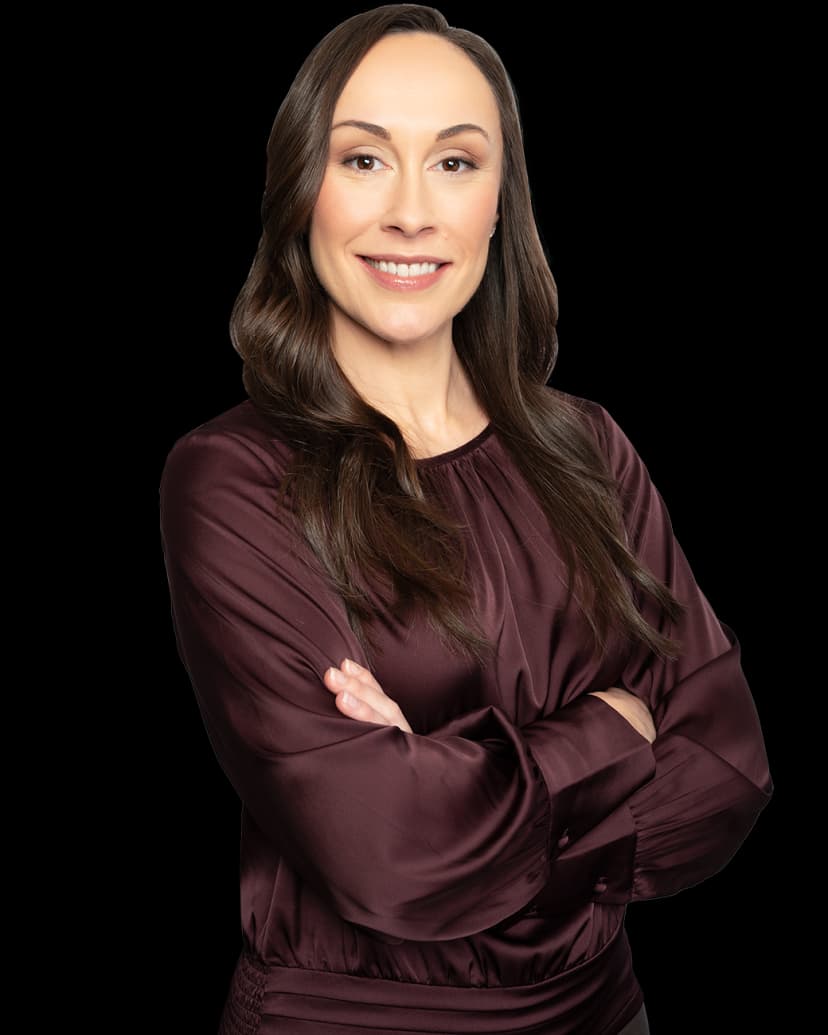
Jessica Foster
Partner


On-demand webinar
CPD/CLE:
JESSICA FOSTER: All right. Well, I think with that, it's time to kick it off. So welcome, everyone, to our From Bids to Bricks-- navigating environmental liability insurance and bonding session. My name is Jessica Foster. I'm a partner at Gowling WLG. And I'm very pleased to be co-chairing today's session along with Kyle David from Aon.
So before we begin, just going to go over a few quick housekeeping items. So first everyone's microphones are muted and cameras are turned off. That's by design. But you can and please do submit your questions at any time using the Q&A icon at the bottom of your screen. We'll address as many as we can throughout the session.
And at the end, we'll leave some time. Today's session is being recorded and we will be circulating the recording after the webinar, as we typically do. And for any lawyers in attendance, this program does contain 1 and 1/2 substantive CPD hours through the Law Society of Ontario.
We're also accredited through a few other jurisdictions as well. If you have any questions on that, please reach out. So that being said, thank you so much for taking the time to be here and join us today. Whether you work on the owner side for a contractor, lenders, or other insurance advisors, we know your schedules are very busy, and so we really appreciate you being here. So Kyle, over to you to introduce today's speakers and walk us through the agenda.
KYLE DAVID: Thanks, Jessica. And good morning to everybody. We're excited about today's risk and insurance heavy lineup, which we'll look at both surety, bonding, environmental liability, and we'll wrap up with an insurance market update.
Today you'll hear from three speakers from Aon, starting with Preya Prashad, who is from our surety team, and will start us off with an overview of surety and bonding, what it is, where it fits in procurement, and the construction life cycle, how owners and contractors can think strategically about security.
Next, we'll have Justin Perry who leads our environmental practice nationally, walk through environmental liability insurance, common risk scenarios and how environmental coverage can be structured to respond.
And last but not least, Denise Hall, our specialty broking leader here in Canada, will close out with a view of the current market, highlighting trends in capacity, pricing, and terms that are shaping how these products are being deployed today. We'll wrap up with time for Q&A and discussion. And with that, I think we'll hand it over to Preya.
PREYA PRASHAD: OK, great. Lorraine, if don't mind. Thank you. Good afternoon, everyone. I'm really excited to be here today and to have the opportunity to share a little bit about sharing and performance security.
For those on this webinar that I may not have met, I'm Preya Prashad. I'm based in Toronto with Aon's National Performance Security team. Before joining Aon over a year ago, I spent 15 plus years on the surety underwriting side.
So much of my career has been spent looking at contractors, projects, and risks through the lens of a surety. What I'm hoping to do today is really make this a knowledge sharing session. Surety can sometimes feel like a fairly specialized area, especially when you start getting into the different bonds and security requirements.
So rather than getting too technical, I want to walk us through why performance security exists, where it fits in the procurement process, and what the different products are actually designed to accomplish. And hopefully by the end, when you see something like a surety letter, a bid bond, or a performance bond in a procurement process, you'll have a much clearer sense of what it's actually telling you. So with that, let's start with what we mean when we talk about performance security.
I've called this Performance Security 101 because really I want to start with the fundamentals. Performance security comes into play at different points throughout a procurement and the type of security you need changes depending on where you are in the process.
At the beginning, the questions may simply be, does this contractor have the financial capacity and the surety support to take on a project of this size? Later, once we get to the contract award, that question becomes much more specific.
What protection does the owner have if something goes wrong? So throughout this section, I'll keep coming back to those two ideas. What risk are we trying to address? And is the security we are actually asking for designed to address those risks?
So today's roadmap, I'll walk us through in roughly the same order you would encounter during the performance security procurement process. We'll start with why owners ask for performance security in the first place. Then I'll explain the basics surrounding the surety relationships, because it is important to understand the surety. It is very different from traditional insurance.
Then we'll move into the procurement process, RFP, RFQ, contract award, and look at the different products and how they come into play. And then I'll finish with some considerations for larger, more complex projects. We're simply asking for more security may not necessarily be the best answer.
So why do we require performance security? At its core, it's really about managing risk. I've highlighted a few of the key risks here that an owner may be thinking about when considering performance security.
The first being delivery risk. Can the contractor actually deliver the project and meet its contractual obligations? The second being financial risk. What happens if the contractor runs into financial difficulty or ultimately isn't able to complete the project?
The third being nonpayment risk. Are the subcontractors and suppliers being paid throughout the process? And what happens if they are not? And particularly on larger or public sector projects, there can also be a broader stakeholder risk if there's a significant disruption or contractor failure.
Now, obviously having a bond, it doesn't eradicate these risks. They don't disappear. But what does happen, however, is that it provides a layer of protection. And importantly, another financially responsible party standing in the back of the contractor's obligation.
And that leads into nicely how a surety actually works, because it is different from traditional insurance. So let's start with the principal. The principal can be the contractor whose obligation is being bonded. Depending on the project, that could be the general contractor or it could be a subcontractor further down the contracting chain.
The principal has the relationship with the surety, which is an insurance company that provides the bond and stands behind the contractor's obligations. And an important part of that relationship is an indemnity agreement between the principal and the surety.
I like to think of that as the contractor having skin in the game. And at its core, that's one of the key differences between surety and traditional insurance. With insurance, we generally think about transferring risk to the insurance company, whereas with surety, the expectation is that the contractor will perform.
If the surety does sustain a loss under the bond, it can look to the indemniters for recovery under that agreement. Then we have the obligee or the owner. Who is the party receiving the benefit of the bond? That could be a municipality receiving a bond from a general contractor?
It could be a general contractor receiving a bond from one of its subcontractors, or even a subcontractor receiving a bond from its lower tier subcontractors. The same relationship holds as it moves down the contracting chain. So in simple terms, we have the principal with the obligation, the surety backing that obligation, and the obligee receiving the protection of the bond.
And because the surety is putting its financial backing behind the contractor, there's a lot of underwriting that happens behind the bond before the bond is actually being issued. And there's a lot of value in that underwriting process itself.
Before the surety is prepared to provide bonds, the surety is really looking at the contractor's financial strength, their experience, backlog, the management team, and importantly, the project itself that it's being asked to support.
So when the surety issues the bond, they're really saying we've looked at this contractor and the project and we're prepared to stand behind that obligation. It's not just the bond itself, there's underwriting, due diligence and financial backing behind it. And that's really where a lot of the value comes into play.
So now that we understand the relationship, let's look at where surety support comes into play throughout the procurement process. I like this slide because it shows that performance security isn't really a one time consideration. It follows the project throughout the different stages of the procurement and what we're looking for changes as well as we move along the procurement stage.
At the RFQ stage, it's really about qualification and capacity. Does the contractor have the experience, the financial strength, and the surety support to take on a project of this size? As we move towards the RFP or tender stage, we're getting a little more specific.
Now we're looking at the bid itself and whether the contractor is prepared to stand behind that commitment. That a contract award, everything becomes more concrete. This is where the final performance security is put in place to support the contractor's obligations under the contract.
And hopefully, we never need to rely on it. But once we're into the construction, that security is there if something goes wrong and the contractor isn't able to fulfill their contractual obligations. So we can really look at this as a progression.
Early on, we're looking at comfort around the contractor's capacity and ability to take on the work. As we get closer to award, that comfort turns into actual commitments from the surety. And we'll walk through each of these stages and the different forms of security in more details in the upcoming slides, starting with the RFQ. Next slide, Lorraine.
So let's start at the beginning. At this point, when it's an RFQ stage, the owner obligee is really trying to understand, who has the experience, capacity, and support to take on a project and move forward in the procurement time frame?
For maturity perspective, this is where you'll see a surety letter. It's really a reference letter. And one thing that's helpful to keep in mind is that a surety letter is not actually a bond, it's really an early indication that the contractor has a relationship with a surety, and that based on what the surety knows, at this point, there is support to consider for this opportunity.
As the procurement moves forward and we know more about the actual project, the surety will still need to look at the specific opportunity in more detail. I sometimes compare the pre-qualification stage to being pre-qualified for a mortgage. You may know generally what you qualify for, but once you find the house that you're looking to put in an offer, the lender still needs to look at that particular transaction. So it's very much similar.
A contractor may have a very strong bonding capacity overall, but the surety will still want to understand the particular project, the contract, the size of the obligation, and the risk that comes into it. So at the RFQ stage, it's really about thinking early comfort around the contractor's capacity and surety support and moving further into the procurement frame.
Then as we move into the RFP or tender stage, that early indication of support starts to become more specific. And this is where we see bid security come into play. A bid bond is really giving the owner comfort that the contractor is serious about its bid, and it's prepared to stand behind it.
And there's actual financial backing behind that commitment. You'll commonly see a bid security expressed as a percentage of the tender amount, often in the range of 5% to 10%. So, for example, if a contractor submits a bid and is ultimately successful, but then doesn't proceed with the contract in accordance with the tender requirements, the owner could have recourse under the bid bond.
The surety also has a financial obligation, which is subject to the terms of the bid bond and up to the bid bond security amount. So there's some real weights behind the contractor submitting a bid with a bid bond. It really is saying we're putting this price forward and we're prepared to stand behind it.
Then we have the agreement to bond, which takes that commitment one step further. Here are the sureties essentially saying if the contractor is awarded this project, we're prepared to provide the final bonds. And this is where timing and having enough information really becomes important.
On some of the RFQs, there may still be aspects of the projects or final contracts that are being worked through. Before making that commitment, the surety is going to want to have a good understanding of the contract scope, value, and ultimately, what they're being asked to stand behind.
So this is another area where early engagement with the surety markets can be really, really helpful. It's an agreement to bond is going to be required. Having those conversations early helps make sure the requirement is clear, practical, and something the surety market can get behind.
So once we get to the contract award, this is where that earlier surety support turns into actual security package behind the contract. So I'll start with performance bonds. The performance bond is essentially the surety financially backing the contractor's performance obligation up to the bond stated amount.
So you'll commonly see this expressed as a percentage dollar amount, 50% of the contract price. Although that amount could be higher or lower depending on the project itself. So as an example, if there's $100 million contract price with a 50% performance bond, that bond amount is 50 million. That represents the surety's maximum liability under the bond subject to its terms and conditions.
And hopefully, we never get to the point where a contractor defaults. But having this in place and having the bond in place becomes really important. There's a process under the bond for the surety to become involved, investigate the default, and determine how it will respond if there is a contractor default and a performance bond has been issued.
So depending on the circumstances, the bond wording, the remedies can be to stand in for the contractor, get a replacement contractor, or pay up to the bond penalty amount on that specific project. Then alongside that, we often have the labor material bond or the L&M bond.
This bond is addressing a different part of the risk. It becomes protection for eligible payment claimants, such as subcontractors and suppliers if they've provided labor material to the project and have been subject to the terms of the bond.
So in very simple terms, I think of the two together in this way. The performance bond is focused on the contractor performing its obligations to the owner, while the L&M bond is focused on eligible subcontractors and suppliers being paid.
And then we have other forms of security, including letter of credit guarantees. A letter of credit, it's different. One, it's issued by a financial institution-- so a bank. And it gives the owner access to a defined amount of financial security.
That distinction is important because the performance bond comes with surety involvement and a process around the contractor's performance obligations, remedies if there is a default, whereas the letter of credit is liquidity.
It does not solve for the project actually getting completed. So rather than starting with, do we want to bond or an LLC? I think the better place to start with is what is the risk we are trying to protect against. And what do we actually want our security to do for us if something goes wrong? Because once you answer those questions, it becomes much easier to determine which performance security you'll lean towards.
And this one, this slide I think, gives a good visual into what could happen if there is a performance bond versus if there isn't. So, as I noted, performance bond, the surety sits behind the contractor. And if there's a default, there's remedies in place to rectify what that is and ensure that the project gets completed.
So the owner essentially is not left to do things themselves. The bond brings the surety into the conversation. There's a process for the surety to look at what has happened, understand the circumstances, and respond in accordance with the terms of the bond.
And depending on the circumstances and the bond language, it can be a number of potential ways in which the surety would respond. It could be helping the contractor complete the project, facilitating completion through another contractor, tendering the remaining work, or simply responding financially up to the bond amount.
And this goes back to what we talked about on the previous slide. The value of performance bond isn't simply there's dollar amount attached to it, it's that there's a surety financially backing the contractor's performance obligations, together with a framework for how that surety responds if the obligation isn't fulfilled.
Without a performance bond, the owner may still have contractual rights and remedies. The difference is that the owner may have to take on much more of the responsibilities for managing the completion and the financial impact themselves.
So I tend to think of the performance bond as providing two things-- financial protection, but also a path forward if something does go wrong. So when we bring it all together, I think the easiest way to look at it is that each form of security is therefore a slightly different purpose, depending on where we are in the procurement and what we're looking to protect against.
This slide, I think, is really helpful because it summarizes that and everything that we've talked about in this presentation. If we're at the beginning of the procurement and asking, does the contractor have surety support and capacity to take on the opportunity? That's where surety letter comes in.
As we move into the tender, we might want something, some comfort that the contractor is serious about their price they've submitted and will stand behind their bid. And that's where the bid bond comes into play.
If we're looking ahead asking, will the surety be there to provide the final bonds if the contractor is successful, that's where the agreement to bond comes into play. And then once the contract is awarded, we move into the actual performance security.
The performance bond is there to protect the contractor's performance obligations and provide that additional financial backing and path forward if the contractor defaults. Alongside that, the labor and material bond provides protection for eligible subcontractors and suppliers with their provided labor or material on that project and it hasn't been paid.
And then there may be situations where the owner is looking for a more immediate access to financial security and liquidity, and that's where an LC or potentially a combination of different forms of security may come into the conversation.
So really, if there's one thing I'd like you to take away from this slide is that there isn't necessarily one form of security that's right for every project. It comes back to the same questions. What are we trying to protect against? And what do we want that security to do for us?
Once you understand that, it's a little bit easier to determine the performance security that you would want on your project. And this last point really brings into what we're seeing in the markets and the projects today. Projects are getting larger, more complex, longer duration. And naturally, that has an impact on how we think about performance security.
It can be easy to look at a larger project and say, well, it's a bigger contract. So we should simply ask for a bigger bond amount. But as the size, the duration, and these projects increase, that isn't always the most practical or effective approach. We also have to consider the capacity available in the surity market. How long that capacity is going to be committed, and what impact that surety requirement could ultimately have on the contractor bidding that work.
So this isn't where the conversation-- so this is where the conversation becomes more thoughtful. Rather than simply applying a standard percentage to a very large contract value, there may be an opportunity to look at things like a fixed penalty amount or a different percentage, depending on the project and the protection the owner is looking for.
And I think this really comes back to the theme we've talked about throughout the presentation is, what risk are we trying to protect against? And what security do we actually need to address it? Because ultimately, we want the owner to have a meaningful protection, but we also want the security requirements to be something that qualified contractors and the surety market can realistically support.
And particularly with these larger and longer duration projects, that's why engaging the surety market early can be very, very valuable. It gives everyone the opportunity to understand what the project needs, what the market can support, and hopefully land on a security structure that works for the owner, but also works for the procurement and is commercially achievable.
So this really just kind of rounds it up for us. And the idea of engaging early, finding the right balance is a good place to bring it all together. From our perspective at Aon, a lot of the value that we bring forth happens well before a bond needs to be issued. It really starts with understanding the project itself, the procurement, and what ultimately is trying to be protected against.
We can help think through the security requirements, review the bond forms and wording, and, importantly, bring the surety market's perspective into those conversations early. And I think that becomes even more valuable as we continue to see larger, more complex and longer duration projects, where the answer may not be as simple as applying a standard bond requirement.
We can go back to the market, understand where their capacity may be or practical considerations, and help work through a security structure that gives the owner meaningful protection while also bringing something the contractor and surety market can support.
And really, that's what I hope you take away from this session is surety doesn't need to be complicated. If we start by understanding the risk, what protection we're looking for, and where we are in the procurement process, we can usually have a much more productive conversation about the right form of security.
And please use Aon as a resource. These are exactly the kinds of conversations we enjoy having, whether it's early in a procurement, reviewing the bond requirements, or simply helping work through what might make sense from a practical project approach.
I really appreciate the opportunity to share a little bit of the surity world with you today. Hopefully, this has given you some practical context of what surety is and the procurement process, and where the products kind of fit into that procurement process. We do have questions and answers if there's any that pop up. But if none pop up now, we can also have it later on in the session.
KYLE DAVID: Preya, we do have one question in the chat currently, and that is please explain 100% versus 50% performance bond and how it would be paid out?
PREYA PRASHAD: OK, so 100% of a performance bond means the full contract value, 50% of a performance bond means 50% of the contract value. What really comes into play is I would suggest when you're looking at this is what you're really trying to protect yourself.
If you want full protection from the onset, 100% might sound like a logical ask to fully protect yourself against a contractor default. But when you think about it logically as you move through the construction phase, it's not necessarily the case that the surety is going to pay out 100% of the bond penalty, unless it's potentially early default or we're in a situation where hyperinflation has taken occurrence.
And to retender that project at tomorrow's price is well in excess of 100% of what that contract price might be. So typically in the Ontario or general Canadian marketplace, what we see is 50% of the contract price. But that's essentially is what it stipulates, is what the dollar amount is noted on the bond security.
And if there is a default, that's the maximum amount that the surety will pay. And it's not make a claim and get an immediate payout. The surety does do their investigation. They'll look at the contract funds remaining on the project to look at the scope that's been completed by the contractor that has issued the bond.
So there's different things in play, but if there is a hyperinflation, that's kind of where I would highlight the distinction of the bond penalty might not be sufficient to retender the project. I hope that answers the question. But if there's a follow up, feel free to put it in the chat.
KYLE DAVID: There was a second part to that question, and that was speaking on the premium differences between 50 and 100. And, I guess, I'm curious about that as well, and whether it's a proportionate increase or similar to traditional insurance, where the more limits sometimes the pricing changes.
PREYA PRASHAD: Oh, no, of course. So a surety facility, typically when you establish a facility, you have rates that apply to that specific contractor. And the rates are determined based on a number of factors. The financial strength of the contractor and the premium or the potential revenue that a surety can earn from that specific contractor.
With the rates, you'll have identifiable the 50% performance bond and the 100% performance bond, in addition to the 50% labor material and the 100% performance. It's not necessarily the case that if you get 100% security, that the rate is double. It's typically not double. It's a few dollars or percentage points in excess of a 50%. So because you're getting more security doesn't necessarily mean you're paying double the price of that security.
KYLE DAVID: Great. Thank you. And I think that's all for questions for this portion.
PREYA PRASHAD: OK, great. Thank you, everyone.
JUSTIN PERRY: Yeah, absolutely. Hi, everyone. Justin Perry from Aon. Happy to be here. So I'm going to give you a quick overview of environmental liabilities. Similar to Preya, starting with the background, the genesis of environmental insurance. Why it's important value it brings.
And then looking at the two scopes, the owner's scope and the contractor's scope and how both play into it. And of course, as we're dealing with contracts, right in the middle, I've squeezed in one slide on contracts as they pertain to environmental matters and the evolution.
So environmental insurance has come about from a number of different ways, but predominantly it's as a result of general liability shifting away from providing coverage, going from general accident insurance to a more defined path into coverage, which excluded environmental or excluded pollution specifically.
And subsequently, other elements have come into question as well, such as mold, asbestos, waste management or waste facilities, et cetera over time. So environmental insurance arose from the gaps that existed in coverage, but then serve a greater purpose today.
One of the key purposes that it serves is the balance sheet cheap protection. So the concept here is essentially that once you have caused an environmental condition, once you discover an environmental condition, it is not necessarily the best practice to remove that condition.
Sometimes you manage it. You can never return soil, groundwater, air to the same condition that it was before. The materials have escaped. They're present. They're reacting. If they're inert, they could be causing other physical issues.
So all of those have incremental costs. They have management costs, investigation costs, and ultimately remediation, if that is the ultimate end, can have a very significant impact on the financials of a corporation.
And so that's why we look at environmental insurance really as a balance sheet protection mechanism in the context of construction. It's also securing the budget for construction. So you don't have anomalies or unexpected circumstances that I guess throw the overall budget. And that would be the initial tie-in to surety. We help with our environmental products to financially secure projects.
The other aspect that has changed over time is regulations. And that's the other driving force or major driving force around the use of environmental insurance and why we exist is that we continually find what you can do, what you can't do, going from the release of a deleterious substance all the way to municipal sewer discharge, bylaws to water quality, air quality bylaws, emmision bylaws, even down to noise as a pollutant, light as a pollutant.
So the environmental insurance is, again, another tool to secure the project and the financials around a project. Some key areas that are worth reviewing that deal with owners and contractor matters are listed down below.
So city of Kawartha Lakes versus Gendron was a situation where it was an innocent party, if you want, contamination ran through a property. And the city of Kawartha Lakes was the recipient of said pollution that ran under their property into provincial lands or waters. And subsequently, they were responsible to clean up.
So just because the premises that you're entering, whether you're the owner or the contractor performing work, appears good at the surface underneath there can be some considerations. Baker versus the Ministry of the Environment is essentially a director's case.
It is very complicated. There's a lot of nuances. Essentially, it is the principle that if you have ownership of the contamination in some way, so management or control of the undertaking, you can be held liable if your corporation is unable to deal with the pollution.
So the directors can be personally liable when it comes to environmental matters in certain circumstances. And then finally, from a lender or a financial security perspective, there's the Orphan Well Association versus Grant Thornton that prioritize the environment over a secured creditor in a very specific circumstance. So environmental insurance can really help around all of those matters.
Since environmental insurance is heavily reliant on regulations, we have to first understand how environmental laws have come to be. So every layer of government has the ability to shape environmental regulations starting at the federal level, then the provinces, and even down to the municipal governments.
One of the major municipal toggles has been sewer discharge and discharge into their property. The sewer systems, stormwater management systems are really third-party property and property of the government or of the municipal government.
And they do outfall into nature. It will end up in a body of water somewhere. So at all levels, there are regulations that apply. And at all levels, you can have a breach of said regulation. Each regulation will determine what the enforcement can look like.
So each law and regulation will dictate within itself what the enforcement looks like. And the typical responses that we see from a regulatory perspective are orders by the government, orders by the minister of the environment, et cetera, and prosecutions. Prosecutions can be fines and penalties, can be again more orders to perform work, et cetera.
The key here is under most environmental statutes, it's the release of the pollutant or the release of the material is often enough to be in breach of the regulation. I've listed a couple of examples here that, I guess, help shape regulations, that the key is really to demonstrate the evolution of environmental regulations and how they really go back.
I mean, some could argue they go back thousands of years, but really it goes back to Rylands versus Fletcher in 1868, where we defined like a strict liability. So as long as you have-- and joint and several liability as well through the tort acts. So, as long as you have some involvement, you could be responsible for all the costs involved.
In 2002, we defined stigma damage with regards to environmental matters. That was actually a Canadian case. 2013, there were two large decisions that came through. One pertaining to basically the innocent party is not a defense. So saying you had no knowledge, you weren't aware, it's not yours, it's not a defense in regulatory liability. And then the director's exposure.
So just to show that there's been a constant evolution and there continues to be. Key areas to consider when you're looking at general liability property, just any other type of insurance is, how is contamination on the premises or at the job site dealt with?
And that could be air quality if you're inside a building, it could be soil quality, groundwater quality. How is it being addressed and dealt with within the insurance policy? And I'll talk about that a little bit later how other insurances apply. Contaminant migration and impacts offsite. So how do you deal with contamination that has left your premises?
And can you do anything about it? That's the other consideration? Or do you need to wait for a third party? And then the flow through property where contamination flows through your premises, you weren't the source of the contamination and you become that innocent party that just stuck in the middle if you want.
So, as we start reviewing the availability of environmental insurance, this is from an owner's perspective, but it's also questions that a contractor should be aware of or should have a basic understanding of on any site that they're operating.
But what is going on at that site? Has the owner performed the requisite investigations or have the requisite approvals for their operations when it comes to environmental emissions, environmental effluence, or any form of contamination that exists in the ground? As I mentioned at the very first slide, sometimes you're not cleaning up the site right away. Sometimes you're going to manage contamination for years, decades, even in certain circumstances, centuries.
So it's important that you know what's going on. And that's the same thing that I would recommend any contractor performing work is. Do you have a clear understanding of what hazards you may come across or what contaminants you may come across?
The second level thereafterwards is having an established process in place that is recognized, such as an environmental management system. And then that continues down the list. Once you're tracking everything in and everything out of the site, then you can take it up to an environmental risk management framework where the constant reevaluation, some are certified processes, some are not.
But that gives the insurer, the underwriter the understanding that you are tracking what's happening. You do understand where losses could occur without actually finding contamination. You know that a product has gone missing. You know that there is some sort of effluent, what's coming in and what's going out doesn't equal. So it's going to be somewhere on the premises.
But once you have all of that basic information, then you can start understanding what you're good at managing, what you can manage, how large a loss can be. So you can start really capturing the data, creating a risk registry or some sort of visualization of your risks and understanding where you want to insure them or how you want to transfer or manage those risks.
One of the key concepts you've probably heard in insurance is dealing with severity. So frequency versus severity. We have insurers and types of insurance classes of insurance that really like low severity and can deal with higher frequency. And that's when you get into a primary casualty layer with a large tower access thereafter.
And then you also have other types of insurance that to like to deal with, very low frequency but catastrophic type exposures. Environmental insurers tend to be in that space. They tend to be more catastrophic risk markets.
So they like the insured to have significant involvement-- significant skin in the game as was mentioned before by Preya to know that you are managing day-to-day releases, day-to-day contaminants, and you are monitoring over time the contamination that can accumulate.
So now that I've provided a brief overview of where environmental insurance originated from and where it likes to participate, where it likes to play, I'll just take a brief moment to talk about contracts. So because of the evolution of environmental regulations, the traditional way of transferring, I will say, traditional liability slip and falls, property damage type of incidences may not be the same way that you want to deal with the environmental impacts.
In some cases, you may want to transfer full responsibility to a contractor, or in some ways, a contractor may want to control response around environmental matter. And in other situations, you would need to as the landowner or the project owner, especially if you're already dealing with an existing contaminant that is not impacting the project, but is on the premises.
I would just [AUDIO OUT] you very high level issues to look at, but how you transfer the liabilities, are environmental matters included? Are they excluded from that transfer? How contracts are drafted. Do you have a single point within your organization that can make changes to the environmental considerations?
Do you need to respond first? Is the contracted party the person responding? Who needs to report to the regulator? So all of those things can change and shift within the contracts. And it's important to have that clear definition.
And then there's a number of inconsistent clauses or terms that we see all the time that need to be defined. And an example of that is a hazardous substance. Hazardous substances, I see in a lot of contracts, whether it's landlord, tenant, contractor, owner, et cetera around hazardous substances.
It is critical that you define what that is. There is no global definition to a hazardous substance. And then I would add to that and say, what about non-hazardous substances? What about existing substances? We've run into issues post-construction where there's been erosion, accelerated erosion that's occurred due to heavy rainfall where the silt and sedimentation ran off the site into bodies of water.
Those are naturally occurring. They're not toxic in their stable state. As they move, that's when they can cause physical damage and harm, especially if they're inert and it's naturally occurring. We've seen existing sediments. We'll say if you're doing any form of marine construction, sediments that are dormant, that have heavy metals will stay underneath that all of a sudden they're disturbed.
So all of that is present already. It's, how do you deal with it? Or who is responsible to-- who is responsible to respond to that event? So those are all considerations in the contract that should be defined clearly?
In some cases, a government order needs to be responded to immediately or within 15 days. So sometimes the work that has to be performed is immediate. It's not a let's defend ourselves and get ourselves out of this. Sometimes you don't even have a choice. You have to start responding to a claim from a government body before you've even determined who is liable, who is responsible. So having that clearly defined is critical consideration.
And for anyone who is trying to attach existing environmental considerations into the contract, we really do need baseline environmental reports. We need to be able to provide the insurers with the current knowledge base of what is going on at the site.
And critically, was that baseline created or drafted with the project in mind. It's one thing to take one or two samples and say, for the general operations, we haven't found anything. It's something else to go and excavate the site and come up with a financial model for disposal of clean soil, or under Ontario's regulations of excess soils legislation, and then finding out it's contaminated and now it needs special treatment and it's a significant cost overrun consideration.
So yes. So tying back into insurance specifically. So I've only selected a few products to talk about how environmental insurance plays with other insurance. And I've chosen the ones that are the most common that we see.
One way to think of environmental liability is almost like an umbrella for environmental matters. There are certain elements that can only be insured by your environmental liability. There are other elements that will share in losses with other policies.
But there is no other policy that can comprehensively cover environmental matters. And we get into that extends over to products as extreme as cyber. You might say, well, how does environmental matters deal with cyber?
Well, if a bad actor has control of a system through remote access, and then causes a pollution condition, that then falls back on the environmental policy. So it's really important that we understand how insurance policies work with each other.
So general liability and property are two policies that almost every risk insurance buyer will have. So general liability policies, the key here is that it is a third party bodily injury, property damage type policy arising out of your premises and your operations.
With the concepts I've spoken about so far, the general liability is silent with regards to remediation costs. So that is not a cost that it defines that it covers. It is silent on natural resource damages or natural resource impacts. So damages to nature.
It affirmatively excludes government orders and fines and penalties, which tend to be the enforcement that comes with regulatory liability. And then it also has a waste facility exclusion, which was just defined in 2017 in a BC Court.
And the application of the exclusion was deemed to be fairly broad. So it's important to understand that aspect of it, notwithstanding any form of limited pollution you may get back through there. Above and beyond their specific constituent exclusions that apply, such as mold, asbestos, lead-based paint, silica, now PFAS being a new emerging pollutant, et cetera.
So notwithstanding any form of give back that's available, the specific constituents exclusion will still apply. So the limited pollution that is often available is referred to often as sudden accidental pollution.
So again, that only applies to the object of commercial general liability. Only applies to third-party bodily injury property damage claims. And it is still subject to the silent elements, which are affirmative under an environmental policy and subject to the exclusions of the policy, such as government orders, fines, and penalties.
So it's important to understand how that works. And the key element there is the time element. Most policies will have 120-hour clause. That's the base. It can be bought up if you want. But that requires the policy holder to discover the pollutant within 120 hours of its commencement and to report it to the insurer within 120 hours of its discovery.
So right off the bat, it does not apply to anything pre-existing, anything that's been there more than 120 hours. And if it is not reported to the insurer, the exclusion applies. So you can't get a claim a year later for a bodily injury because of a pollutant.
And your general liability respond if you did not report that pollutant within 120 hours or within five days. So it is a very administratively heavy element. On the property side, there is no pollution exclusion.
However, there is a sub-limit of soil and groundwater remediation following an insured peril or an insured property loss. So it's not just coming across contamination that will allow the policy to respond. It does have to be a property event that applies. And then directors and officers has other factors that come into play.
One fun fact I'll mention there is that environmental insurance policies for the owner specifically, so the premise's product may exclude known conditions for the corporation and may give a dedicated side a type of coverage for the directors for everything that is excluded in the event that the corporation were to go insolvent. So there is an element of coverage there that is very unique to environmental policies.
So key terminology under an environmental policy, most environmental policies or all environmental policies start as a claims made and reported form over a given term. The term can be annual, like most policies, most standard insurance policies, or it can be multiyear. I believe I have a policy that's 19-year construction project right now on the books. So we can play with the term, depends on the nature of the risk being insured.
Specifically for construction policies. So like contractors, environmental liability, or contractor's pollution liability, depending on the name. There is an occurrence version or there might even be two or three different occurrence versions that exist.
There is the traditional occurrence which covers the damage. And then there's also the alternative common interpretation, which is more of a pre-1985 occurrence language that covers the event during the policy period that results in damage. So understanding how that applies to your project, how that applies to the post or the completed project is critical. And those are all elements that should be spelled out in a contract.
There are pros and cons to both structures based on what the specific operations are. Again, environmental matters are a little different than other types of losses and claims. And when a claim can arise can be years later.
The claim definition is the critical factor. That's what gets you into the policy. And then the environmental condition is the object of the insurance. Everything under an environmental policy ties back to the environmental condition.
So it might be a third-party claim for bodily injury, property damage, or environmental damage as a new term resulting from work because of an environmental condition. So what is an environmental condition is critical.
So I've just left a definition that we use here that is critical. It starts with the general liability exclusion and then gets augmented. So it's the same terms. And then it gets augmented. One of the key elements for contractors is the exacerbation clause.
Generally, wrap-up policies, general liability policies only cover materials you bring to and from the site as pollutants. They don't cover what is already naturally present on the site. So [AUDIO OUT] element. And then everything to do with biological, chemical, radiological, or radioactive substances is also important, et cetera. So keep that in mind on the terminology.
The two policy bases that exist have two different time considerations. So a premise's policy, which would be an owner's policy, would define new and pre-existing conditions as two different elements. The majority of the policies are new conditions policies.
But you can have a retrospective element which is critical when you're dealing with delays in construction because of something you found, where you have to walk off the site or stop all construction activities because you've come across contamination you didn't even know was present.
So understanding if it's new or pre-existing is critical from the owner's perspective. The contractor's perspective is always looking forward, arising out of the work they do, and the exacerbation of an existing condition is still a future or prospective type of loss.
So finally, dealing with the two different classes. So we have a premises class which looks at the site, doesn't look at who is performing work there. That's the owner's policy if you want. And then the contractor's environmental liabilities for transformation or work being performed and that is the contractor's policy.
Both can be linked together if it's an owner controlled program, depending on if it's an owner's exposure, pre-existing conditions, delay in construction because of pre-existing conditions, and also just anything that happens at the site that's not a result of the contractors.
And then the contractors is really tied back to their obligation. What are they doing, et cetera? So just as a quick summary, these are the two different classes of policies and how they play down the different products.
So the critical piece for construction policies is understanding that there is an infrastructure environmental liability program that links the two where the consortium or the contractor is taking an asset management and property management role as well on behalf of the owner. So on that note, I would thank you for your time. And always happy to answer any questions you may have now or afterwards.
SPEAKER 1: Thanks, Justin. We do have one question, and it revolves around which policy would respond in the event of an air quality situation during a building renovation, would it be the contractors or owners?
JUSTIN PERRY: It could be both. So the owner's policies or the premise's policy will respond at the absence of any material change to the operation. So if it's something that is just present-- mold is present in the building, et cetera, then the owner's policy would respond.
The contractor's policy will respond to the work they're doing. So if the contractor caused a release of the mold, for example, or caused a degradation in air quality, so it doesn't have to be mold. Anything that's in the building asbestos, carbon monoxide from a heating source, et cetera, then it would fall under the contractor's policy. So it could be both.
Only one will ultimately be responsible at the end. But it's a question of, was the contractor aware of the presence of the mold? Was it somewhere else in the building due to a vibration for example, that caused the release of the mold? Et cetera.
So it could be both. And that's why in an infrastructure situation, we would usually link the two together so that all the exposures are sharing one larger limit if you want or one limit than having two policies play. But it could definitely be both. Yes.
KYLE DAVID: Great. We have another one that's just come in. If an owner is requiring a contractor to carry the insurance, should a contractor's environmental liability policy be project specific?
JUSTIN PERRY: Well, that really depends on how you want to share your limits across your program or if the owner wants dedicated insurance. So dedicated insurance has a minimum cost. There's a minimum cost to underwrite, et cetera.
And so if it's a large enough project, an owner may want that to be dedicated, the full limits to be dedicated to that project. But otherwise, no. If a contractor has sufficient capacity, buy enough insurance, et cetera, then the owners can be comfortable, should be comfortable with that. But it's really based on performance ultimately.
KYLE DAVID: OK, great. Thank you, Justin. We're actually going to go back to a bonding question here for Preya. So it's, have you seen a cost sharing example where prime contractor is asking for higher bonding from their subs than required by the owner's contract with the prime CM?
PREYA PRASHAD: Yes, yes, we have seen that. The way I would think about this is the owner sets out their project requirements, but the prime or the CM is still managing their own subcontractor risk. So if I'm the prime and I have a particular large trade, something on the critical path, a long duration scope or a subcontractor that would be difficult to replace, I may look at that exposure and say for this particular subcontract, I'd be more comfortable with additional security.
And I think that really brings into the risk management we've been talking about earlier. What happens to my project if the subcontractor fails? What does it potentially do to my own schedule if the subcontractor fails? And what costs could I incur if the subcontractor fails?
And it really comes down to the prime's risk management appetite. Of course, there is an additional cost that comes with it. So you really do want to balance out the two, the cost versus additional security for the sub-trade in question.
And I would say it should be looked at as a project specific subcontractor risk decision making process, rather than simply a blanket approach, higher bond penalty amount from what the owner is specifying. I hope that covers it.
KYLE DAVID: Great. Thank you very much, Preya. With that, we will hand it off to Denise.
DENISE HALL: Wonderful. Hi, everybody. So thank you so much for sticking in. These are very technical topics, and I'm so glad that Justin and Preya were the ones presenting those two topics. So my name is Denise Hall. I'm based in Toronto. I've been with Aon for 25 years.
And I lead a team of specialty brokers that are focused, like Justin is, on environmental or construction PNC placements. I have nine slides. So I've only got about 10 minutes of material. I'd love to see the questions keep coming into the chat because that's the main purpose is to get everybody's questions out.
So my first few slides are just the general state of the market. We're going to talk about also the construction market and how that's performing environmental and surety. And then the last few slides I have are some advice around program design, what clients are doing, and how to take best advantage of the market. And then we'll get back into the Q&A.
So right now, we're in a very buyers friendly market. So it's been that way for the last couple of years. And really there's four elements that can impact market conditions into what we would consider a harder market.
And just a reminder, when we're in a harder insurance market, that's really marked by reduction in capacity, more conservative underwriting, increase in premiums, retention, and lower limits. It's very painful for our clients.
The good news is that the harder markets usually are very short in duration relative. So a few years and then the softer markets as we call them, which were in today last longer. But in order to shift from the buyer friendly conditions into a harder market, we really need to look at these four things.
So catastrophic loss activity, which sometimes we call Cat activity. It's not related to any sort of pets that we have, but it means more of the severe weather events that we see, earthquake exposure and things like that. So I have a slide next to talk about that.
But when we have a very intense Cat, catastrophic year, we generally do see the reinsurance market respond. And when the reinsurance market and reinsurance is insurance, that insurance companies buy. When that market gets hard, then insurers try and pass those costs along to their consumers, their customers such as yourself.
And then also the primary market conditions where actual insurers are doing, the ones that write your risk, well, that will be Orleans, Star, AIG, Liberty, Chubb, to name a few. Right now, insurers are absolutely in growth mode. They've had strong financial results.
So their loss ratios are very positive. And they're seeing underwriting profit and improved investment income. So while they're more disciplined, they're still disciplined on risk selection. They're looking for ways to write risks. So they're being more creative. And that kind of ties into their underwriting attitude.
So there's strong global interest in writing Canadian business. We've got lots of domestic insurers seeing Canada as favorable. We've got US insurers, Bermuda, and also our London market. So really strong interest in Canadian business. And as I mentioned, while they're still disciplined in their underwriting, they're trying to keep their good accounts and also be creative on winning more accounts. So that's positive again.
And then when I mentioned reinsurance, it is a favorable market. 2023 is when we saw the hard market in reinsurance, and I had a few of my insurers crying a little because they were saying, oh, my gosh, the reinsurers are really penalizing us. And they're not understanding how great our portfolio is, and they're just slashing limits and increasing retentions. And our costs are going up. And I'm thinking this is how our clients feel in the harder market.
But after 2023, there was a lot of Corrections around reinsurance programs. And since that time, so post that, the Jan 1 is a big reinsurance renewal date. Since 2024, it's been very positive. There's lots of capacity in the reinsurance market, lots of capital. And so those renewals are going smoothly.
So let's take a look at the Cat activity in Canada, which is an interesting story. You can see that in 2024, we had quite a severe year, 9.21 billion. And that was really a hail, convective storm, the Jasper wildfire, and flash flooding.
And what we're seeing for cat activity across Canada, wildfire seems to be in many locations now. The flooding is increasing. And so it does feel like the activity is getting greater in certain years. However, given the reinsurance changes in 2023, and this activity is more of a series of mid-size events rather than a single mega loss, the reinsurance isn't being hit as much. It's being retained in the primary or lower reinsurance layers.
Also some of these losses are more in the personal line space. And so insurers that have a personal lines book and an insurance book, commercial book are the ones getting hit a little bit harder than those just pure commercial players.
So, so far, even despite the Cat activity that we've seen, the market conditions, we do not forecast to be changing next year. And the good news for 2026, it's a quieter year globally and in Canada. So year to date, Cat activity is tracking about 3.9 billion again by wildfire, convective storm, and flood.
But as things stand, the reinsurance can expect to end the year with the positive results. So even despite some Cat activity, we're not seeing changes to the market. But that being said, there's no question the world is more volatile.
So weather activities I talked about, input costs, tariffs, supply chain can increase severity and duration of claims. Cyber AI and complex third-party dependencies are reshaping threat, scenarios and litigation is becoming more costly and less predictable.
So all that said about our general market conditions, good market conditions for clients, but more complex risk. And as we'll talk about in the next few slides, we're really looking for clients to capitalize on that.
Look at your limits, not just pricing, terms and conditions, structures, and try and push into improving your programs, using data and analytics to get prepared and future proof for the future market cycles. So for construction in particular, whether you're an owner or contractor, the good news continues.
So the construction market is following the general market conditions. And many insurers that I meet with are really looking for construction as an area of growth. They're following Canada's investment plan. So they're trying to hire talent and underwriters and write more annuals or write more projects. So construction is a big topic for a lot of our meetings that we have.
Annual programs with clean loss records are looking at rates that are flat or reductions, actions, and clients are investing in higher limits and additional lines of coverage. And project appetite continues to be strong. And we've seen a slowdown in private work. So there's more competition, I feel, for some of our infrastructure projects creating improved terms and conditions.
D&L cyber remains competitive, although the decreases are a bit slower than we saw last year. And the one area that is a little bit more challenging is project-specific professional liability, more challenging in terms of cost of the risk transfer, but capacities entering the market again. So we're pushing on that pretty hard.
And if you do have a Cat exposed area that will restrict capacity, wood frame continues to be a challenge when we need a large limit. And mass timber is still evolving in our underwriting-- in the underwriting understanding. But Aon's pushing quite hard on the understanding around mass timber and how it should be treated differently than wood frame.
If your project values are increasing or you've got heavy civil undergrounds or any sort of new construction methods, those will be looked at with more scrutiny. Justin did a really good job talking about environmental. It's also a favorable market.
Premises is a little more challenging of the underwriting, but contractors pollution is lots of capacity there. But the one thing Justin I really wanted to get across is the wording really, truly matters in the environmental placement. They're bespoke wordings and we try and manuscript them.
So although you can maybe save a little price difference here and there, I would very carefully look at the definition of pollution condition, the exclusions, and things of that nature. And environmental claims can be quite complex. The emerging contaminants, PFAS, climate, remediation, especially in remote areas, and expanding regulatory liability.
And then yeah, the surety market is strong as well. And so as Preya talked about, it's not usually price, it's more the capacity and selection as a project values duration and contractor backlog increases. So it's more about telling the capacities there. And it's a favorable market, but it's more about telling the story around the projects.
And as she mentioned, also start early because bond ability is not something that you want to find out. It's not possible towards the end of your procurement. So start early and, obviously, tag into a professional.
So I think really when we think about how clients are placing project insurance from different angles, it's really about less the different policies that you need to procure, but more about, what is the project? What are the risks of the project? What's the life cycle of the project? And then trying to coordinate coverage between environmental, some of the property casualty and professional placements that you need.
But absolutely all goes around the contract language. So we do spend a lot of time thinking about the contract language, the indemnities, responsibility for deductibles, and things of that nature. So really what that kind of results in for clients is thinking about strategic selection of insurer.
And you may luck out. You may have one insurer that can do it all for you. And then you can leverage that relationship. But you may also, if it's a very complex project, think about a lead insurer and specialist insurers for other parts of such as professional.
I was also going to mention that we often do master programs. So if you're going to have several projects of similar size and scope, you can develop, whether it's a formal master program with reporting [INAUDIBLE] or just a agreed relationship with a certain insurer, that could be a very effective and efficient way of procuring insurance for many projects.
And now surety. So this is a huge goal of our insurance partners to translate the surety relationship into the insurance relationship. But it doesn't always translate that easily. Surety is quite sticky. But if you can find that insurer that can do both for you, it can really align nicely because your financial view and view of the corporation can really translate into better insurance outcomes.
And this at the top of the house that the insurer, the leadership, is very invested in your placements. But I wouldn't say trade or try to tie or reduce your market choice, but when it works, we see it work really well.
So this slides a little bit obvious, but starting early, our brokers would love one data room, so that what Justin's seeing is the same story as Victoria seeing on the builder's risk and wrap up. And absolutely trade across terms. So that's the key message for this slide is it's price. Price is very important. And we understand.
But some of the exclusions, sub-limits. We saw a claim recently for off site storage. So the terms and conditions of the placement are really critical. Defect coverage. And just making sure that the policy, how it's placed matches the project.
And the last thing I would say here is project extensions. So those I feel like in this market are pretty typical. So I think the best thing to do is plan ahead of time when you place the insurance to think about an extension of the project insurance.
Next slide, please. And this is my last slide. So just to wrap it up, the market's positive. Definitely think about environmental. Use surety as a tool. And design for the full life cycle of your project. Think about every little aspect of it to translate into appropriate coverage. Great. Kyle, back to you.
KYLE DAVID: Excellent. Thank you very much, Denise. I'm just going to wait a few seconds to see if any questions come in specific to the market or on the past presentations. And if not, we will wrap up.
DENISE HALL: OK. Indications for 2027, more the same. So as we think about, as I mentioned, my reinsurance team sits across the hall on my floor. They're busy. They're in meetings all day trying to prepare for these Jan 1, mostly property renewals. They're happy. They're smiling. So that's good. Really next year, more of the same, buyer friendly conditions. Thank you for your question.
KYLE DAVID: OK.
DENISE HALL: Perfect. Good news. I love delivering good news. It's way better than bad news. And I also love not standing between you and lunch. I usually have the last spot on the agenda. So this is worked really nicely.
KYLE DAVID: All right, well, thank you very much, Denise. And thanks for everybody for attending. As always, if you could please complete our survey, that would be very helpful. And we look forward to seeing you all on November 27 for our session-- or, sorry, I should say November 24 for our session on strategic contract management and insurance claims. As usual, the presentation will be available in the coming days and you should get an email with that link. Thanks. Have a good day.
DENISE HALL: Bye everyone.
You can download a copy of the
presentation here.
Join Gowling WLG and Aon for the next installment of our seven-part webinar series designed to help construction and infrastructure stakeholders navigate an increasingly complex project landscape. Whether you are an owner, contractor, consultant, or insurance or risk management professional, this session will provide practical insights to support informed decision-making throughout the project lifecycle.
We will explore environmental liability exposures and available insurance solutions, and provide a practical overview of bonding, including the purpose of surety bonds, underwriting considerations, and common contract security requirements for construction projects. We will also discuss key insurance market trends for 2026.
This program is eligible for up to 1.5 hours of substantive CPD credits with the LSO, the LSBC and the Barreau du Québec.
NOT LEGAL ADVICE. Information made available on this website in any form is for information purposes only. It is not, and should not be taken as, legal advice. You should not rely on, or take or fail to take any action based upon this information. Never disregard professional legal advice or delay in seeking legal advice because of something you have read on this website. Gowling WLG professionals will be pleased to discuss resolutions to specific legal concerns you may have.





Gowling WLG is an international law firm comprising the members of Gowling WLG International Limited, an English Company Limited by Guarantee, and their respective affiliates. Each member and affiliate is an autonomous and independent entity. Gowling WLG International Limited promotes, facilitates and co-ordinates the activities of its members but does not itself provide services to clients. Our structure is explained in more detail on our Legal Information page.
© 2026 Gowling WLG All rights reserved.