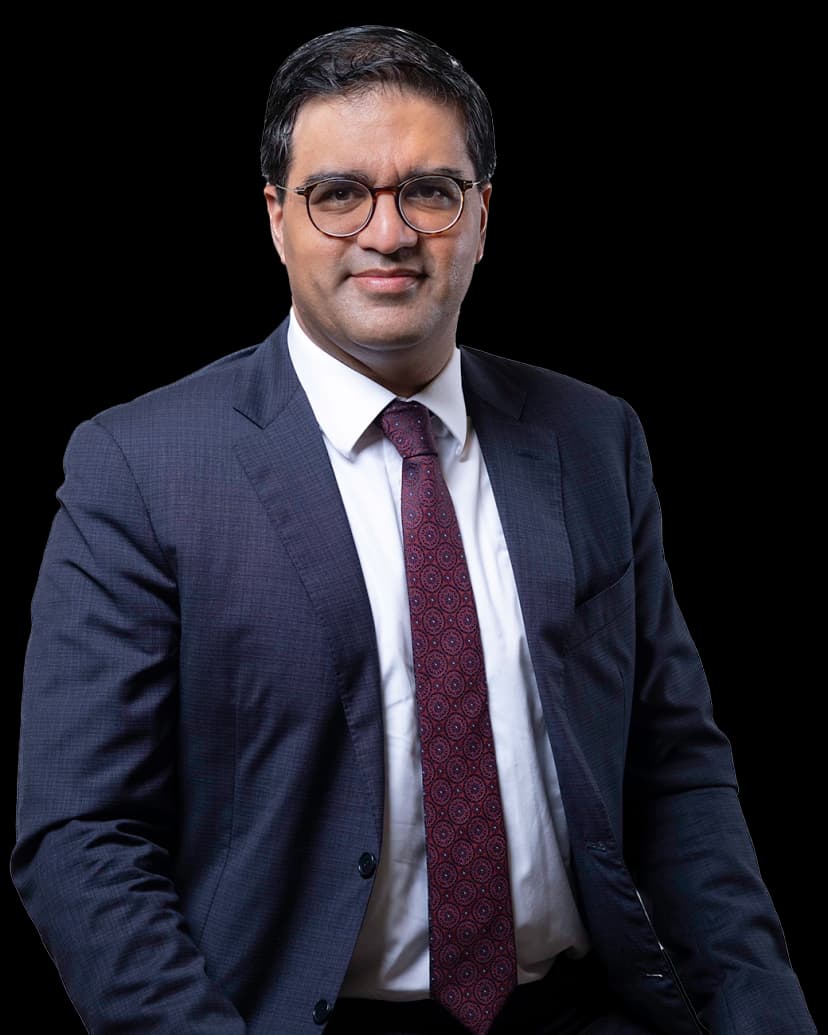
Aarij S. Wasti
Partner
Entertainment & Sport / Brand Protection, Corporate Commercial, Funds and Private M&A


Video
Episode 7
As the world prepares for the FIFA World Cup 2026 across Canada, the U.S., and Mexico, Sideline Conversations takes you beyond the pitch to explore the legal and commercial issues shaping the tournament. Hosted by Aarij S. Wasti (Gowling WLG, Toronto), Marlon Hill (WSHC+B, Miami), and Juan Carlos Partida (EC Rubio, Mexico City), your cross-border legal guides to the world’s biggest sporting event.
In Episode 7, the trio is joined by guests from across the globe to unpack the final qualification playoffs, how host cities like Miami are preparing for kickoff, and what a first World Cup appearance means for emerging football nations.
Watch each part below.
Joined by Alina Hudak, President and CEO of the Miami 2026 World Cup Host Committee, and Paulo Santos, Vice President of the Cape Verdean Football Federation, the group explores Miami’s preparations, including its 23-day Fan Festival, public safety coordination and the realities of working within FIFA’s commercial framework. They also discuss Cape Verde’s historic first qualification and how the federation is approaching the opportunity on and off the pitch.
MARLON HILL: Good day, everyone. Bonjour! Como estas wherever you are in the world right now. My name is Marlon Hill. I'm coming to you live from Miami, attorney with Weiss Sirota, known in the World Cup world as Clutch. I'm joined here on the Sideline. We've been on this journey for the last six months or so. This is episode 7.
It's a special episode for everyone, as we are less than 73 days, 72 days. The clock is ticking. Each day you wake up, we get closer and closer to kick off in Mexico City. We have a very special program here for you today. Joining me here on the Sideline, I have my good friends, Aarij Wasti joining us live still in his winter weather clothing all the way from Toronto.
And down in the balmy, rainy weather of Mexico City, my good friend JC Partida, from our good friends at EC Rubio here at the Sideline Conversations. And guys, we're in the middle of the playoffs, almost ending the playoffs right now. Inter-confederation, the UEFA playoffs, how are you feeling now that these playoffs and we now have these final 16 in this historic tri-nation, 48-nation, 104 games? Tell me how you're feeling.
JUAN CARLOS PARTIDA: Well, Mexico is now feeling the World Cup. The World Cup has already arrived in Mexico. I would say as of this last Saturday, when the Mexico City stadium, the old Azteca stadium, was re-inaugurated last Saturday in the match between Mexico and Portugal, it was a party.
The stadium is really nice. It's really good-looking. It's the only stadium in the world that has been hosted or will be hosting three World Cups. And it was modulated and it's an amazing stadium. So we are feeling it, man.
MARLON HILL: Awesome, awesome, JC. Aarij, tell me, what's happening in the sixth?
AARIJ S. WASTI: Yeah, look, believe it or not, it's no longer minus temperatures. The snow is melting. I know I still have my jacket on. But it's been on for six months so it's hard to take off now. But otherwise, things are good. Look, I was on a panel yesterday at one of the local universities. I think people are now starting to, like JC said, in Mexico, feel the vibe. I think they're getting ready for particular matches, which is great to see. We've got friends calling in. Germany, Ivory Coast is going to be a big draw here.
And Canada Soccer announced a Canada house for both Toronto and Vancouver during the World Cup to showcase what Canada has to offer in the soccer space, including its legacy programs for youth development going forward. So, lots of watch parties now being scheduled. Like I said, fans are excited. And you start to feel it a little bit because that's--
MARLON HILL: Yes. Well, one person that's definitely feeling it, I don't know how she keeps up, one of our most seasoned public administrators anywhere on this planet. I would match her up against any government administrator anywhere in the world, Alina Hudak, who is one of our former county managers, city manager. She manages everything. We want to welcome Alina Hudak. She is the CEO of the FIFA Miami Host Committee, which is, of course, one of our separate organizing bodies of the 16 host cities. Alina, welcome to the Sideline Conversations. Thank you for taking some time out with us.
ALINA HUDAK: Thank you, Marlon. And thank you, JC and Aarij. Am I pronouncing that correctly? I hope.
AARIJ S. WASTI: Absolutely! Aarij, very, very close and better than 99%. So you're ahead already.
ALINA HUDAK: Well, it's great to be on with the three of you. And I feel your energy. I need all the energy I can get. So thank you very much for the invite. It's really an honor to be leading this effort. I accepted this position about a year ago more than anything because I felt it was such a legacy moment for our community-- a lot of excitement.
And I felt that my background with all of our different governments allowed me to navigate all of the services and all of the responsibilities that we have as a host committee-- so a very exciting time. And yes, I feel it every day, every minute in the middle of the night at all hours. The World Cup is coming to Miami.
MARLON HILL: Well, Alina, we would love to hear how things are going. We know that you are going to be partnering with the Dolphins organization, the operators of the Miami stadium. You're going to be working with the city of Miami in downtown Miami, where your fan fest is going to be. Give us some insights as to how these intergovernmental public, private relationships are going, as we approach this global historic event.
ALINA HUDAK: Of course, Marlon, would love to. We're on parallel paths with a multitude of things. We have the operational responsibilities as a host committee to support all of the infrastructure that you would expect that hosting a World Cup requires, everything from public safety to transportation infrastructure. And I love to tell people, I'm not a government. I am a private nonprofit host committee led by a volunteer board of 24 leaders in our community.
And so it's an interesting role for me because I'm accustomed to being in charge of a government and having a lot of authority over those types of responsibilities. But here, I'm the connector of a lot of dots. And I'm the facilitator of a lot of funding opportunities, together with the operational realities of what has to be delivered. So in that role, we're making sure that the federal funding that we need for purposes of supporting our public safety agencies.
And there's many of them. We have 24 plus public safety agencies working with us in preparation for our seven matches. Then our transportation mobility plan is being properly coordinated by our lead agency, which is the Department of Transportation and Public Works for Miami-Dade. But that also involves the Florida Department of Transportation. And then there's a multitude of agencies that have to be coordinated with.
That's a lot of inside baseball in terms of the operational requirements of a host committee. But we're very busy on that path. And we have some great people that are part of my staff that have that kind of experience. And then separate and apart from that, there's the aspect of special events and producing special events.
So we are hosting a fan festival that will be hosted in Miami's downtown park, Central Park of Miami, Bayfront Park, beautiful park right on the Bay, 23 days of activation, contiguous. We're going to start on Saturday, June 13. And we're going to go straight through July 5. We're going to show every match that we can get in within the time frames that we're allowed to be in Bayfront Park.
And we do have some restrictions late at night because the park, interestingly enough, is in the middle of a very residential area. And so we will have back-to-back viewing opportunities-- three stages with viewing opportunities. In between, we'll have all kinds of cultural programming-- lots of food, lots of activity, children's activations, family opportunities.
As we lead into the tail end of our fan festival, 4 of July, a really big day in our country and a really big day this year in particular, as we celebrate the 250th anniversary of our country. So we're partnering with the city of Miami. And that day, not only will we have viewing, but we will also be hosting a concert-- so a lot going on as it relates to that fan festival.
And because we have and we're such a diverse community in Miami, not only do we have a huge Caribbean contingency here, obviously, a lot of South Americans in Miami as well. We're trying to make sure that as the different viewing opportunities, that we're bringing in that community to come to our fan fest and be a part of that.
Separate and apart from that, we're going to be hosting regional viewing opportunities. And because of the funding sources that we have, we have some limitations in terms of what we can and cannot do under the regulatory umbrella, which is how we operate. But we're making sure that we have a regional opportunity to the North, a regional opportunity to the West, a regional opportunity to the South.
We have partner cities that have asked for some activation. So we have a viewing party on Miami Beach, for example, two viewing centers on Miami Beach. We're working on a potential kickoff concert. And we're still in the process of negotiating talent. But we're hoping on Thursday, June 11, when in Mexico, the World Cup kicks off, we're hoping to have a concert on Miami Beach together with a watch party. So we have all of these activations that we're working on, separate and apart from leading and connecting the dots on all of the operational requirements. But that was a lot, so tell me to stop.
MARLON HILL: No, no. Before I turn it over to JC, who has a question, I wanted to ask you, what has surprised you so far? I mean, you have managed Super Bowls. You've managed major, major programs, initiatives for one of the largest county in the state of Florida. What has surprise you about this global event so far?
ALINA HUDAK: Well, I have to tell you that I think that the greatest surprise for me-- again, I was hired late in the process. So I was hired a year ago. And, I wish that I would have been involved in a much longer time period because I think that would have helped me to create a structure that I think would have been a little bit more resilient.
But I think the greatest surprise-- I have had a lot of experience with regulatory frameworks in the sports industry because I did serve on six Super Bowl host committees. But I was not fully aware of the restrictions that are tied to the relationship with FIFA proper. And those restrictions exist for a reason. And they certainly have these very extensive commercial partnerships that have tremendous value to them.
And as a result of that, there are a lot of limitations imposed on the local host cities. And for me, that was an education. That was surprising. I was not fully aware of what that meant and what that was going to mean in terms of being able to raise the monies needed to be able to fulfill the commitments.
MARLON HILL: Fair enough! Fair enough! JC.
JUAN CARLOS PARTIDA: Yeah, thank you, Alina. First of all, thank you for being here. It's an honor to have you here with us today. And you were talking about the watching parties or the fanfest being hosted in a park within the city, and it's surrounded by residential area. Do you know or are there any zoning changes or temporary ordinances in Miami that are being enacted specifically for the tournament?
ALINA HUDAK: Well, we have had to work with different jurisdictions to impose clean zones. And those are to protect FIFA's commercial partnerships. And that's very typical. That happens also during Super Bowl activations. And so we're pretty accustomed to that. And the governments are very accustomed to that.
So there are very specific requirements that have a perimeter area. And so we've already gone to every jurisdiction that's being impacted by that. And we've had those ordinances passed. So we have one in the city of Miami. We have one in the city of Miami Beach. We needed one around the stadium, which is the city of Miami Gardens. So we've established those clean zones and that has been established.
JUAN CARLOS PARTIDA: Thank you.
MARLON HILL: Thank you very much.
AARIJ S. WASTI: Yeah, I'm still stuck on that opening line, where you said the World Cup is coming to Miami and the smile on your face. I understand you're from South Florida and you've been there for some time. Just coming off topic in terms of the planning and the prep, what does it mean to you as somebody from the Miami area? And how are your family and friends taking this all in?
ALINA HUDAK: I come from very humble roots. I'm very proud to say that I'm a Cuban-American who grew up here. My parents came to this country in search of freedom and a life for their children. And so for me to be able to be at this point in my career, quite frankly, I've served for 42 years in public service in a leadership capacity. And to be able to lead this legacy moment is really important.
And I think I say this a lot. And sometimes, I even get sentimental about it. When we were kids, my brother and I, my parents couldn't afford to-- we wanted to do all the things that our neighbor and all the kids we knew were doing. My brother wanted to play football. And I wanted to be a cheerleader. And my parents couldn't afford that. And they couldn't afford to even take us because they were working around the clock.
And so for me to have, not only the opportunity to lead the totality of the effort, but to work on legacy and bring soccer-- we're doing community clinics right now. We're rolling out in 16 different clinics in different regions of our community, where kids are having the opportunity to learn about soccer. We're educating coaches so that we can spread the love of the game in a way that we wouldn't have been able to do if we didn't have World Cup and if we didn't have a host committee.
And so for me, I think, given my background, it's a very impactful moment to be able to bring a sport that so many people love to people who don't have access to it. So it's meaningful in that regard. And I will tell you, I think that Miami is a global destination. And certainly, I've been a part of moments like Art Basel, where Miami is front and center of the art world.
And I think that being able to host a World Cup and seven matches and be at this moment is really significant for Miami as a community for South Florida, as a region for the state of Florida. It really puts us in a very different league. And it builds capacity in a different way than when we host traditional events, sporting events.
MARLON HILL: Inter Miami is going to be opening their stadium, their new stadium at Freedom Park. The Brazilian Football Federation just opened their offices here in Miami. Barca football club just opened up their offices in downtown Miami. So obviously, the football world is tapping into the Miami-Dade economy. And the World Cup is expected to have a billion economic impact. What would you say to the many small businesses and other businesses that are out there to take advantage of this legacy moment? How can they take advantage of this legacy moment?
ALINA HUDAK: Yeah, and that's been a tough one because I think that local businesses and talking to us and in attending the workshops that we've hosted, they're very focused on, well, what opportunity do you, Alina, have for me or what opportunity do you, FIFA, have for me? And I've tried to frame the conversation differently.
We've obviously made whatever opportunity we have available. We've advertised our procurements on our website. We've shared them. We worked with FIFA to create a local business directory. Not as robust as I would have loved for it to have been, but we did it. And we continue that. We continue on that path.
But I tell everyone when they attend our workshop that they have homework, too. They have to understand what's coming. They have to educate themselves on where the private sector events are going to be. They have to build capacity so that they can be ready to participate.
I always use this example. I had a great conversation with a young man who had just opened a security company. And he told me, he said, Alina, I'm not going to qualify for your fan fest security contract. And I told him, I said, look, we have a responsibility. I need a security company with x number of years of experience.
But you need to understand that there's going to be hotels that are going to have needs. There are going to be private parties that are going to have needs. And every public safety agency is going to be tied up with the stadium and with formal responses. So there is going to be opportunity for you. You need to be ready. And you need to build capacity. You need to have your financials in order. You need to have all of your capacity in order. So I like to use that example because I think there's tremendous opportunity. And local businesses and small businesses have a responsibility to do what they need to do to be ready.
MARLON HILL: Absolutely! JC.
JUAN CARLOS PARTIDA: Yeah, talking about security with an event of this magnitude, what is the city's preparedness for this event? I mean, is it, I mean, well-coordinated? How are you seeing the city being prepared for an event like this, security-wise?
ALINA HUDAK: Well, I will tell you that our Sheriff's Office is-- and our local government here, our regional local government, Miami-Dade County is probably the sixth largest urban government in the country. And our Sheriff's Office is probably the sixth or seventh largest police department in the country. So they are very equipped. They're accustomed to managing events of this scale. They are extremely knowledgeable and led by a person who is a seasoned professional.
And I do believe that our law enforcement officials are ready. We've learned lessons. And obviously, we've had situations that we've learned from in this community. And I think that people have spent the last two years preparing for this and understanding what the needs are. We're supported by significant number of state and federal resources.
So I do believe that our law enforcement community has really good coordination. They meet on a regular basis cross-jurisdictionally. They exercise their plans. That's being led by our emergency management leaders in the community. And so I can tell you that off the top of my head, there's been at least 10 different exercises and scenarios that have been tested.
And we had the privilege of hosting Club World Cup last June and July. We had eight matches in Miami. So that was an opportunity for our police and law enforcement officials to prepare and to exercise what they were planning in terms of perimeter and activation. So I do feel that we have really prepared law enforcement and public safety here in Miami.
MARLON HILL: All right! Last question from me, Alina. Either in your capacity as the CEO of the hosting committee in Miami or as a resident of Miami, what do you say to those first time visitors and fans that are coming across? What can they look forward to beyond the matches in the stadiums and the fan fest in the South Florida area during the World Cup summer?
ALINA HUDAK: Well, that is so easy. It's Miami. It's our beaches. It's our natural environment. It's our diversity, our culture, I think that our diversity lends itself to so much happiness. And I say this, unfortunately, to my daughter, who lives in Boston and she doesn't like to hear it. I don't know if it's the sun. I don't know if it's our palm trees. I don't know if it's the ocean. But we're happy people.
And I think that that's infectious. And I think that the people who come to visit will enjoy, not only this amazing experience that is the World Cup, they're going to love our fan fest. They're going to love our beaches and our coast. And if they love nature, they can go to the Everglades and they can see this amazing exhibit of God's work. Or they can get in a car and in an hour be in the Keys.
And so I think that it's an amazing experience for all of our tourists, not just from a sports perspective, but from a really vacation experience. There's a lot to do. And it's a great time of year to be here. Our summers are beautiful. Yes, we have rain in the afternoon, but that's part of the fun.
AARIJ S. WASTI: So you can imagine, I always have a reason for asking the question. JC and I have been trying to get Marlon to invite us to Miami for many, many months now. This was the plug. So, Marlon, since your friend, Alina, has sold Miami so well, JC and I will be coming to visit. It's now up to you to host us.
MARLON HILL: Listen, this is--
ALINA HUDAK: He's on it. If anybody can be a great host, it's Marlon. [LAUGHTER]
MARLON HILL: Listen, we're going to be welcoming you here. We are the capital of football. We're so honored to have Alina Hudak, who is leading the charge in hosting one of the 16 host cities. You can learn more about what Miami is doing by going to miamifwc26.com If you're a business owner, sign up for their local supplier program. If you are just a fan, sign up for updates-- miamifwc26.com.
You can also go to the Instagram and follow their Instagram, FWC26 Miami on Instagram. And give them a tag. Give them a shout out. All the best to you, Alina. I hope that you are drinking all that cafecito for the next 70 plus days.
ALINA HUDAK: I don't need to drink cafecito. The cafecito is dangerous. I already don't sleep, so. But thank you all, it's really been a pleasure to be on. And I don't know why I lost my screen. So hopefully, you can still see me.
MARLON HILL: I see you, yeah.
AARIJ S. WASTI: A tremendous honor, Alina, thank you for joining us.
ALINA HUDAK: Thank you. Same here. Same here.
MARLON HILL: All the best to you and your team.
ALINA HUDAK: Thank you. Thank you.
MARLON HILL: Alina Hudak joining us here on the Sideline Conversations. We want to wish her and her team the best over the next few weeks. The fan fest, June 15 to July 5 in downtown Miami, also celebrating the 250th anniversary of this United States of America.
We're going to take a short trip now across to the middle Atlantic off West Africa, the Coast of West Africa. Our good friends from Cabo Verde are joining us here on the Sidelines, making it to the World Cup, guys, for the very first time in history. And it's so special to have Paulo Santos, the VP of the Football Federation of Cabo Verde. [SPEAKING PORTUGUESE] What time is it?
PAULO SANTOS: It's night. It's night. Good night. It's night. It's why I'm with pyjamas my. It's why I'm in pyjamas. And it's time. It's time to sleep. For us from Cape Verde, we are very happy to be here with you. And yeah, my name is Paulo Santos. I'm VP of the Cape Verde Federation. I was running water in a [INAUDIBLE]. We are from a small, small, small, small country in the middle of nowhere, in the middle of the ocean, on Atlantic.
I think all of our population is able to be in one district of Miami-- so one small district of Miami. But we are also a country for sun, for beach, for palm tree, for good weather. So we and Miami in this case, in this situation with the good sun, the good beach, the good palm trees, and the fun and happiness.
So we are a country of happiness, the country of morabeza. And this is our first time to come to the World Cup. And the World Cup will be in the three countries-- Mexico, United States, and Canada. But our big diaspora, we are 500,000 who lives in Cape Verde. But we have just plus 1.2 million Cape Verdeans, who live in the United States.
So we have the double, almost triple of the population who lives in the United States. More of them, they live in the East Coast, in the New England. But yes, we have a lot of people who lives also in Miami. So on these days in the match, we will be there with Uruguay. We will win the match. This is the first things. We will win the match. And then we will have fun with the people there, so for us is--
MARLON HILL: I have to ask you man, this event happens every four years. Out of the 211 Federations, everyone wants to be here. We have countries that are fighting, hoping, and now made the last six slots. How does it feel? How does it feel being a part of the football? Or how does it feel just to be a--
PAULO SANTOS: We are in the heaven. We are in heaven. We are in the heaven. Listen, for us, we are a small Federation. We work with 15 guys. Our Federation, we have 15 guys only. And we have executive committee. We are 10. We work for pro-bono. And I am 55 years old. I make my first team. I had 11. So I have 44 years in football.
So it's our passion. It's our second life. And for us, it's something we do once in our life. I did it my time. So I don't know if the next generation will do it, but we do it. We are doing the preparation the most serious possible. We have a good team.
And my team is now in New Zealand. They are playing the FIFA series in New Zealand. We are doing a very, very tough work with the young Cape Verdeans who born outside the country. So 80% of the players, they born outside of the country. They live outside of the country. They're born in the United States.
We have some ones who play in MLS-- Steven Moreira. We have Jorginho, who plays in MLS, too. We have some in Holland, in France, Portugal, Luxembourg, Norway, Indonesia, Malaysia, Vietnam. So you cannot imagine this, but for us, we'll be. I was in Miami one month ago with lot of problems with the rain because that time I slept in the airport on Atlanta. Because in Tampa airport, because they had very storms and these things. And I was in Miami for one day to--
MARLON HILL: But listen, It's great to have you, Paulo, here on the Sideline Conversations. I'm so happy, so happy for you and the people of your country. JC, you wanted to ask you a question.
JUAN CARLOS PARTIDA: Yeah, first, I wanted to congratulate you, Paulo. And you're not a small country. You are now one of the largest 48 countries in the world that are coming to the World Cup.
PAULO SANTOS: That's true.
JUAN CARLOS PARTIDA: So congratulations! It's a big event. And just wanted to know, what are your expectations? It's tough to play one game in three different venues. I think it's Miami, Atlanta, and Houston, right?
PAULO SANTOS: And Houston.
JUAN CARLOS PARTIDA: Yes. So what would be the logistical-- I don't know-- thing that you're going to do? I mean, how is that going to work for you guys?
MARLON HILL: Yeah, where are you going to be based?
JUAN CARLOS PARTIDA: Yeah, where are you going to be based?
PAULO SANTOS: You see, first, we will be based in Tampa. But let me tell you a story. In the year '34, last century, our grandfathers, they left Cape Verde in a boat with 50 feet to come to America. So when a population do like this, it's not a problem to fly. It's not a problem to move. For us, it's not a problem.
So we can do it. If it's four or five venues difference, for us, it's not a problem. We will be there for fun. We will be there for play. We will be there for win. But for us, it's just the moment. And we will do it. We have a logistic organization. We've been there three times to organize the logistic.
We will be staying in Tampa. We will fly to Atlanta in the day minus 1 for the game. We come back in the same day to Tampa, if the weather let us to do it, of course. We will go to Miami for the match with Uruguay. That, we will come in the same days, too. And we will go to Houston. But in Houston, we will stay to sleep there. Because we will win the match and we will pass for the next stage. So we will stay there.
JUAN CARLOS PARTIDA: Yeah, yeah. And it's just a shame that you're not coming to Mexico. Uruguay and Spain are coming to Mexico, not you.
PAULO SANTOS: Yeah, we would like to come to Mexico. We would like to come to Mexico because, let me tell you, the first time we saw the World Cup by television in Cape Verde was the World Cup in Mexico.
MARLON HILL: 1986.
PAULO SANTOS: '96, yes, yes, yes, with the very nice goal from Negrete, remember?
JUAN CARLOS PARTIDA: The most beautiful goal in the World Cups, I think, that's how it's been.
PAULO SANTOS: Yes, I think one of the best.
JUAN CARLOS PARTIDA: So far.
MARLON HILL: In the excitement of qualifying versus getting focused on all the logistics, all the administration, what's new about this opportunity? I'm sure the team has played in other tournaments. But this is the World Cup. And so how is the team preparing for this moment at this time?
PAULO SANTOS: Marlon, we worked in two different ways. What the team do, what the staff, the technical staff, do with the team is in the team and is very close. We are a very small group and very close group. We work with 30, 32 players and a staff with 12, 18 persons around the team.
And this, they are close, they are focused, and they are out of this exciting moment, who we live in Cape Verde. You cannot imagine the request for tickets, requests for t-shirts, the requests for everything. So the Federation had 500 jerseys to sell. We were trying to sell the jerseys for three years. After the qualification, we sold in one days, just to let you know how [INAUDIBLE].
MARLON HILL: I'm not surprised. I mean, Haiti has come out with a World Cup song. France came out with a World Cup song. When is the Cape going to come up with their song?
PAULO SANTOS: We will have our song. We are a country of Caesarea. So we will have our song there, a nice song, the 13 of April. We make a deal with American brand, who is our new jersey, it's Scapelli. And in Monday 13 of April, we will have the presentation of the new jerseys in New York in the big events, in big music events for our community.
So we are trying to show Cape Verde. We are trying to promote Cape Verde. We are using this moment to show the people, to show the world that will be the biggest ever promotion we can have for free. So when we are there, that is the idea. Our government are doing this. Our Federation is doing this. So for us, like I told you, Marlon, we are in heaven but with the foots on the ground and work hard for this.
MARLON HILL: Before I turn you over to Aarij, what do you want the world to know about Cape Verde and the people of Cape Verde?
PAULO SANTOS: Sorry?
MARLON HILL: What do you want the world to know about Cape Verde and the people from Cape Verde?
PAULO SANTOS: We are the best people in the world. We are the best people in the world. We like to do happiness. We like music. We like to play football. Our country is very nice. We don't have war. We have established democracy. We have a good education. They need to know Cape Verde is a good place to be, to come, and to feel free.
So that is why we have our children to study around the world. My daughter studied in California. She's in UC in California. So it's why we do it. We work for our children. And we like to pass our generation. This is what we do-- happiness, football, good music, and a lot of work, hard work.
MARLON HILL: I love it. Aarij, it sounds like you're moving to Cape Verde, Aarij.
AARIJ S. WASTI: Yes, while you've been talking, I'm booking my flights. I am so there.
PAULO SANTOS: Yes, yes.
AARIJ S. WASTI: Paulo, when you speak about getting this message out about your nation and your people and the values that you stand for, your biggest ambassadors, aside from the team, will be your traveling fan base. And I'm sure they can't wait to join you during the summer in the US. In terms of that movement of people from your homeland to the US for the tournament, is the Federation involved in any assistance, in planning with visas, with travel packages, with fan coordination or?
PAULO SANTOS: We will have a lot of fans who lives in America. The people who lives in the East Coast in Boston, Brockton, Pawtucket, Connecticut, Massachusetts. We have a big community, around 12,000, 15,000 persons who lives in Kissimmee near Florida.
MARLON HILL: Orlando, yeah.
PAULO SANTOS: So we have people who comes for this place to see our matches. They bought tickets and waits. For the fans who lived in Cape Verde, it's more difficult because the USA government now put a pin for the people who like to have the visa. So we need to pay $15,000 to have a visa to come here, deposit.
It'll be a little bit tough for us, for our supporters to come from Cape Verde. We are dealing with the USA department. But it's not easy. You know the restriction we have now in with this. And Cape Verde, we had this problem. So from Cape Verde, we will have not a lot of people who comes, only the people who has already visas to come. Because no one will deposit $15,000 to go and don't have money then to spend there. This is one big problem.
The second problem is, it's expensive. It's expensive come from Cape Verde to USA. For example, a ticket from Cape Verde to Miami is around $2,000, only the tickets. Because you need to do a Cape Verde, Lisbon, Lisbon, Miami, and come back. From Europe, we are expecting around 2,000, 2,500 persons for the match against Spain and 1,500, 2,000 for the match against Uruguay.
The match against Saudi Arabia is not a lot of request. The Federation took the tickets from FIFA to sell in the normal price. So we didn't put nothing on top. But we didn't took a lot of tickets because the tickets we have rights was around $8 million for buying before. We don't have this money. The Federation don't have money. So the money the FIFA give us, it's not enough for us for the preparation. It's $1.5 million.
MARLON HILL: Come on, Aarij, you need to call [INAUDIBLE] and let them know that Cape Verde--
AARIJ S. WASTI: Well, I was going to say-- so three thoughts there. One is, we're still 70 some days out. I'm still holding out hope that sanity will prevail, that this $15,000 bond will be waived in exceptional cases and that your fans will be welcomed to the US, number one. Number two, you quote these numbers in terms of fans that will be attending your matches. I guarantee you that like myself and many others, people will be joining your Indigenous fan base and joining the world in celebrating football--
PAULO SANTOS: We will be thankful. We will be thankful.
AARIJ S. WASTI: --and supporting your wonderful country. And thirdly, I would just say you mentioned Boston a couple of times. I think Alina's daughter will be joining the Cabo Verde band as we celebrate through the World Cup.
MARLON HILL: So, Paulo, where can I get my official jersey? How can we support the team? Where should we go to support the team, buy a jersey, follow up [INAUDIBLE]?
PAULO SANTOS: Marlon, one of the reasons we chose Capelli instead of Adidas, for example, or other-- we had Tempo Jersey from Austria-- because Capelli is a company who buys it in USA. Their headquarter is in New York. And we are expecting to sell around 50,000, 70,000 jerseys here, so in the United States.
And they have retailers, a chain of retailers there. So for us, it was important to join with them because the opportunity to sell jerseys and the opportunity we have a company who have a retailer connection net in USA. So for sure, you will have the jerseys in the fan base parts. We will try to have the agreements with the organization to have proposed stores in this big arenas.
And we will play a match, a friendly match in day 6 of June in Boston, Connecticut, against Puerto Rico. We will have festival, a day festival. And we are expecting 40,000 Cape Verdeans in this match in the East Coast to celebrate the World Cup qualification with them.
Yes, you will have your-- for sure, I will send it to Olivia, the Jersey for you, for you and Aarij and JC. I just need to know the size and then we will send it to you. Of course, you will have the jerseys. And I know you will send me a photo with the Jersey, in the day of the matches.
MARLON HILL: Absolutely!
AARIJ S. WASTI: Better than that, Paulo, the four of us, JC, Maron, myself, and most importantly you will wear those jerseys together in one place as we celebrate Cabo Verde going forward.
PAULO SANTOS: That will be good. That will be good. If it's Miami, it's OK. If it's Atlanta, it's OK if it's Houston, OK. Or if it's Miami in the next stage, it'll be OK also.
AARIJ S. WASTI: There you go.
MARLON HILL: Listen, what are your expectations, Aarij, as we come to a close in this conversation? What are your expectations as an executive of the Federation? And also, just being from your country, what is your expectation of this World Cup outside of the games and playing well and advancing? At the end of the day, what's the legacy that you're hoping to write with this experience?
PAULO SANTOS: Marlon we will save for the money we will receive for FIFA around $4.5 million that we will save. That will be money who the Federation will invest in the young generation, in pitches, training, in coaches, in infrastructures. So this big advantage, we will get from the World Cup. A part of the matches are part of the fence. That is good things for us.
So it will give us a sustainable capacity, financial capacity, for work in the Federation for next 10 years with planning, with strategies, and will grow up the Federation and to bring the Federation with the professional stage to the next generation can profit of this. So I think our legacy for me and my team will be this.
We will save $4.5 million. If we pass for the next stage, it will be $6 million. That will be fantastic. And we are working hard for this. So every penny, every single dollar we had, we will spend in a correct way to save money and do a good participation. But that is the legacy we will give for our future for the kids, for Cape Verde football.
MARLON HILL: I love that. I love that. Aarij, yeah.
AARIJ S. WASTI: Yeah, and I was going to say I think the long-term legacy, especially grassroots development and youth development, obviously, very, very important. But just as important in the moment is for the world to get to know the Blue Sharks and appreciate the game from a part of the world that, perhaps, most fans wouldn't follow, much like Iceland at the Euros a few years ago. And I think those interactions, Paulo, and as a debutant nation, I think you'll appreciate this when you're at the matches. It's just such a wonderful bringing together of humanity, an opportunity to share culture, an opportunity to showcase values, to exchange, to make friends. And the Lord knows we need that right now.
MARLON HILL: Absolutely! Paulo Santos, VP of the Federation of the [INAUDIBLE], the Cape Verde, thank you for joining us here on the Sideline Conversations. [SPEAKING PORTUGUESE]. We wish you the best.
PAULO SANTOS: [SPEAKING PORTUGUESE] after we passing the group phase.
AARIJ S. WASTI: Amazing! Amazing!
MARLON HILL: Amazing! Amazing, man! Thank you for joining us here and spending some time with us.
PAULO SANTOS: Thank you. Nice to speak with you. You have my contacts if you need something. If you like to book the hotel, Casa Tu Casa. So it's no problem.
AARIJ S. WASTI: Now, Paulo, you get to turn off the light and finally go to sleep.
MARLON HILL: Absolutely!
PAULO SANTOS: Yes, of course, thank you.
As the final UEFA playoff results come in, Aarij and Marlon break down the completed 48-team field. They reflect on host city readiness, fan travel and broader geopolitical considerations, while discussing what this expanded tournament means for the future of the game in North America.
MARLON HILL: Back here on the Sidelines. And we are almost at the end here, folks. We are almost right. We're about to have our 48 teams. And unfortunately, we're in extra time. As always on the sideline, and you have to expect the unexpected. Sometimes you even have to go to penalty kicks. We already have a couple of our final six. We have Turkiye and Sweden have grabbed their slots. Aarij, what do you think?
AARIJ WASTI: Yeah. Look, I'm just putting myself in the shoes of the teams that are being eliminated tonight. To come this close as a team, as a Federation, as a fan base, that is looking, not just forward to the World Cup this summer, but the opportunity to participate in a celebration of humanity and life at a time when it's so badly needed, it's going to sting, it's going to hurt.
But I think look, the reality is that I think this expanded format is here to stay. I think the World Cup is probably at the right size in terms of representation across the continents now. It will always be competitive. Obviously, there's no shortcuts to that. But I think there will always be future opportunities for all of these countries.
MARLON HILL: I know it's going to hurt.
AARIJ WASTI: It's going to be interesting to see who gets left out at the end.
MARLON HILL: Yeah. I know it's going to hurt. But I'm a glass half full type of guy. 211 football Federations vie for a shot. And I believe that in life, sometimes you're just asking for a shot. And even though you may not necessarily win that shot, you should celebrate that journey and the opportunity to do that.
AARIJ WASTI: Oh, 100%.
MARLON HILL: And that's the real essence of sports.
AARIJ WASTI: And I think some of the values-- we just had a guest on from Cabo Verde talking about what his country and Federation and players represent. I think it's these tougher times that really test those values and are an opportunity to shine through. And I'm sure we'll see a lot of class in the coming hours in terms of some of the statements coming out from teams that were successful, but also not successful this time around.
But like I said, there will be second chances. Marlon, while we wait for those final results, I wanted to just do a quick health check on how things are going in the US as a host country.
MARLON HILL: Yeah.
AARIJ WASTI: And given that, of course, the bulk of the matches are in the US, the US continues to dominate World Cup headlines in sporting press. So if I can just kick it off, at this good point, what aspects of the US preparations are going better than had been going in the past, some of the hurdles and challenges that we discussed? And where do you think the US is now ahead in terms of exceeding expectations?
MARLON HILL: I think logistically, things are going swimmingly well. The stadium preparation, the preparation of the fields, the training facilities, the logistical stuff, infrastructure is world class. However, we can't ignore there are geopolitical pressures that are imposing itself on this World Cup. Not that the World Cup hasn't dealt with geopolitical influences in the past. But this one feels different, seems different, and is also actually is different.
And it's really going to test the resilience of an organization like FIFA. And it's also going to test the resilience of the fan base as to what is really important. Is it football or politics? And I'm here to tell you, as someone who watched his first World Cup, my first World Cup was 1982, football is very resilient. There's something about the sport that transcends earthquakes and hurricanes and wars and political differences. That to me, I really treasure.
And I think that's going to come through as we get closer to the tournament. And with that in mind, the rules still remain, as we've discussed here on this program over six, seven, eight episodes. You've got to prepare, you've got to plan, apply for your visa. If you qualify, make sure you have your accommodations, get to know your host cities. Call a friend to call a friend. Pursue those tickets. I think the whole dynamic ticket pricing that is in this tournament will settle down and will settle in.
People will be able to find tickets. Certain games, maybe not so much. But I think folks will be able to access this tournament. And I think the fan fest as well, all those plans are going very well here in Miami. Those plans are already in place. We just finished hosting in the last few weeks, the Ultra Music Festival, which is a large music festival in Miami, and that venue is now being turned around for the fan fest in downtown Miami, where the public can really enjoy the beauty of this game.
AARIJ WASTI: So where do you think those challenges still remain? Is it the immigration stuff we've discussed in the past and also just now with Paolo? Is it security? Is it the coordination between different levels of government? Is the relationship between the three host city, host countries? Where do you think the real focus needs to be to get this really now into a mode where things go smoothly?
MARLON HILL: I think security is at the top, and even without a big tournament like the World Cup, whatever is happening in your world, in your city, Toronto, Vancouver, Seattle, Houston, San Francisco, I don't care where you are, everyone wants to feel safe. Everyone wants to enjoy time with their families and to have fun. Everyone wants an opportunity for their business to be prosperous and looking for the next contract and to grow.
So you can't have any of those things without security. So we may talk about it at the extreme in and around like a team like Iran or other teams that have high security issues at this time. But at the end of the day, even without a global conflict or a regional conflict, security has to be tantamount.
So this is a level one event at the highest level. Federal, state, county, city, all hands on deck, and also the citizens making sure that everyone feels welcome. And the immigration issues, to be quite honest with you, Aarij, it's really more noise and bluster than actually in reality. The law really hasn't changed. You want to come to the United States and visit, you need a non-immigrant visa. FIFA has created a FIFA pass for you to expedite your appointment.
There may be certain countries that will be lacking with their fans, but like our good friends from Cape Verde said, they have 1.1 million Cape Verdeans in the United States. The Haitian community, they're well over three, four million persons of Americans of Haitian descent in the United States, and also a couple 100,000 in Canada. So they won't be short of fans. So those countries will be a little bit challenged that are on the immigration list for the United States.
But there's still a lot of room to enjoy the tournament. But security is definitely number one.
AARIJ WASTI: No, point taken. You're probably right. Rules are rules. Visas have always been required of certain nationalities. But there are still some moving pieces here. So, for example, because of the geopolitics, the price of gas, the fuel surcharges of flights have gone up. And so less media now, but more fan chatter. Concerns about rising prices with travel, in particular. But the cost of buying even in services, now, in terms of hotel space.
I don't know if you're seeing yet. Maybe it's too early to see whether that's being addressed. But do you see that impacting travel, demand, movement during the tournament, attendance? What's your gut there?
MARLON HILL: Ultimately, it will. But, again, when it comes to football and the fan that wants to support their country, whether they be Colombian or they're South African or Jordanian or Uzbekistan or debutant countries, folks are going to find a way. They're going to find a way. It may be a little bit painful on the treasury and the bank account, but they're going to find a way.
And unfortunately, even though the economy is going to be impacted, the World Cup always seems to fight through it. I really believe that. And things change dynamically every single day, as we approach the tournament, kick off on June 11. But those economic pressures are going to be there. My advice to the fan, or to the business owner, or to the executive in the Federation, or the person that has high anxiety, is to control the things you can control.
AARIJ WASTI: I think that's sound advice. And you are 100% right. You are a glass half full. Possibly, glass full, full kind of person. Often, all we can use is the bellwether is what we've seen in the past. And everything you've said is right. The World Cup does shine through a lot of these challenges that we identify. As lawyers, we love to focus on the problems. The press obviously sells. The more negative a story, the more it sells.
But ultimately, we've seen, whether it's South Africa, whether it's Russia, whether it's Qatar, whether it's past tournaments, I think everything we've discussed over the last seven episodes, there are more positive memories than negative when it comes to the World Cup.
MARLON HILL: Let me say this as we approach a real important period before the tournament, it's still very important for us as citizens, as global citizens, to let our elected officials know and our politicians know what we want, and what we want in this world. There's still a moment where we can still put pressures and to make the phone call to your Congressman, your congressional representative, or your parliamentary representative, and to let them know that we want peace. We want love. We want football. We don't want to be in a world of conflict.
And in fact, when the tournament starts, everything else is going to stop. Watch. Everything else is going to pause.
AARIJ WASTI: Yeah. And I hope you're right, Marlon. Because like I said, for me, as a fan, this is supposed to be and has always been a celebration of life. It's been a celebration of humanity, a bringing together of people and cultures and ideas and exchanges. I'm still part of a WhatsApp group with Peruvian fans that I met at a restaurant in 2018, in St. Petersburg. It's crazy.
And we converse in different languages, but we share birthday pictures of grandkids and family members. That is what the World Cup is about. And like I keep saying, that is what you, ultimately, want to shine through all of this. So Marlon, before we unveil and announce the UEFA results, one final question from you, from a US perspective. It's not lost on me that Alina talked about, not necessarily a surprise, but just having to realize the scale of the surmountable but nonetheless obvious challenges, requirements, boxes that needed to be ticked in the relationship between the host cities and FIFA.
What are you hearing? What are you seeing? Do you think that the alignment, city level, state level, host country level, and, finally, FIFA level, do you think it's where it should be in the United States 70 days out? Or do you think that there's going to have to be band-aids and emergency procedures put in place to get this across the line?
MARLON HILL: Football is shaped by culture. And culture is shaped by football as a phenomenon. And so United States is going through that growth process of adopting football, soccer as a part of its culture, like any other nation. And there are some countries where football is part of the DNA blood cells of the people from many generations.
And to just be honest, it's just not there yet in the United States. And it's one of the reasons why FIFA is here as an organization, because it's one of the last many countries in the world where the sport has so much room to grow. It's one of the reasons why they move their legal and compliance office here to Miami. It's a reason why Barcelona has opened offices in Miami, and the Brazilian Football Federation has done the same, because they see the sport growing among young people across the United States of America, one of the largest, if not the largest economy in the world.
And so that's what's happening in front of us. Building the plane, as they're flying it, as it relates to the sport being a part of the cultural bloodline of the country.
AARIJ WASTI: Coming to the results. Marlon. Are you ready?
MARLON HILL: Who do we have?
AARIJ WASTI: All right, so the UEFA playoff path has just wrapped up with two penalty shootouts having been completed. The final UEFA qualifiers have punched their tickets to 2026. So you want to do the drum roll? We've got some upsets, Marlon. The Czech Republic has upseeded Denmark. Denmark will sit out of this World Cup.
MARLON HILL: No danishes for you.
AARIJ WASTI: The Turkish team, first time since 2002, will be returning to the World Cup. They nipped Kosovo, 1-0.
MARLON HILL: That's a big deal.
AARIJ WASTI: That's a big deal. And we remember Turkey's run in Japan, Korea. Third place, podium finish, as Morocco did in '22. Sweden beat Poland 3 to 2.
MARLON HILL: Swedish meatballs.
AARIJ WASTI: What a legacy. Some of the greatest players in World Cup history have hailed from that nation. And finally, the shock of the hour, Bosnia beat Italy, 4 to 1 on penalties and extends, as my friends from Russia said today, the curse continues for the Italians. Bosnia will now play Canada in the World Cup opener in Toronto at Toronto Stadium.
MARLON HILL: Come on, Pope Francis. Come on, Pope Francis.
AARIJ WASTI: That's your reaction? You're just shaking your head.
MARLON HILL: Pope Francis, come on, man.
[LAUGHTER]
Mama Mia.
AARIJ WASTI: Marlon, you got to give me some credit. I called it.
MARLON HILL: You did.
AARIJ WASTI: I called it did. So now, you tell me, just given your reaction, what I've given you, how do you see these four results reshaping expectations of the group stages?
MARLON HILL: I think that's very disappointing for the Italians. I'm sure the millions of Italian-Americans and Italian-Canadians and maybe a few Italian-Mexicans are sobbing right now. But cheers to Bosnia. Turkiye, the sport is growing in Turkey exponentially. Very passionate fans. Look for them to be a disruptive team. You can't expect-- the Czechs, you can't count them out. They've always been historically very strong in the Euros. I'm not surprised there.
The Danes have been fledgling a little bit through the euro tournament. And last, but not least, who do we have?
AARIJ WASTI: Sweden.
MARLON HILL: Sweden.
AARIJ WASTI: Turkey and Czechia.
MARLON HILL: And Czechia. Yeah, I think that those two-- I don't know much about the Bosnian team. I need to do a little bit more research. But certainly--
AARIJ WASTI: Here's what I can tell you. The little that I know. They're gritty, man. They're gritty. They're not easy to beat. It's one of those teams that going into a World Cup, they may not score a lot of goals, but boy, are they tough to get past. And those are tricky matches in the group stage.
MARLON HILL: Yeah. Well, listen, we have the final four from Europe. And we will definitely look forward to sharing with you and speaking with you about the final two from the inter-confederation. And we are certainly great to have you here on Sideline Conversations for our very special double playoff episode, less than 70-plus days to the tournament, historic tournament in North America, Canada, United States, and Mexico.
Great to have you here on the Sideline Conversations. Make sure you drop us a comment. Send us a note. Look forward to talking with you, again, soon, as we approach more legal and business issues in and around the beautiful game and the 2026 World Cup.
With guest Rahaf Owais, sports marketing executive from Jordan, the trio examines Jordan’s first World Cup qualification. The conversation explores national excitement, fan engagement and how countries are using the tournament to showcase their culture and global presence.
MARLON HILL: Hello, my good friends. Welcome back to the Sideline Conversations. It could be good morning where you are, good night, good afternoon, good day, wherever you are in the world. We like to thank you for joining us here. We are at a historic moment or inter-confederation playoffs are set and almost and already done, 48 teams, 104 matches, three historic countries hosting the World Cup, the quadrennial global spectacle that they call the FIFA World Cup.
My name is Marlon Hill, attorney with the law firm of Weiss Sirota. I'm coming to you live from the United States of America, celebrating 250 years this year, believe it. But I'm also joined here on the sideline. Call it a double header, maybe even a triple header. It's a let's just call it extra time here on the sideline.
AARIJ WASTI: Marlon, I think at this point just call it penalties.
MARLON HILL: Yeah. Let's call it penalty kicks for sure. JC Partida in Mexico City, the vibrant city there in North America. And my good friend up in the 6 in Toronto, Aarrij Wasti in Toronto holding it down. But guys, we are almost at the finish line. But we have to also talk about the playoffs. Who's in who's out? How do you feel? We definitely have some thoughts about that.
And we've had some great, great conversations here on the sideline with friends who are making it into the World Cup for the very first time. Uzbekistan has joined us here on the sideline. We had our good friends from Cape Verde joined us as well, and we can't leave out the Middle East. We're going to be speaking with our good friend Rahaf Owais, who is joining us from Jordan, to give us a little bit of perspective of the excitement that the Jordanians are celebrating the World Cup.
So, Rahaf, thank you for joining us here on the sidelines.
AARIJ WASTI: [NON-ENGLISH SPEECH]
RAHAF OWAIS: Thank you, Aarij. I see you still have a bit of Arabic, so that's good.
MARLON HILL: [NON-ENGLISH SPEECH]
That's it.
AARIJ WASTI: That's it. It's easy. Marlon is fluent in all languages.
MARLON HILL: What time is it there now for you--
RAHAF OWAIS: It's actually 7:30 in the morning.
MARLON HILL: --in our red eye version? In the morning.
RAHAF OWAIS: It's 7:30, actually, in the morning.
MARLON HILL: Well, thanks for joining us and carving out some time to share your perspective. I know that you have had a long-standing career in sports marketing and other issues related to the World Cup. And you yourself may have some breaking news to share with us as well.
But thank you for joining us here on the sideline. First and foremost, how are you feeling about this qualification?
RAHAF OWAIS: I think this is a very different World Cup from what we've seen before. There's more teams, there's more excitement. There's a lot of work being done behind the scenes to make it a successful one. We see a lot of countries qualifying for the first time. So I think it's going to be an experience. And I think hosting it in the US is also something that we haven't seen for a while.
And I think it is the nation of fan of entertainment. So I think we're all looking forward to it, honestly.
MARLON HILL: Excellent. JC?
JC PARTIDA: Yes. Rahaf, on this historic qualification of Jordan, can you describe the moment when Jordan qualified for its first World Cup? What did it mean for the Federation, the players, the people of Jordan? How did that happen? How do you feel about it?
RAHAF OWAIS: I think there's always a smile on my face when anyone asks me that question. I worked with the association for a number of years. I've done a few FIFA events. It's a different feeling. I mean, I cannot speak for all Jordanians. But if you are just in Jordan on that day in June, then you would see it as if it was-- I can describe it as a national holiday that day.
Everyone was out in the streets. Everyone was celebrating. It was a joyful day. I mean, coming from a region with a lot of conflict, there's so much going on around us, it was truly, truly something to remember. Even when you look at the Federation, the Federation was established around 75 years ago. And I think for them, that's really hard work paying off.
The president of the association is Prince Ali bin Al Hussein, and he's been leading the association for the past 26 years. And it truly was a translation for his vision into reality. And actually, it describes how every single Jordanian was feeling on that day. It was very special. We had a lot of support from the royal family. It was truly memorable and especially that we qualified early on. It was just different. It felt well-deserved.
The team worked very hard to get there. So I think it's a life-changing moment, especially for the players. When you look at the players now, their contracts are different. They have more exposure. So it's really amazing to see what football and the World Cup and this qualification can actually do to the country specifically.
MARLON HILL: What is your perception, Rahaf, as to what did the team do different this last four years that you think made the difference to create this excitement for the nation?
RAHAF OWAIS: I think this is actually the second time that we were close to qualifying. Back in 2014, we were just very close to qualify. I was still working with the association hands-on back then. And we all saw this team that really wanted to work hard, to achieve, but they were not lucky enough to qualify. They were playing against Uruguay in the playoffs, so it was quite difficult.
I think the main factor is the change that happened within the association. When you look at their strategy right after COVID, all the changes that happened, after the pandemic, things really changed within the management, and they cascaded down and reached even the players. So I think there was also a national movement within the country.
It's quite different after the qualification. But before that, you can just call it like soldiers walking and working behind the scenes. I think it was a lot of hard work, but it was a lot of management changes and a lot of hard work being done in the background.
MARLON HILL: Take us into the mood of the Federation and around the team, managing that excitement with some of the conflict and instability that's in the region right now. How is everyone managing those emotions and that reality right now? Give us your perspective on that.
RAHAF OWAIS: Honestly speaking, everyone is affected by everything happening around the Middle East and the Gulf, specifically, for Jordan. We're right in the middle of the conflict. I think that has made it a bit more difficult for the association to prepare as well as they have planned early on, after the qualification.
They have been very proactive. They adapt pretty well to change. They've been very proactive in the planning of the friendly matches, of the players. It hasn't been easy, but I think they're managing it in the best way possible. At the end of the day, the financial resources of the association are not endless. So it's not like we can solve our problems with financial resources. It's just being a bit strategic and having different plans that can actually solve the issues that we're facing around the region.
MARLON HILL: Aarij, your family's in near proximity to the region. And you also worked in the region in the last World Cup. How are you feeling about a country like Jordan qualifying for the World Cup and preparing? Do you have a different emotion about that as well?
AARIJ WASTI: No, it's a very close knit region. And I think the success of one team is really the success of the entire region. Morocco was a great example of that in the '22 World Cup. Perhaps, you will recall, the entire country, once you know the country team had bowed out of the tournament, rallied around the other Arab nations, including Morocco, that, obviously, went very, very deep into the tournament.
So I think all of these successes that we're now seeing, including representation by Jordan at the World Cup, is being celebrated. I think there's a part of us that feels like, wow, this is coming at a difficult time. There's, obviously, a lot of challenges. The logistics is the least of all. But I mean, there are real lives. There's real people affected by this.
On the other hand, there's this other perspective that perhaps they will be, as you said earlier, the world will take this as an opportunity to pause, reflect, and allow the World Cup to be the celebration that it's meant to be, and that inclusive celebration, including the Arab culture around the teams that are representing the region.
I completely hear Rahaf and what's she's saying. And I fully agree and appreciate that.
MARLON HILL: All right. Rahaf, you've worked in marketing for many, many years. What can we expect from the Jordanian fans? Are they going to be traveling? Are they already here in the United States? What are you hearing and seeing in the WhatsApp chats?
RAHAF OWAIS: There's a lot of WhatsApp chats and conversations happening around people traveling. Honestly, I think if we were doing this podcast a month or two months ago, my answer would be very different. But I think the main, main thing that everyone is talking about right now, specifically the fans is, we all want to be there. But there are some difficulties related to visas, to appointments, to getting the visa at the right time.
I think everything happening is causing a hassle for the Jordanian fans, who are in Jordan and in different parts of the world. Rest assured that every single Jordanian would love to travel and to watch the team. However, I think there are some certain difficulties within the visa issue. I think it's also worth mentioning the cost associated with traveling to the World Cup, staying in the US, accommodation, transportation, all the logistical aspects behind it.
The last World Cup in Qatar, and, I think, Aarij, you can add on that. It was a lot easier for people to travel. However, when you look at the government, at the association, at the people, everyone is trying to support the fans in the best means possible. You see travel packages being launched from travel agents from Royal Jordanian, who is the official carrier of the national team. They're adding additional flights.
So they're trying to the best of their knowledge and to their best of their ability. And I'm sure that the Jordanian fans in the US, they also have a very, very ambitious program. A few months ago or right after the qualification, the Jordanian community in the US, they actually announced their plans and what they're planning to do for Jordanians who are traveling as a fan coordination movement. They have announced two main initiatives. One of them is the House of Nashama.
Nashama, of course, is-- I think you're going to hear this word a lot when it comes to Jordan. It's like the nickname of the national team. Nashama means courage, pride. And it's always associated with the Jordanian team.
MARLON HILL: Nashama, how do you spell that?
RAHAF OWAIS: Nashama. It's N-A-S-H-A-M-A
AARIJ WASTI: That was a trick question, Rahaf. You were supposed to spell it in Arabic.
[LAUGHTER]
RAHAF OWAIS: OK. Let's leave that to the end of our podcast, and we can actually do a run of spelling it.
AARIJ WASTI: Exactly. Marlon is very good at spelling in English. We'll see how he does in Arabic.
JC PARTIDA: So Rahaf, I bet that the Jordanian government is also planning events within Jordan for all those people that may not be able to travel or have difficulty getting visas to have these World Cup experience, even at home, following the team or following the World Cup. Is this something that is being organized if you know?
RAHAF OWAIS: The government has been issuing a number of programs that are associated with the national team, going, again, with the vibe of our team qualifying since they actually qualified. If we take it a step back, the moment-- sorry. [COUGHS]
Sorry. It's a bit early in the morning, so my voice is still not ready. When we look at the government and the royal family, who leads this country, since the day that Jordan would qualify, the king announced that there will be a new stadium established for the team and for the association. The government, from their side, issued a few laws to assist companies, to actually encourage them to sponsor the national team. And add to that, they are doing a lot of programs during the World Cup time to support the team.
I think the government is very understanding of the situation of the visas, and the difficulty of Jordanians traveling, but you can just imagine that the whole country will be pausing for a bit, and just to watch the matches. When you look at timing, I think the timing of the matches for the Jordan team will be early on in the morning in Jordan. I think everyone will be arriving late to work on those days.
JC PARTIDA: I'm sure. When Mexico plays in the World Cup, everything stops. It doesn't matter whether it's night, day, or morning. We are a very soccer-oriented country.
AARIJ WASTI: As is Jordan.
JC PARTIDA: Yeah. I know what you mean.
AARIJ WASTI: That came through. The passion in the region is-- soccer is-- football is, obviously, a sport, that's loved the world over. Rahaf, in terms of that support for sponsor for the national team and bringing that corporate support, if you will, to the game, do you think there'll be an uptake or attraction of Jordanian companies traveling to the US, promoting their brands, getting the message out? What do you think that will look like in the different host cities that Jordan travels to?
RAHAF OWAIS: Locally speaking, we see a lot of attention going to the national team, and even to the players themselves. I think it's really nice that the association is even encouraging local companies to sponsor the players and not only the association. And this actually reflects very well on the players. Because at the end of the day, we have a team, and we have players, and you need to also acknowledge the players.
We've seen a massive increase in the number of sponsors and commercial agreements between the association and different companies. However, going to how they will promote themselves in the US, I think everyone will be careful with brand protection and the ability to promote their brands in the right way.
I'm sure they will find ways to associate themselves with the brands. There will be a lot of brands announcing their partnerships or activating their partnerships during the World Cup locally and massively working on it. Like right now, even if you just walk around in the streets of Jordan, you see all the sponsors having advertisements in the streets, cheering the team on until they get to the World Cup.
However, they plan to promote it within the host cities, they will have a lot of guidance from the association, I think, in what they can and what they cannot do. But I honestly haven't heard the plans yet. So I think we will see a lot happening from the fans and the companies, but all under the guidance of the association itself.
AARIJ WASTI: So Rahaf, in terms of promoting the country, we know that Jordan has some of the most beautiful and historical sites the world over, including Petra, the Dead Sea, Amman itself is a beautiful city, do you foresee that tourism or national tourism advertising and promotion in the US, Mexico, and Canada this summer?
Because we've heard from other guests from other countries where really that is the focus as opposed to the more commercial nature of marketing.
RAHAF OWAIS: Honestly speaking, I think Jordan going to the World Cup is the perfect opportunity to promote Jordan. For us, as a country, it is football. It is the participation. However, if you want to simplify it, it's just every player and administrative and fan acting as an ambassador for Jordan in the US.
It's the perfect opportunity to reflect the history, the culture, the modernization, and everything happening in Jordan. As you mentioned, there's a lot of historical sites, there's a lot of culture. And it is, at the end of the day, a very safe country. It is the perfect opportunity to promote the country. There's also a lot of movement from the tourism authority to promote Jordan within the time of the qualification.
I think we've also seen a lot of discussions happening around the increase of the search of the word, "Jordan," within search engines on specific days, the day that they qualified, the official draw day. Some numbers reached 500% from countries such as Spain, for example. So we're hoping that that will actually shift the perception a bit towards Jordan being a very safe country, promoting the country the way we want.
And I think this is why the Jordanian embassy in the US is also doing a lot of efforts to work with the Jordanian community to be able to reflect what the country really is within the Jordanian fans and reflect the culture to everyone. I'm 100% sure, a lot of people, this will be the first time in their life that they might have heard of Jordan or even met a Jordanian. So we're hoping to reflect a very positive image of the country.
AARIJ WASTI: Now, what a wonderful what a wonderful opportunity. I think one wonderful advantage, really, in a way, is that Jordan is playing two of its first three matches in the Bay Area, super inclusive city, a fantastic stadium, a great fan base. And then the third match in Texas, I mean, there's, obviously, a lot of Arabs in the Dallas area, including a lot of doctors. And so I think there'll be a lot of support in the stadiums. I think it's a wonderful opportunity to have that exchange and make it a meaningful opportunity for Jordan and the country.
MARLON HILL: Rahaf, it's been great having you here on the sideline. But before we let you go, however, though, you have to let us know where can anyone find out more about the Jordanian football team or about Jordan, in general. World Cup is always a teaching moment and a learning moment for all of us.
RAHAF OWAIS: I think the best way to know about the Jordanian team is just to visit, just go on social media. Nowadays, a long time ago, we used to send press releases. But now, it's all online. If you just go on Instagram, on Facebook, and you just type Jordan FA, then you'll get the official page of the association. You'll see a lot of behind the scenes, you'll see a lot of results, player moments. And I think this is what fans are really looking for nowadays, and this is what people want to see.
And we're trying to reflect the best of the team, the preparations, the country through our social media channels. Even if fans want to know about Jordan itself, then you can just go and Visit Jordan, which is the official tourism authority in Jordan. And it gives you a really in-depth overview of Jordan, the Jordan past, how you can get there and all the touristic details related to the country. Different ways, but I think, hopefully, we'll be able to encourage everyone to visit Jordan soon. Hopefully, we'll do a great result in the World Cup. And we're hoping for the best.
It's once in a lifetime opportunity. So we're going to make the best out of it.
MARLON HILL: Well, we're wishing you the best of luck. How do we say best of luck in Arabic?
AARIJ WASTI: [NON-ENGLISH SPEECH]
MARLON HILL: [NON-ENGLISH SPEECH]
RAHAF OWAIS: [NON-ENGLISH SPEECH]
MARLON HILL: [NON-ENGLISH SPEECH]
AARIJ WASTI: [NON-ENGLISH SPEECH]
MARLON HILL: [NON-ENGLISH SPEECH]
AARIJ WASTI: So before we end the Jordan segment, Marlon, can you spell [NON-ENGLISH SPEECH]?
MARLON HILL: Can I spell?
RAHAF OWAIS: Nashama. Oh,
MARLON HILL: Nashama.
JC PARTIDA: I do.
MARLON HILL: N-A-H--
JC PARTIDA: No.
MARLON HILL: No?
JC PARTIDA: N-A-S-H-A-M-A.
MARLON HILL: N-A-S-H-A-M-A.
JC PARTIDA: There you go.
AARIJ WASTI: There you go. Easy.
MARLON HILL: [NON-ENGLISH SPEECH]
Rahaf Owais, Jordanian sports marketing executive extraordinaire, joining us here on the sideline. It's great to have you here on the program. Wishing you the best of luck. [NON-ENGLISH SPEECH].
And look forward to welcoming you to North America, to Mexico, United States, and Canada. All the best to you and the team and the rest of the Federation. Thank you for joining us.
RAHAF OWAIS: Thank you. Thank you guys. We'll see you.
AARIJ WASTI: Thank you, Rahaf. Good to see you.
RAHAF OWAIS: Thank you guys.
AARIJ WASTI: Take care.
JC PARTIDA: Thank you.
The episode closes with a look at the practical and geopolitical factors shaping the tournament, including ticketing and travel logistics. The group also reflects on key storylines from qualification and what to expect as the World Cup approaches.
MARLON HILL: As we continue our conversations right here on the sideline, lots of things happening in these extra time penalties. The red-eye episode of Sideline Conversations, joined by my good friends again, JC Partida, Aarji Wasti from Canada, and we still have our friend from Jordan, Rahaf, still joining us.
But earlier today we had a little deep dive in what's happening in the United States-- preparations, logistics, infrastructure. The mood, we also heard from our good friend, the CEO of the Miami Host Committee, Alina Hudak, who I may think she-- Alina must have some Middle Eastern background with a name like "Hudak." We got to check into that, even though her family is from Cuba.
But I certainly want to check in with my good friend, JC Partida. The Azteca Stadium just reopened, and excitement in Mexico City. JC, what is the mood in Mexico right now? Mexico has hosted a number of World Cups. This is not your first rodeo, as they would say. But give us some insights. What's the mood in Mexico?
You're also hosting the inter-confederation playoffs, which have completed as well in Guadalajara and Monterrey. What's your view from your standpoint?
JUAN CARLOS PARTIDA Well, Mexico is ready. Mexico, I can tell you, is ready to host its third World Cup. The Azteca Stadium, now called the Mexico City Stadium for this World Cup, will be hosting its third inaugural game and just reopened, as you mentioned, last Saturday in the match between Mexico and Portugal. It was a very exciting game even though it was a draw, 0-0. It was a very, very good game.
I mean, team-wise, I think Mexico, there's still room to improve. Today, Mexico played again against Belgium in Chicago. As I understand, they tied 1-to-1, which is a great result for Mexico, considering that Belgium is one of the favorites in the World Cup this year. So it's not a bad result. The Mexican team is improving. It has some young players coming into age, and they are doing great.
In terms of Mexico being ready to host everything, it's working. We have some delays, I guess, in the infrastructure, such as getting Mexico City's airport, which is the main hub in Mexico-- they're remodeling it. But I was today at the airport, and they're doing a great job. I think they're going to be ready within the month. So everything is-- it's kind of, as we Mexicans say, to the last minute, but it will work.
We will have a great World Cup. The avenues, the streets to get to the Mexico City Stadium are almost ready. I think the government is doing a great job. We hear that there's going to be some ordinances or regulations going to be issued and published in the Mexican Official Gazette within the next few days, especially the one relating to ambush marketing, which is not going to be a temporary one. It's going to be an amendment to the law. It's called the Industrial Property Law, that includes copyright.
But it's here to stay. Ambush marketing is going to stay in Mexico for all types of events. So it's a good thing that it's not just a temporary amendment. But it's a definitive amendment to protect copyrights, to protect trademarks in big events like this one. So everything is working now.
AARJI WASTI: And that's great to hear, because that, traditionally, has been one of the legacies, particularly in the last few cycles in developing nations, where the World Cup law, including amendments to the IP law framework stay on in legacy and help the country continue its evolution of IP protection in major event space.
JUAN CARLOS PARTIDA: Yeah. And overall, I mean, Mexico has not been traditionally good at protecting trademarks. There's a lot of piracy going on outside stadiums, outside venues, concerts, everything. And I think these amendments will be something that will stay and will be good for Mexico. So--
MARLON HILL: Does anything--
JUAN CARLOS PARTIDA: Yeah? Go ahead.
MARLON HILL: Does anything feel different this time around? JC, you've been in Mexico in prior World Cups. What's different about this one?
JUAN CARLOS PARTIDA: Well, there's certainly an excitement. The one I was present was not the 1971-- I was not born yet-- but the 1986. I mean, the thing that feels different is that in every single city, big city back then, we had games. It was a World Cup only for Mexico.
This time around, people is excited to see the games in Mexico. Mexico is going to play. It's three groups of games in Mexico, two in Mexico City, one in Guadalajara. But still, the Mexican people would have liked to have more games. We have very few games in Mexico. And as you know, Mexico lives for soccer. And it's just different that we're not going to be able to see more matches.
But other than that, people is very excited to be here in Mexico City, Guadalajara, Monterrey, be around the big teams such as Uruguay and Spain coming to Mexico-- obviously, South Korea. Now the Czech Republic is going to be the fourth team in Mexico, at Mexico's group. It's not going to be an easy team. South Africa, of course, the first game. So it's excitement, but it's not as big as an excitement as in 1986 when all games were played in Mexico.
AARJI WASTI: JC, JC, don't give up yet. Don't give up yet.
JUAN CARLOS PARTIDA: Oh no, I won't-- not yet.
AARJI WASTI: And we won't get into that discussion now. But Iran is still insisting that they want to move their games to Mexico. We heard today from Cabo Verde. They are keen to play in Mexico. A lot of people want to come to Mexico. So I think if we open this up to a vote, Marlon, no offense--
MARLON HILL: It depends on where you got your news, though.
AARJI WASTI: --a lot of people want to head to Mexico. I have a question for you as well, JC. But before we come to that, Rahaf, the 48th team in the World Cup is now officially Iraq.
JUAN CARLOS PARTIDA: Nice.
AARJI WASTI: They've beat Bolivia 2-to-1. Your reaction from Jordan?
RAHAF OWAIS: [LAUGHS] I mean, honestly, we are-- I am personally very happy for Iraq, for every single Arab country who has made it to the World Cup this year with everything happening on our side of the world. I think it's-- I'm having goosebumps when you said that, honestly
AARJI WASTI: Me too. Yep.
RAHAF OWAIS: It's amazing.
AARJI WASTI: Yes, it's amazing.
RAHAF OWAIS: Especially for Iraq. I mean, after everything that happened in that country, all the difficulties, them not being able to play on their home ground for so long, there's a lot of history within Iraq specifically for football. And actually, the first official international match for Iraq-- I'm not sure which year that was. That was the year that the ban was lifted-- was actually against Jordan.
We have very close ties with Iraq. We always play them in the AFC competition level. There's a lot of rivalry between the two teams. But for us as people, at the end of the day, we're one nation. All Arabs, we cheer each other. We will be-- Jordanians will be cheering Iraq. Saudis will be cheering Jordanians. I think everyone will come together to cheer the Arab team. So congratulations to them. And we can't wait to see all the Arab countries performing.
MARLON HILL: What's the real true meaning of the impact of this qualification, the last of the 48 teams, and just geopolitically and the reality of what's happening now? Do you guys think it will have an impact on things, generally, the mood, the relationships between the countries? Rahaf, what's your sense of that?
RAHAF OWAIS: I think things originally changed when Qatar hosted the World Cup back in 2022. That truly changed the way that the world perceives the Arab countries. And that actually was proof that the Arab countries can actually host events such as any other country in the world. They hosted a beautiful World Cup. And Aarji and I were there working on it. So we saw it hands on.
But if you look at the rest of the world and the media and how they are looking at the Arab countries, I think it's a bit unfair how we're being judged due to political reasons. At the end of the day, we're people who want to live our lives and achieve something and present our countries in the best way. So hopefully-- hopefully-- this World Cup will be a chance to actually show our heritage, our countries, and how welcoming we are. Arabs are very known for their hospitality. Hopefully we'll be able to reflect that during the World Cup.
MARLON HILL: Yeah, well, Aarji, we have 10 African countries in the World Cup this year. How many Arab countries do we have, Aarji, our resident archivist?
AARJI WASTI: Yeah, I was, in fact, just tallying them up. I think we might be close to the 10 number now.
RAHAF OWAIS: Yeah.
AARJI WASTI: I think we're there. One, three-- yep. Qatar, Morocco, Turkey, Tunisia, Egypt, Saudi, Iraq, Algeria, Jordan, and extended region Iran-- 10 countries.
MARLON HILL: 10 countries. There you go, very historic. I think this expanded format does give us some very interesting, delicious dynamics, global dynamics.
AARJI WASTI: But you know, Marlon, we talked about this too, in terms of just the cultural exchange, right?
MARLON HILL: Yeah.
AARJI WASTI: And just the fact that 10 out of 48 participants-- more than a fifth-- are coming from the cradle of civilization that's not a very large or large or vast region, but a region that has been passionate about this game very quietly, unknown to the rest of the world, for many, many, many decades. And this emergence-- and Rahaf was right-- perhaps the '22 journey that, remember, was all about football development for the region. This wasn't just meant to be about one state.
But you think about the cultural exchange, the opportunity to showcase the values, the opportunity to share the travel. And that too, at a time like this, with these 10 nations traveling to the West and putting on this show in the United States, in Canada, in Mexico, it almost feels like a calling, like it was meant to be at this time.
MARLON HILL: For sure. For sure. I definitely attribute the World Cup to what I do as a lawyer now and what I do in my community now for teaching me about the world, coming out of Jamaica. I mean, it's one of those opportunities that I'm hoping that the rest of the world, especially with North America, will take this opportunity to open a window to the world, to these varied countries and get their panini book and really learn about these players and where they're from and what their histories are and what they eat, the music.
We have the different music. The playlist is actually coming out with the different countries having their songs. And I'm hoping the Jordanians won't disappoint us, and they will give us something to listen to as well, Rahaf. And I'm sure there will be something that the team rallies around.
So congrats to Iraq, 10 Arab countries, 10 African countries. Unfortunately, my beloved Jamaica did not make it in. But the ball is round, and sometimes that's what happens. I'm very, very happy for the people of the Democratic Republic of Congo, formerly known as Zaire. They were there well over 50-plus years ago similar to IT, Haiti, there 50 years ago. They are also having challenges with their country. And the World Cup is going to give them an opportunity for people to learn about who they are.
So sometimes you got to give up your own space in order for people to learn about someone else, someone else's journey and someone else's history. So I'm happy for Iraq, for sure.
AARJI WASTI: Yeah, absolutely. You know, JC, just coming back to Mexico, I mean, we've talked, obviously, about the difficulties right now in the Middle East. Mexico has also undergone some challenges over the last few months, including some of the violence that we saw around the Puerto Vallarta area. Just in terms of that security setup, how do you feel the country has handled that, particularly in the lead-up to the World Cup? And do you think that there's an ongoing concern, or do you think that the phase has passed and it's sort of business as usual as we go forward?
JUAN CARLOS PARTIDA: Fortunately, Aarji, it's business as usual now. Yes, the first few days were chaos. There were lots of cities that were shut down because there were some security concerns. But we have put up with this for some time now. And fortunately, I can tell you that it's business as usual.
The good thing is that the government actually was alarmed by the violence that happened. And now they're taking a lot of measures. They are proactively having programs and security plans in each one of the three host cities. And everything is working now. There's going to be a lot of security, yes. I would say that the concern of violence coming into these cities is not much now. But certainly, the government is working on that.
We have our issues and we have to deal with them. But the government is fortunately working on them. And I see the games that these three cities going to be held without any incidents. It's going to be a festivity. And I guess we have to correct our things. But during the World Cup, it's going to be completely different.
MARLON HILL: Listen, JC, no one wants to be held responsible for holding up a World Cup, OK? You don't want to go down in history as that guy or that lady or that organization to do that. So I'm not concerned. And I'm sure things will itself out. But the most important thing, though, we want to know, do you guys have any tickets left?
Rahaf, what is the allocation like from the Jordanian Football Federation? Tomorrow is April 1, 11:00 AM. We will all sell our blood cells for tickets, Rahaf. What Jordanian tea do you have to share?
RAHAF OWAIS: I think the official allocation is 8% of the venue that was allocated for Jordanian fans. We're hoping to see much, much more. I'm sure-- I'm 100% sure everyone in Jordan has been trying to buy tickets. I'm sure it's the same across the world.
JUAN CARLOS PARTIDA: Oh, yeah.
RAHAF OWAIS: We're hoping to see more Jordanians in the stadiums that we're playing in. And hopefully, we'll have a good amount of Jordanians in the venues. But I know for a fact that tickets is an issue for everyone everywhere. So--
MARLON HILL: Equal opportunity playing.
AARJI WASTI: Rahaf, just so you know, we did a DNA test, and Marlon is actually 1/12 Jordanian.
JUAN CARLOS PARTIDA: Yep.
AARJI WASTI: So if that counts for anything, feel free to welcome him as part of that ticket allocation. He will wear the thobe and the keffiyeh very proudly.
MARLON HILL: I have hope. I have hope.
JUAN CARLOS PARTIDA: I'm going to run my DNA test tomorrow.
[LAUGHTER]
RAHAF OWAIS: All right. Well, I think you should just share the results. We'll take it from there. I hope I do have hundreds of tickets to give to everyone.
AARJI WASTI: JC just keeps running his DNA test. He's already half Uzbek, and he's half South Korean. So I don't know what percentage is left for you to be Jordanian, JC.
JUAN CARLOS PARTIDA: Oh, well, I'm looking at Bosnia-Herzegovina now. I don't know, I mean, still looking for something.
MARLON HILL: But listen, Maple, how is this ticket thing going to work starting tomorrow at 11:00 AM? Break it down for us.
AARJI WASTI: Yeah. Look, I think this is what most fans, I think, have been waiting for, because this is the-- I don't want to call it final, but it's the first-come, first-serve part of the process.
Previously, we've looked at the lotteries. We've seen unprecedented demand. The three of us, by way of a small sample size, obviously hadn't had any luck in that process. And so I think this is where open to fans across the globe, no restrictions aside from, obviously, how many tickets you already have in your account. But this is the opportunity to log in on time. Hopefully, your Wi-Fi cooperates and you don't get kicked out. And if you're lucky, there are still some tickets available for your host cities of choice.
Now that's not to say this is the final opportunity because you've got the FIFA resale portal that will continue live throughout the tournament. And Rahaf, I'm sure this is your experience as well, the supply and the demand of these things continues to fluctuate throughout a tournament, particularly as you get closer to the knockout, right?
RAHAF OWAIS: Yes.
AARJI WASTI: Get a surprise. I mean, tonight we had a number of surprises. You may have certain assumptions in terms of the 1-2-3 finish, where teams are playing. Tickets are invariably released for different reasons, even through the official portal. And of course, different to Qatar, this time around, you've got the secondary sales platforms that are legal.
Although, I'm sure you saw the update, Marlon. The premier of Ontario has announced tabling of a bill that will make it illegal for any company or person to resell a sporting ticket, including for the World Cup, at a profit.
MARLON HILL: At a what?
AARJI WASTI: At a profit.
JUAN CARLOS PARTIDA: Wow.
MARLON HILL: I don't know if that bill is going to pass.
JUAN CARLOS PARTIDA: [CHUCKLES]
AARJI WASTI: Well, I mean, there's a few questions there. Does it pass? Does it pass on time? But I think, at a minimum, right, what it's sending is a very clear message that we heard the fans loud and clear, that costs are prohibitive in this event, just ticketing alone, for local fans, even before you get into travel. And we've heard from a number of our overseas guests that, when you add that logistical travel element into it, even before you get into the cost of fuel as it rises, it's already difficult.
So I think what the government is trying to really do is gently, but not so gently remind people that, hey, by the way, this great idea that you have for your summer business, not such a good idea after all. At the end of the day, don't make this into, I want to make money at the expense--
Now, I'll give you an example that somebody tweeted a couple of hours ago. Somebody was selling a Cat 1 ticket for the opening match in Toronto for $64,000 on StubHub. And the tweet was, "Well, now that Italy is no longer playing, that guy's having a terrible day." [LAUGHS] He was probably trying to sell that ticket on the assumption that it was going to be in an opening. Of course, with a massive Italian and Canadian population, the demand would have been astronomical.
Again, like with the Mexican change in IT, this is meant to be a change in legacy. This is not just a World Cup one-off legislative change. So I think, yeah, it's a little bit late in the game, but they're trying to get the message out, at a minimum.
MARLON HILL: Well, listen, the whole tickets, now, now JC and I are going to wait for these prices to stabilize. And we'll get into the stadium, some way, somehow.
RAHAF OWAIS: You found your way, DNA testing. Rahaf has the tickets. You have the DNA test.
MARLON HILL: Settled, settled.
RAHAF OWAIS: We just need the proof.
MARLON HILL: Before we wind down this red eye of a version and we talk about the final results and the final 48, I definitely want to touch on an issue that we've raised in previous episodes. With instability, and political conflict, or other issues that are external forces that are impacting the production of this global event, many contracts-- Aarji, talk about force majeure provisions.
What are we thinking, guys, in terms of the impact? Or should we be dusting off the contracts, take a close look at those force majeure contracts-- provisions in the master sponsor relationship agreements, or the production agreements, or the venue agreements, or the host city agreements that have these provisions? What are your thoughts, whether or not being-- approaching two months away from the tournament, is that something that we should be looking at very closely?
AARJI WASTI: Look, from my perspective, there are really three major risks. Again, I'm looking at this from the perspective of businesses that are either sponsoring or planning commercial activity around this tournament, but also looking at this from a fan perspective, just simply given the amount of resources, financial and otherwise, that are needed to travel.
I think one is this question of does Iran play. And if it plays, where does it play? Having talked to FIFA, without getting into details, effectively, the internal view is that the advice is we've got bad options, we've got worse options, and we've got the worst option. And I understand that the president was in Turkey today, at Iran's friendly, and did announce that Iran would be playing as per the schedule. But things are changing on the ground very quickly, as Rahaf can attest to.
And so I think that is one significant change. Because what does that mean, right? You can imagine that if you are a sponsor for the Iranian team and you planned activations in LA, or you are a business in the Downtown LA area, where you're assuming, particularly given the Persian diaspora in Southern California, that these matches will take place, there is some uncertainty. And I think most businesses would be well-served to, to answer your question, look at their contracts and see whether there are any remedies, in light of match scheduling changes.
That's risk number one. Risk number two, that I think impacts everybody, but really depends more, is the cost of fuel, the rising cost of travel, and where are we heading? I don't know where we are today, but if gas continues to hover between $100 and $120 a barrel, yeah, maybe that's already priced in. But, Marlon, if we go to $150, $18, god forbid, $200, do airlines start shutting down?
I mean, in Asia, in countries like Pakistan, and Bangladesh, and the Philippines, there are already reports of airlines being told, local airlines, don't refuel at home because it's too expensive, and there's not enough fuel. You need to bring enough fuel to be able to fly out again. Logistically, things that you hadn't thought about before, so I think that's a secondary risk.
And then the third risk-- and none of us want to talk about that, right-- is further escalation and an escalation to a point where the world as we know it functions in a slightly different direction and doesn't just affect these 10 participants that are regional participants. It starts to impact the world beyond.
MARLON HILL: That one is definitely the most concerning.
AARJI WASTI: Yeah, and I think the long and short is any business should prepare itself for all eventualities, simply because that is good business. I tend to agree with what you said earlier this evening, that, hopefully, sanity prevails and it prevails soon.
But at a minimum, like we've seen in previous eras of war, that for the World Cup and for the Olympics, everybody just takes a pause; they allow an event like this, given the uniqueness of the celebration, to happen-- even if it's in somewhat of a muted contextual setting-- and hopefully try to use that opportunity to resolve disputes. So fingers crossed that things will stay as is.
Obviously, the assumption is the World Cup is happening. Nobody has announced change of the schedule. But I think, just in terms of good business practice, very, very important to speak to in-house counsel, to external lawyers, to advisors and really just start to get a sense of, OK, if A, or B, or C happens, how do we react?
MARLON HILL: Yep, well, listen, Ramadan has passed. And hopefully, the Passover and Easter season will prevail with cooler heads, and allow us to get past this chapter in our global history, and allow us to back to some stability and some love for football and a World Cup, right? No one wants to go into a World Cup with conflict like this. But for our businesses and even for our fans, make sure, travel insurance. Take a look at your umbrella insurance policy, and make sure that you protect the investments that you make to come and to celebrate this tournament.
Listen, guys, we are wrapping up this red eye-- and lady. Thank you for joining us. We're wrapping up this red eye version of the Sideline Conversations. But before we go, we have to get your impressions of the final six who made it through the UEFA playoffs and the inter-confederation playoffs. Rahaf, I'm sure you are following the playoffs over this international break the last few days. Any surprises, now knowing the final 48?
RAHAF OWAIS: I think it's going to be an interesting one. The qualifiers throughout are very interesting. I think Italy not qualifying for the third time is a bit surprising. They were going into the match with the full force, hoping that they would qualify, and they didn't. And I think that's a bit of a surprise.
It's going to be an interesting one. A lot of countries are appearing for the first time. So I mean, I'm hoping the World Cup will be as interesting as the last couple of days within the qualifiers and friendlies that happened, honestly. It's been very interesting.
MARLON HILL: Yeah. JC, what about--
JUAN CARLOS PARTIDA: I do agree with Rahaf. I hope that the World Cup is full of surprises as well. Of course, the biggest surprise of the qualifiers today was Italy not making it to the World Cup. And on the other side, I think Bosnia is going to be one of the black horses. I think it's going to be a tough team.
In terms of Mexico playing the Czech Republic, is not the first one, the first time I think it happened in Chile. So we need to be ready to play against the-- Czech Republic is not an easy team. But I'm sure there's going to be a lot of surprises in the World Cup. We're going to see a lot of upsets. And we have to be ready. It's going to be very, very exciting.
MARLON HILL: Yeah. Aarji, you are the winner of the taco standings.
JUAN CARLOS PARTIDA: Oh, yeah. True.
MARLON HILL: You owe us dinner. Your choices were on point. How are you feeling about yourself right now?
AARJI WASTI: Well, look, it would be an honor to by all of you dinner. So, Rahaf, basically, we had a small wager this morning where we said, let's predict who the winners of today's six matches are. And whoever is the most correct will actually do the honor of buying everybody else dinner when we meet, hopefully with you in Mexico City. And so I think I got five of the six right.
I would've liked to get the sixth one right. But I have to say, because of my friendship with Marlon, I had to pick Jamaica over DRC, even though I thought DRC would prevail.
MARLON HILL: That's love. That's love right there.
AARJI WASTI: I think, look, what Rahaf just said is correct, you know? You can only hope that things are as interesting in the World Cup as they were in the last few days. Look at this. Turkey, in Group D, is one of the last countries to qualify for the World Cup, right? They've qualified with 2 months and 10 days to go before kickoff. Yet, as of two hours ago, Turkey is now the favorite for the group and are odds-on favorite to top the US in the US, at the World Cup.
And that just goes to show you that there are no weak teams at this tournament. I know that, in Canada, for example, there's this assumption that, well, we don't have to play the Italians anymore, and so our chances have just gotten better because we're playing Bosnia. Yep, let's not forget, 48 hours ago, the Italians were celebrating when Bosnia won and was coming in to play them, thinking, this will be a walkover. And we saw what happened today in penalties.
So whether it's Turkey, or it's Bosnia, or it's Jordan, or one of the other African or Middle Eastern teams, I think we are going to see a couple of dark horses, like we did in 2002, in Japan and Korea, with Turkey; as we saw in Qatar, with Morocco.
MARLON HILL: I think it's going to be more than one.
AARJI WASTI: If this was a March Madness tournament, I'm guessing we'd have no perfect brackets left by the end.
MARLON HILL: I think it's going to be more than a couple dark horses, with the expanded format, which is going to make it way more interesting and dynamic. I can't even tell, with the final 48, if there's a group of death.
JUAN CARLOS PARTIDA: No.
MARLON HILL: Typically, in past World Cups-- I took a look, and I didn't really see one that stood out as problematic across the board.
AARJI WASTI: But Group I, I mean, France, Senegal, Norway, and Iraq, none of those are pushovers. I mean, it might not have the biggest names that you can imagine, but in terms of competitiveness, those are going to be close games. So I like Group I. I think those games are going to be fantastic.
MARLON HILL: Well, I definitely would love to see Jordan playing against Argentina. That should be a fun game, a very interesting one. Argentina just had quite of a tour at the La Bombonera in Argentina today, this week, with the friendlies. And so I'm curious to see some of these matchups with countries that rarely or never had an interaction of this magnitude. This is what the World Cup really reveals, right, besides the international trade, and travel, and stuff.
But when they are actually matched up on the global stage with all stakes and the bragging rights of the size of your country, or the size of your economy, or the popularity of your culture, all of that goes out the door.
JUAN CARLOS PARTIDA: Correct.
AARJI WASTI: I mean, Rahaf, were you in Lusail Stadium when Saudi beat Argentina?
RAHAF OWAIS: Yeah. Yes, I was actually handling Lusail as a venue. And I think, on that day, it was just astonishing, what happened. I mean, we went into the match. From the marketing side, it's all about delivery and meeting the sponsors' rights. And we were running around for hours before the match and during the match. And then the match starts, and we started to see something that was memorable for everyone. And just to mention it, I'll never forget I was in the brand activation area outside after the match, and everyone was expecting to see the Argentinian fans. And the DJ was preparing that type of music.
AARJI WASTI: Playlist, yeah.
RAHAF OWAIS: There were certain expectations for that match, and Saudi won. And we actually had to extend the brand activation area for an additional two hours, just because the Saudis were celebrating. I don't think I've ever seen Saudis celebrating in the way that they were on that specific day. It was astonishing.
AARJI WASTI: To be honest, if you remember, I mean, it wasn't just that day. It changed the-- and I've said this before on this show-- that was the moment the World Cup started because you had a home or a regional team not just win, but I mean, win a massive upset. And that is what flipped the switch, Marlon, in terms of the media focused on, oh, I can't believe we're hosting this in the Middle East. Oh, there are all these problems in this region. Why did FIFA bring the World Cup here?
And [SNAPS FINGERS] overnight, it was about the tournament. And I think that's what we're going to see here. So we've got all these headlines and all this negativity, and rightly so, in many cases. But look, hopefully there'll be those one or two inflection points which actually turn the moment into what it's meant to be, which is a global celebration of sport and humanity.
MARLON HILL: Well, listen, time flies when you're having so much--
JUAN CARLOS PARTIDA: That's going to be an opportunity, I'm sorry, to-- for Brazil and Morocco, that's going to be a great game. I want to see that Morocco team and Brazil.
MARLON HILL: 100%. That will be a special one as well.
AARJI WASTI: If you have tickets to Brazil-Morocco, I just want you to know that JC is 1/16 Brazilian--
RAHAF OWAIS: 1/16, all right, I think that qualifies.
AARJI WASTI: --and 1/32 Moroccan.
JUAN CARLOS PARTIDA: Yeah, yeah, it's true.
AARJI WASTI: I'm just saying he qualifies for this match.
JUAN CARLOS PARTIDA: Yeah, I have--
[INTERPOSING VOICES]
MARLON HILL: We have global citizens here on the Sideline. But thank you guys for joining us here on the red eye episode. The inter-confederation playoffs-- the UEFA Playoffs-- have gifted us a triple episode. I want to thank everyone for joining us here on the Sideline. Our good friend coming to us from Jordan, Rahaf Owais, thank you so much for joining us here on the Sideline. And earlier today, we were also joined by another debutante from Cape Verde, Mr. Paulo Santos, the VP of the Cape Verde Football Federation.
And we were also joined, in this special episode, by the CEO of the FIFA Miami Host Committee, Alina Hudak, who gave us some insights on the host city challenges, successes, and what we can expect as we approach kickoff in Mexico City on June 11. I want to thank my good friend JC Partida in Mexico City for giving us his insights as to how Mexico is preparing for this historic tournament, and also my good friend Aarji for also giving us some insights on force majeure, and protecting our investments as well, and also preparing for our travel in these interesting, dynamic times on this planet that we call Earth.
Look forward to talking with you again on our next episode. Less than two months, almost, to the greatest show, the greatest tournament, the greatest sporting spectacle here on Earth. Thank you for being with us here on the Sideline Conversations. Drop us a comment. Please subscribe and share. And we look forward to catching with you and talking with you again on our next episode. Thanks for being with us.
AARJI WASTI: Thank you.
JUAN CARLOS PARTIDA: Thank you.
AARJI WASTI: Thank you, Marlon.
RAHAF OWAIS: Thank you.
AARJI WASTI: Wonderful to see you.
NOT LEGAL ADVICE. Information made available on this website in any form is for information purposes only. It is not, and should not be taken as, legal advice. You should not rely on, or take or fail to take any action based upon this information. Never disregard professional legal advice or delay in seeking legal advice because of something you have read on this website. Gowling WLG professionals will be pleased to discuss resolutions to specific legal concerns you may have.





Gowling WLG is an international law firm comprising the members of Gowling WLG International Limited, an English Company Limited by Guarantee, and their respective affiliates. Each member and affiliate is an autonomous and independent entity. Gowling WLG International Limited promotes, facilitates and co-ordinates the activities of its members but does not itself provide services to clients. Our structure is explained in more detail on our Legal Information page.
© 2026 Gowling WLG All rights reserved.