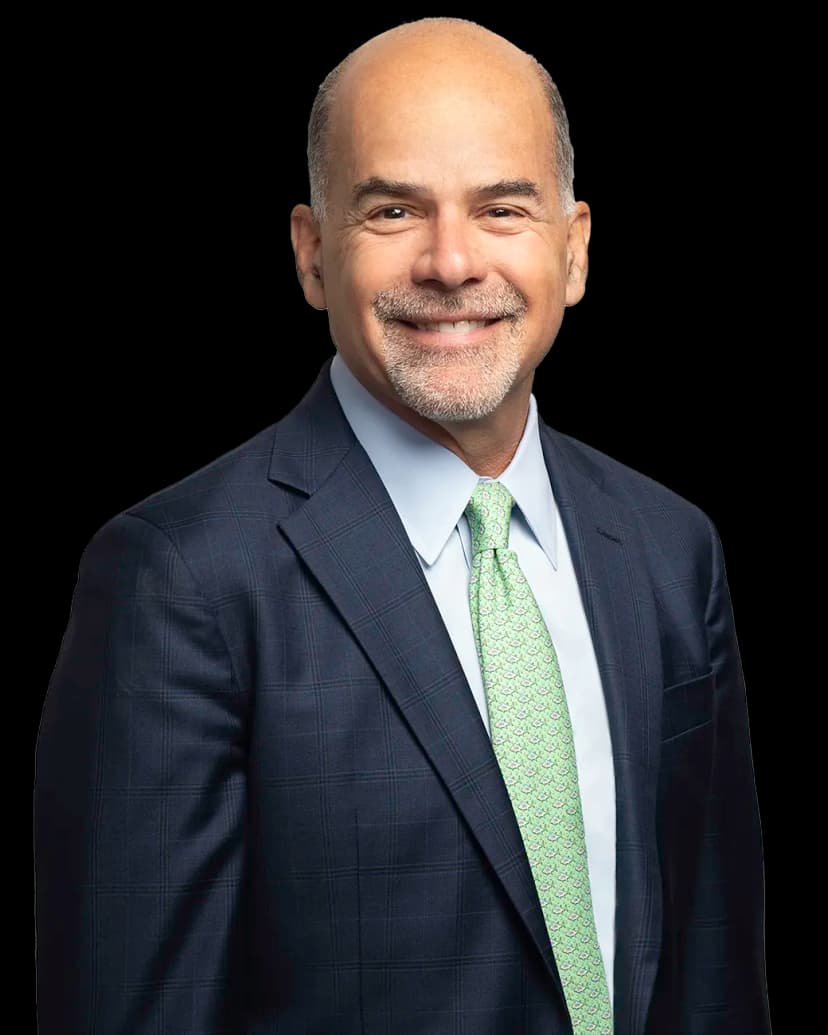
Stephen A. Pike, ICD.D
Partner
Co-head - Canadian ESG Advisory Services Practice


Article
6
On June 12, 2026, the Government of Canada introduced legislation in the House of Commons to strengthen the ban on importing goods produced with forced labour. If Bill C-35, An Act respecting the prohibition of the importation of goods produced by forced labour, becomes law, it would establish a standalone anti-forced labour legislative framework, replacing the current forced labour and child labour import prohibition under the Customs Tariff. Bill C-35 received First Reading on June 12 but was not advanced by the government before the House of Commons rose for the summer recess on June 18, 2026. The House of Commons will not sit again until September 21, 2026.
Given recent and impactful legislative and regulatory actions by the governments of the United States, the UK, the EU, and Australia, Canadian businesses would be well-served to get a head start on the steps to be taken to address the risks of forced labour in their supply chains and business operations.
Canadian businesses that import goods into Canada and/or export goods to the U.S., the UK, Australia, and the EU will soon face a growing range of anti-forced labour legislation and regulation. Supply chain mapping and due diligence are foundational tools that will be needed to address the risks of forced labour and to comply with all of the laws discussed in this article.
The EU Forced Labour Regulation (EUFLR) establishes binding rules prohibiting “economic operators” (e.g. businesses) from placing and/or making available products made “in whole or in part” with forced labour in the EU market. It also prohibits businesses from exporting products made from forced labour from the EU market. “Products” include manufactured products, agricultural products, and extracted products. “Forced Labour” has the meaning set out in Article 2 of the ILO Forced Labour Convention, 1930 (No. 29), and includes forced child labour. The prohibition also applies to state-sponsored forced labour.
The EUFLR creates an “obligation of result.” In other words, it is the responsibility of the economic operators to ensure compliance with a prohibition that is “unconditional and absolute.” Economic operators may be subject to a decision to ban their products if they violate the prohibition.
The prohibition applies to products in respect of which forced labour has been used, in whole or in part, at any stage of the supply chain, regardless of whether the forced labour occurs within or outside the EU.
While the EUFLR does not mandate that businesses must conduct supply chain due diligence, the 74-page Guidelines (Guidelines on the application of Regulation (EU) 2024/3015 on prohibiting products made with forced labour on the Union market) provide detailed and non-binding guidance to businesses on voluntary due diligence in relation to forced labour based on internationally recognized principles and standards such as the OECD Guidelines for Multinational Enterprises on Responsible Business Conduct and the Due Diligence Guidance for Responsible Business Conduct.
The EUFLR requires the European Commission to establish a publicly accessible database that is to provide indicative, non-exhaustive, evidence-based, verifiable, and regularly updated information on forced labour risks in specific geographic areas or with respect to specific products or product groups.
The database shall be based on independent and verifiable information from international organizations, and shall prioritize the identification of widespread and severe forced labour risks. Unlike the provisions of Bill C-35, the database shall not publicly disclose information that names economic operators directly.
Beginning on December 14, 2027, the EUFLR will apply to all products that are placed or made available in the EU market, even if the products or their components were produced or imported into the EU before that date.
The UK government is strengthening the UK Modern Slavery Act (UK MSA), which has been in force since 2015. On June 30, 2026, the UK government introduced a bill that included amendments to the UK MSA. These amendments will impact Canadian businesses and subsidiaries that publish an annual statement under the UK MSA.
The bill includes new mandatory detailed disclosure requirements to be included in modern slavery statements including explanations for why a company is not taking steps to assess or reduce the risk of slavery and human trafficking or does not implement other items which are the subject of disclosure items.
The statement must include a declaration from the individual signing it confirming that it is accurate to the best of their knowledge and belief. It must also be published within six months after the end of the financial year to which the statement relates.
The bill empowers the Secretary of State to impose financial penalties if a reporting entity fails “without reasonable excuse” to comply with a duty imposed by or under Part 5 of the bill. For commercial organizations, the maximum financial penalty will be 1% of its total turnover or £1 million, whichever is higher.
Canadian businesses exporting to the United States should familiarize themselves with new guidance published by the U.S. Customs and Border Protection (CBP).
In June 2026, CBP published its CBP Forced Labor Enforcement Operational Guidance for Importers. This document consolidates guidance on the three legislative authorities—Section 307 of the U.S. Tariff Act of 1930 (19 U.S.C. §1307), the Uyghur Forced Labor Prevention Act (UFLPA), and the Countering America's Adversaries Through Sanctions Act (CAATSA)—and explains the enforcement process CBP uses to prevent the importation of goods produced with forced labour into the U.S.
The 79-page CBP Guidance includes “Best Practices and Lessons for Due Diligence for Importers” to clarify what documentation and evidence CBP expects to be provided by an importer in its efforts to have goods be admitted into the U.S.
For example, the Guidance notes that “if an importer fails to provide information regarding the production of even a single supplier in the importer’s supply chain, this will render the importer’s submission insufficient to allow CBP to reach a determination of admissibility regarding the specific shipment and such shipment will be denied entry into the United States.” The Guidance further explains that “[t]his documentation requirement applies to merchandise detained or seized pursuant to a Withhold Release Order (WRO), Finding, UFLPA, or Countering America’s Adversaries Through Sanctions Act (CAATSA).”
The CBP’s Guidance, particularly its “Best Practices,” and the EU Guidelines should be reviewed by Canadian companies to prepare for heightened global anti-forced labour border enforcement and transparency reporting laws.
Accordingly, Canadian businesses exporting to the U.S., should identify, assess, manage, and mitigate forced labour risks throughout their supply chains. Businesses must be able to demonstrate that imported goods are free of materials produced, wholly or in part, with forced labour. To do so, they should carry out robust due diligence, including supply chain mapping, full transparency and traceability of all inputs, and a comprehensive review of supplier practices at all relevant tiers of the supply chain.
In July 2026, the Australian government proposed a new criminal offence for businesses under the Australia Modern Slavery Act (AuMSA). The offence is constituted by a business failing to prevent the presence of modern slavery in its supply chains. A business may defend itself by proving that it took reasonable steps to identify and prevent modern slavery in its supply chains.
This criminal provision applies to businesses with annual revenue in excess of AUS$100 million. The government will also introduce civil penalties and associated enforcement powers to address a failure to comply with existing obligations under the AuMSA.
The new legislative and regulatory actions by some of Canada’s biggest trading partners that are discussed above will affect Canadian businesses and their subsidiaries that are exporting to and/or carrying on business in those jurisdictions.
Businesses importing goods into Canada should consider how they will comply with Canada’s legislative (Bill C-35) and enforcement efforts to ensure that goods that are produced wholly or in part by forced labour are prohibited from importation.
On July 21, 2026, Canada’s federal government announced consultations to seek stakeholder feedback on the approach, evidence, criteria, and methods for identifying goods suspected of being produced with forced labour. Feedback is also requested on the information importers of listed goods would be required to provide under Bill C-35, as well as possible supply chain due diligence measures that would require Canadian businesses operating abroad to identify, prevent, address, and remediate risks to fundamental labour rights across their operations and supply chains, and civil liability provisions.
For guidance on the steps that your board of directors, compliance, and procurement teams should take to prepare not only for Bill C-35 and the other laws noted above, but also to manage and mitigate the numerous potential risks of forced labour in business operations and supply chains, please contact Stephen Pike at Stephen.Pike@gowlingwlg.com.
NOT LEGAL ADVICE. Information made available on this website in any form is for information purposes only. It is not, and should not be taken as, legal advice. You should not rely on, or take or fail to take any action based upon this information. Never disregard professional legal advice or delay in seeking legal advice because of something you have read on this website. Gowling WLG professionals will be pleased to discuss resolutions to specific legal concerns you may have.





Gowling WLG is an international law firm comprising the members of Gowling WLG International Limited, an English Company Limited by Guarantee, and their respective affiliates. Each member and affiliate is an autonomous and independent entity. Gowling WLG International Limited promotes, facilitates and co-ordinates the activities of its members but does not itself provide services to clients. Our structure is explained in more detail on our Legal Information page.
© 2026 Gowling WLG All rights reserved.