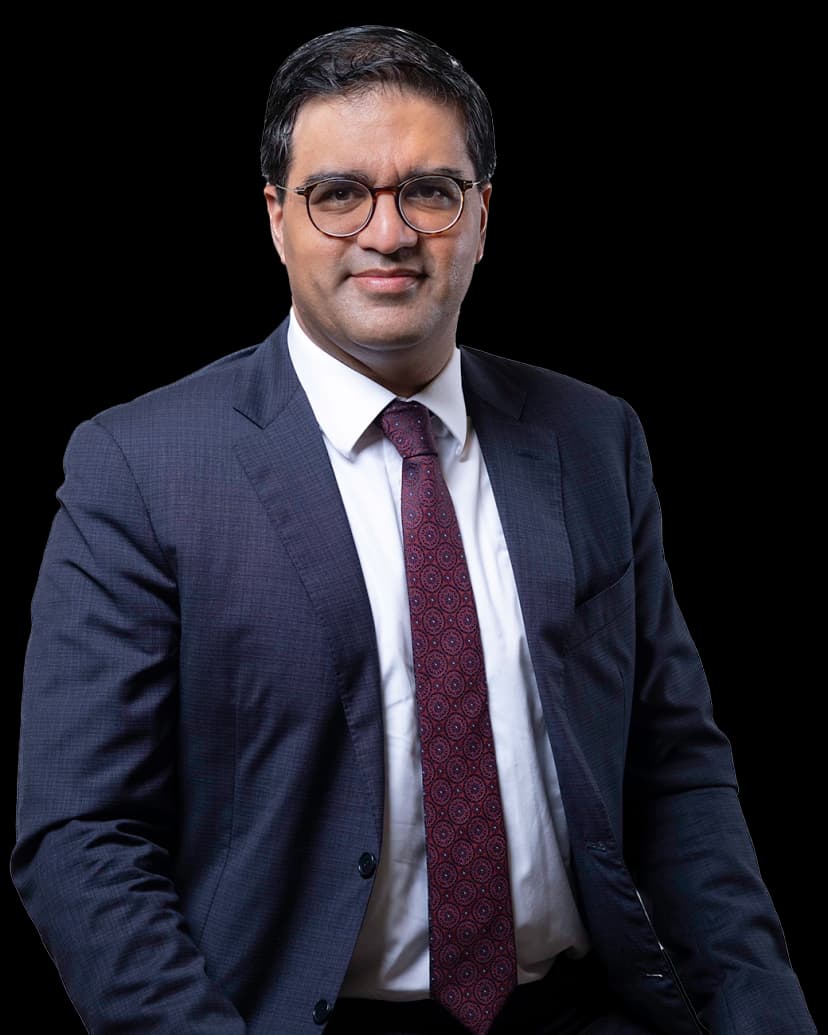
Aarij S. Wasti
Partner
Entertainment & Sport / Brand Protection, Corporate Commercial, Funds and Private M&A


Video
Episode 1
As the world prepares for the FIFA World Cup 2026 across Canada, the U.S., and Mexico, Sideline Conversations takes you beyond the pitch to explore the legal and commercial issues shaping the tournament.
In Episode 1, join Aarij S. Wasti (Gowling WLG, Toronto), Marlon Hill (WSHC+B, Miami), and Juan Carlos Partida (EC Rubio, Mexico City) for an introduction to the series and an early look at the business and legal landscape of the first tri-nation World Cup.
From ticket sales and sponsorship rules to cross-border logistics and fan engagement, the discussion sets the stage for future episodes covering immigration, funding, ambush marketing, and more.
Watch the full conversation below.
MARLON HILL: Hello, everyone. My name is Marlon Hill, attorney with the law firm of Weiss Serota. Welcome to the Sideline Conversations. You're on the sidelines. You are in the stands. You're up into the bleachers. You are in the nosebleeds. But we are talking about the playbook. All the legal and business issues around the World Cup. We are less than 300 days. I think it may even be 287, 288, 286. We are counting down, and we want you to be a part of these sideline conversations.
I'm practicing here in Miami, one of the host nations for the 2026 World Cup, practicing business law with Weiss Serota for over 30 years, now representing entrepreneurs, non-profit organizations, governmental entities in their transactional affairs, brand protection, business, immigration, helping them to achieve their strategies. But this Sideline Conversation can't happen just with one person. You have to have a few guys, a few dudes on the sidelines calling the plays on the pitch. And with me from the other two host nations for 2026, my colleagues, Aarij and Juan Carlos. Welcome to the sideline.
JUAN CARLOS: Thank you.
AARIJ WASTI: Thank you.
MARLON HILL: So Aarij, man, tell me a little bit about what's happening in Toronto, Canada.
AARIJ WASTI: Yeah, look. First of all, Marlon, thanks for bringing this gang together. We've been in touch for a few months now over the summer, and it's been a lot of fun. And I think you rightly identified right at the beginning. The World Cup really is about bringing people together. And it's a phenomenal idea to bring people from the three host countries together. Hopefully we can get more people to join this conversation as we go through.
But yeah, look, I'm starting to finally feel the buzz in Toronto. I think as we approach 250 days to go, we've got tickets starting on sale next Wednesday. You can see the construction around BMO Place or Toronto Stadium, as it'll be called. And people are starting to ask the question, how can I get in? And I think when that conversation starts, it's a straight line to the World Cup.
MARLON HILL: We are definitely going to get to that. But we would love for you to tell us a little bit, how are you connected to the World Cup, Aarij? Tell us a little bit about your practice.
AARIJ WASTI: Yeah, so, look, I'm a partner at Gowling WLG in Toronto. I split my time between Toronto, where I am now, and the Middle East that obviously hosted in Qatar in 2022, where I was for 17 years. I'm focused on building the sports practice at the firm, which includes bidding for, planning for, and operationally supporting major events. Not just in football.
And then there's obviously the brand protection, the ambush marketing, the compliance pieces, the governance pieces around it. And as we know, sports is a sector. And major events really are catalysts for national development. Or in this case, development across the continent. And so anything that has those touch points is what I'm involved with. And I got to say, it's the privilege of a lifetime.
So on a professional front, I was with the Supreme Committee in Qatar for a number of years, helping Qatar plan for-- well, initially bid for and then plan for hosting the World Cup. I moved over to Qatar 2022, which was a FIFA subsidiary in Qatar in 2018, where I worked through the event and into the wrap-up phase, completing the project at the end.
MARLON HILL: So my family is from Jamaica, and I'm here in the United States now for the last 40 plus years. Tell me a little bit about your family.
AARIJ WASTI: Yeah, so I'm a Pakistani background. I was born in Calgary, host of the '86 Olympics many, many years ago. I have been very privileged to have lived in whatever it is now, six countries around the world since then. And I've got two daughters. I tell you, Marlon, the highlight, believe it or not, for me, for the '22 World Cup wasn't the final. It wasn't entering this. It was going to a completed stadium with my daughters, with my wife for the first time.
Because this was my baby. I tell you, the first time I visited these sites, these were just spaces in the desert. They weren't even demarked, right.
MARLON HILL: Yeah.
AARIJ WASTI: And I tell you, it's become very much part of who I am and my family's identity. So much so that when we left Qatar and the World Cup ended, my daughters actually said to me, what are you going to do in life now?
MARLON HILL: We're going to learn a lot more about that, but it's great to have you on the sideline.
AARIJ WASTI: Thank you.
MARLON HILL: We could not negotiate NAFTA without Mexico. So Juan Carlos, tell us a little bit about why historic three nations hosting the World Cup. Tell us a little bit about your background and your connection to the World Cup.
JUAN CARLOS: Yeah, sure. Thank you, Marlon. It's a real pleasure to join you and Aarij in this series of conversations leading up to the greatest sports event in the world, which is the World Cup. There is no larger, bigger, and more exciting event than the World Cup every four years in the world. And well, thank you for having me. My name is Juan Carlos Partida. As you mentioned, I am a Mexican attorney and partner at the law firm of EC Rubio, which have offices in several jurisdictions in Mexico, including Mexico City and Monterrey, which are two of the World Cup host cities in Mexico.
But above all, I am a football fan. And I am a die hard fan of the greatest soccer team in Mexico, which is América. I am a very, very die hard fan of El Tri, our national team.
MARLON HILL: Excellent, excellent. Well, Juan Carlos, it's great to have you here on the sideline. With so many days left, less than a year, excitement is building. Tickets are going to be on sale next week. Volunteers are starting to be recruiting. These Sideline Conversations for us, we want you to join us on the journey. We're going to be delving behind the scenes around the game, outside the stadium, out in the different host cities, what happens in the business in and around the World Cup every four years. This is part of the Sideline Conversations. We want you to join us.
But all of us have a first World Cup experience. Mine was 1982, Espana. I remember it like yesterday. But I also remember that period because growing up playing football-- football, as we call it, soccer in America. But in 1986, my coach went to a trip to Mexico, and unfortunately, they died in a bus accident in Mexico City. And I remember to this day, both coaches were part of my high school. So 1982 to 1986, joyful memories and also some hard memories as well.
But we all loved football. They were there in Mexico City, too, to represent the Jamaican Football Federation. And Dennis Zadie, Jackie Bell, I want to lift you up. We're going back to Mexico City to celebrate you. Hopefully your team, Jamaica, can make it. Aarij, what is your first World Cup experience?
AARIJ WASTI: My first World Cup experience actually was on TV. Because of course, I grew up, part of my childhood in Calgary. And Calgary was at that time barely had soccer in schools. And I remember accidentally turning on the TV one afternoon. I remember this vividly. And there was soccer on TV, and it was the World Cup. And the thing that still resonates with me was just the crowds. This diversity. Right, a sea of just people. And Marlon, believe it or not, that was 1986.
I think whatever match that was, from 1986 till today, I have watched all but 27 matches on TV live. And the 27 that I have not watched on TV, I've been privileged to have attended in Russia, in Brazil, and in Qatar.
MARLON HILL: That's a privilege. That's a real privilege.
AARIJ WASTI: It is. 100%.
MARLON HILL: What about you, Juan Carlos? What was your first World Cup experience?
JUAN CARLOS: Well, I was a six-year-old kid watching games with my dad and my grandfather. They were also great soccer fans. And we were watching the 1978 Argentina World Cup. Mexico was really hopeful that the Mexican team was going to do really well on that World Cup. And there was a saying that we were playing Germany, Poland, and Tunisia. So everybody would say Mexico is going to lose with Germany. That's a given. Then we're going to tie with Poland, and we're going to beat Tunisia.
Well, it turns out that Mexico lost all three games. 3-1, 3-1 against Poland, Tunisia, and 6-0 to Germany. So it was not a very happy memory. But then came Spain, 1982. And Mexico didn't go to that World Cup. It was a great World Cup watching Zico playing for Brazil at that World Cup. Michel Platini for France. But then it came 1986, Mexico City, again in Mexico as a host country.
And living close to Mexico City, it was awesome. I mean, everybody was involved in the World Cup, I remember. Advertisement began two years or three years before the World Cup. And that team of the Mexican team did really well in that World Cup. So everybody got excited. And as a 14-year-old, I mean, obviously playing soccer every day at school or football every day at school, we love that World Cup. Because people would go to the stadium in Mexico City or Puebla or Guadalajara. There were games. There were two stadiums in Mexico City hosting games, so it was definitely a blast. So I think Mexico 1986 is the one that I really, really remember the best, as there--
MARLON HILL: There's something so special about this tournament, this game every four years. It's just something that builds up into you. The build up and the passion and the excitement. But you know what? This is the first time three nations are going to be hosting. 48 teams and four matches over 35, 37 days between our three nations. What's going to be different about this, Aarij?
AARIJ WASTI: Oh, man, Marlon. I don't know where to begin. I think just the sheer geography is so daunting. I know coaches will be looking very carefully at how the scheduling pans out in the final draw. No, I think the distance-- the furthest two host cities are Vancouver and Miami, where you are, Marlon. 2,800 miles.
MARLON HILL: Yeah.
AARIJ WASTI: Right? And this came up, I think, in the last NHL playoffs, where Florida was playing Edmonton. And the thing is, where you got connectivity, a lot of those services are taken up by team charters. And when it comes to the remaining groups like fans, it's a heck of a journey. So I think, look, I think the geography is a challenge.
MARLON HILL: Yeah.
AARIJ WASTI: I think the coordination clearly is going to be a challenge. I think, look, we've got three independent countries. Sovereign nations have independent policies, including foreign policies. And immigration policies. We talk about accessibility, I guess, in the US context, but then also mobility during the tournament. I think that's going to be an interesting one to watch.
MARLON HILL: Yeah, no, I was going to ask Juan Carlos, with Mexico having three host cities, what are you hearing? This is not 1986. So Mexico has the opportunity to be a part of this historic moment. What do you think is going to be different this time around for the Tres Colores?
JUAN CARLOS: Well, the very first thing I can tell you, the first thing that it's outstanding is that El Estadio Azteca, our national stadium in Mexico City, it's going to be the host stadium three times of a World Cup, first of all. It's going to host the inaugural game for three times over three different World Cups. So that's very outstanding. I think certainly logistics and cooperation is going to be something that needs to happen.
There's not going to be a lot of difficulty traveling within Mexico. I think the problem is going to be traveling among the three countries. And one of the greatest challenges, I think, is that fans will need to know that there are different rules, different legislations, and different regulations, especially for immigration in each of the three countries. So there has to be a lot of communication by the three governments and also by FIFA with the fans to let them know that it's not the same coming into Mexico or going to the US or going to Canada. So--
MARLON HILL: Yeah.
JUAN CARLOS: I think that's part of the mobility challenges that we're going to face. Within Mexico, I think that's not going to be a lot of problem. Airlines are opening new routes especially or special just for the World Cup. So I think it's going to be fine within Mexico only hosting a few games in three different cities. So I guess the real challenge is going to be traveling to and from the three countries.
MARLON HILL: Aarij, the hosting and managing the world's largest sporting event comes with so many tentacles on a business side, on the legal side. Here on the sideline with these Sideline Conversations, there's just so much to talk about. So little time in the game, unless you want a red card or a yellow card, right? So--
AARIJ WASTI: I was actually going to give you a yellow card for calling it soccer. And I know Juan Carlos almost did it, but we'll leave that aside. That was a slip of the tongue. But, Marlon, you're on a yellow.
MARLON HILL: Hey, I'm on jurisdiction in the United States, so I get a pass. I get a pass, my ref. But listen, over the next few months, we're going to be jumping into these Sideline Conversations, talking about a number of different issues behind the scenes of this tournament. Talk to us a little bit about some of the things that are-- people that follow the game may not be paying attention to as a business owner, or even as a manager of a sponsor. Or you're a football federation. You are a vendor. What are some of the issues that we're going to be talking about here on the sideline?
AARIJ WASTI: Yeah, look, I think the key things really all come down to, and I think Juan Carlos alluded to this earlier, is communication and preparation. So all of these stakeholder groups, right, from businesses, to suppliers, to sponsors, to businesses that aren't directly involved with the hosting of the World Cup or the operations but are in these host cities or host countries, I think it's all about preparation, ensuring you've got access to the right information.
This could be through your Chamber of Commerce. It could be through the official LOC portals or websites. And not to forget, of course, from a brand protection perspective, understanding FIFA's rules and regulations around marketing. And then, really, it's about the do's and don'ts of doing business in a context like this, right. And I think if you've got that early preparation and you've got access to the right information, you can plan out, depending on where you are, a relatively seamless, profitable, and successful business venture.
Where I've seen in the past businesses really trip themselves up is just not understanding the basics of it, right. And on the IPC side, you'll see that a lot. Look, there are cases where people are going to infringe on purpose. We understand that happens. And then there's the smarter ambush sort of stuff where you're coming close, but you're not crossing the line. That's fine. But I'm just talking about just silly, silly mistakes that are almost inviting a cease and desist or an action by the regulator.
So, yeah, look, I think as we get closer to the tournament, it's going to give us an opportunity to have these conversations. I think it'll be great to delve into, in all three countries, what's cropping up. What are people noticing? Is there a gap? And what I'd be really curious to see is, where is there actually a gap in information? Right?
MARLON HILL: Right.
AARIJ WASTI: And then, is anybody proactively managing that from the stakeholder side?
MARLON HILL: Is there a gap in the-- is there a gap in the wall for the free kick for you to get it in the top corner? Where's that? Where's that little gap? Juan Carlos, what about from your end in Mexico? What are you going to be looking at in terms of some of the issues as we-- over the next hundreds of days and weeks leading up to this magnificent summer of 2026, what are some of the issues that you're looking to discuss here on the sideline.
JUAN CARLOS: Well, I think we need to understand also how the current Mexico government administration works and what their purpose is with these advertising the World Cup in Mexico for the Mexican population. This government is a government that likes to make all its political base happy. And they're even talking about trying to put giant screens all over the place, all over at least Mexico City or in the major cities. And they need to understand how FIFA works, and I think they do.
And today, precisely this morning, our president, Claudia Sheinbaum, she was talking about that. And she was really careful at saying, well, this is our purpose, but we need to talk to FIFA.
MARLON HILL: Absolutely.
JUAN CARLOS: Because we need to coordinate with them. And especially because there's going to be a lot of businesses around these giant places where they want to put the screens that have to abide with FIFA rules. So there's going to be a lot of issues like this coming up in the next few months.
MARLON HILL: Wait, no, listen, we're approaching a little bit of extra time here. I don't want another yellow card from the referee, Aarij, from Pakistan. And I want to be on my best behavior. But listen, we're going to be talking about these geopolitical issues. We're going to be talking about these ambush marketing issues. We're going to be talking about immigration. We're going to be talking about the challenges with the funding versus public money versus private money.
We're going to be talking about issues related to getting special permits for sponsor activations. Right here on the sideline over the next few months, we want you to join us here. But before you join us for the next episode, folks are asking us, Aarij, you've been in this. Where can I get my tickets? How can I get my tickets? What is the tea, Aarij?
AARIJ WASTI: Yeah, look, once people start asking that question, it's time to either go on vacation or hide under your desk. Because there is no end to that story, right. But look, the good news, I think, over the last few cycles is that FIFA ticketing has a fairly easy to navigate and understandable system. And they have an in-house ticketing system. They've announced just a couple of days ago. You would have seen the breaking news on ESPN and The Athletic of the New York Times in terms of the process and the pricing.
As well as the dynamic concept, right, that what FIFA's saying is, look, we'll look at what demand looks like as we go through these various sales phases. So I think step one is for people to pre-register their interest on the FIFA portal. Prior to Wednesday, there'll be a notification through FIFA saying, hey, look, this is coming up. You're going to have to log in. And these are the instructions.
MARLON HILL: And that's September 10.
AARIJ WASTI: And that's September 10. In this case, it's not a first come, first serve. So we don't need to worry about getting in a virtual queue. But it will be a lottery. So what you'll need to do effectively, and this is the key here, you've got to have access to a Visa credit card. Because of course--
MARLON HILL: Should I sign up for one?
AARIJ WASTI: If you don't have a Visa card, then you're going to have to borrow Juan Carlos' card, because I don't have enough credit limit. Or you go out. And I remember in Brazil, they would actually issue prepaid cards. So it wasn't quite a credit card, but it did the trick.
MARLON HILL: Right.
AARIJ WASTI: So Visa has obviously, as a sponsor, paid good money for this. So they paid for the exclusive rights. The Visa card requirement will not apply in future rounds. Just so we're clear. And once you've put in your interest, you'll be allowed to, I believe, sign up for up to 40 tickets, four tickets per match, 10 matches. You'll get a right to them if you're selected. It is a random selection draw in the truest sense. I can tell you, having worked on that side of the business, one of the big four auditors will run the process. And probably the success rate will be one in eight. So not terrible chances.
MARLON HILL: How does this dynamic pricing work?
AARIJ WASTI: Well, look, the dynamic pricing in theory-- and Juan Carlos, I don't know if you read it differently. But basically, the idea, I think, is to say, hey, look, we're going to have four categories of tickets. This is non-hospitality, of course. We're going to start cat four. So the furthest, if you will, category of tickets from a view perspective, at $60 US. So 82 Canadian. And through the rounds, it'll go up. I don't want to mention really the number on the upper side, because that sets a ceiling, but we're talking about in excess of $15,000 for one seat at the final. Probably not cat four.
And look, we saw this in Qatar as well. They're going to be for whatever reason. Now, in this World Cup, we've just talked about immigration challenges, accessibility challenges. Right, the weather's going to play a role. I mean, Southern California gets hot in the summer, as does Miami. And so, where FIFA sees that demand is a little bit lower. In theory, what they're saying is they can adjust prices downwards. On the other hand, where they see more demand, prices go up.
Now, at the same time, they've also said that secondary ticket sales will be permissible, from what I understand, and that there will not be a cap or an upper limit on that secondary resale. So I don't know. For me, dynamic becomes, theoretically--
MARLON HILL: We'll see if the good old Mexican entrepreneurial spirit comes into play, Juan Carlos. But hopefully everyone here on the sideline, make sure you go to fifa.com/tickets.. You got to have a lotto ticket to win the powerball. So shoot your shot. Shoot your shot.
Listen, I want to thank both of you. We're just getting started, really, on this journey with each other for the next few months here on the sideline. My colleague, Aarij Wasti, coming to you from Toronto, Canada, the Gowling WLG Law Firm. He is there with his posters in the background. Look at that. He's been to every World Cup. The guy is just-- take a look. Take a look.
Juan Carlos Partida, from our friends in EC Rubio in Mexico City. La ciudad de Mexico. He's wearing his tres colores. They have already qualified, Canada has already qualified. And Los Estados Unidos, we have already qualified as well. Join us here on the sideline. We're going to be just peeling away the layers of the legal and business issues here on the sideline over the next few months. We want you to join us in the conversation. Drop your comments in the chat when you see us. Post it. And we look forward to seeing you on the sideline next time. Thank you for joining us.
JUAN CARLOS: Thank you, Marlon.
AARIJ WASTI: Thank you so much, guys. Look forward to the next one.
NOT LEGAL ADVICE. Information made available on this website in any form is for information purposes only. It is not, and should not be taken as, legal advice. You should not rely on, or take or fail to take any action based upon this information. Never disregard professional legal advice or delay in seeking legal advice because of something you have read on this website. Gowling WLG professionals will be pleased to discuss resolutions to specific legal concerns you may have.





Gowling WLG is an international law firm comprising the members of Gowling WLG International Limited, an English Company Limited by Guarantee, and their respective affiliates. Each member and affiliate is an autonomous and independent entity. Gowling WLG International Limited promotes, facilitates and co-ordinates the activities of its members but does not itself provide services to clients. Our structure is explained in more detail on our Legal Information page.
© 2026 Gowling WLG All rights reserved.