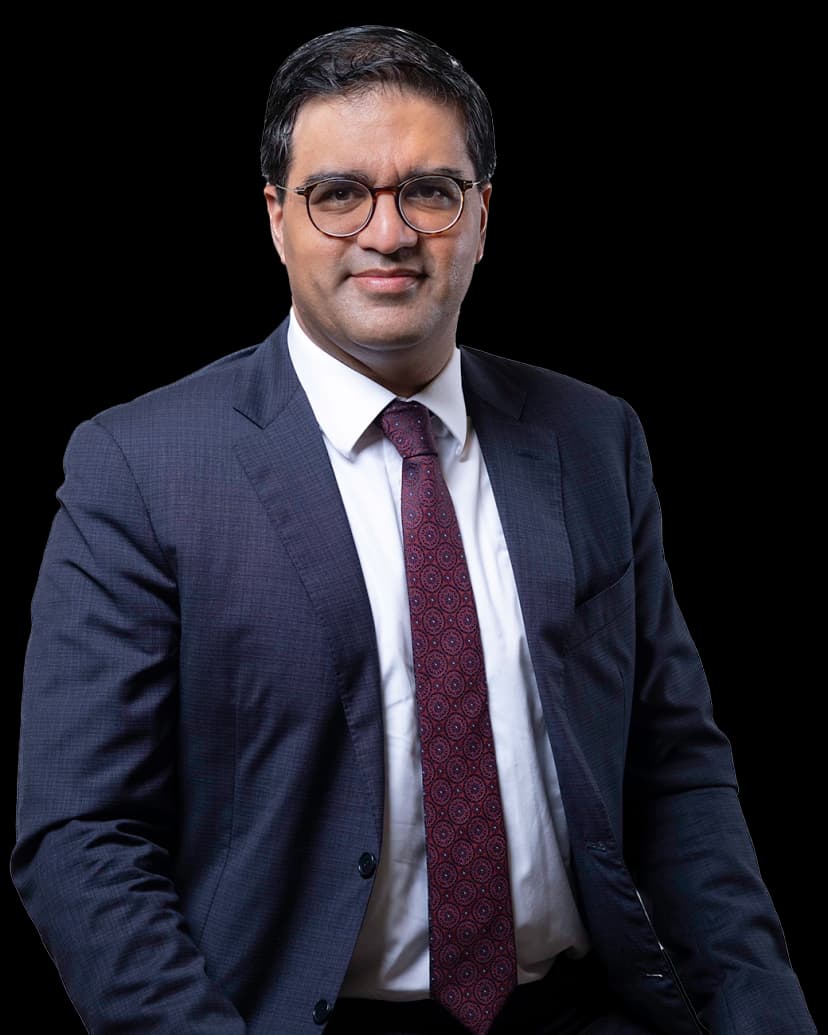
Aarij S. Wasti
Partner
Entertainment & Sport / Brand Protection, Corporate Commercial, Funds and Private M&A


Video
Episode 2
As the world prepares for the FIFA World Cup 2026 across Canada, the U.S., and Mexico, Sideline Conversations takes you beyond the pitch to explore the legal and commercial issues shaping the tournament. Hosted by Aarij S. Wasti (Gowling WLG, Toronto), Marlon Hill (WSHC+B, Miami), and Juan Carlos Partida (EC Rubio, Mexico City), your cross-border legal guides to the world's biggest sporting event.
In Episode 2, they discuss tiered categories, clean enforcement, how FIFA protects its partners, and ultimately, what non-sponsors can and can't do to participate.
Watch the full conversation below.
MARLON HILL: Welcome back again to the Sideline Conversations. This is attorney Marlon Hill from Weiss Serota coming to you from the United States of America. Some people are calling me clutch. I don't know. I think I'm clutch on a daily basis, anyway. But here we are to talk about the legal and business issues behind the scenes of the FIFA World Cup 2026.
I have my good friends coming to me from the 6, the Northern Lights. Some people know him as "Maple," Aarij Wasti from Gowling WLG. How are you doing, my friend.
AARIJ WASTI: Well, I'm enjoying the Northern Lights. I'm enjoying being a Moose again in life. It's a great feeling. And like I said, it's always good to get together with you, clutch.
MARLON HILL: Man, and we're trying to renegotiate some NAFTA deal. We got to call our friend Zayu. How are you doing, my man? [NON-ENGLISH SPEECH]
JUAN CARLOS PARTIDA: [NON-ENGLISH SPEECH] Thank you. Thank you very much and thanks for having me again here. It's a pleasure and excited. I mean, the World Cup is coming. There's a lot of events now happening. The ball is coming out, the official ball. So I'm excited. Thank you.
MARLON HILL: Yeah, the ball is coming out with Zayu, Juan Carlos Partida from EC Rubio in La Ciudad de Mexico. Thank you for joining us here on the Sideline. What's happening? We have the mascots came out this past week. We have less than 250-plus days, I think, until the start of the World Cup next summer. We have the tickets that are rolling out.
I don't know, guys. Have you received any emails in spam about being a visa ticket holder, Aarij?
AARIJ WASTI: No, I think it takes a little bit longer for that stuff to get to up North where we are. So I haven't seen anything. I don't know, Juan Carlos, anything on your side down South?
JUAN CARLOS PARTIDA: It takes longer to get down South, so.
AARIJ WASTI: Oh, OK.
JUAN CARLOS PARTIDA: Yeah.
AARIJ WASTI: OK. OK nothing on your end.
JUAN CARLOS PARTIDA: Well, listen--
AARIJ WASTI: It must be you, Clutch. I mean, you must have gotten something.
MARLON HILL: I haven't gotten anything, man. I may be an eagle, but I can't see anything in my spam. I've searched. I've searched each-- I refresh my email each time, and I see the little thing circling. Nothing is happening. And then those ticket prices, man, I don't know.
Our good friends at the athletic seem to be providing us some inside information art. Is that Secret Service information?
AARIJ WASTI: Look, I don't know. I think let's just keep in mind it's meant to be dynamic. So before we jump all over this and get too excited, I think it's a starting point. We always said it could go up. But it could also go down. I think given that we haven't received anything individually, I think let's wait to see what happens now with phase II. So phase II registration starts, I believe, on the 27th of October that week.
There'll be tickets again on a lottery basis that will be available for purchase, I believe November, December. And then of course, the final draw 5 of December. And then it's first come first serve. And I think that's when the dynamic pricing will kick in. And we'll have a better idea of how much it will cost to go to the games that we want to go to in the cities we want to attend.
MARLON HILL: Well, for anyone listening, my email address is mhill@wsh-law.com. Christmas is coming. You know what to do. You know exactly what to do. Help a clutch out. Help Maple out and Zayu out. You saw the characters. So I'm an eagle. You are a moose. Zayu is a jaguar. What do you guys think of the characters, given the history of mascots in our beautiful game?
JUAN CARLOS PARTIDA: Well, on my part, I think we in Mexico, we like it. We like the most is the fact that the Mexican mascot is a jaguar. It's an endemic and sacred animal for several cultures in Mexico. So it looks good. I think it was wise not to overuse other symbols of Mexico in the past. So this is something fresh, something new.
The only downside is that it has drawn some comparison to a mascot of a professional football team down in Chiapas. But overall, I think it's a good choice by FIFA to select a jaguar as a mascot.
MARLON HILL: And Zayu is a striker. Interesting as a striker. Moose is a goalkeeper. Aarij, you're a goalkeeper, man.
AARIJ WASTI: Hey, look, when I played football back in law school, I was a goalkeeper. So it works for me.
MARLON HILL: OK.
AARIJ WASTI: Yeah. And look, I'm going to stay on the positive side of things. I think, look, there are those that say, yeah, the moose is playing to a stereotype. Hey, why not? Look, this whole thing is to keep us young. It's to have some fun.
I think having a moose amongst the fray is in good spirit. And I think overall people aren't too offended. By the way, on that note, statistically British Columbia has more eagles than the United States. Just saying. We could have well had the eagle as well. So--
JUAN CARLOS PARTIDA: Well, Mexico's national symbol is an eagle.
AARIJ WASTI: Well, there you go. So you know what, Clutch? Yeah. You borrowed from us.
MARLON HILL: Hey, man, we're North America. We're hermanos y hermanas.
JUAN CARLOS PARTIDA: Yeah.
AARIJ WASTI: That's right.
MARLON HILL: We're all one family for the World Cup. It's great. But listen, the video games are coming out. Maybe our nieces and nephews and our kids and are going to be having some fun with Zayu, Moose and Clutch. I'm sure there's going to be some great sponsors right around the video games.
So what we really want to talk about on this episode on the Sideline, we want you to join us here on the Sideline Conversations. Every big event, just like the World Cup, has to be funded by someone, governments, we buy tickets. We are funding the game and then you have the sponsors, the fuel behind the World Cup.
Tell us a little bit about the history, a little bit about the history of FIFA and sponsorships and how the beautiful game has been sustained with the support of private corporate sponsors over the years?
AARIJ WASTI: Yeah look, these relationships between FIFA and the corporate world go back decades now, right. I mean, let's take a look at Coca-Cola as an example. I think its first partnership agreement with FIFA was way back in 1974. They became an official sponsor a couple of years later in 1978. And that relationship is really symbiotic.
Coca-Cola as a corporation has its values. FIFA's got its values. The reason I use the word partnership is they bring those values together, they find where there's overlap and they work to further those values. And one of those common values, and that you find that across FIFA sponsorship is the development or the use of the World Cup, for example, which is on a global platform to further the development of the game at a grassroots stage and to expand the game in terms of footprint. And, of course, look, with the expanded format. And we won't talk about it, but there's a proposal, obviously, for further expansion as we get closer to 2030.
And you might balk at that and say, well, when is too much, way too much. But look, at the end of the day, the World Cup is about providing a global platform for the game across all nations equally. So I think that's a little bit of background.
And then that has now evolved into a very sophisticated and structured hierarchy, where you've got FIFA partners and sponsors at a global level, global, you've got tournament sponsors. And then, of course, particularly for this World Cup, where it's such a massive, massive geographical space, you've also got regional sponsors that present host country and activation opportunities. Marlon, you would have seen in Miami with the Yellow C. There's local sponsorship opportunities including around boxes and hospitality within the stadium. So--
MARLON HILL: Who develops those tiers? Who develops those tiers and monetizes them? How--
AARIJ WASTI: FIFA does. I mean, at the end of the day, look, this is a FIFA tournament. This is a FIFA asset. Like I said, based on FIFA's values, they roll out propositions for companies to tender for. And barring a couple of examples, there's always been tremendous take up in interest. And like you said that's the fuel that feeds the fire. It's the money that funds this massive, massive beast of a tournament. And it's what drives this forward.
MARLON HILL: Juan Carlos, when you think of looking at these sponsorship contracts and some of the clauses and provisions that are there, one of the main ones is exclusivity. Locking out anyone out of a particular category. What are your thoughts on exclusivity in sponsorship contracts similar to the ones that maybe a Coca-Cola may have or Visa may have, or some of the other major sponsors. You see their logos at the FIFA website. What are you looking for in some of those agreements?
JUAN CARLOS PARTIDA: Well, basically, I mean, you have to define first what's the meaning of exclusive rights, right. And that means that one trademark is legally registered and its owner is the only one that can use it. It's like having a unique key to a name, a logo, or a symbol that represents only your business. In the case of FIFA, FIFA registers names, logos, slogans, and even symbols related to the World Cup, such as the images of the trophies or in this case, the official mascots that were launched last week.
So in this case, the agreements of exclusive rights to use the names, logos and anything that is registered by FIFA for World Cup provides these exclusive right licensees to use these names and to protect their investment. I mean, we have to remember that these guys invest not only millions, but sometimes billions of dollars in--
AARIJ WASTI: And I think critically, not just money. But they're putting their reputation on the line. And I think that underpins a lot of-- that's why I go back to the values.
JUAN CARLOS PARTIDA: Yeah, and FIFA wants to protect that. I mean, they know that without these billion-dollar investments, they couldn't be as successful as they are reaching out to regions or countries that otherwise would not be available for FIFA reach. So in the agreements, they really have to be really clear as to the way they're going to enforce the rights of these sponsors during the event.
MARLON HILL: Yeah. So Aarij, like in previous World Cups, the FIFA has a subsidiary for each host nation or host nations in this particular. So then those IP rights trickle down to the local organizing committees, the host committees in the 16 cities. Give us a sense as to a host single nation into three nations now, what becomes more complex in enforcing these sponsorship rights in-- what do you-- three ronda? Three ronda. In a three ronda hosting for 2026.
When you think about how the sponsorship is now magnified, tell us a little bit about your thoughts on that.
AARIJ WASTI: Yeah. Look, I think the more layers you add, the more complex it gets when you go back to that hierarchy, right. So we talk about the FIFA partners, the highest level of sponsorship that we're most of the enforcement action, where exclusivity really matters because the sponsors have invested in that. So those are the brands that you mentioned earlier. The Adidas, the Coca-Cola's Hyundai, Kia's, the Aramco's, the Qatar Airways, Visa, Lenovo, et cetera.
When you then have that kind of tier at a global level across multiple FIFA tournaments that have the most-- let's call it platinum-level protection. And then you superimpose those against the next level, which is the second-tier sponsorship, which is tournament specific. So in this case, and there's been a tremendous amount of interest, like you said, because it's across the three countries McDonald's, AB InBev, Hisense, Bank of America, Lay's, Verizon, Mengniu, I mean, the list goes on.
And then to take that global level and then tournament level and then add to that third layer of regional supporters, I think gets super, super complex because when you talk about exclusivity, you've got to define what is it that covers.
MARLON HILL: Yeah.
AARIJ WASTI: Does that compete at any level with another sponsor?
MARLON HILL: So if it's Coca-Cola-- let's say it's Coca-Cola, Aarij, right? What categories of products fall under the Coca-Cola brand? Does it include all of Coca-Cola's products or does--
AARIJ WASTI: I think not. Because I mean, Coca-Cola is a mammoth organization. And they don't just produce one beverage or two beverages that we're familiar with. So I think you're right. They're very specific in terms of the product, the brands that they are sponsoring with. And what is then open game for other sponsors to get involved.
MARLON HILL: So Juan Carlos, tell us a little bit about you are a big sponsor. Your company is headquartered in Mexico City. You put down billions of dollars. What are you expecting from FIFA and its infrastructure of it and its administration and operations to protect your investment?
JUAN CARLOS PARTIDA: Well, first of all, it's enforcement. And the way that FIFA enforces this sponsorship rights is by even when a country bids for World Cup, it signs an agreement with FIFA promising that it will create and enforce certain even clean zones within the tournament.
MARLON HILL: What is a clean zone? What is a clean zone, Zayu?
JUAN CARLOS PARTIDA: Yeah, well, a clean zone is also called an exclusive or exclusion zone, which is an area established around official venues of the World Cup event such as stadiums, fan zones, even training grounds of the teams, where only authorized sponsors, licensees and partners of FIFA can advertise, sell or promote products. For example, around the stadiums on a match day, you won't see random billboards or street vendors or rival brands at around that stadiums. Only FIFA official sponsors would be allowed.
They usually cover the stadium perimeter and surrounding public areas, often extending it to several hundred meters around the stadium. So it's a very complex way to enforce that. But those are the clean zones. First, as a sponsor, I would make sure that clean zones are really enforced. Second, and we have seen it in the past, FIFA would require the host countries to enact special protection laws, IP protection laws for the tournament.
For example, in South Africa to 2010, South Africa enacted the 2010 FIFA World Cup special measures Act. In Brazil, 2014, the general World Cup law and similar laws in Russia and Qatar. So I would expect as a CEO of an official sponsor for FIFA to actually request or require from the government or the state officials to enact these laws, special laws, in order to protect my brand during and around the event.
MARLON HILL: So Aarij, this is a billion-person event, global event, the largest in the world. Everyone wants to grow their companies. They want to-- and if they're locked out of a particular category because of an exclusive sponsorship, you're thinking, how can I be creative about reaching the fans and reaching the market, both in Canada, United States and Mexico. So if you're a company and they come to you, Aarij, asking you, how can I be a part of this event? Where can they first go and just learn which sponsors are locked in with FIFA and what the guidelines are? Where should they start?
AARIJ WASTI: Yeah, look, I think the FIFA website again, like we talked about last time, has a tremendous amount of resource information. The FIFA brand guidelines are there. One of the pillars of FIFA's brand protection program is education and dissemination of information to the public, including for small businesses. And so I think familiarity, again, as we discussed last time, they're talking to the local chambers of commerce, talking to the local organizing committees in each of the 16 cities. It will give you, at a minimum, an understanding of two things, who's currently sponsoring and what are some of the no-go areas so that you don't cross the line.
And secondly, what are and don'ts of marketing around this tournament because look, I think to cut to the crux of your question, just because you're not a partner globally or a tournament supporter or even a regional supporter, doesn't mean that you can't market around the tournament. You've just got to stay on side.
MARLON HILL: So, hey, here are the sidelines. Sometimes the coaches and the managers misbehave, Aarij. And if you do misbehave, you can be ejected from the stadium. How do you know that you're about to be ejected in this context of the world of sponsorships and clean zones? You're about to be evicted by the local law enforcement officials. What typically happens?
AARIJ WASTI: Yeah look, I think it just depends on what kind of infringement and where you are. But, look, I don't think FIFA is in the business of just creeping up behind you, tapping in the arm and then saying, ha, we got you. Yeah, exactly. look, at the end of the day, the foundation of the brand protection program is around commercial right. At the end of the day, it's business.
So often FIFA's got a pretty robust, let's call it, enforcement program where they're constantly scanning the market or relevant markets for infringement. If they believe that there is potential infringement or actual infringement ongoing, they'll reach out, they'll make communication, and they'll have a conversation and explain why a particular activity may potentially or may in fact be infringing.
I think by the time you get to a point where there is a raid or there is confiscation or there is, any of those more extreme measures, chances are that isn't the first hint or indication that there may be an action.
MARLON HILL: Yeah, go ahead. Go on.
JUAN CARLOS PARTIDA: I was going to say, and I completely agree with you, but then you have the extreme manners in which other companies would like to take advantage of the event, which would be ambush marketing, for example.
MARLON HILL: Yeah. What are some of those things that we can or cannot do without getting a yellow card or a red card, Aarij? If you are a company that wants to be creative, stepping up to the sideline without stepping onto the field and getting pulled off by the security?
AARIJ WASTI: Look, I think the do not's are pretty simple. Like, if you go again through the brand protection guidelines, again, that are public, it's all about just don't associate with the tournament or FIFA using tournament IP or tournament assets. So Juan Carlos listed some of them. The trophy is synonymous with the tournament. The ball that's issued later. The Trionda will be a tournament asset. The mascots are tournament asset.
The minute that you start to use those in your own advertising, you've now associated with the tournament. And without having paid for that association, you've crossed the line. You're then subject to a yellow or potentially a red card.
MARLON HILL: By the way, Aarij, the Sideline Conversation is not an official chat endorsed by the local organizing committee or FIFA. We are just three legal friends from North America having a conversation on the sidelines. The year happens to be '26. It happens to be in La Ciudad de Mexico, Miami, Toronto, and it's around this game that we love.
But for the record, scrolling across the screen, there's no affiliation.
AARIJ WASTI: Yeah, absolutely. And look, your beautifully designed t-shirt is a great example of that. Nowhere do you have the mention of FIFA. Nowhere do you have the tournament logo. Nowhere there do you have the World Cup trophy. You've got a number, you've got three flags and you've got a guy kicking a ball in green boots.
So I think that is a fantastic example, if I may.
MARLON HILL: And as long as we're not selling any, advertising or promoting the fact that we are commercializing this conversation on behalf of FIFA or the World Cup 2026 and any of the materials behind the scenes, that is also important.
AARIJ WASTI: That's right. Yeah, 100%. To complete the answer to your question in terms of what you can then do, it's exactly what we just said. As long as you're not crossing the line, by all means advertise, promote your brand as long as you're not in that clean zone that JC beautifully articulated, do business, do business as you've normally done or that you aspire to do, but just don't misrepresent to the public that you've got an association. I think for me, that's the bottom line.
MARLON HILL: Excellent. Aarij, you've been to several World Cups. Have you ever seen any companies that are not partners or not sponsors do something creative that you go, man, I wish I thought of that?
AARIJ WASTI: Oh, at the tournament itself, I mean, I've seen examples--
MARLON HILL: Or in a clean zone or around a fan fest or, yeah. Have you ever seen a company that has come up to the line, not crossed it or even if they crossed it, they pivoted or?
AARIJ WASTI: The one that it wasn't live in the venue, but it was really around the 2014 World Cup. I don't know if you guys remember, but Neymar, of course, playing the World Cup at home. The Beats by Dre, the headphones with his touching just absolutely gorgeously designed advert for TV, where he's in the dressing room. He's getting in the zone to focus and he's got the Dre's on.
And they didn't use tournament IP. They didn't talk about the World Cup. They just showed Neymar sitting in the dressing room with and a lot of people globally just assumed hey, this must be it. But I don't think any of the FIFA sponsors or FIFA itself could take action against Beats because there was no association. There was no association. If there was association, it was actually in the viewers minds.
And I think that was a beautiful way of-- Nike has done this as well with footwear. It's about getting close, getting personal, getting the attention of the viewers and then leaving it to their imagination. And I think that's how you do this without crossing.
MARLON HILL: Zayu, you look like you wanted to score a goal. Go ahead.
JUAN CARLOS PARTIDA: I think more than the comment I would like to ask both of you whether the ambush much marketing like the case of the Barbarian girls incident in--
AARIJ WASTI: 2010.
JUAN CARLOS PARTIDA: South Africa 2010.
AARIJ WASTI: Yeah--
JUAN CARLOS PARTIDA: Is something like is crossing the line or not. Because these ladies, these girls were only dressed-- by the way, it happened during a game between the Netherlands and Denmark in South Africa in Johannesburg, where a group of 30 something ladies entered the stadium wearing identical short orange dresses. It didn't say anything. But these dresses were supplied by a beer company called Bavaria. And everybody, or at least Europeans, actually knew that it was an advertisement for this beer, which was not a sponsor of the game or of the World Cup.
So my question was this crossing the line or not? I mean, we know this was ambush marketing, but was this crossing or not the line.
MARLON HILL: Boy, I would say that it's bordering on a yellow card right here. So you get a warning, you get a ceasefire and desist letter. There's an enforcement team that communicates with you. You have a time to correct what you're doing. If they feel that you've crossed the line of association, and if you don't comply, they may have to go to the court for an injunction. And then it goes down the line.
JUAN CARLOS PARTIDA: But it only lasted, what, 45 minutes until they--
AARIJ WASTI: Yeah--
MARLON HILL: 45 minutes in the world of global football and soccer is a lot of very valuable.
AARIJ WASTI: JC, think about how many eyeballs, even in 2010, how many eyeballs would have seen that on TV? And like you said, what's the intention? To answer your question, how do you know if they've crossed the line? It's a competitor with a particular event that yes, you may not be able to figure it out at the moment, but when you un-piece this, there was an intent to associate, to beat, to have eyeballs in Europe that understood exactly who was doing this and actually got the attention that they craved. By the way, imagine if this had been Carlsberg with the green.
MARLON HILL: Or Modelo.
AARIJ WASTI: That's it. So I think look, at the end of the day, FIFA's gotten smarter. I think that one incident has changed the way that FIFA's brand protection teams work and survey fans coming in. They now sometimes will politely ask if they feel that one too many people are wearing a particular color. That has nothing to do with the teams on the field. They might actually ask you to take those off, put them out inside out and enter the stadium.
JUAN CARLOS PARTIDA: OK.
AARIJ WASTI: I think sometimes, they've got to err on the side of caution now.
MARLON HILL: Yeah. So listen, guys. The whistle is almost going to be blown here on the Sideline.
AARIJ WASTI: No extra time, seriously?
MARLON HILL: No extra time, no extra time, no extra time. But we'll be back again to talk about much more. But there are many people that in the last couple of things that we wanted to talk about. Many people are going to be hosting watch parties. It could be a family, it could be a restaurant, it could be a bar, it could be a city or a municipality. Any advice that they should go through in order to not cross the line of association for hosting a watch party next year, crossing into sponsorship?
JUAN CARLOS PARTIDA: In my mind, and according to what Aarij was telling us about a FIFA marketing rules, I think as long as you don't advertise with the FIFA logo, the FIFA World Cup logo with the mascots, anything that is really protected by FIFA, I think it should be OK to advertise a match. Now, obviously, also, there's going to be a lot of issues around who can actually broadcast or not the games in a venue like this.
MARLON HILL: Yeah. Aarij, I'm sure there are public viewing and licenses that need to be procured now.
AARIJ WASTI: Well, yeah. And let's not forget, I mean, again, like with the sponsorship, there's a structure, there's hierarchies, the FIFA fan fests, the official fan fest where you've got viewing plus more that are also part of the clean zone strategy. Presumably, we'll be in all 16 cities, at least one, and there may be additional cities globally, where there are these fan zones.
So you're going to have the fan fest. You may have then local organizing committee run fan zones, and then the third level will be the private businesses, the bars, the restaurants, the malls, et cetera that will want to. I think simple answer to your question. When in doubt, ask because often there is a licensing procedure available. Depending on the number of guests or patrons you're going to have, there may be a fee, again, reach out to the local chamber of commerce, reach out to the LOCs, find out. And there's always a way to do business. I think that's the key here.
I don't think look, especially in North America, you've got these three massive economies. I don't think there's an expectation that business is going to come to a grinding halt in 16 major cities in the world. It just ain't happening. JC he's a tiger. He's not going to stop. So at the end of the day--
MARLON HILL: He's a jaguar. Hey, he's a jaguar. His category is a jaguar.
AARIJ WASTI: My bad. He's a jaguar. The point being there surely is always a way to-- and the World Cup is meant to facilitate the growth of more business. So when in doubt, find out, follow the rules, stay on side. You should be good to go.
MARLON HILL: JC, before we close, any tips for any small business owners companies that are looking to come right up to the line, right up to the sideline without getting a red card as they prepare for the World Cup next year to be a part of this exciting moment in history?
JUAN CARLOS PARTIDA: No, no, I mean, the only suggestion is, again, as Aarij says, ask to your local chambers, to the local organizing teams and you will be able to do business now. We have to do it orderly. So it's a matter of doing it in the right manner, just like that. Ask and find out what the rules are.
MARLON HILL: Listen-- Go ahead, Aarij. Yeah, yeah.
AARIJ WASTI: Before we close, I'd you give you a really quick, real time example. It was a Jamie Oliver restaurant in a town square in St. Petersburg in Russia during the Russian World Cup in 2018. And it just so happened that the fanfest was placed at that intersection, in that city square. Traffic was closed off. And Jamie Oliver, surprise, surprise, was serving beverages alcoholic and non-alcoholic.
And there were those who thought, wow, might have to shut down the restaurant for a month, might have to limit what they can sell. Without going into the details, the point is the restaurant stayed open. It was inside the actual fanfest. Despite not being a sponsor, they were able to host patrons. They were able to do business. They were able to serve pasta. They were able to sell beer and serve Coke.
So look, there's never a situation unless there's a security or that national interest. There isn't a situation where you can't do business. There's always a solution. You just got to--
MARLON HILL: Listen, listen, man. If you know that there's a jungle and you build a condo, high-rise condo next to the jungle, there's going to be a maple there. There's going to be a moose there. There's going to be a jaguar there. There's going to be an eagle flying above. It's not their fault that you built the condo next to the jungle. But listen, this is a great opportunity. Multicultural audiences are going to be here for the World Cup from Canada, Mexico, United States, billions of people. This is a great opportunity to reach the market that you're trying to reach. Just do it within the rules.
Like Aarij said, make sure that you're asking questions, doing your research and planning your playbook for next summer 2026. This is our second episode. We definitely want to hear from you here on the Sideline. Please drop us a comment a question. You may even disagree with the jaguar, with Zayu, or you think that moose, maple in the is goal there is telling everyone what kind of defense should be played and how to score when he's in the goal. Drop us a comment and we would love to give you a shout out on our next episode when we talk about vendors, local suppliers, and business opportunities here on the Sideline.
Thank you for joining us here on the Sideline, where we talk about the legal and business issues behind the scenes of the World Cup and the beautiful game that we love so much. See you next time.
AARIJ WASTI: Good to see you guys.
JUAN CARLOS PARTIDA: Thank you. Bye.
AARIJ WASTI: Take care. Bye-bye.
NOT LEGAL ADVICE. Information made available on this website in any form is for information purposes only. It is not, and should not be taken as, legal advice. You should not rely on, or take or fail to take any action based upon this information. Never disregard professional legal advice or delay in seeking legal advice because of something you have read on this website. Gowling WLG professionals will be pleased to discuss resolutions to specific legal concerns you may have.





Gowling WLG is an international law firm comprising the members of Gowling WLG International Limited, an English Company Limited by Guarantee, and their respective affiliates. Each member and affiliate is an autonomous and independent entity. Gowling WLG International Limited promotes, facilitates and co-ordinates the activities of its members but does not itself provide services to clients. Our structure is explained in more detail on our Legal Information page.
© 2026 Gowling WLG All rights reserved.