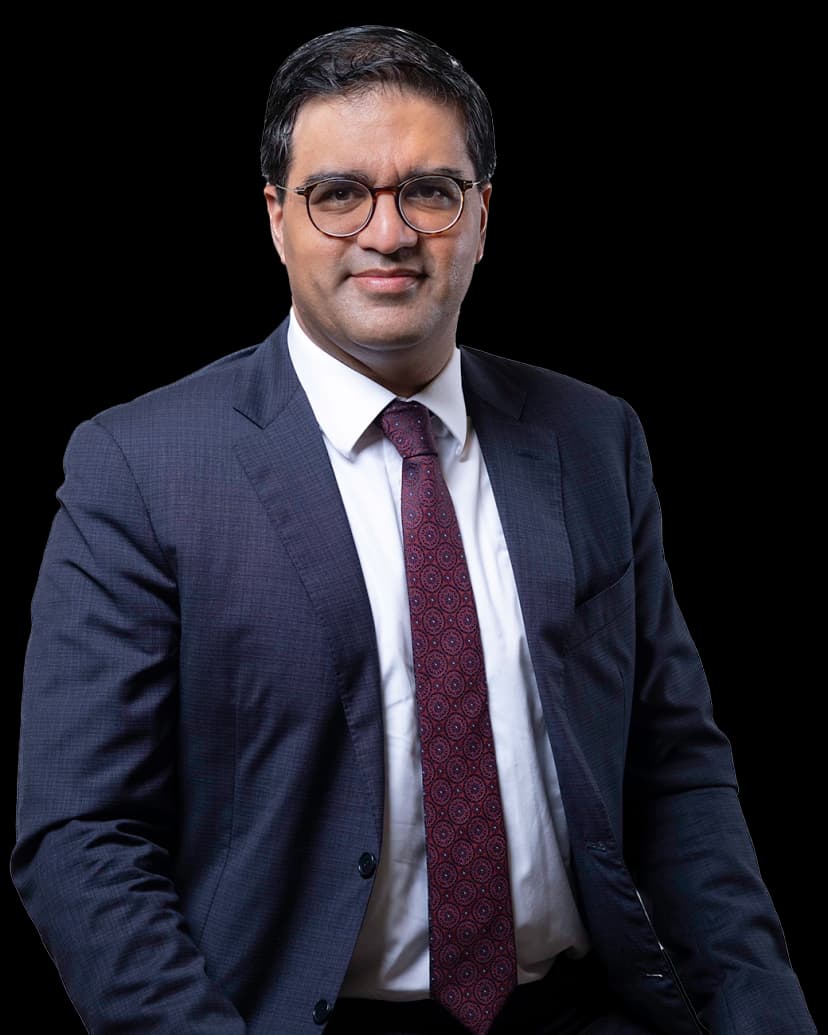
Aarij S. Wasti
Partner
Entertainment & Sport / Brand Protection, Corporate Commercial, Funds and Private M&A


Vidéos
Episode 10
As the world enjoys the FIFA World Cup 2026 across Canada, the U.S., and Mexico, Sideline Conversations takes you beyond the pitch to explore the legal and commercial issues shaping the tournament. Hosted by Aarij S. Wasti (Gowling WLG, Toronto), Marlon Hill (WSHC+B, Miami), and Juan Carlos Partida (EC Rubio, Mexico City), your cross-border legal guides to the world’s biggest sporting event.
In Episode 10, the team sat down ahead of the final weeks of the tournament to discuss the controversies that have emerged, including accusations of federation overreach, the blurred line between government involvement and footballing integrity, and the immigration hurdles affecting fans and officials alike. They also hand out their own "cards" of the tournament by recognizing standout commercial activations and the Cinderella run of Cabo Verde.
Watch the episode below.
MARLON HILL: Like a real countdown from the North America Stadium, five, four, three, two, one. We are kicking off here. This is Marlon Hill, your good friend, Clutch coming to you live from Miami, Florida, one of the 16 host cities. We are almost at the business hour of the World Cup, approaching the final couple of weeks of this historic tri-nation hosting here in North America teams. 104 matches. I'm not sure which match we're on to yet, but we're definitely approaching the 104th. We want to thank you for tuning in here to the Sideline Conversations.
I am representing the United States of America, my good friend J. C Partida. He was caught in the middle of the 1.3 million Mexican fans in Mexico City, charging the energy of those games near to the Azteca. J.C partida with E. C Rubio in Mexico City. And from the North, across the border, my good friend, Aarj Wasti, representing Gowling WLG, representing the Toronto and Vancouver are also here on the Sidelines.
There's lots happening, whether you are at a fan fest, or whether you are at a watch party. There's so many issues from a fan perspective that we want to dive into. Everyone has something to say. Everyone has an opinion, everyone has a perspective. But at the end of the day, football is number one, where integrity, trust, transparency, questioning calls. Should it be a red card? Should it be a yellow card? Should it be sent off? Everyone has an opinion and I know my good friends have something to say about it.
Gentlemen, first and foremost, before we dive in off the Sideline, I know you're chomping at the bit outside of that little box that you're supposed to be staying in. Otherwise, I'll give you a yellow card. What are your views so far? How are you feeling just as a football fan into this historic tournament? I want to hear what your emotion is after these four weeks so far.
JUAN CARLOS PARTIDA: Well, from Mexico perspective-- and I think I speak for all Mexican soccer fans, this World Cup has been very special for Mexico. This is the third time Mexico has hosted the World Cup, although not by itself now, along with the US and Canada. But it's been a real surprise for everybody to see the hype of all soccer fans in Mexico. Not just Mexico City, as you said, I was in the middle of the 1.3 million fans that gathered around along the Angel Independencia on Reforma Avenue. And not just there, in every city in Mexico.
And watching the games, not just the Mexico soccer team games, but in the fan fest, everybody has been engaged. In Guadalajara, hosting the Koreans, the Spaniards, the Colombians in Monterrey, also with the Moroccan-- with the Japanese. Everybody has been engaged. And what I know and what we've heard is that fans from other countries that came to watch games to Mexico have left Mexico really happy, surprised, about how soccer fans have behaved in Mexico and how well they have been received.
So for me, it has been a surprise. It's been a great, great three weeks. And I think we still have a couple more weeks to go. And it's still-- for us, it's a great World Cup. On top of that, Mexico soccer team, national team played really well. The best World Cup in a long, long time, I think the best World Cup since 1986. So we're very happy and hyped about this World Cup.
MARLON HILL: That's so awesome. What's the vibe up there in Toronto, Vancouver, and Canada? Give us a feel as to the feeling from the streets.
AARIJ S. WASTI: Yeah. Look, I think three key takeaways from the North. One is, I think Canada's multiculturalism really came through. Lots of talk, including questions of well, what does that actually look like? Are people going to be engaged during the tournament? Is that multiculturalism going to show up? Is it going to be a unifying factor? Is it going to be a divisive factor?
Look, at the end of the day, I was on the train this morning. The number of Argentinean shirts, the number of Moroccan shirts, the number of even now, Portuguese shirts, despite the team being out of the tournament, people have really embraced the experience here. Visitors, by all accounts, have been very happy with the welcome they've received, the warmth they've received, and also the ability to join in, if you will, with local fans and have that exchange, which is what makes a World Cup a very special experience. So I think that's the first one.
The second is around the national team. The national team had a great group stage. It was always going to come up against tougher opposition as the tournament progressed, but won a lot of hearts and a lot of interest. And I think part of the Canadian strategy was exactly that, to put eyeballs on the game so that more and more young women, young men engage in the sport. And that's how you grow. So I think the game between Canada and Morocco was the single, largest viewed Canadian sporting event in history. Hear that again, more than any ice hockey gold medal game at the Olympics or otherwise in history. So that is saying something.
And then thirdly, I mentioned a number of times about the strengths and the weaknesses, and perhaps there was a bit of a missed opportunity for particularly Toronto, given the size of the venue and Toronto stadium perhaps not being as big, or fancy, or flashy as Atlanta Stadium for example. But look at Roberto Martinez's comments after the Portugal, Croatia match. He said, the Toronto venue reminded him of the good old-fashioned EPL English stadiums. They were homely, they were comfortable, so much so that Portugal decided to actually stay and train for a couple of extra days in Toronto.
So in a sense, you go, embrace what you have. You don't have to be the biggest. You don't have to be the flashiest. But whatever you have, present it in the most optimal manner and make the best of it. And I think Canada is an example of making the best of a great opportunity here.
MARLON HILL: Listen, from my perspective down here in Miami-- you guys know Miami is the capital of the Caribbean and Latin America-- the fan festival here has been extraordinary. Well over 500,000 people have come through that fan fest full. In fact, many times, oversubscribed. They had to shut down the entrances. They had to-- unfortunately, because we are in the heat of the hurricane season, the thunderstorm season. Sometimes close the venue or evacuate the venue because of extended thunderstorms. And no one complained. Everyone came out or went back in. So it's a tremendous economic impact there from the fan fest in downtown Miami.
Usually, the hospitality tourism season is slower during the summer, and the occupancy rates, and the daily rates on the greater Miami convention and Visitors Bureau is definitely looking at the numbers and seeing increasing double figure increases in the numbers in terms of occupancy and daily rates. So that's good for the economy. Transportation, people are shopping, people are in the bars. We were invaded by the Tartan Army from Scotland, which pretty much changed the game as to how fans should travel and how you can proactively impact an environment and a market just with the passion of your culture.
I think that is-- someone should study that. The way in which they went to baseball games and they went to the local bars. They didn't go places that they would normally go. They went to places that people from Miami go. And that, to me, was just very, very special. I had a chance to spend and to go to that game in Brazil versus Scotland. And I also had a chance to go up to Philly to get a chance to look at that game with Brazil versus Haiti. And that was very interesting as well. A much bigger fan fest, extraordinary space in Philadelphia there.
So I think that the fan experience outside of the games really was something to behold, irrespective of what we talked about early in our season here on the sideline about the dynamic pricing. I think that obviously, the access to tickets, we lamented having access to tickets. And the big question is, was FIFA right on pursuing dynamic pricing based on the marketplace for North America? What would you say to that? As a policy and a business decision, did they make the right call or do they still deserve a yellow card or maybe a red card?
JUAN CARLOS PARTIDA: I think that business wise, praise to them. Every single game that I've seen on TV, it's either completely full or 3/4 or almost full. In Mexico, all games were totally sold out except the first game in Guadalajara, Korea-- i can't remember who-- Czech Republic, there were some spots there. But at the end, I think business wise, I think it was a great idea.
Now in terms of fan base, I think it's a disappointment. A lot of people wanted to go to games. They didn't even have the opportunity to try to buy the tickets. If they wanted to go to a game now, once the World Cup started, you had to go to the resale, and that was, four or $5,000 per game in Mexico City. The last game against England, there were tickets. The lowest price was about $10,000, the last day.
So the people who love soccer was disappointed. And I think it could have worked or it worked in North America, including Mexico, because of the fan base, but I think they need to revisit the strategy going back to Europe. I don't think that's going to work there. Europeans are less-- they have less appetite to spend a lot of money in a single game. So I think they will have to revise it. Although business wise, it's been a success.
MARLON HILL: So hopefully that money-- oh, yellow. Which one?
AARIJ S. WASTI: I'll say a yellow card going to the next to the next World Cup. They need to revisit that.
MARLON HILL: All right. All right, Aarj, you agree? Or you want to set it to VAR?
AARIJ S. WASTI: No, I agree. Look, I'll tell you, based on my experiences with previous World Cups, and I had the privilege of attending a couple of matches, including one that was a blockbuster and absolute barn-burner in Portugal, Croatia. But even there-- and the other one was Iraq, Senegal-- you see that there is a difference in the type of fan that attends the matches when you're pricing it in this way. I've been to World Cups in South Africa, Brazil, obviously Qatar, Russia, the fan energy just wasn't the same, Marlon.
And I get it. I get it. It reminded me almost a little bit of a World Cup Final atmosphere where you understand that, there's a lot of corporates and people are on a certain behavior. And you can see the way people dress and all of that. And look, that's not to slight any particular group, but I just think that at the end of the day, that accessibility wasn't there the way it should have been. I continue to hear individuals being invited to matches-- invited to matches, thereby not being able to go with their sons or daughters. I think that's a myth.
Look, on top of that. And we talked about this. It's not just the price of the ticket. Lots of conversation about the price of buying a coke, of buying your kid a burger at the stadium, $20 for a sandwich. And then you look at the cost of travel. Honestly, I would have loved to attend a game in Mexico, but every time I looked at the cost of travel, including hotels, forget about the cost of the ticket for a second, because we know JC would have invited me and he would have covered that, but there was no way.
So I think from a purely ticketing perspective, cost perspective, did FIFA get it wrong? Yes, I maintain that, because I think, again, the strategy in my view needs to be long term. How do you grow the fan base? And this was not a tournament where there was engagement. There was in fact, disengagement. I think this is it's a sign of the times, but FIFA went for the quick buck. Yes, they sold out. Yes, they made lots of money on turnstile revenue. But how many future generations did you engage in this tournament? My kids didn't get to go.
MARLON HILL: I think referee Wasti, you've hit the nail on the head there. And it's the red card there on that issue. We are going to send that one to the disciplinary committee for their evaluation, and we will see exactly what the decision they come out with.
AARIJ S. WASTI: I don't know Marlon. I don't trust the committees anymore.
MARLON HILL: Well, we're going to talk about that in a second before we talk about the disciplinary committee and certainly, we want to talk about the political environment that this tournament walked into, not just for the United States of America and North America, just in the world. And I wanted to get your perspective from the Sideline Caballeros as to when you have an organization like FIFA, JC, or any organization, a private company that is doing business in a market environment.
Do you have to adapt to that environment, or what boundaries should you set to retain the values and the precepts that your company or organization has established for itself in that political environment? How difficult is it for an organization like FIFA to conduct a tournament or an event like this without being impacted by the political environment? Can you walk onto this field without having to play the game?
JUAN CARLOS PARTIDA: I think like a major corporation, I think you have to adapt to the market where you go or you intend to go. However, you cannot lose your essence. You have to keep that. And I think that that part specifically about FIFA coming to the World Cup in North America, especially in the US, they've lost that. They lost their essence being a sport that is-- that its fan base is a worldwide fan base. And it's not the wealthy, it's everybody.
MARLON HILL: Well, did they lose it though, or did they give it-- did they give it up-- intentionally to give it up for certain things?
JUAN CARLOS PARTIDA: I think in my perspective, they've lost it. They have to find it again, but they've lost it. Politically wise, we saw it even before the tournament began in the drawing of the groups.
AARIJ S. WASTI: The final draw.
JUAN CARLOS PARTIDA: I think that's where everything started-- the FIFA started losing their essence by trying to be nice, politically wise in terms of their relationship with the host country-- or most host countries. And we have the red card issue, and we'll talk about it probably later. But I think they've lost their essence right now. I'm not saying they cannot get it back, but they have to work really, really, really hard to get it back. And in terms of the perception, at least in Mexico about FIFA, it's the lowest ever.
MARLON HILL: Aarj, you had to manage working in the Middle East and in Qatar in 2022 for an organization like FIFA walking into a cycle, into another country or countries. What are some of the thoughts that happen internally that are being discussed, that are real issues that you have to manage in differing political environments?
AARIJ S. WASTI: It's managing the leaders. It was no different in any of the past three or four host nations. But I agree 100% with JC. Look, the question that I've heard asked repeatedly during this tournament, which I think is a valid question is, would Qatar have been allowed to get away with any of this? Would Russia have been allowed to get away with half of this?
And I think we know the answer. The reality is, as JC said, FIFA started to accede control, if you will, over the tournament in a very public way from the final draw onwards. And look, I always say-- and my wife hates this phrase-- but perception is reality. So we don't-- it doesn't really matter what the facts are. It doesn't really matter what FIFA's in control of and what it's not in control of.
Yes, it's their tournament. They're running the tournament, the decisions on field are theirs, et cetera, et cetera. But as JC said, this fan perception-- and I don't think it's just Mexico. I've heard this in South America, I've heard this in Europe, I've heard this in Asia, including the Middle East-- is that there's a double standard that's been applied that they've gone a little too far on appeasement of certain leaders and that it is now impacting the perception of the integrity of the game. To me, a lot of these statements in the last week boil down to that.
MARLON HILL: Aarj, let me ask you this then, in all fairness, devil's advocate then, is the context of the governance guardrails, or is it the whims of the leaders who are leading the structure and the governance?
AARIJ S. WASTI: Marlon, there are processes in place for a reason. There are committees that are supposed to be independent in place for a reason. There are historical cases why the corporate governance is structured the way it's structured.
MARLON HILL: But those structures are there. So the perception is?
AARIJ S. WASTI: Is that they are not working independently. And so what needs to be done? It's a very simple fix. And that is for all involved at a leadership level, that includes the president of FIFA, that includes global political leaders, that includes, frankly, celebrities to basically say, listen, our views are simply our views. We have no say in what is happening in this tournament, and we are going to allow, as we should, for the matches to play out and the results to fall where they may. But instead, what do we have? We have statements that are being issued saying, calls are being made. And perhaps-- no one's saying this, but you read between the lines and it's like, oh, we didn't think that this was a fair decision. Yeah, but hold on, who are you?
MARLON HILL: And it matters where those calls are coming from. Let's be real about that.
AARIJ S. WASTI: But it matters-- again, let's not look at the facts. I would say, forget about who's making the calls. It's the perception of what impact does that kind of call have? Why was there so much anger, quite honestly? When you look at an X feed, the morning after the Belgium US match, I think honestly Marlon, the amount of support and respect the US team had going into the knockouts was incredible. Because people were energized, they were like-- there's so much respect for this system that again, you point to the poster from '94 behind me. You look at how far the game has come.
MARLON HILL: Yeah. And that was squandered?
AARIJ S. WASTI: And that was not just squandered, the amount of anger against the US and the US team during the match. I remember seeing a world map on X where the entire world map was Belgium except for the US. And then the morning after, it becomes a laughing stock, not because anybody's upset with any particular player, or the way that the team played, or the fact that they got outplayed. But again, that political posturing around the match, that stuff hurts.
MARLON HILL: So that red card goes to?
AARIJ S. WASTI: The red card, has to go to the federal officials in the US. And in this case, it's the president of the United States, but it's not the first case, Marlon.
MARLON HILL: Put a pin there. Put a pin there, though. You're not telling me that other leaders and other federation officials don't make calls to advocate for their team or for their players, right?
AARIJ S. WASTI: Do they have press conferences boasting about it?
MARLON HILL: I don't know but-- but we would know. That's my point. So what line did they cross?
JUAN CARLOS PARTIDA: The perception-- i think the line that was crossed was by publicizing the fact that they intervened. We know and Infantino said it a couple days ago yesterday, that he received calls from a lot of people, world leaders, political leaders, sports leaders, whatever. And that's the truth. The problem is the perception of intervention by a political figure, by publicizing the fact that they intended or they tried to pressure FIFA into doing something. I think that's the part that does not-- is not working.
MARLON HILL: So does it mean that if we don't know about-- if we know about it, it's different, if we don't know about it?
JUAN CARLOS PARTIDA: Well, the thing is that if I'm Infantino, I receive a call from the president, and I tell him what he probably told him that, hey, this is being reviewed by independent committee, that's about it. Because we know that's the rule. We know that that is what has transpired in the last World Cups, whatever. But this time around, you had an invented peace world trophy or peace prize for the US. There was the statements by the US secretary of the borderland security or homeland--
MARLON HILL: Homeland Security, yeah.
JUAN CARLOS PARTIDA: --about when Iran lost and did not go to the next stage. That's a lot of perception. That's what fans didn't like about the whole organizing part, and FIFA not stepping in and saying, hey, this is the World Cup. You cannot do it. Please don't go out and say that.
MARLON HILL: Aarj, what is your advice though? Tell me this though. You're operating in an environment of things that you can control and you can't control. So you've given the red card to the federal officials of the United States. What are you saying are the expectations of any government that's hosting the World Cup to give FIFA some room to do what it does best?
AARIJ S. WASTI: Look, at the end of the day, the US-- we're just focused on the US here, but it applies to all three host nations-- it's a host nation. FIFA has very publicly aligned itself, perhaps for good reason with the federal government of the United States in hosting this tournament in the United States. Now, every public official-- every public official at FIFA and every public official in the US federal government now has a responsibility as part of that host-- let's call it-- committee partnership in order to help FIFA deliver this tournament in an organized, trustworthy, respectful, transparent, trustworthy way.
What did we see in previous World Cups? Were there controversies? Of course. Were there statements? Sure. But not for a second did anybody go rogue or off script and question the integrity. You can't do that. To suddenly say that I don't think a decision was fair, that's it. Again, if you put a disclaimer, that's my personal opinion. That's fine. But you crossed the red line when you start to say, I made a call to the head of FIFA, presumably to have a decision overturned.
MARLON HILL: We could discuss this ad nauseam over una cerveza in terms of this issue. So both of you guys have been hired. JC, you've been hired by FIFA. Aarj, you've been hired by the federal officials of the United States or the next government. What are you advising having gone through this experience of the breach of the integrity of our beautiful game? Can it be remedied? What would you recommend that we can do or should be doing to rebuild the integrity that we want and need for the game? JC, what would you say? FIFA gives you a call.
JUAN CARLOS PARTIDA: I would say there are manuals for the tournament. There are manuals, there are instructions, there are rules. And once a host country agrees into hosting a World Cup, they need-- they are abiding, they need to comply with those rules. That's the rule of the game. And I think that has happened in the last four or five, 10, 20 World Cups. I think here, people went over those rules or went beyond those rules, breaching those rules. And I think it's just a matter of FIFA saying, you want to host a World Cup, you need to abide by these manuals, these rules. I think that's the only part we FIFA has to do.
AARIJ S. WASTI: But JC, how do you remedy this now? Because look at the precedent that's been set. That's my biggest issue, is now you've opened a Pandora's box.
JUAN CARLOS PARTIDA: Yeah. No, that's true. That's true. But my only remedy that I think it will work is to have a new leadership in FIFA.
AARIJ S. WASTI: I fully agree. That's the true red card.
JUAN CARLOS PARTIDA: The credibility of FIFA--
AARIJ S. WASTI: And it's not us saying it.
JUAN CARLOS PARTIDA: The credibility of FIFA lies there. The red card of the US player, it should have-- yeah Balogun-- that shouldn't be an issue. Why? Because there are precedents that have happened. Cristiano Ronaldo got the same treatment after the Ireland game, a qualifier. May not be exactly the same, but it was-- something happened there. The problem was the intervention.
MARLON HILL: Gentlemen, we are approaching stoppage time and we have a couple more issues to discuss here at The Sideline before we head to the semifinals and the final in New York, New Jersey. There are a couple more things that I wanted to run by you to make sure that we are discussing all that's necessary in this game plan here on The Sideline. With every hosting, we know that Spain, Portugal, Morocco, and Uruguay, and other countries are going to be hosting the next World Cup. And then you have Saudi Arabia. Aarj, in terms of the movement of people and immigration, any thoughts on things that we need to be improving on to enhance the fan experience accessibility? What are your thoughts from an immigration cross-border standpoint?
AARIJ S. WASTI: Look, I think this goes back to what JC said about rules. Look, there's a bidding process. There are conditions and guarantees that come with bidding to host this event. Those need to be fulfilled and honored once that hosting agreement is signed. Look, my view is we always knew immigration was going to be a challenge here. We also know that legally speaking, there were no government guarantees issued, therefore no assurances.
Each of the hosts-- three host countries maintain their position throughout that this is a sovereign matter and that our standard immigration policies in the interests of our nations will continue to apply. But I don't understand why you can't have both. You look at some of the decisions that have been taken. Start with the FIFA Congress prior to the World Cup. Iranian officials detained at Pearson Airport, unable to travel on to Vancouver. Why? They already had a visa. They already had a visa. So is that a political decision now? And if it is a political decision, does that not fall outside of the leeway that that host country has given?
MARLON HILL: Absolutely. So Aarj, it's all about the fair play within the political environment. We know that the host countries have control over their immigration policies, and we certainly can't change that. But certainly, when you're talking about a major tournament like this, there has to be more alignment in terms of partnership. I want to switch it up a little bit before we draw close here, before we have to go to extra time, and certainly, we don't want to go to penalties before our producer gives us a red card.
I want to ask you guys some quick fire questions, fun questions. You know, the man of the match that we usually vote on after every game. Who's your man of the match from a commercial standpoint? Any commercial brand that wins the man of the match for the tournament so far, that's doing it right in terms of their ability to enhance their brand within the licensing limitations of FIFA? Any MVPs out there, Aarj?
AARIJ S. WASTI: For me, it's actually a non-sponsor. So Air Transat, an airline here came up with a very clever ad promotion where they basically use the ticket pricing strategy as fuel, and put up the prices of the tickets to particular matches, and advertise those destinations instead. So it said Air Transat to Bogota, and then they would put the price of the ticket and show that it was actually cheaper to fly. And by the way, we've had friends here that have sold their tickets-- again, dynamic pricing-- sold their tickets, flown to places like Colombia, and watched from the fan fest there, and still had money in their pockets.
MARLON HILL: Wow, that's great. Great. We definitely give them-- my MVP is Bank of America. They had the bracelets that you could customize from the different fan fests. And the lines to get those bracelets, customized trinkets were around the block. And whoever came up with that concept to bring some connection to what Bank of America is doing needs to come to the front of the class in terms of that activation for the different fan fests in North America. What about you, JC? Any brands did it?
JUAN CARLOS PARTIDA: I think every brand in Mexico who used the phrase, y si si si-- y si si. And that means if yes, if we go all the way to the quarterfinals, we go to semifinals, y si si. And that has been used by banks, by everybody, small advertisers, bigger advertising, huge advertising. In every building that had the capability of putting up something in lights, you would see here in Puebla, where I live, for example, there are a couple of residential buildings that can put some signs on the top and everybody put y si si. So that phrase alone has been-- it's just an icon right now in Mexico. Everybody's using it.
MARLON HILL: That's brilliant.
AARIJ S. WASTI: And as an example of who lost on this front, the opposite of an MVP, whatever that is, I think it's the hydration breaks. I don't know if this was a Fox strategy to commercialize some ad time, but I tell you, the amount of fan booing that I've seen is second only to perhaps a couple of national anthems that have been played during this tournament.
MARLON HILL: I'm not sure who you want to give the red card to there. What about the MVP for the debutant country? Which country took advantage of this moment?
AARIJ S. WASTI: Come on, Marlon.
MARLON HILL: And converted it into-- yeah.
AARIJ S. WASTI: You know the answer.
MARLON HILL: Listen, has to be Cabo Verde.
AARIJ S. WASTI: 100%.
JUAN CARLOS PARTIDA: There you go.
AARIJ S. WASTI: And their goalkeeper's coming to Miami, right?
MARLON HILL: Well, I don't know. We'll see. Hasn't signed on the dotted line yet, but I wouldn't be surprised. I think their tourism economy is about to hit exponential numbers. And this is a lesson. You get an opportunity in life to qualify for this opportunity. It's not just the moment of the opportunity or the occasion of the opportunity, it's really the moment. And they took advantage, not just in terms of their performance on the field, but also on the field, humanizing their fans and bringing their culture and their energy.
So they matched their performance on the field while shining a light on the brand for their country. They had a number of activations here in Miami that I attended where they had their art and their businesses being exposed. I think they're going to really maximize this opportunity. And I think it's going to return back to an investment in their federation as well.
JUAN CARLOS PARTIDA: Hey, my family wants to go next vacation to Cabo Verde. And you have it there. My wife just told me, I really didn't know exactly where Cabo Verde was, but now I want to visit Cabo Verde.
MARLON HILL: That's the win.
AARIJ S. WASTI: What a cool touch in that final match, where the coach actually took-- and I know he's not a Cape Verdean coach, he's a Brazilian coach-- but he took that flag with the map of the islands and he explained it to the opposing coach from Argentina. What a beautiful, beautiful moment to have captured on TV to be honest.
MARLON HILL: Listen, that's a good moment there to blow the final whistle here on Sideline Conversations. Want to thank everyone for tuning in. We are going to have one final episode after the final. We don't know who it will be right now. We have South America battling against the UEFA as we go into, and also a couple countries from the African continent as well. We'll see what shapes up beyond the quarterfinals into the semifinal, going into these final days of the 2026 FIFA World Cup. We thank you for tuning in. Drop us a comment. Tell us what we should be discussing, or tell us your pick as to who will be in the semi-finals or the final going into these final historic summer of 2026. Thank you for tuning in.
AARIJ S. WASTI: Thanks, Marlon.
CECI NE CONSTITUE PAS UN AVIS JURIDIQUE. L'information qui est présentée dans le site Web sous quelque forme que ce soit est fournie à titre informatif uniquement. Elle ne constitue pas un avis juridique et ne devrait pas être interprétée comme tel. Aucun utilisateur ne devrait prendre ou négliger de prendre des décisions en se fiant uniquement à ces renseignements, ni ignorer les conseils juridiques d'un professionnel ou tarder à consulter un professionnel sur la base de ce qu'il a lu dans ce site Web. Les professionnels de Gowling WLG seront heureux de discuter avec l'utilisateur des différentes options possibles concernant certaines questions juridiques précises.





Gowling WLG est un cabinet juridique international constitué des membres de Gowling WLG International Limited, une société à responsabilité limitée par garanties enregistrée en Angleterre, ainsi que leurs affiliés respectifs. Les membres et affiliés constituent des entités autonomes et indépendantes. Gowling WLG International Limited promeut, facilite et coordonne les activités de ses membres, mais ne fournit pas elle-même de services aux clients. Pour en savoir davantage sur notre structure, consultez notre page Avis juridique.
© 2026 Gowling WLG Tous droits réservés