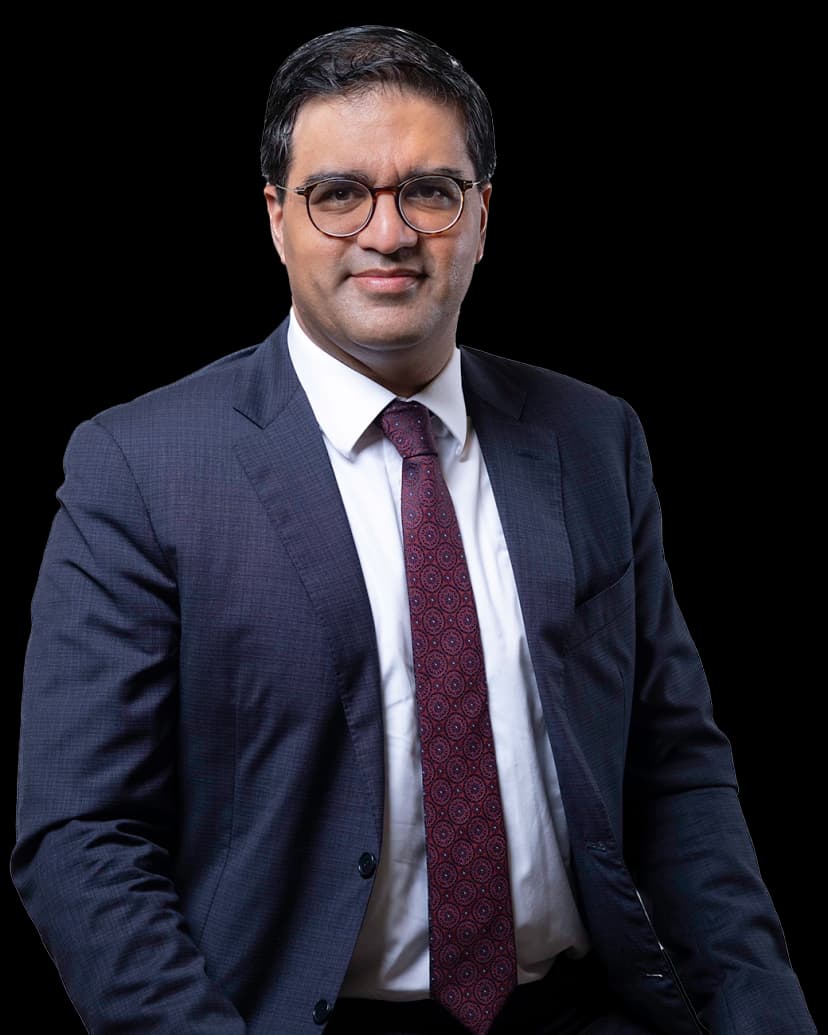
Aarij S. Wasti
Partner
Entertainment & Sport / Brand Protection, Corporate Commercial, Funds and Private M&A


Vidéos
Episode 8
As the world prepares for the FIFA World Cup 2026 across Canada, the U.S., and Mexico, Sideline Conversations takes you beyond the pitch to explore the legal and commercial issues shaping the tournament. Hosted by Aarij S. Wasti (Gowling WLG, Toronto), Marlon Hill (WSHC+B, Miami), and Juan Carlos Partida (EC Rubio, Mexico City), your cross-border legal guides to the world’s biggest sporting event.
In Episode 8, the trio are joined by guests from Bosnia and Herzegovina, the Democratic Republic of the Congo, and Qatar to discuss the development of young squads, the evolution of football infrastructure, and the global impact behind the world’s biggest stage.
Watch each part below.
Joined by Adnan Džemidžić, Secretary General of the Football Federation of Bosnia and Herzegovina, the group discusses the country’s return to the World Cup stage after 12 years. They explore what qualification means for a nation that has endured such seismic geopolitical shifts, the federation’s efforts to strengthen the football program, and the deep cultural passion driving the team forward.
MARLON HILL: Good day to everyone. Welcome back again to the Sideline Conversations. The Mundial World Cup 2026. The fever is building less than 37 days away until we kick off at the Estadio Azteca, in the heart of la Ciudad de México, where all my good friend JC Partida and the friends at EC Rubio are headquartered for our World Cup.
And up in the north, in the sixth, it's warming up. The snow-capped mountains are now turning into spring waters, rivers coming down to the shorelines there in Canada. My good friend Aarij Wasti from our friends at Gowling WLG in Toronto-- I want to welcome back to the Sideline.
Gentlemen, the time is building. I would just say, listen, the World Cup is coming up in less than 30 days. And on our last episode, we had a chance to speak with some of the representatives from football federations, some of them debuting for the very first time-- our friends from Uzbekistan, who joined us; Cabo Verde joined us; and Jordan joined us. What a great time speaking with them as they prepare for this historic tri-nation hosting of the World Cup Mundial in the United States, Canada, and Toronto.
And we are continuing our series speaking with some of our good friends around the world. This episode, we are going to be speaking with our friends from Europe, Africa, the Middle East. We're going to touch all places. But first and foremost, I want to welcome our good friend and the General Secretary for the Football Federation of Bosnia-Herzegovina. Thank you for joining us, Mr. Dzemidzic. How is it going? Where are you in the world right now?
ADNAN DZEMIDZIC: Thank you very much, Marlon. Thank you, Aarij. Thank you, Juan. And I'm really glad to join yourself, and it's a great pleasure to me just try to introduce our federation, our national team here. And we are very proud because we had really the very hard way, and we catched the last minutes there to jump into the railway there. But really, we are now there inside and hope so that really our role should not be finished here in the group stage.
MARLON HILL: Mr. Dzemidzic, I'm so excited to have you. My last World Cup was actually in Brazil, where you last qualified. Unfortunately, my host city was not where you were located. I was in the northeast of Brazil, in Salvador, Bahia, and you were in the south, I believe.
You're now back to the World Cup after a couple terms not being there. How does it feel? Tell us about the emotion about being back on the world stage.
ADNAN DZEMIDZIC: Yes, three championships there and exactly 12 years there because we were there in Brazil 2014. And I was also there in Brazil but in a different role. But I'll never forget it there because that is really one of the great experiences in my life.
MARLON HILL: That is so awesome. My good friend JC, take it away.
JC PARTIDA: Yes. Thank you, Mr. Secretary General. Thank you very much for being with us today. I wonder how-- or whether you can walk us through this roller coaster experience of the UEFA playoff path to qualify and then this one-game, pressure-stakes, emotional roller coaster of winner-takes-all play against Italy. How did the country, the federation lift all this qualifier experience?
ADNAN DZEMIDZIC: Juan, that is something unbelievable because I try to compare two competitions there as we compare now when we played there just before our qualification there in Brazil. But this was really something different. Why? Because the first time, we passed through the group, and now we missed only 22 minutes there in Austria, in our last match, because we were leading there until 77 minutes there-- 1-0, it was, for our national team-- and they drew.
And we didn't have enough power there. I can't say the motivation but the power. And the players were crying. I really could say I'm so long time in football there because-- also my father, who passed away a long time ago, 37 years ago-- in our house, it's always living only one thing. It's football there, never doubt it.
MARLON HILL: [LAUGHS]
ADNAN DZEMIDZIC: And I can't imagine there, and I don't have enough words because English is not my native tongue. But I would say that it's really the most terrible situation when I was walking to our dressing room. You can hear only the silence there, and only you can heard the cries there.
It's strange because the coach, staff, and the allowed players there just to stop it there, just to relax themselves. And they promised each other, we will fight. We'll have the big battle, or battles, to get this route to the United States, Mexico, and Canada.
And honestly, the first match, because we were guests there, after the draw ceremony there, just we played in Cardiff. Hard match, tough match, because the English system there is totally different than we are playing in our part of Europe. And we survived, honestly, the first half of the match, but it's happened again because they scored in 52 minutes, if I'm correct-- 7 minutes in the second part, in the beginning only.
And all of us, we were believing that we will succeed here. And Dzeko, our hero, the national hero, he scored 6 minutes before the end of the regular time-- 84 minutes, if I'm correct. And the players, when they start to shoot the penalty after the extra time-- they are the youngest. They are the youngest in the team, between 18 to 22.
JC PARTIDA: Wow.
ADNAN DZEMIDZIC: I have really to [INAUDIBLE] that. And they were shooting like they have 10 years of their own experience.
AARIJ WASTI: [LAUGHS]
MARLON HILL: [CHUCKLES]
ADNAN DZEMIDZIC: I can't imagine that. I can't explain because I really pass through the age there and see the football matches.
Against the Italy there, we were really sure that we could win there, but never you can say 100%. We organized everything, but we were, shh-- just closing our mouth there. And the fireworks was ready. Everything was ready.
But after the penalty-- and I'm sorry for taking your time longer. I want to introduce our experience and explain everything here, and that is something like the Vulcan-- the Vulcan of emotion. The spectators, they were crying like babies right here. No, just I could still say that because I'm, again, watching that match there. I mean, 50 times. I watched the match like the crazy guy there. It was something unbelievable.
And 3 hours after midnight, 1,000-- sorry, 150,000 people, they were outside. They were waiting for the players. And they arrived in our central court here, and they went up to the balcony. And it was explosion of the nation.
And the people, they were so happy. Everybody in our country, Bosnia and Herzegovina, had forgotten for any troubles there. And probably, the price of gasoline will be, next morning, [INAUDIBLE]. Nobody will not think about that, believe me.
JC PARTIDA: No, we all saw the media, TV images of the whole country celebrating. It was really, really awesome. It was impressive. Yes, thank you.
AARIJ WASTI: As JC said, we've seen beautiful images from that match-- the flares, the energy of the crowd, the incredible drone footage of this gathering of 150,000 people in Sarajevo and other cities across Bosnia-Herzegovina. I think it's for anyone to see how much passion and love and enthusiasm there is within the country. And it makes sense. I mean, that part of Europe has a long history of a football culture.
But, Mr. Secretary General, now moving forward-- you've watched the Italy match 50 times, and obviously, it will go down as one of the great wins of BiH football. But as you now come to the global stage, at the World Cup proper, a tournament that many had written Bosnia off from-- in this city, for the opening match, people had almost already prepared signs welcoming Italy. How does that motivate your team? How does it drive you? What are the ambitions now going forward, looking beyond the past and into the future?
ADNAN DZEMIDZIC: Aarij, that is something very clear because after the draw and the group, what probably had been settled to somebody-- I can't say nothing. And the most important thing what's happened-- it was the short video after our penalties there in Cardiff, and the players of Italy, they were laughing. I don't know. Did you see, or did you watch [INAUDIBLE]?
AARIJ WASTI: Yeah, yeah, yeah.
ADNAN DZEMIDZIC: They were laughing.
AARIJ WASTI: I saw that.
ADNAN DZEMIDZIC: And our young players there, because they are very young-- I say "young." Our average is 21, 22.
AARIJ WASTI: Wow.
ADNAN DZEMIDZIC: Dzeko is the oldest one. And they said, together, we will try to avenge them only for that laughing. Why? Because they tried to humiliate it there, and they try really to-- how to say it-- reduce the dimension of our national team.
And also, we had a very hard period two years ago, when we start with this new generation. And most of the players, they are the second generation of our people outside of Bosnia. They left Bosnia 35 years ago. But they are much better in, really, their own soul, how they believe it, and how they love their own countries.
And really, they showed to all people in Europe. I say "in Europe" there because, really, nobody didn't think that we will succeed here. And as you said, now, what they did in Toronto-- I know that is, really approximately in Toronto, used to live 400,000 Italians there, and all the people sound from that Italian. And they bought the whole tickets, or most of that.
And now we will also show how we can play there. I can't say that we are the best, but we will show our best, really, observation, also the presentation on the pitch.
And the only one place where you can see-- because it was really the big battle, something like David against Goliath. Why? Because when you see the Italians there, they are the great players-- I mean players with famous names. But sometimes, the names don't play the game, and it's really something what is the spirit of the team.
And also, we have a very good coach-- the national coach-- and he didn't have any club, any team, before-- because he was one of the best players 20 years ago. And he used to live there in Germany. And really, we had a lot of troubles there, and we lost a lot of games. But we believed each other there and also in this new generation, and now they show their best.
I really can't say how most of people-- how they believe in those players there. And sometimes, it's unusually and unbelievable. But really, nobody did any thinking about that we can lose a match.
MARLON HILL: Mr. Secretary, as the professional leagues wind down to their championships and their playoffs, Bosnian players have populated many of these teams. I'm from Jamaica. We have a similar population. What do you think the secret is to Bosnian football to the pipeline? Why do you get so emotional, and why is everyone always crying? [LAUGHS]
ADNAN DZEMIDZIC: Marlon, that's something very similar. You just mentioned about your whole country there. We survive a lot of strange things because also, I was here 35 years ago. And it was really the worst part in our life. And I really don't like that everybody could pass it in their own life, but we pass it here.
And that is something-- how to say it-- we are very proud. We like our country there. OK, that is something like the figure there and that you like, but people feel this country because everybody will say that their country is the best one.
MARLON HILL: [LAUGHS]
ADNAN DZEMIDZIC: But that's true. Just, I don't like to compare with nobody. But I really want to say that really, that is something very interesting. I don't see that there is any secret and some spaces-- places, pardon-- inside to say what is that. But there is very simple-- we love this country, and that's it. And also, you can say for your country, too.
MARLON HILL: Yeah. JC.
JC PARTIDA: Yeah, I'm shifting to another issue. We understand that the Bosnian Federation operates within a unique and complex governance structure, reflecting the country's constitutional design. How does that structure affect, if any, the day-to-day operations of preparing to World Cup?
ADNAN DZEMIDZIC: Honestly, Juan, without any troubles there because we are a special country. We are different of everybody there. We had our Dayton Constitution. We have everything different than the other countries.
But really, we have our football federation, the federation who's been just compiled from two associations there, because our country is not divided there. But it's just really produced there in Dayton, in the United States, on 1995, as the country who is really consisting of two entities there-- Republic of Srpska and Federation of Bosnia and Herzegovina.
And also, we have the two football associations, and just really, we have our roof federation association there-- Football Federation of Bosnia and Herzegovina. And the people from both associations, they are coming and working together-- from both sides there because we are only one country there.
All of people, they were so-- how to say it-- productive. And they were also very good, engaged in their mission, how we can succeed here. I really can't say that somebody just did something better or not because all of people, I say, in our federation are working very hard to get this success.
And that is one of the reasons-- because beside the whole political problems we have, like everywhere now in the world, believe me, we forgot that in the time when we were playing the matches there. That is the only one thing.
And also, we had a problem with our spectators there, especially the ultra fans. And also, they don't like players or somebody there, but nobody didn't say any wrong words, any bad things-- nothing, believe me.
It's something unbelievable. For our area, Balkan, it's something different there. When you see that, outside, it's sunshine, probably somebody will see that it's raining. Never say that it's the same.
But this one, really, believe me, they're consistent there about only one thing-- all of people, they were supporting. I can't say 100%, but let's say 75% in our country, they were supportive fully, with full heart, our national men-18.
JC PARTIDA: Thank you. Thank you. Aarij.
AARIJ WASTI: Mr. Secretary General, you talked about the previous generation living outside of the home country and a lot of the kids coming back to play. In the United States, there's a large Bosnian population in the north of Florida, in the Midwest, around St. Louis. As a federation, are you working with, let's call them, expatriate Bosnians that are living in the host countries in terms of cultural programming, in terms of supporter coordination, just to get that support out?
ADNAN DZEMIDZIC: Yes, Aarij, exactly, because a long time ago-- let's say 30 years ago when our federation had been really constituted there and when they've been just starting to work there because it was very difficult. But-- [COUGHS] sorry-- we had a lot of people who wanted to support and help the national teams here. When I say "different," under-15 till the men-18 there. Now it's women too there.
And also, we have a lot of people that are really the scouts there on the fields, and they are working on behalf of the federation. But also, that is something very interesting. We have now our scout team in this national co-staff now because just we extended the number of the people.
And just they are collecting the information because I can't say that is cheaper for us, but it's more useful for us that we get the information from different sources there. And if three of them, let's say, from one state, say that there is one good player, he is from Bosnia and Herzegovina, or their parents, we try to just check with them, with the parents, with the family there. Also, if they have another citizenship, we have to do something more. Also, they have to change the sports citizenship.
But most of them now, they try to be part of this group, and now we have, especially from abroad, approximately 22 or 23 players. In this squad, there is always around 35, 36 players there. That is just very interesting there because most of them, they didn't born here in Bosnia and Herzegovina. I mean, they're born somewhere outside.
And also, the focus have been totally changed now, and also, the parents wants to allow themselves to change not the citizenship but the sports citizenship there. And it's now up to them who wants to expect-- I mean, to accept or not, it's up to them.
MARLON HILL: Mr. Secretary, my final question for you-- and thank you for joining us here on the Sideline. Your passion-- the history of Bosnia is very rich. For this World Cup, though, on this global stage, after returning to the World Cup from 2014, what do you want the world to know or to remember about Bosnia when you win group B come this summer?
ADNAN DZEMIDZIC: Marlon, I want that everybody just will meet who are the Bosnian warriors there. And they are very proud. They are very young, and they have the biggest hearts than I've seen in my life, believe me, because they are like the big birds and nobody can stop them when they are together.
And really, they will die for each of them there when they are in the pitch because, as I mentioned, just when we're beginning there, I have never seen that spirit. I have never seen the connections there inside, in the team. That is very important. And also, the most important thing-- they don't scare from nobody.
MARLON HILL: Mr. Secretary, I believe that Bosnians have the passion from the east of Europe and they have the passion from the west, in the Middle East. It's going to be very interesting. It's a team to watch for the World Cup this summer, I'm telling you, group B, be very careful. Canada, Qatar, Switzerland, Bosnia, I'm telling you. Gentlemen, what do you think?
ADNAN DZEMIDZIC: Marlon, you will get our jersey. Don't worry.
[LAUGHTER]
AARIJ WASTI: Hey, no, I'm the one hosting Bosnia here, so, Marlon, you need to send me the jersey. But I tell you, I agree with you. I think Bosnia-- as much as people wanted to see other teams in that opening match, I am convinced that the opener is going to be a sizzler. I think Bosnia is going to be formidable. It's a tough, young, gritty, and attacking team. I don't think they're going to be easy to beat. I think they're going to set this World Cup on fire very, very early on, and I can't wait to see what that does to the tournament here.
ADNAN DZEMIDZIC: Thank you, Aarij.
JC PARTIDA: I don't think any team will want to face Bosnia.
AARIJ WASTI: Yeah.
JC PARTIDA: I'm sure of that.
MARLON HILL: Who wants--
ADNAN DZEMIDZIC: I don't like to face nobody there, but I've seen something very significant because just when we're in preparation for the final match against Italy there, I went to visit them there because the base is not too far away from our headquarters. I've seen what is the serious of the young population.
I have never seen that-- because they had the meeting just before they just came down for the training. 4 o'clock, it was the shuttle time. 5 minutes before, all of them, they were sitting. It is probably a sign to somebody, but for me, it was very important. And really, you can't hear nothing there inside, only the voice of the coach.
MARLON HILL: Mr. Secretary, where will you be based in North America? Where will the team be based?
ADNAN DZEMIDZIC: Salt Lake City.
MARLON HILL: In Salt Lake City.
ADNAN DZEMIDZIC: Salt Lake City.
MARLON HILL: Beautiful, beautiful.
ADNAN DZEMIDZIC: But, Marlon, we didn't have the chance there to choose that because it's been just really deducted to us and just it's really, OK, take or leave whatever there.
But my colleague is-- our team manager, he's now in his travel there because he was in Toronto two days ago there, and also visited the hotels there and the rest of things-- I mean, all facilities around. And today, he's in LA. Probably tomorrow, he's in Salt Lake City.
Because we have also the big community, just to say one thing more, there in St. Louis. It's the biggest Bosnia and Herzegovina community in the United States. About 70,000 people are from Bosnia. They're the citizens of St. Louis.
[INAUDIBLE] there against Panama. It was really something very tricky because the agents just offered that because it was the best option there. They will sell the stadium, I mean, as soon as possible.
MARLON HILL: Listen, we look forward to having the Dragons back here on the world stage. Who wants to face a dragon? But the fire is coming.
ADNAN DZEMIDZIC: We are not the green one. We are just-- you see the colors there, and there is blue and yellow there. Just we are not too dangerous.
MARLON HILL: Ah, OK.
AARIJ WASTI: So how do you pronounce the name of the team? Is it "mah-jeh-vee"?
ADNAN DZEMIDZIC: "Zmah-yeh-vee," "zmah-yeh-vee." It's the Dragons. It's "zmah-yeh-vee."
AARIJ WASTI: "Mah-yeh-vee."
ADNAN DZEMIDZIC: Z, Z.
MARLON HILL: "Zmah-yeh-vee."
AARIJ WASTI: "Zmah-yeh-vee."
ADNAN DZEMIDZIC: Yes, yes, "zmah-yeh-vee."
AARIJ WASTI: There we go.
ADNAN DZEMIDZIC: That's one thing, I say, from the very old period in Bosnia-Herzegovina because it was really the old stories, always-- I could say, now a thousand years ago, but let's say less or more-- and in one mountain. It's not too far away from here. It's only 30 kilometers. I went there two days ago with my wife.
And there, it's really the place where was the dragon's secret hiding place there inside. And the people, they didn't like to walk there around because always they were expecting the dragon will come from somewhere there.
And just there is probably some signs that our national team got the name from that source, but I'm not sure 100%. But it's very significant because it's very old story, as you know it, in whole history. And they didn't have-- the TV technology was on the lowest level there, and that was only the stories. That's it.
AARIJ WASTI: I mean, who wants to slay a dragon, right? It's hard work. So let's see what happens.
ADNAN DZEMIDZIC: [LAUGHS]
MARLON HILL: Secretary General Adnan Dzemidzic, thank you for joining us here. Bosnia-Herzegovina--
ADNAN DZEMIDZIC: Thank you, Marlon.
MARLON HILL: --group B here in the World Cup 2026. Thanks for joining us here on the Sideline Conversations.
ADNAN DZEMIDZIC: If anybody of you be somewhere around, just let me call because Aarij has the number there, and he'll be our dear guest whenever we are playing the matches there in [INAUDIBLE].
AARIJ WASTI: Yeah, and likewise, if there's anything we can do in Toronto while you and your team are here--
ADNAN DZEMIDZIC: Thank you.
AARIJ WASTI: --always happy to help. We look forward to hosting you, and we look forward to a wonderful tournament.
ADNAN DZEMIDZIC: OK, Aarij, your size is XL, if I'm correct.
[LAUGHTER]
AARIJ WASTI: Cut. Amanda, cut.
[LAUGHTER]
MARLON HILL: Thank you so much.
ADNAN DZEMIDZIC: OK, all the best, gentlemen.
AARIJ WASTI: Thank you. Thank--
Joined by Marcel Mayala of the DR Congo National Team, the group discusses the country’s return to the World Cup after more than 50 years. They reflect on the evolution of football infrastructure in the DR Congo, and what this moment means for a new generation of Congolese players and supporters.
MARLON HILL: Welcome back to the sideline conversations. My name is attorney Marlon Hill. I'm here live in Miami with my good friends J.C Partida in Mexico City. Aarij Wasti in Canada.
We are welcoming another special guest who is returning to the World Cup stage after 50 years. Formerly known as Zaire, now the Democratic Republic of Congo, that took the heart out of my Jamaican heart in Mexico by qualifying in the inter-confederation playoffs. But it's such a joy to welcome back the DRC to the World Cup stage.
Our good friend Marcel Mayala, one of the team administrators from Congo. Welcome to the Sideline Conversations, Marcel. How does it feel to be back on the world stage? What is the emotion in Congo?
MARCEL MAYALA: Thank you for this opportunity you have given me to be part of you guys, and part of the show. So it's a great feeling. Let me tell you, firstly, it wasn't easy.
If you check how we started, and how we finished, it was like something that was not going to end. But at the end of the day, we have made it. It was very, very difficult, but we made it on our heart, on our head that it might rain, it might be sunny. Whatever happens, we have to make it, so that is what happened--
MARLON HILL: So happy for you.
MARCEL MAYALA: The excitement, it was-- I can't even describe. I can't describe the excitement. Let me tell you, even the president of the country, after the game, came out of his palace, and took his car and was like driving around the town.
So to tell you that a. It was very, very, very, very exciting.
MARLON HILL: Very, very happy for you, Marcel. J.C.
JUAN CARLOS PARTIDA: Yes, thank you, Marcel, for being with us. And congratulations for the qualifying. And you did it in Mexico. Sorry for Jamaica, for my good friend Marlon. But you guys won in the pitch. So congratulations.
Congo's last World Cup was more than 50 years ago in 1974 under Cyrus name. A tournament that is remembered, probably unfairly, for a single moment rather than an achievement itself.
My question to you is whether this time around this qualification feels different, and is it a new opportunity for the country to rewrite that narrative? And how is the Federation, or what is the Federation doing at this moment for a new generation in Congo-- Congo fans to do it completely different?
MARCEL MAYALA: Thank you for the question. Let me tell you that it has been 52 years exactly since Congo played in the World Cup in under the name of Zaire. And this time around, we made it one of the biggest objectives of the national team.
Even myself, as I'm talking to you now, I've never seen the national team playing in a World Cup. When they played, I wasn't yet born. So this young generation are like excited.
Like I said, it's a dream which has come true because it's just a story that has been told to all of us that our country, that we play the World Cup in the 1974, and those players today, most of them are no longer alive. Only few of them are still alive. And they are old, you see.
And then, we only see them when there are some events at the FA or with the department of sport. But with this generation, it's like you have made a point.
We have made a mark to say, OK, this is it, this is the time that we are supposed to do it. And also, with the involvement of himself, the president of the country, he made sure that everything was in place.
He made sure that the team as a whole lacked nothing. That is the reason why we went all the way to qualify. And then, for the younger generation, all of them. I'm telling you, I'm showing you every young person now wants to come to America, to Mexico and to Canada, to be part of the event. But unfortunately, not everybody can be able to make it.
But every day, in the whole country, every day is a party. And nowadays, you can see the National jerseys are everywhere. You can't cross a street without seeing a national team jersey.
Yeah, so yeah, I believe it's something that needed to be done. Also, with the way the people of Congo have been going with lots of difficulties in different areas of life. So it comes as something to chill with. So that's it.
And coming with the FA. Unfortunately, we have a-- what do you call it? A normalization, a committee that was sent by FIFA and CAF. But by the 20th of May, of this month, there will be election whereby there will be a voting for the members of the committee of the FA.
But for now, there's no committee of the FA. Those who were sent by FIFA and CAF to come and normalize to do something like-- what do you call it? A transition. They mandate already ended on the 20th of last month. No, no on the 15th of last month.
So now, it's only the general secretary and the election committee that are in place to do everything, so that we can have a committee that will be elected on the 20th of May. So in few days, we will be having a committee. But all in all, the team as a whole, we worked as a unit, so that we can achieve this goal.
Then, we thank God for everything that we have done. Although, it was not easy, it was difficult.
Remember, we have started the qualifying on 2023. It's three years ago, and then to come across until 2026 after the qualification, we had to go through the playoff of Africa, playing against Cameroon, playing against Nigeria, which are big, big countries in Africa, and winning against them. It wasn't easy.
And then, going again a winning against Jamaica that was no we can't explain.
AARIJ WASTI: So Marcel, you talked about unity, and obviously you know, the power of football is such that it can be a huge unifier across political divides, across cultural divides.
In terms of beyond the federation and beyond the national team, is Zaire, either through the government, the Ministry of Tourism, the Ministry of Commerce, are there plans to promote Zaire, and its-- sorry, the Democratic Republic of Congo, and its economy and its culture when you're visiting the US during 2026?
MARCEL MAYALA: For sure, for sure. Like I said, we as a country, we went through a lot of difficulties. Don't want to-- I can remind you that on the East of our country, there are things that are happening. There's war, and people are dying. But every time the national team wins a game, it's a joy for all the people.
They have been in pain every day. But again, when we play, and we win a game, again, it's a joy for them. It's a joy for everybody. It's really a symbol of unity of the country, you understand? From the head of the state, the Ministry of Sport, the Ministry of Foreign Affairs, the whole government as a whole, we made it a point.
The World Cup is a big stage whereby we can make our country known to the entire world because it's not a secret. There are people who when you speak about the Democratic Republic of Congo, they ask you, where is it situated? They tell you, in which continent are you? You get my point?
So this stage is something that will make us known again to the entire world. Because the World Cup is seen everywhere in the world. So yeah, that is--
MARLON HILL: You know, Marcel there's so many Congolese all over the world. Different countries in Europe, in Belgium, and England and other parts of the world. For Jamaicans, we have a population of 2.8 million, but we have over 5 million people all across the world.
And your players also reflect this binational heritage, as well. How has that been a positive infusion into the heritage of-- or the background of the team to have players from other countries with heritage from these other countries that are now a part of the DRC team?
MARCEL MAYALA: Remember, remember, you can be born in another country, but you still belong to your country, your own country. You get the point? Like, all those players who are playing now for the national team, they belong to Congo, they are Congolese players.
Although, most of them are born outside the country, although most of them never, never played really in Congo, but they're Congolese. They can come back and represent their country or the country of their origin. You get the point? They are parents--
MARLON HILL: Sure.
MARCEL MAYALA: --are for Congo, and they are also Congolese. Although they are having like caring two nationalities and stuff. But they choose to come and play for Congo. You get the point?
MARLON HILL: Is their blood.
MARCEL MAYALA: That work has been done by the head coach. That's the reason why also I'm saying he has done a great job because it's not only about players playing locally, it's not only about players who are born in Congo, but it's about the Congolese. It's about Congo.
Whoever can represent Congo better is able to be called and come and represent the country. That is what the head coach has been doing since he took over. And that is what is working.
And again, for him to come up with this way of doing things before Congolese league was not organized that well, you can start and not finish. You can have teams playing and teams being chased away because of this and this and that.
All in all, the organization was not 100%. All in all, the league was not fully professional. Then, the coach had to take a decision because he's judged by the results also. So he is working for us and we can't complain about that.
MARLON HILL: Absolutely, absolutely. J.C.
JUAN CARLOS PARTIDA: Yeah, Marcel, speaking of Congo nationals living outside, we see that there's a lot of them living in Europe, and there is an increasing number of Congo nationals now living in North America.
Is the government or the Football Association programming any community events, fan zones, or cultural events outside Congo, like in cities like Montreal or Brussels or any other places where Congo nationals live?
MARCEL MAYALA: We always do that. Even when we went for the African Cup of Nations in Morocco, we did the same thing. There was events about Congo culture that is held by the ministry of culture, together with the Ministry of Foreign Affairs and the Ministry of sports.
So there are always events, there are always things that are being-- what do you call it? Published in these kind of events to show the culture of the Congo, to show how people of Congo are living, to show how people of Congo are doing things in certain way.
So I think-- but for now, I don't know yet where exactly it will be held, but for sure, it will take place, I think.
AARIJ WASTI: So Marcel we've talked about the past. We're obviously focused, laser focused on what's to come this summer. But there's beyond 2026. We want to forget about '74, we want to see Congo do well in 2026.
But as you go now from the 26 World Cup into the future, hopefully, future qualification in 2030 and onward, what opportunity does this present your country's football infrastructure in terms of resetting the baseline, to grow the baseline standard.
And what help are you getting if any, from FIFA and CAF in growing the football infrastructure in DR. Congo?
MARCEL MAYALA: OK, going forward, there is a project. I'll have to say it. There's a project that the country is helding to-- with the will to host one of the African Cup of Nations to come. And then, FIFA has been also helping the FA where they could.
And that help produce some fruits to say. We have a football center which is built outside of the city of Kinshasa, yeah. But I believe the plans are to make it bigger, to make it bigger, and build more fields.
But as I said, we are not having an elected committee at the moment. It has been like that for plus minus five years. For five years, we have been going for normalization committees coming from FIFA. Those committees couldn't receive the funding from FIFA to say, these are for the project X, for the project Y.
So after the election, I believe, there are still some funds that the FA has to receive from FIFA and CAF, and I believe those fundss are there waiting for the committee to come and present the project of football, development of maybe infrastructure for the FA, so that we can develop a football from the base.
We also have-- we can't forget about women football. It's also one of the project that people are talking about because we have also some women teams that are playing football. We have academies that need help.
Yeah, I think, going forward, if the committee is elected, if the committee come in place, coming with a good project, I think it will be project to develop football from the younger ones until the professional league because we can always talk about players coming from abroad, yet they are Congolese, yet they are helping the country.
But locally, football needs to be organized. Locally, football needs to be professional. Locally, younger ones need to be developed, so that we can have-- what you call it? We can supply the players, from the younger ones, you can talk about under 15, under 17, under 18, under 20, under 23.
If we can have those solid things, I believe we can also have-- will have a solid a first team in the national level. So yeah.
MARLON HILL: So Marcel, listen, for those people that follow African football, Congolese have a lot of energy in the stands. The music is pumping, energy is pumping, Marcel.
For those people in Houston and Atlanta, how should they welcome you with open arms? What can they expect from the Congolese energy in those two cities? Give us some insight.
MARCEL MAYALA: Are you talking about the games, or are you talking about the--
MARLON HILL: The game, the team, the energy, everything about those games. What can they expect?
MARCEL MAYALA: You know, the World Cup on its own is a party. It's already a party. So we are preparing ourselves not to say, we are going to win the World Cup, but we want to go there not to show-- OK, I believe what he said. We can't talk about what happened in the past, we must talk about what going forward.
But we don't want to have the same situation that happened in 1974. Let me put it clear. So all the preparations are going well. The plans are there. The-- what do call? The preparation has been set, how it's going to-- when it's going to start, where it's going to take place, and where it's going to finish, you understand?
But for those who are there in the United States of America, they just have to welcome us as people who are coming to make them happy. We are coming there to be ourselves. We are coming there to make ourselves proud. We don't want to come there, and just make the numbers. We are coming there to play.
Because, don't forget, whatever the team might be, it will be 11 versus 11. So that's it.
MARLON HILL: There it is.
AARIJ WASTI: Well, I have-- but Marcel, before we go, I have a question, because I'm most interested, and I think a lot of our viewers are most interested in knowing about the 12th player, and that is Kuka. Will Kuka be at the World Cup, and will he get a visa?
MARCEL MAYALA: OK, for now I can't talk about which player is coming, which player is not coming, you understand? Because--
AARIJ WASTI: No, I'm talking about I'm talking about Cuca, the guy who supports your team in the stadiums--
MARCEL MAYALA: Lumumba, Lumumba, Lumumba.
[LAUGHTER]
AARIJ WASTI: Yes.
MARCEL MAYALA: Lumumba. I believe is going to be there because everything is in place from the Ministry of sport, so that he can be there. Not only him, but the group of people who are coming to push the team to go forward. So I think-- I believe they will be there.
AARIJ WASTI: I think that's going to be an iconic football moment on TV and--
MARCEL MAYALA: He will be there. He will be there. He will be standing 90 minutes without moving.
JUAN CARLOS PARTIDA: Amazing, amazing.
MARLON HILL: Amazing, amazing. Marcel Mayala, team administrator with the Democratic Republic of Congo, formerly known as--
MARCEL MAYALA: Exactly.
MARLON HILL: --Zaire. Bonne chance, Marcel. We look forward to seeing you in Atlanta and in Houston. All the best to all the followers of your team. Be safe in your travels to come to North America. We look forward to the best of your group K with Portugal, Colombia, and Uzbekistan. All the best to you and your team.
Unexpected technical difficulties cut the team’s interview with Ali Al Salat, Head of Communications for Qatar Football, but this snippet captures Ali’s perspective on Qatar’s continued investment in football and what it is like to qualify for the World Cup, its first as a non-host.
MARLON HILL: We continue on a very special episode. Less than 30-plus days to go to the World Cup 2026. A historic hosting of the trination hosting of the World Cup 2026. 48 nations, 104 matches across three countries. And no one better can tell us what this experience is like, like our previous hosts, Qatar. They have gone from hosting. And now they are competing. But they will not only be competing in one country, two countries, but three countries. And we want to know exactly how they're going to be.
So our very special guest, Ali Al Salat is joining us. He's busy getting the teams ready, getting in, getting them into top form. "Assalamu alaikum," man. Welcome to the Sideline Conversations here. Thank you for joining us and carving out some time to speak with us. How is it going?
ALI AL SALAT: "Wa alaykumu s-salam." All good. Thank you for hosting me in this show. And I'm really glad to talk about my country, my national team. And as you mentioned, it's the first time to be qualified to the World Cup. So it's something really good. And I'm proud of it.
MARLON HILL: What's the emotion? Tell us how you're feeling. Is it excitement? Is it anxiety? Is it passion? What is the current mood around the--
ALI AL SALAT: Honestly, it's a mixture of everything. To qualify for the first round-- for the first time from the qualifiers, the way to qualify wasn't that easy. We struggled a lot. Although, we are the Asian Champion back-to-back. But it wasn't that easy. We've changed coaches, players' been out of shape.
And at that match against UAE, you can see the whole country united for this specific match. And thank god, we nailed it.
MARLON HILL: Excellent, excellent. JC.
JUAN CARLOS PARTIDA: Thank you for being with us, Ali. In 2022, Qatar delivered one of the most captivating World Cups that have been played. Now, just four years after that World Cup, you're arriving as a competing nation in someone else's someone else's tournament.
CECI NE CONSTITUE PAS UN AVIS JURIDIQUE. L'information qui est présentée dans le site Web sous quelque forme que ce soit est fournie à titre informatif uniquement. Elle ne constitue pas un avis juridique et ne devrait pas être interprétée comme tel. Aucun utilisateur ne devrait prendre ou négliger de prendre des décisions en se fiant uniquement à ces renseignements, ni ignorer les conseils juridiques d'un professionnel ou tarder à consulter un professionnel sur la base de ce qu'il a lu dans ce site Web. Les professionnels de Gowling WLG seront heureux de discuter avec l'utilisateur des différentes options possibles concernant certaines questions juridiques précises.





Gowling WLG est un cabinet juridique international constitué des membres de Gowling WLG International Limited, une société à responsabilité limitée par garanties enregistrée en Angleterre, ainsi que leurs affiliés respectifs. Les membres et affiliés constituent des entités autonomes et indépendantes. Gowling WLG International Limited promeut, facilite et coordonne les activités de ses membres, mais ne fournit pas elle-même de services aux clients. Pour en savoir davantage sur notre structure, consultez notre page Avis juridique.
© 2026 Gowling WLG Tous droits réservés