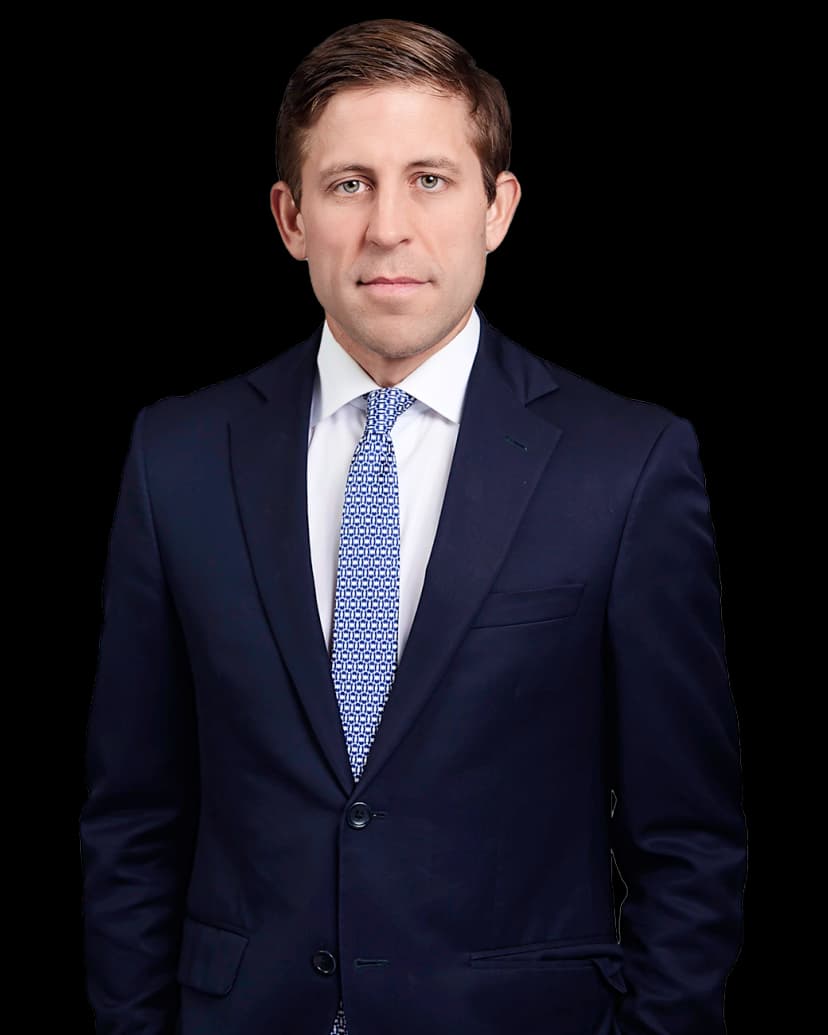
Michael Crichton
Associé
Agent de brevets


Article
The past year saw courts consider subject matter eligibility for patents, availability of patent term adjustment, and various Canadian court decisions addressing numerous patent-related issues.
Notable developments from 2025 in Canadian patent law are summarized in this article.
On October 9 the Supreme Court of Canada heard an appeal by Pharmascience of the Federal Court of Appeal’s decision in Janssen Inc v Pharmascience Inc, 2024 FCA 23 concerning methods of medical treatment, and specifically dosing regimen inventions, are patentable “arts” or “processes” under section 2 of the Patent Act. The patent at issue concerned novel and inventive dosing regimens for Janssen’s INVEGA SUSTENNA (paliperidone). The Court also heard submissions on the appropriate analytical framework for determining whether subject matter constitutes a method of medical treatment, assuming such subject matter is excluded from patentability.
Pharmascience argued that claims monopolizing subject matter involving physician skill and judgment are unpatentable, as they interfere with physician autonomy. It distinguished its proposed test from the Court of Appeal’s formulation, which asked whether practicing the claim involves skill and judgment. Attempting to tie its position to the Patent Act, Pharmascience argued that new uses for old compounds were patentable subject matter as “art”, but that dosing regimens relate to the specifics of “how and when” to use that subject matter, and therefore do not constitute an art or process within the scope of the Patent Act. Pharmascience also argued that the Patent Act’s incentives were not needed to encourage R&D in this area, as regulatory authorities required research to be done into safe and effective dosing of pharmaceuticals.
Janssen’s argument focused on the “commercial offering versus professional skills” distinction articulated in Shell Oil and AZT to argue that a claim to a drug or its use, including a specific dosing regimen integral to the marketed product, is a patentable “art” because it yields a commercially useful result. What cannot be patented, it submitted, is professional skill and judgment “in itself.” Janssen argued that the proper analysis is whether the claimed subject matter is new, useful, inventive, and economic in nature; if so, the fact that physician skill may be required to apply it is irrelevant. Janssen maintained that its invention provides a new, inventive, and useful treatment option, and that physicians can choose whether to use it without fear of infringement. This argument was supported by submissions from intervenors which made clear that significant investment underlies the discovery of novel dosing regimens, and that physicians practice without fear of infringment when prescribing patented dosing regimens to their patients.
The Court reserved judgment. A decision is expected in winter or spring of 2026.
As we reported on here, the Federal Court in Dusome v Canada (Attorney General), 2025 FC 1809 has once again reversed a rejection by the Canadian Patent Office of a patent application claiming a computer-implmented invention based on subject matter eligibility.
Dusome’s application, entitled “Method of Playing a Card Game”, has 24 claims: method claims 1-21 are directed to a method played with physical cards, and claims 22-24 are directed to a method played on a computerized system. On appeal to the Federal Court from a rejection of the application by the Patent Office, the Court found legal errors in the Patent Office’s purposive construction and in identifying the “actual invention” contrary to Court of Appeal decisions in Amazon and Benjamin Moore. The Court also cautioned that business methods or card game mechanics are not per se excluded and emphasized that discoveries embodied by a combination can be patentable if they add new knowledge and achieve a commercially valuable result.
The application was remitted to the Patent Office for further consideration based on the Court’s decision and reasons. This decision is a reminder that purposive construction is the sole pathway to determine subject matter eligibility. The “actual invention” path advocated by the Patent Office cannot supplant the importance of purposive construction upon which a proper assessment is ultimately based. Moreover, per se exclusions for game rules/business methods were rejected by the Court. Patent Office procedures (e.g., MOPOP) cannot ground refusals absent statutory authority.
As we reported on here, the Federal Court of Appeal in Canada (Attorney General) v Matco Tools Corporation (2025 FCA 156, on appeal from 2025 FC 118) found that Matco’s patent application was deemed abandoned after a failure to pay a maintenance fee due to a data migration error.
In this case, the maintenance fee was not paid due to an administrative (data migration) error. The Patent Office issued a notice of non-payment, which the Canadian agent forwarded to instructing US counsel, but US counsel did not forward the notice to the applicant because its standing instructions were to take no action on maintenance fees. The Court of Appeal held that to satisfy the “due care” standard for having an abandoned application reinstated, an applicant must demonstrate that all parties involved in the management of deadlines exercised “due care”. Notwithstanding the data migration error, the Court found that either US counsel should have forwarded the non-payment notice to the applicant notwithstanding the “no further action” instructions, or the Canadian agent should have exercised greater care to ensure the non-payment noticed reached the applicant.
Applicants should therefore ensure all persons involved in the management of their deadlines are taking great care to meet those deadlines, as securing reinstatement based on the “due care” standard will likely be challenging.
In another 2025 decision of the Federal Court of Appeal involving the “due care" standard, the Court in Taillefer v Canada (Attorney General) (2025 FCA 28) found that patentees and agents must maintain effective backup communications and monitoring systems to avoid maintenance fee lapses. In that case, and notwithstanding eight years of reliable agent/patentee communications, maintenance fees went unpaid due to notifications going to junk folders. Without a backup communication/monitoring system, the “due care” standard was not met.
In Adeia Guides Inc v Videotron Ltd (2025 FC 1725), a patent infringement action involving four asserted patents, the Court addressed a multitude of issues, including construction, validity (anticipation, obviousness, double patenting), infringement, and remedies. The Court found two of the patents to be invalid, and two of the patents to have been infringed. Certain of the infringement-related findings are notable.
First, the Court found that there was infringement based on the doctrine of common design. This is the first case in Canada where such a finding has been made. The Court explained that the doctrine stems from the principle of holding someone accountable for their actions towards another if they are working with a third party to further those actions; “[p]ut simply, one cannot escape liability for patent infringement by virtue of subcontracting out a portion of the infringing act, or by being but one party to an overall harm towards another.” The Court held that the defendant, Videotron, was not a docile party, but rather was engaged in the acts of infringement through a contractual agreement with Comcast. The Court stated that it was not necessary for Comcast to have been named a defendant for the Court to conclude Videotron had infringed based on common design.
Second, the plaintiff, Adeia, had sought a royalty for Videotron’s infringement based on the total royalty that would have been paid to Adeia had the parties renewed the licence for the entire Adeia patent portfolio. The Court rejected this request and instead stated that “a royalty can be premised on the previous licence and yet be apportioned to only compensate for the damages caused by the infringement of two patents (out of over 200).”
Lastly, having found infringement, the Court reiterated the well-recognized principle that, in Canada, a permanent injunction is rarely denied to a successful patentee. Notwithstanding Adeia being a patent licensing entity, the Court granted a permanent injunction. Videotron was given thirty days to comply with the injunction.
The Court of Appeal decision in NCS Multistage Inc v Kobold Corporation (2025 FCA 187) is an important reminder regarding how the principle of claim differentiation works.
The principle of claim differentiation creates a rebuttable presumption that limitations of a dependent claim should not be read into the independent claim. It functions as a guard against redundancy in the claims of a patent.
In this case, the lower court made a number of findings with respect to claim construction, including that “The barrier is first introduced in Claim 11 and is therefore not included in Claim 6 – to otherwise include it would be a claim differentiation violation.” The Court of Appeal found that this was an error of law. Claim 11 of the patent at issue depended on claims 6-10. Therefore, the Court of Appeal found that the broader claim must encompass an apparatus with the barrier. As a result of a reversal of the lower court’s findings on claim construction, certain invalidity issues were remitted to the trial judge for redetermination in accordance with the revised claim construction.
In 1048547 Ontario Inc v Fromfroid SA (2025 FCA 151) the Court of Appeal affirmed the lower court’s award of punitive damages in a patent infringement case.
The Court clarified that punitive damages may be justified for litigation misconduct, such as attempting to mislead the Court, without an antecedent finding that documents were falsified. This case demonstrates that punitive awards can be sustained where deterrence of abusive litigation tactics is warranted.
For any patents issued after December 1, 2025, patentees may be able to apply for patent term extension. Circumstances in which an extension will be granted are limited; however, and as discussed here, CIPO’s recent delays in processing of applications (due to a recent modernization project that experienced setbacks) may result in a greater number of patents being eligible for patent term adjustment than originally anticipated.
In order to qualify, applications must be filed within three months of patent issuance, a $2,500 application fee must be paid, and any additional term will run concurrently with any applicable Certificate of Supplementary Protection (CSP) (see here and here for further discussion on CSPs).
In addition, to be eligible a patent must have been filed after December 1, 2020 and issued after the later of five years from engagement with CIPO (i.e., filing date, national entry date or presentation date for divisional applications) or three years from request for examination. Delays caused by the applicant will be deducted against any delays caused by CIPO, such that the situations in which a patent may successfully qualify for an extension may be limited. See here for further comments.
The only trial decision under Canada’s Patented Medicines (Notice of Compliance) Regulations of 2025, Alexion v Amgen (2025 FC 754) concerned a challenge by Amgen to CA2,645,810 which covers Alexion’s SOLIRIS (eculizumab) product. Infringement was conceded, with anticipation and obviousness being the key issues at trial. The Federal Court upheld the 810 Patent, issuing a declaration of infringement and a permanent injunction in Alexion’s favour.
Amgen’s anticipation argument was based on a patent application that disclosed the same sequence as the light chain of eculizumab and a heavy chain sequence that is the same as the heavy chain sequence of eculizumab but for the inclusion of a TPO mimetic peptide instead of the CDR3 of eculizumab’s heavy chain. This patent application included a further application via incorporation by reference. The further application disclosed the heavy chain sequence of eculizumab. Amgen argued that these combined disclosures were anticipatory. The Court disagreed, holding that the sequence of eculizumab was not set out in a single disclosure despite the incorporation by reference and was therefore not anticipated.
Regarding obviousness, the Court emphasized that the proper inquiry under the obvious to try analysis is to ask what the skilled person would have done in view of the state of the art and their common general knowledge, highlighting that “it is not sufficient to establish what the [skilled person] could have done”. The Court carried out a detailed analysis of the evidence and found that that Amgen’s case left “too many connections to be made and gaps to fill to establish a clear path to the claimed invention.”
In the late 2024 decision of EMD Serono[1] the Federal Court found that a generic company is not required to address a patent that had been submitted to Health Canada for listing before the generic’s ANDS was filed if the patent is only formally added to the Patent Register by Health Canada after the generic files its ANDS. A similar situation arose in 2025 in a dispute between Bayer and Amgen regarding a patent relating to Bayer’s EYLEA (aflibercept).
In this case (2025 FC 107) Bayer’s “315 Patent” was granted on August 22, 2023. Bayer submitted patent lists for the 315 Patent on the same day. Health Canada informed Bayer that the 315 Patent had been added to the Patent Register eight days later, on August 30, 2023. Amgen had filed its regulatory submission for its proposed biosimilar to EYLEA on August 24, 2023. Health Canada decided that Amgen was not required to address the 315 Patent as it had not been formally listed the 315 Patent on the Patent Register on that date by the Minister. Bayer challenged this decision via judicial review, however the Court followed its decision from EMD Serono.
Bayer appealed this decision, arguing inter alia that underlying decision was inconsistent in its treatment of Bayer’s 315 Patent (which was only held to be functionally listed when found compliant by Health Canada) and Amgen’s regulatory submission (which conversely was held to be filed on the date that Amgen provided it to Health Canada, not when it was found to be compliant with Health Canada). The Federal Court of Appeal rejected Bayer’s argument (2025 FCA 142), reiterating the high standard of review in judicial reviews and agreeing with the Federal Court that the Minister of Health’s decision was reasonable.
In another decision between Bayer and Amgen relating to an EYLEA (aflibercept) patent (2025 FC 264), the Federal Court upheld a decision on an appeal of a (then) Associate Judge’s denying a motion by Bayer for samples of intermediate cell cultures used by Amgen in manufacturing its proposed biosimilar product. Bayer’s motion was supported by evidence as to the material sought and the tests that were planned on being carried out. However, the Court below found that there was inadequate evidence to support that a test existed, or could be designed and conducted, that had a reasonable possibility of proving infringement.
The Federal Court rejected Bayer’s appeal of the former Associate Judge. It was found that the Court below correctly required Bayer to demonstrate that there was a reasonable possibility that providing the requested samples would reveal useful information to the trier of fact. While Bayer adduced evidence as to the types of testing that could be conducted, the Court held that it did not advance the necessary evidence to show that the proposed testing could provide the Court with helpful information.
The case of Viiv v JAMP (2025 FC 379) related to litigation under the Patented Medicines (Notice of Compliance) Regulations in respect of patents covering TRIUMEQ (abacavir/dolutegravir/lamivudine). About five months after the proceeding was commenced JAMP brought a motion seeking to amend its pleadings to add a counterclaim. The counterclaim alleged, inter alia, that a certificate of supplementary protection (“CSP”) associated with one of the patents at issue in the proceeding was invalid for the reasons stated in JAMP’s statement of defence (which had been previously filed), and that the CSP did not comply with the requirements of the Patent Act as it was alleged to not properly relate to Viiv’s TRIUMEQ product.
The motion was granted in part. The Court first addressed whether such a counterclaim was permissible under the PM(NOC) Regulations and found that they are expressly permitted under subsection 6(3).[2] The Court then considered the specific amendments being proposed. The amendments alleging invalidity on the same grounds as pleaded in the Statement of Defence were granted, with JAMP stating that it did not expect any additional documentary productions or oral discovery to be required as a result of the proposed amendments. However, the amendments seeking to invalidate the CSP for not properly relating to TRIUMEQ were rejected, with the Court noting the strict time limits and pressures involved in PM(NOC) Regulations litigation and considering that JAMP did not put forth evidence of the impact of its proposed amendments on the expeditious trial of the matter.
The case of Janssen v Pharmascience (2025 FC 389) involved the alleged infringement of two patents related to Janssen’s OPSUMIT (macitentan) product. One of those patents related to the use of macitentan in combination with a PDE-5 inhibitor. Pharmascience denied infringement on the basis that its product would not be indicated for combination use with PDE-5 inhibitors. Janssen noted that the vast majority of patients administered macitentan will use it in combination with at least one PDE-5 inhibitor.
Pharmascience’s affidavit of documents was brief and Janssen brough a motion for a further and better affidavit of documents. One document sought by Janssen was Pharmascience’s internal business case for its proposed macitentan product, which would include marketing and sales forecasts. The Court ordered the document produced, finding it relevant to Janssen’s allegation of infringement by inducement.
In Unilin Beheer BV v 6035558 Canada Inc (2025 FC 552) the Federal Court upheld an Associate Judge’s decision which allowed the plaintiffs to amend their claim to add corporate directors as personal defendants in a patent infringement action involving flooring technologies. The Federal Court found no palpable and overriding error in the Associate Judge’s finding that the Plaintiffs alleged sufficient material facts demonstrating that the Defendants’ behavior could amount to patent infringement, and that it was possible that the defendants used the corporate defendants as a “cloak for their personal acts”. The Federal Court also rejected the Defendants’ argument that the Associate Judge’s reasons were inadequate, and emphasized Associate Judge’s need to be able to issue short reasons without delay due to their very high volume of cases. The appeal of this decision is to be heard in early January 2026 (A-132-25).
Between the same parties in Unilin Beheer BV v 6035558 Canada Inc (2025 FC 1949) the Federal Court upheld an Associate Judge’s decision in compelling the Defendants to proceed with documentary discovery prior to the Plaintiffs posting security for costs. The Federal Court found that the Defendants waited over two years to bring their motion for security for costs, and back-pedaled from their initial request that the security for costs motion proceed simultaneously with discovery steps. In considering procedural delay, the substantial delays in the proceeding, and the Defendants’ last-minute change of position, the Court found it reasonable for the Associate Judge to order the parties to move forward with discovery.
The Defendants also sought an order staying any requirements for them to complete further steps pending the disposition of the security for costs motion, but the Federal Court did not consider the stay because the security for costs motion had been briefed by the time this motion was heard.
In Impulse Downhole Solutions Ltd v Challenger Downhole Tools Inc (2025 FC 1916) the Federal Court upheld an Associate Judge’s decision to dismiss the Defendant’s motion to compel the Plaintiff to demonstrate by way of drawings or other documents that its Acti-Pulse and Power-pulse tools fall within the claim of the patents at issue in the underlying infringement action.
The Federal Court reiterated that for the patentee to claim damages for patent infringement, the patentee is not required to sell the patented tool to claim damages for the lost sales of that tool, and that there was nothing in the jurisprudence limiting a patentee’s recovery to lost sales of products that are themselves subject to the patent. The Federal Court refused to “dictate the Plaintiff’s litigation strategy” and found it was the Plaintiff’s prerogative to refuse to answer the question.
The Saskatchewan Court of Appeal in Mosiuk v BASF Canada Inc (2025 SKCA 90) dismissed a farming couple’s appeal of the lower court’s decision permitting BASF Canada Inc (“BASF”) to enter the couple’s land, obtain leaf samples from the canola crop, and test the leaves to determine whether the crop had been grown. BASF held patent rights in its InVigor Hybrid Canola, and its sale was governed by a licensing contract which the defendants had signed, permitting them to use InVigor seed to plant one crop, and prohibiting them from growing a second-generation crop. Once BASF found out that a second generation crop was likely planted, it brought an action for breach of contract and patent infringement, and urgently sought an interlocutory injunction and preservation order to collect and test the canola leaves, which the Court of King’s Bench granted.
The Court of Appeal upheld the lower court’s decision, finding inter alia that it was not necessary for BASF to present specific evidence of what the patent protects and how the patent is being infringed in order to demonstrate that there is a serious issue to be tried because the root of the relevant question was whether the licensing agreement was violated. The Court of Appeal also rejected the appellants’ argument that there is no serious issue to be tried because the licensing agreement was invalid as there was no evidence of a material misrepresentation that would invalidate the agreement.
In McCain Foods Limited v JR Simplot Company (2025 FC 1078), the Federal Court dismissed McCain Foods Limited (“McCain”)’s patent infringement action against JR Simplot Company (“Simplot”). Simplot’s use of a pulsed electric field (“PEF”) to treat potatoes before making French fries did not fall within the scope of claims 1 and 6 of McCain’s patented process, as Simplot’s process did not use a “high electric field”, as claim 1 required.
Notably, the Court accepted Simplot’s expert evidence regarding common general knowledge, even though that expert did not construe the claims. The Court clarified that though it was “unusual” for an expert not to opine directly on issues such as claim construction, an expert’s evidence on the skilled person and common general knowledge can be relevant and admissible, even if that expert does not opine on construction and validity. The Court found it was merely one of many building blocks that the Court can use in its ultimate assessment of the factual and legal issues.
The Court also determined that had Simplot’s process fallen within the scope of the claims at issue, McCain’s patent would have been invalid for being broader than the invention made or contemplated and for lacking demonstrated or soundly predicted utility for PEF treatments.
The Federal Court of Appeal in Canadian Energy Services LP and John Ewanek v Secure Energy (Drilling Services) Inc and the AG of Canada, (2025 FCA 76) dismissed Canadian Energy Service (“CES”)’s appeal challenging the lower court’s decision declaring inventorship and ownership of a patent for polymeric drilling fluid, and challenging the availability of remedies which Secure sought.
At first instance, the Federal Court found that Simon Levey, a previous employee of a company that eventually became Secure Energy (“Secure”) was the sole true and proper inventor of the patent at issue. The Federal Court of Appeal upheld the lower court’s inventorship finding, and found that Secure demonstrated chain of title to the patent by proving that title flowed from Mr. Levey to Secure’s predecessor company. The affidavit evidence showed that Levey was hired at Genesis for the purpose of inventing, and as such, no formal assignment was required for Genesis to obtain the rights in the invention. The rights in the invention in the patent were also determined to flow to Secure, as was demonstrated from an Asset Purchase Agreement.
[1] Discussed in our 2024 year in review.
[2] 6 (3) The second person may bring a counterclaim for a declaration (a) under subsection 60(1) or (2) of the Patent Act in respect of any patent claim asserted in the action brought under subsection (1); or (b) under 125(1) or (2) of that Act in respect of any claim, asserted in the action brought under subsection (1), in the patent set out in the certificate of supplementary protection in question in that action.
CECI NE CONSTITUE PAS UN AVIS JURIDIQUE. L'information qui est présentée dans le site Web sous quelque forme que ce soit est fournie à titre informatif uniquement. Elle ne constitue pas un avis juridique et ne devrait pas être interprétée comme tel. Aucun utilisateur ne devrait prendre ou négliger de prendre des décisions en se fiant uniquement à ces renseignements, ni ignorer les conseils juridiques d'un professionnel ou tarder à consulter un professionnel sur la base de ce qu'il a lu dans ce site Web. Les professionnels de Gowling WLG seront heureux de discuter avec l'utilisateur des différentes options possibles concernant certaines questions juridiques précises.





Gowling WLG est un cabinet juridique international constitué des membres de Gowling WLG International Limited, une société à responsabilité limitée par garanties enregistrée en Angleterre, ainsi que leurs affiliés respectifs. Les membres et affiliés constituent des entités autonomes et indépendantes. Gowling WLG International Limited promeut, facilite et coordonne les activités de ses membres, mais ne fournit pas elle-même de services aux clients. Pour en savoir davantage sur notre structure, consultez notre page Avis juridique.
© 2026 Gowling WLG Tous droits réservés