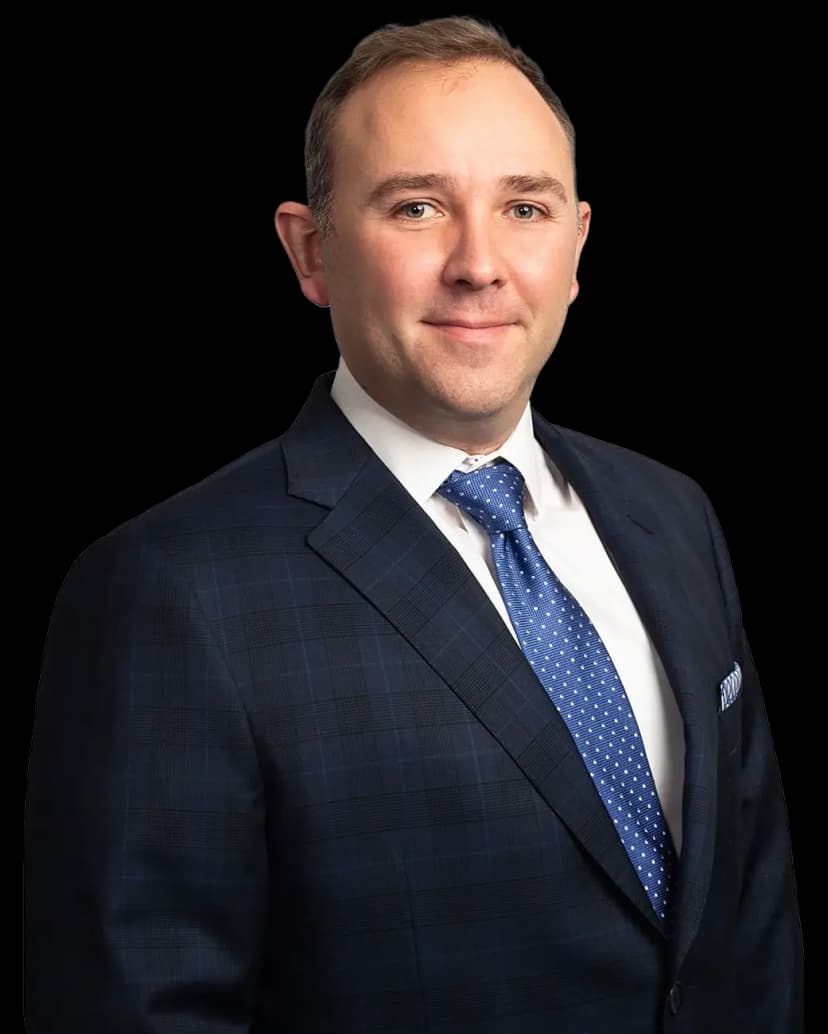
Matthew Bernardo
Partner


On-demand webinar
Builders’ Risk and Wrap-up Liability Insurance
CPD/CLE:
MATTHEW BERNARDO: Perfect. So let's get started today. Good morning, everyone, and welcome to session 2 of the 2026 From Bids to Bricks series. I'm Matt Bernardo, a partner in the Gowling WLG Infrastructure and Construction Group here in Toronto, and I'm standing in for Jessica Foster this session.
On behalf of Gowling WLG and my co-chair, Kyle David from Aon, we want to extend a warm welcome for all of you for joining us today. Thanks for making time in your busy schedules to attend. Your support and engagement are what makes this series possible. We truly appreciate it.
KYLE DAVID: Good morning, everyone, and thanks to Matt for stepping in for Jessica. I know she wanted to be here, but unfortunately, she had some prior commitments that she couldn't reschedule. Today's session is titled "Construction Insurance-- Builder's Risk and Wrap-up Liability Insurance." Over the next hour and a half, we'll dive deeper into these key project coverages. Back to you, Matt.
MATTHEW BERNARDO: Excellent. A couple of housekeeping items before we get underway. If you miss anything today, you'll find the recording and materials on the event portal posted about a week after this session. Feel free to share the link to your colleagues who could not be here today or who you'd think would find it interesting. Registration is already open for the following two sessions, and we're looking to put up a site where you can register for even more in advance. So please mark your calendars and join us for the full ride.
For the lawyers in the room, this program is accredited for up to 1.25 substantive CPD and CLE hours. And on that note, you'll also be receiving a feedback survey after the session. We'd be grateful if each of you could take a moment to fill it out, as we want to ensure that the content that we're providing through these sessions is useful and responsive to what you need as possible.
Finally, the standard legal disclaimer. This presentation is for educational and informational purposes only, and it does not constitute legal advice. Kyle, I'll turn it over to you.
KYLE DAVID: Thanks, Matt. As I mentioned, today's session is "Construction Insurance-- Builder's Risk and Wrap-up Liability." As you'll see there, we have our future sessions listed. So if any of those look to be of interest, please mark your calendars and make sure to sign up for those invitations. Go to the next slide.
Today, myself and Pankhuri Saxena will be speaking on behalf of Aon and covering the insurance concepts and both the builder's risk and wrap-up liability coverages. Go to the next slide.
I will be starting by discussing some insurance terminology and concepts, just for those on the call that might need a brief refresher. So I'll start with loss payee, additional insured, waiver of subrogation, retentions, and lastly, we'll discuss occurrence versus claims-made policies. Slide.
OK, so I'll start with the concept of a loss payee. A loss payee is a party that's specifically named in the insurance policy to receive claims payments in the event of a covered loss. So instead of all the proceeds going directly to the insured, the insurer will include the loss payee on any payments that should occur.
Who can be a loss payee? So common examples of a loss payee include lenders, project owners, contractors who have a financial interest in the insured property. So in other words, anyone who has money tied up in the asset and needs to be sure they'll be repaid in the event of a loss can be added as a loss payee.
The purpose? Well, as mentioned, the main purpose is to protect the financial interests of those stakeholders, make sure that when a claim is paid, the money flows to the appropriate parties and not indirectly through others and is used to repair or replace the damaged property rather than being diverted elsewhere.
Obviously, why does that matter? Having a loss payee listed is often essential to secure project financing. Lenders and owners want evidence that their investment is protected. And it gives them assurance that if something goes wrong, the insurance proceeds will come back to them first. And it helps them protect their collateral and overall financial position.
Next slide. Next, we'll be talking about additional insureds in the construction project policies.
An additional insured is a party that's added to an insurance policy that can receive coverage under the named insured's policies instead of buying their own separate policy for this exposure. They're sharing the protection that's already in place, as opposed to having two separate coverages that could potentially respond.
Who could be added as an additional insured? It's typically key project stakeholders, so for example, project owners, general contractors, and subcontractors [INAUDIBLE] name. These are parties that could be pulled into a claim because of their role in the project, even if they didn't directly cause the loss.
The main purpose is to extend liability protection to these stakeholders. And it also helps satisfy contractual requirements that often call for one party to name another as an additional insured. So everyone has a broader coverage tied to the same project.
And lastly, why does it matter? Being an additional insured helps protect these extra parties from claims arising from the project work. And it's a key tool for managing and transferring project risk, as it clarifies which policy is expected to respond if something were to go wrong.
On to the next slide, which is the concept of a waiver of subrogation. And obviously, it's discussed in the various contracts and agreements that are in place for projects, and it's definitely an important concept to understand and make sure that it's being captured correctly.
So a waiver of subrogation is in an agreement that prevents the insurer from going back against a third party to recover money after a paid claim. So even if another party may have contributed to the loss, the insurer agrees not to pursue them for reimbursement.
In the construction setting, the main goal is to reduce lawsuits against project participants instead of the insurer paying a claim and then, in turn, suing an owner, contractor or subcontractor. Everyone agrees upfront that the insurer will not seek recovery from those parties.
This lowers the overall level of conflict, or the potential conflict, that helps keep the project finishing without dispute or delay. It also promotes collaboration and minimizes disputes, as I mentioned, because the parties are less worried about being dragged into a future claim settlement. And everyone can focus on, actually, the project at hand and finishing that.
So lastly, who benefits? Owners, contractors, subcontractors, and any other involved parties benefit from the correct use of a waiver of subrogation. And anyone else who might otherwise be targeted by an insurer for reimbursement gains a level of protection when the waiver of subrogation is in place.
So lastly, why does it matter? This is important because it helps protect relationships between stakeholders during a difficult time if a claim occurs. When claims are handled without potential lawsuits among project partners, it's much easier to maintain working relationships and keep the project moving forward, which is everyone's shared goal. It also ensures that the claims are resolved without shifting blame or costs back and forth between parties after insurance has already responded.
Next slide, we'll be talking about retention. So in a nutshell, retention is the portion of the loss that the insured has to pay out-of-pocket before the insurance coverage responds. Think of it as the amount that the organization is willing to absorb itself on each loss. And the level of retention is obviously a question of a lot of different individual circumstances and beliefs in risk management, but the purpose of having a retention is the same between the two concepts we'll discuss.
First, it can help control insurance costs by taking the smaller routine losses. The insured can often-- excuse me. The insured can often offer-- the insurer, sorry. The insurer can often offer more competitive premiums. And secondly, it encourages better management of minor claims when the insured is paying the first layer of the loss.
There's a stronger incentive to improve safety, manage risk, and avoid unnecessary claims-- so those small nuisance claims that we don't want to be trading dollars with the insurance parties for.
And speaking about retention, there are two main types of retentions, being self-insured retentions and deductibles. Ultimately, they're very similar in the way that the-- end results, but they are different in the sequence.
So in Self-Insured Retention, or an SIR, the insured is responsible for handling the claims up to the retention amount, often including some or all of the claims administration. And the insurer only becomes involved once the threshold is exceeded. Now, that can sometimes differ depending on the language, and they may become involved earlier depending on the requirements of the policy. But generally speaking, it's handled until the retention is breached.
Secondly, it's deductible. With the deductible, the insurer administers the claim and then collects the deductible back from the insured. So the insurer is involved from dollar one, but the insured still shares in the cost of that claim.
Main difference between the two is the sequence and the payment or the control of the claim administration. So the dollars end up being the same, but it's who's paying them when and, potentially, who's administering that claim in that layer. So for example, if a policy has a hundred thousand dollar retention, the insurer pays the first hundred thousand of any covered loss. Only amounts above that retention are paid by the insurer, subject to the policy limits and terms.
This structure directly affects both cash flow and how frequently the insured is brought in the claim process, which can be beneficial from a premium perspective and also risk management perspective, potentially. Next slide.
So the last concept we're going to talk about is occurrence versus claims-paid insurance policies-- and comparing the two. So the two forms can be confused, but the key difference comes down to timing and long-term protection.
And first, timing of coverage. With an occurrence policy, what matters is when the event actually happened. If the incident occurred during the policy period, the policy can respond even if the claim isn't reported until years later. With a claims-made policy, what matters is when the claim is filed. The claim needs to be made against the insured and usually reported to the insured while the policy is in force. And that is obviously subject to any retroactive or extended reporting periods found within that policy.
The second point is long term-protection. An occurrence policy naturally provides protection for past incidents. Once the term has ended, it still responds to eligible occurrences that took place during that term, even long after the policy is expired.
A claims-made policy, on the other hand, requires you to maintain active coverage or an extended reporting period, as I mentioned earlier, if you want protection for past events. If coverage lapses or no tail coverage is purchased, you could not have protection for that loss in the event of a claim from the work that was performed earlier.
So obviously, it's very important to understand which of these concepts applies to which coverage and then making sure that you're purchasing either the extended reporting period or tail coverage appropriately.
So next, we're going to look at a table that's going to compare them. So firstly, what triggers coverage? For an occurrence policy, coverage is triggered by the event itself happening during the policy period. If the event occurs while the policy is enforced, that policy is the one that will respond. And for a claims-made policy, coverage is triggered when the claim is made during the policy period. So the focus is not on when the event occurred but on when the claim is first brought against the insured.
Next, we're talking about claims reporting. So under an occurrence policy, the claim can be reported at any time, even several years after the policy ends, as long as the event took place during that policy term. Under a claims-made policy, the claim generally must be filed when the policy is active or during an agreed extended reporting period, as I previously mentioned, sometimes referred to as tail coverage.
So as an example, if an incident took place in 2022, but the claim isn't filed until 2024, under an occurrence policy, that claim would be covered if the policy was active in 2022, when the incident occurred. Under a claims-made policy, that same claim is covered only if the policy is active in 2024, when the claim is made, or if you've purchased that tail coverage I previously mentioned.
So the question, Best for? Obviously, that's a huge generalization, but it ultimately depends on many factors. But an occurrence policy is generally best for long-term protection of completed work because it continues to respond to incidents that happened in the past policy periods. Whereas a claims-made policy is often used for ongoing projects with changing risks, where the coverage is structured around continuous protection as long as the policy remains in force and the claims are reported in time.
So go to the next slide. And that's all for me in discussing the terminology and some of those basic concepts. I'll be introducing my colleague, Pankhuri Saxena, who's a senior vice president in our Construction and Infrastructure practice, with a proven track record of leading strategic initiatives and driving results for her clients. With that, I'll hand it off to Pankhuri.
PANKHURI SAXENA: Thank you, Kyle. That was a great refresher on insurance terminologies. Always best to take a look at what some of these clauses can mean beforehand before a claim actually occurs. And then you open a policy and go about reading what those terms mean. So that was a great refresher, and thank you for that.
Good morning to-- or good afternoon to everyone here, and thank you for taking the time to join this call. I'm very happy to be speaking to all of you today. Just as a brief introduction, I've been in the insurance broking space for about 15 years, at the moment specializing in construction and infrastructure. And I've been doing that for most of my career but have also spent a large amount of time in M&A insurance. And M&A insurance around infrastructure domain is what was most of it.
So thanks so much. We're hoping for this session to be an interactive one. We've included a couple of polling questions. The idea of doing that is that we are trying to gauge how many of you are checking your emails and how many are ready for that 20-mark test at the end of this presentation. Just kidding. We would hope that this one is an interactive session. Please feel free to put down your questions in the chat, and we'll take them up as we go along.
So on the call today, we've got a great mix of owners, contractors, lawyers-- I would say three groups of people that don't necessarily see the world the same way but who absolutely share one thing in common, which is that they will pay the price if risk is not handled appropriately.
So our goal over the next few slides is to address too often misunderstood concepts around builder's risk and wrap-up insurance. And we'd like to make it as practical and clear as possible, as interesting as we can, by sharing claim scenarios. We'll obviously not take names of our clients for confidentiality reasons, but happy to take more and more claim situations so that it becomes more engaging.
We're going to be focusing on three main questions. What are you really getting when you buy a builder's risk coverage? How do OCIPs and CCIPs-- and I'll get into what those really mean-- change the game for owners, or contractors, or subcontractors, or maybe even subs of subs? Where do disputes usually come from, and how we could avoid some of these? So we'll walk through these with the help of claim examples.
I know up till now, I've only referred to these as abbreviations. So when we talk about OCIPs, which is an Owner-Controlled Insurance Program, or CCIP, which is a Contractor-Controlled Insurance Program, what we're really talking about is, who is driving this project insurance bus? Who is going to manage the risk? Who is going to design the risk? Who is ultimately going to own that risk and have a leverage with the insurers?
So in an OCIP, as the slide tells you, it is the owner that buys one large policy or program covering itself, covering the GC, covering the enrolled subs for the project. But in the case of a CCIP, it is the GC, or the General Contractor, that buys the program, enrolls the subs, and often, as required by the contract, names the owner as an additional insured. And of course, as Kyle mentioned, there are several other requirements around loss payees and et cetera that need to be addressed at this stage as well.
So the aim of both of these OCIP or CCIP is to basically replace any kind of patchwork when it comes to insurance. Try to imagine the situation where you don't have a controlled program. You have contractors bringing their own general liability, workers' compensation covers and then pointing fingers at each other when a claim arises. That can be a real problematic situation, which we obviously want to avoid. And so an owner-controlled or a contractor-controlled program is the way to go.
Now, in an OCIP-- or even in a CCIP-- but the project agreement is going to spell out the list of insurances that need to be procured. More often than not, it's going to be-- OK, the owner is going to get the builder's risk, wrap-up professional, pollution. Again, it depends on the kind of project and the contractors that we are working around with.
And then there will be a section that refers to non-ancillary sort of insurances, like the off-site GL; if you have drones on the site, then drone insurance; maybe equipment insurance, a transit insurance, auto insurance. Stuff of that sort generally falls under the private sector partners bucket. But again, it really depends upon whether you're going ahead with an OCIP or a CCIP.
If you see the first statement of this slide-- which says "typically determined at the tendering stage." And that is what we usually say-- that it needs to be decided upfront whether it's going to be an OCIP or is it going to be a CCIP. But I have, of late, come across some contracts which are not very clear on that language. And so, as insurance brokers, we review those and let you know that it needs to be made clear at the beginning.
So just to give you an example-- obviously not taking names-- but recently, I was looking through a contract which was at a stage that we could raise RFIs, which had a language around professional liability insurance. And it said that the owner is going to obtain all the required information-- which is all the required underwriting information from the contractor-- and then go out in the market and obtain the insurance.
And just in case the owner is not able to obtain the insurance, then the owner is going to give the contractor 90-day notice and ask the contractor to go out and obtain this insurance. And if the contractor is not able to obtain these insurances, then they are going to give 90-day notice to the design team, and then the design team would go out and obtain the covers.
This is a definite example of something that should not be done. It should be made clear from the very beginning as to whether this is going to be an OCIP or a CCIP because it just helps avoid confusion in the entire placement process and in the entire claims process as well. So with this, we are now ready for our poll question.
OK, so I'm just reading it out. Who is best positioned to place project insurance?
KYLE DAVID: How many takers on whoever wants at least?
PANKHURI SAXENA: [LAUGHS] OK, so I'm assuming the ones who have said "always the owner" or "always the contractor" are probably the owner and the contractors, respectively. But yeah, the correct answer in this case is, definitely, it depends on the project complexity. OK, so can we move on to the next slide?
OK, so with this-- I know this slide says "benefits of OCIPs for municipalities." It doesn't really mean that I'm trying to say that this is the way to go and that it is going to be an OCIP. But at this point, we are addressing what an OCIP could mean for municipalities, large businesses, provinces, et cetera. But to be clear, if there is a straight answer to if there is a better program, whether it's an OCIP or a CCIP, there's definitely no straight answer to this.
So as I mentioned, provinces, municipalities, large businesses are examples of entities that might look at OCIPs. They may have a strong pipeline of projects to leverage with the insurance marketplace, and they might want to take from that experience and the existing relationships that they have with the insurance partners.
But what are some of the reasons why this may end up being better for them? It's that-- I mean, basically, through privity of contract, the owner has the ability to insure multiple contracts, and that's not just with the prime contractor. He could insure his contract with professionals, with suppliers, with speciality contractors.
And with some of these, the project owner may actually end up having long-term or long-tail public liability concerns, which can be addressed well with an insurance policy. So if they had an OCIP, it's probably easier for them to address that long-tail public liability with, say, a completed ops sort of a coverage.
If they went ahead with an OCIP, they would have full sight lines and control of movement from a construction to an operational phase. Obviously, we know that it's not like provinces or municipalities are building something to sell. They usually are going to own and operate the asset for decades. And so that transition from construction to operation is a very critical transition in construction phases because you see most number of losses actually occurring in that phase. And that is mostly during the testing phase. But there could be various things to it.
So to give you an example here, I had a-- it was an LRT opening. And what they usually do is that they'll do something like a soft opening. And they'll open up the stations, but then they'll not open anything else. So what is the kind of program that needs to be put in place for that small portion that has opened up but still continues to have your builder's risk, wrap, et cetera, running? And so to manage that critical balance between the two becomes a very essential step, and sometimes, owners are in a good position to do that.
It's also possible-- and it happens more often than not-- that when a project reaches substantial completion-- even after it reaches substantial completion, there will be a list of minor deficiencies that need to be worked upon. And those can be addressed in a builder's risk policy and under a certain section of the wrap-up liability policy. But those can also be addressed if you took it upfront with a property insurer-- very hard to get but can be done in theory. And so, again, the transition needs to be very carefully designed or crafted so that all of these risks get covered appropriately.
From an owner point of view, the owner has the ability to balance the level of risk transfer and control. What I mean when I say that is that it is not that the only thing that you can do with risk is insurance. Insurance is definitely a part of it, but there are so many other things that can be done. You may want to retain it. You may want to have a captive solution. And of course, captives is a very large topic and requires a separate presentation in itself, so I'm not going to spend too much time on it. But the owner may want to look at it from the point of view of not insuring the entire risk, and so is in a position to be able to do that.
From a cost perspective, there is always an impression that the owner can take comfort in the fact that the insurance is not going to be marked up by the bidders, so of course, that's why they end up saying "reduced costs." They get a control over the claims process-- very important, especially in large construction projects that are never going to end in time and where you are definitely going to see extensions.
So to give you an example-- and this happens more often than not, so I'm not even sure whether this is just one example to cite here, but just because this was more recent-- we had put out extension terms for an extension that was supposed to come up. The project was getting delayed. It was supposed to be extended for a good period of one and a half two years.
We put out extension terms. We got a "no known or reported loss" letter signed. Everything was done. Last minute, people started reporting a whole lot of claims, and that, of course, threw the entire discussion with markets around extensions into quite the ride for us. We were able to get it through, but then it is important to have that control so that you can mitigate surprises as far as claims are concerned.
Now, do I mean that OCIP is the only way to go? No, not at all. Especially in the case of a strong and experienced GC, I would 100% say CCIP. In fact, honestly, I do work more on CCIPs than on OCIPs. And so it depends on the kind of experience. The way that the GC is actually looking at the risk-- that has also got a very large role to play over here. And of course, it's an absolute no-brainer that if it's a smaller or a more standard project, just go ahead with a CCIP, and that can be something that one could benefit from.
So to give you another example at this point, I had a-- there was an owner. It was a not-for-profit company. They were basically into events and art exhibitions, and so they do one-off projects here and there around studio fixes and the likes.
But then they were now going to do a pretty large project which involved a mass timber component. And so they employed an owner very well-established, very well-known, experienced in the market. And it was also a cultural heritage building, so everything was really close by.
So there were a lot more complexities to it, but just given the experience of both the owner and the contractor, in this case, it was absolutely clear that it is the contractor who's best suited to design that insurance program. And so we worked with them to put one in place.
So one thing that I would like to put out here is that-- and I think I wouldn't get a lot of agreement from the broking community, as such, on this. But I feel before the program is finalized, it's very important to share a draft of the wording with either the owner or the contractor-- the draft proposal-- so they know exactly what they are getting into, rather than trying to make changes to an already bound insurance program, which can be a very hard job. [CHUCKLES] Next slide.
So we have a polling question here. So you've just signed a contract. Six months later, a loss occurs, and the insurer denies coverage. What do you think is going to be the most likely reason for it? It's funny how we have somebody who's saying the insurer is just being difficult. [LAUGHS]
Great. So as I was actually expecting, most of you did respond the loss wasn't covered under the policy, but the right answer here is that the contract required a broader coverage than that was actually in the policy.
So before I get into that, I think it would be a good idea to start a contract section with a disclaimer. Obviously, when we, as insurance brokers, review a contract, we're not reviewing it from a legal point of view. We're reviewing it purely from an insurance perspective. We're looking at the potential gaps on indemnity, on warranty, liquidated damages, et cetera.
We can help draft RFIs-- which is what we do more often than not-- when engaged at the right time. And we provide that basis industry best practices. But that is not a legal review of the contract by any means. It is a review done from an insurance point of view.
So one thing is for sure-- that when we review a contract-- and I have seen this happen with quite a few of the people that I know of. They review the contract, they write down a long list of RFIs, and then they are sent supplementary conditions to the contract.
So before we get into reviewing the contract, of course, we need to make sure that we do have the entire-- not just the contract but also supplementary conditions to the contract, et cetera, which have been shared with us, and we review it all in totality and give our comments on it.
So what are we really reviewing here in terms of sections? We're reviewing, say, a limitation of liability clause. Now, it is possible that that limitation of liability clause is excluding consequential loss or that limitation of liability clause does not apply to third-party claims. In some cases, it's also possible that the liability that has been accepted is unlimited. I have seen that happen.
But why is it important for us to review it? Because insurance doesn't have to be exactly what your limitation of liability clause is asking you to be. We can actually place an insurance policy which is going to be much broader and will offer coverage much more than what is mentioned under any sort of limitation of liability clause. And let me explain this with the help of an example. Here, I'm comfortable taking names because this one was in the public domain.
This is a claim of Sanofi, which is a French pharmaceutical company. They got into a contract with UPS for warehousing, and they were storing vaccines at the UPS warehouse. Vaccines, of course, need to be stored at a certain temperature. And if you are above or below that temperature, then the vaccine is no good.
There was a loss that occurred. That loss was about $9 million. The court went back to the contract and saw that the limitation of liability that UPS and Sanofi had gotten to was only a hundred thousand dollars. But thankfully, Sanofi had an insurance policy that was for a good enough amount, and so it did pay out, which makes it very important for us to review limitation of liability clause but review it from an insurance point of view.
Another clause that we do review is the indemnity provisions of the contract. While it is important that those indemnity provisions are mutual, with each party providing the other with an indemnity, it is very common to see this being one-sided. And so we do comment upon the indemnity provisions of the contract as well.
Moving on, we also look at the uninsurability section of the contract. Now, what an uninsurability clause spells out is that it talks about what happens if a party cannot obtain insurance because of change in market conditions. So it's almost like a safety clause that is allowing the party to avoid penalties if they are failing to maintain the cover.
Now, I'm not sure if a lot of you on this call are aware, but there was a time that a project-- and I shouldn't say "there was a time" because we do run into issues on some of those project-specific professional liability policies even today. But this was happening more often than not sometime back, where, supposing there are a whole lot of claims under the PSPL policy, we were not able to necessarily get extensions and those policies had to lapse. And so because of that, it's become something that we've started to see as the uninsurability clause excluding professional liability.
However, as insurance brokers, whenever we look at the contract, we always make sure that we push back on this because a market has changed. And I don't think it would be fair to allow the contractor to bear penalties only because that insurance is no longer available in the marketplace.
The next section that we look into is a force majeure clause. When I looked at force majeure several years back, the first thing that struck me was Act of God peril. And that's literally where it would stop. A force majeure is basically an event that impacts the performance of the work but, over which a party that is claiming the force majeure, has absolutely no control. And what it is doing is, the clause is permitting the party that is relying on the clause to be excused from the performance until those conditions no longer exist.
Now, we all thought of it as earthquakes and floods, et cetera, but then there was a time that we saw the pandemic happen. And so it does now become even more important, since we've seen something of this sort happen, to review that force majeure clause and see whether it's going to encompass, literally, all sorts of events that may not be under the control of the party that is actually triggering that force majeure clause.
And of course, because we are an insurance advisor, we have to review the insurance section of the contract. When we review it, I think it would be silly for me to say that we have to review and see if it covers all the forms of insurance. That's pretty basic. We will see that it insures builder's risk, wrap-up, professional, pollution, and whatnot.
But then we also go into further details of it. Like, we'll see what are the deductibles that this contract is asking you to obtain because some of these contracts are a copy-paste of other contracts and so may ask that you need to take a $10,000 deductible for builder's risk on a project which is $1 billion in contract value, which is never going to happen. It is not achievable in the insurance marketplace. And so we review those deductibles, and we see that, OK, this is not something that is possible, et cetera.
I also want to dwell on the deductible section from the point of view of that polling question that we had put out there. And this is an example of a case that happened with us, with one of my clients. Thankfully, they did not see a claim. It allowed Aon to actually win that business because we looked at the policy and we said, OK, there seems to be a concern here.
But just to give you a more perspective on it, the deductible section of the contract said that you need to have any other peril deductible of 250,000 and you need to have an earthquake deductible of 500,000. When we looked at the policy, the policy said that the earthquake deductible that was actually there in place was-- and I'm going to say this as slowly as possible-- 3% of value at risk at the time of loss, subject to a minimum of 500,000.
Why is this really important for us to know, and especially from the example of the claim that I am referring to, is that my client-- who was, at that time, not a client but had-- it was a bridge. And the way that their statement of values captured those values was that it said "west end of the bridge" and "east end of the bridge." 70% of the values were put under west end of the bridge, and 30% was put under east end of the bridge.
Now, imagine if a claim arises in this scenario. The deductible that is going to apply is going to be 3% of the entire 70% of the total contract value and not $500,000, which is absolutely nothing in comparison. And so not only are you not compliant to the contract. If a claim was to arise, this would have been a complete disaster for the client. So we review it from the point of view of whether those deductibles are available in the market and, of course, get into more details on what kind of deductibles need to be there in place.
We also look at it from an early works, main works, et cetera, point of view because we have a lot of clients that are large clients that will say that, OK, I'm going to do the main works, but I need time to get there. And before I get there, I am going to be doing some clearing-the-site activity and that kind of work. And so I need you to put a small policy in place.
We should review the contract and, of course, see whether the contract has separate provisions for those enabling works or not, because that's an important aspect. Sometimes, contracts spell out separate provisions. And if it doesn't and if we are in that stage of putting out RFIs, we definitely put those out because you don't want to place a hundred-million-dollar wrap-up liability policy for going out and doing some deforestation activities. So we'd review the contract from the point of view of what is there for enabling works and what is going to be there on the main works point of view.
One big thing that I'd like to put out here-- and again, I've seen this from a claim scenario-- is that foundations should always be covered under main works section and not under the early works section because early works policies put in place, and then it lapses, and then there can be a really big claim, which could result from a foundation under the main works section, and it's not going to get paid, or there are going to be issues at a later point of time. So we always make sure that we look at these-- I shouldn't say "smaller things." These are details-- before we go ahead and place the policy.
We've also had scenarios where our clients have come to us and have wanted to place insurance package by package. And when I say "package by package," it's that the contractor says that I'm being awarded work packages or change orders. And so I need to insure only the amount that has been awarded to me at this stage.
That becomes problematic because you can go out in the market and seek insurance for a small cover. And it happened with one client. We placed a policy for $50 million. Eventually, that project became phase one, phase two, and then within phase one, we had stage one, stage two. And so we highly recommend that we need to place one policy all the way to the end, covering everything and avoids issues at the time of the claim.
Of course, delivery model is very important when we are reviewing the contract. What I mean when I say that is, say it is a progressive design-build. Then, more often than not, you're not placing project-specific policies in the DPA phase. You're going to do that in the DBA phase.
But sometimes, contracts don't spell it out that way. The contract is just going to say, go ahead and place all these project-specific policies instead of relying on corporate covers. And that becomes an issue.
So that was my little bit on the contract section. But before I get into builder's risk and wrap, I do want to spend some more time on what are the other main insurances and why those main insurances need to be covered. And I'm not going to spend too much time on it because we have separate sessions on the environmental and the professional separately.
But it's a misconception that a lot of people have-- that if I placed a general liability policy and it covers me for a sudden and accidental pollution, then why do I need to go and place a pollution policy? And which is why I want to address that here. When you place a general liability policy, even if it covers you for sudden and accidental pollution, it is only going to cover you for things that are abrupt and unintended.
And it also is very specific to cover only certain types of pollutants. If you have a dedicated environmental liability policy-- which sometimes contracts, I'm not sure why, but skip mentioning the requirement of it-- then there's much broader coverage. And it can cover gradual, historical conditions; on-site, off-site cleanup; transportation. Stuff of that sort also gets picked up. And so there's no way that placing one or the other is good enough. You need to definitely have both in place.
And then the last portion of this slide, which is on the professional liability, we've seen a lot now that many owners are seeking to delegate certain design scope and risk to the contractors. And if you are subbing out this design responsibility to third-party consultants, you just need to make sure that you obtain evidence of the professional liability insurance and that you're comfortable with the limits that they are carrying. And you pay special attention to the policy annual aggregate limit, et cetera.
And even then, there is definitely a potential risk associated with it because sometimes, the contract language may say that the contractor may be ultimately responsible for the design risk. And if that is the case, then collecting any sort of amount under a third-party consultant's insurance policy is going to be a very time-consuming and challenging process. Might as well have a policy at the corporate level to address those forms of risk.
And of course, sometimes, it's not just the policy which is there at the corporate level which is going to do the job. You will need a project-specific professional liability. And we do a combination of that with other kinds of contractor protective indemnity insurances sitting in excess that help to actually protect the insured in a much better manner than just having one PSPL in place. Next slide.
OK, so we're finally getting into the crux of builder's risk. On builder's risk-- or more often, in this part of the world, called builder's risk or course of construction policy, but in different parts of the world, called different things. Like, for example, you may come across a contract that says "construction all risk" or "erection all risk." It's, at the end of the day, the same thing.
A construction all risk is basically more for civil engineering sort of projects-- if you're doing roads, bridges, stuff of that sort. And an erection all risk is where there is a lot more heavy equipment involved that requires testing and commissioning. That's when you place a separate EAR policy. But in this part of the world, usually just called a builder's risk or a course of construction policy.
So what does it actually cover? It basically covers any kind of direct physical loss or damage during the construction phase. And the word "direct" is very important here.
Imagine a scenario where the project shuts down because of a weather, or a pandemic, or a civil unrest or protest-- any of those kind of situation-- and it's just shut down. You are denied use of the property. But it is not really physical loss or damage. Do you think that the plain vanilla builder's risk policy would offer coverage? The simple answer is no. And so direct physical loss or damage needs to be seen for the builder's risk policy to offer coverage.
If you see here, it's noted that it could be for projects from ground up or on a renovation sort of a project. Now, I'll give you an example here of a historic hotel. Say there's a investor who's buying an old hotel in downtown Toronto and decides to convert this into a boutique property. The building itself is around 80 years old. He's involved some contractors who are redoing all the interiors there, adding a new plumbing, electrical, doing some luxury finishes, et cetera.
And during the renovation, one of the contractors leaves a rag near the heating system, and it just causes a huge fire. The fire has destroyed not just the newly installed finishes or framing, but it has also destroyed the original structure. So that's when our work becomes very important-- not after the claim, but before the claim-- which is to ensure that you have your policies structured well.
We could have done this in two ways. We could have had a builder's risk policy that would cover the value of the renovation work, and sometimes even the existing structure-- if it is endorsed, only then. Alternatively, the property policy on the existing building, plus a renovation builder's risk, is something that we would help place.
But the key point here is that, for renovations, what part is existing? What part is new work? All of that needs to be defined really well so that the policy actually ends up responding rather than having issues in the event of a claim.
As you can see here, the policy is placed for loss or damage on the site, during transit and storage, et cetera, as well. Why I note here on builder's risk versus installation floater is because a lot of people think that the installation floater policy will do the job if you have a lot of these small jobs that are being done. That's not necessarily the case because, usually, installation floater policies, they do not protect the subcontractor's interest. And that's, of course, not compliant with CCDC requirements if it's a CCDC contract that needs to be complied to.
And even if the work that is done by the subcontractor-- if that causes the loss, then the insurer does have the right to subrogate back from the responsible party, which is not really the case in builder's risk because in builder's risk, there's no subrogation rights against the responsible subcontractor, which is the reason why you're trying to have one policy to have all these people covered under it. Also, usually, installation floater policies don't cover flood and earthquake.
And a big point here is that they are always issued on a per-loss limit basis and not on an aggregate basis. What that means is, say I have a $500,000 loss and I have a $500,000 per-loss limit under the policy. I can have three of those losses, subject to the fact that the insurer doesn't go ahead and cancel the policy after the second loss, which can happen. And so having that builder's risk policy does become an important point here.
Now, who is insured? We are insuring the owner, the general contractor, the subcontractor.
One big question that comes up is that, are subs of subs included? The answer to that is, well, not in the plain policy, not in the vanilla policy, because the definition of a subcontractor, as per CCDC, is somebody who has a direct contract with the general contractor. And of course, subs of subs don't have that direct contract with the general contractor, and so they're not automatically included.
Having said that, should we include them? Yes, of course. We should make sure that the policy becomes broadened enough to include all of these parties under the policy.
So the next point here is, what is insured? The policy limit is usually-- the way that we usually do it is that it's supposed to be a combination of hard costs and soft costs. But simply put, people say insure the contract price.
But again, why that contract review that I was referring to becomes important is because if you were to rely on, say, a CCDC 41, then that is saying you need to place it as per 110% of contract price. And that should include the value of the owner-supplied products and the design services, et cetera, which a lot of people end up not insuring. And so very important to insure the right values.
Very important to discuss, even at this stage, whether a probable maximum loss study or a maximum foreseeable loss study is something that can be done. So we have risk engineers who can actually do these studies and arrive at what can be that big loss if everything was to catch fire. And so that could be used as a limit as well. Next slide.
So at this point, we have a polling question. When does builder's risk coverage typically end? OK, so I'm happy to see that most people have said "when construction is complete" because that gives me something more to talk about at this stage. Yes, builder's risk coverage should end when construction is complete, but does it always end when construction is complete? I mean, it depends if the person has actually reviewed the contract and has placed the contract the way that it is supposed to be placed or not.
So to answer this, the builder's risk coverage will end earlier of some of the conditions occurring. One is 10 days after ready for takeover, supposing your contract says it needs to be 10 days after ready for takeover, or 15 days after substantial completion. Or however it is defined in the contract, we could take it up to that.
But like I said, it is earlier of the first, which is 10 days after ready for takeover, or on commencement or use or occupancy of that section of the work, unless, of course, that section of the work has been occupied for construction purposes. And the third one is when the site is left unattended for 30 days or 30 consecutive calendar days.
And I feel like the second and the third parts are very important to understand because, in projects, what happens is people don't realize that the moment they occupy the building-- which is supposed to be under construction-- ideally, your builder's risk policy should cease to operate, and so you don't have coverage there anymore. Or if you've left your site for 30 calendar days, then there's going to be no coverage.
So I've had a client of ours who said that we need to place a policy from now to 2032. And then from 2032 to 2033, there's going to be no work because we are doing some licensing work, and then from 2033, we wanted to start again. That is not how these policies can be placed because, for one year, if you are doing no work on the site, then this policy is not going to offer coverage, and it's going to lapse. So very important to know when that policy is going to lapse, and obviously, try and make it as compliant to the contract as possible.
What is not covered? Because a builder's risk policy is an all-risk policy, what is not covered is very important to see because, obviously, the exclusions are what are going to define what's not covered under the policy. So general rust, wear and tear, deterioration-- all of that is not covered.
So imagine a scenario where you've ordered some steel beams and they are just delivered early to the site and they are stored on the site for over a year. And over time, they're just sitting there, and they develop some sort of surface rust. And there's no storm that has happened. It's just a slow deterioration.
Gradual deterioration is not covered. Any kind of corrosion, dust, et cetera, is not covered. A builder's risk would pay up only when the accident or what happens out of it is sudden and accidental in nature, not something that is slow or even predictable. That doesn't get covered. Of course, cyber, nuclear, workers' compensation injuries don't get covered because there are other policies to cover that risk.
Contract penalties, pure financial loss sort of situation-- those don't get covered because imagine, again, a situation-- and we were discussing this prior to the call, so I do want to bring this up to some extent now, is that imagine a scenario where a retail developer has a-- he's got into a contract with a tenant. And the lease says that if this store is not ready by November 1, then the landlord is going to pay $50,000 per week in penalties.
The construction is basically falling behind because of noninsured factors. It is things like poor scheduling, the subcontractor disputes, and stuff of that sort. And so that policy is not going to cover it.
How is premium determined? Premium can depend on various factors. It can, obviously, be on the project value, the hard cost, soft cost. As I mentioned earlier, they have different rates, and those rates get applied.
What is the kind of construction that we're talking about? Is this a wood frame? Is this concrete? Obviously, wood frame is more riskier, so the insurer is going to charge a much higher rate on that.
What is the location of the project? Is it urban? Is it rural? Is it a renovation project? Is it a new project? What are the kind of deductibles under the policy? What is the kind of term that we are looking at? Is it going to finish in one year, or is it going to be for five years?
And then, of course, we take a whole lot of information from our clients as well. Like, for example, we'll ask for applications to be filled up. We'll ask for geotechnical reports, drawings, water mitigation strategies, et cetera. And based on that, the premium is determined.
As I was mentioning, another section question that I do want to address here is the deductibles. Very important to see who is responsible for the deductible. And I feel like it takes me back to that contract review portion, where recently, I had come across a contract that said that if the contractor is responsible for the reason behind the loss, then the contractor is responsible for the deductible. If the owner is responsible for the reason behind the loss, then the owner is responsible for the deductible.
But in case it is undeterminable who's actually responsible for the reason behind the loss, then in that particular contract, it was still putting it on the contractor. I feel that it should be a matter of negotiation, and so, again, very important for us to review that contract and ensure that wordings are something that are in favor of our client.
Another section here important to address is warranties. So warranties can be a very restrictive language that may actually void your coverage. To give you an example, hot work permit.
I'm not saying that you will not see those under the policy. You may see it. But just in case you are not going to have sprinklers at the time of that loss, then you're in a better position letting the insurer know that these are the things that are going to happen and so I may not be able to comply by the warranties beforehand than actually having a claim and the insurer trigger that warranty and you're not getting paid anything at all because that policy can be canceled because of that.
What happens after the policy is placed? Of course, just because of how projects are, you may need an extension. If you need an extension, there's going to be information that you may need to provide to us. And so we take all of that information and extend policies.
There may be change orders. And so we could use those change orders to either further negotiate or just endorse the policies. And of course, there could be claims, and so you'd need claims preparatory services, advocacy services, which could then come into play. Next slide.
So I know that I said that faulty workmanship or design defects, et cetera, are excluded. Historically, yes, the CR market was unwilling to provide cover for damage resulting from defects, but over the last, I would say, 30, 35 years, the position has shifted a bit.
And there are certain kind of wordings, like, for example, the London Engineering Group defects wording, which is the LEG wording, or the design defect wording, which can provide some amount of coverage. So there'll be like a LEG 1, LEG 2, 3, or a design defect 1, 2, 3, 4, 5 sort of thing, which is available in the market and can provide coverage.
So in gist, what this means is, where there is the broadest exclusion, that would sit within the LEG 1 or the DE1 space, and wherever the exclusion is the narrowest, that would be more the LEG 3 or the DE5 space.
What kind of defects am I really talking about when I say defects are excluded? Those defects can be because of defects of a design plan, defects of material, defects of workmanship. It can arise because of various reasons. But let me explain this with the help of an example, and I've always used this example because I found it the easiest to understand.
Imagine a defective bolt and that defective bolt is used in a steel frame and that steel frame has a roof sitting on the top of it. Now, because of that defective bolt, there is a big loss that occurs. Everything falls apart. The steel frames, the roofs-- everything falls apart.
In a design defect 1, or DE1, LEG 1 exclusion, it's an outright defects exclusion, which means everything is not going to be paid. And then it keeps progressing. So in a DE4, only that defective part-- which is that defective bolt-- that is not going to be paid, but everything else would be paid. And if it's a DE5, then you cannot make improvements, but that defective bolt of yours can also be paid up.
Now, are scenarios always that easy to explain as I did right now-- that the bolt is defective and that has led to all of these claims? No, it doesn't really happen in real life. In real life, it's more complicated. We'll have situations like your entire mix of that concrete was defective.
And so it's very difficult to figure out what portion needs to be excluded or not excluded, which is why we always strive and we try to place covers. We will always try to place at least, at minimum, a LEG 2 or a DE4. And there is now availability of DE5 in the market. It comes at a higher deductible and at a higher premium, but it is available in the market.
The next section here talks about bylaws. Bylaws basically say, because of a government action or an ordinance, you have to make upgrades. To give you an example, there is a renovation taking place, and there is a small cupboard fire that happens at an old building. When the city goes and inspects it, the city says that, OK, what you need to also do along with these renovations is that you need to upgrade your sprinklers. You need to upgrade all that structural bracing that is there because you're using stuff that needs those upgrades. Sometimes, the cost of the upgrade can be far more than the cost of just going about repairing, and so this bylaws extension becomes important.
Debris removal-- again, very important. The reason I say "plus 300 meters" is because sometimes people don't realize and they'll just place debris removal for whatever is in the project site. But imagine a really tall building that falls down. It's not going to be just the project site that it's going to have debris over. It's going to be over a much larger area. And so you may want to have all of that covered as well.
And then there are other covers like extra expenses, off-site storage. When you do off-site storage, always make sure that-- if your original policy has coverage for flood and earthquake, then make sure that that off-site storage also has coverage for flood and earthquake because it does not come as-is.
And then testing and commissioning. As I was mentioning, testing and commissioning, definitely one of those phases where most of the losses are seen. Usually, it's time-bound. Your policy will say "testing for 90 days." It's not necessary that you'll finish all your testing in 90 days. So make sure that you look at the policy to see if all of that needs to be changed. Next slide.
And then there's a section that talks about soft costs and delay of completion. Again, let me try and explain this with the help of an example. Imagine a high-end office [INAUDIBLE]. It's supposed to be getting completed, say, on June 1, and there's a signed lease that July 1 onwards, somebody is going to come in. And then there's a gas explosion that happens just before, like maybe now, and that's going to make sure that there's going to be three-- this is going to delay the entire project by quite some time.
So not just is there going to be physical damage on your site that is going to be incurred. There's also going to be an additional design fee to redraw all of those damaged plans. There's going to be lost rental income due to the delayed opening.
And so the soft cost coverage, which would cover things like financing costs, design fees, legal fees, and the delay in completion coverage, which covers things like loss of business income associated with delayed openings-- that can get picked up under the DSU section.
An important section here to remember is the contingent delay in start-up insurance. The way I like to put it in easy words is that, say, my project is getting delayed because of someone else's project getting delayed. So those delays are not because of nonphysical damage kind of stuff. So it's not that my supplier has gone bankrupt and so this policy is going to trigger, or there's some sort of a logistics issue, or contractor is just running late for whatever reason. That's not when it's going to pick up, but it's going to pick up supposing there's a fire at my supplier's end and he's not able to reach. And that's when that can be a coverage.
And then we can move on to the next slide. I'm wanting to actually wrap up as fast as possible so that we can take up all the questions after. And I'm going to skim through this in the next five minutes.
Wrap-up is basically a section where you are offering a third-party liability damage for all of the parties together. So it's going to be the owners, contractors, everyone together offering third-party liability damage.
Don't rely on a general liability policy. Sometimes, I don't know why, again, contracts will say, place a general liability policy of 5 million. But that's not going to be what is needed. You need a wrap-up liability policy for projects that's going to cover all your parties.
The premium is dependent, again, on a lot of things, like what could be the exposure, what is the deductibles that need to be selected, what are the water mitigation plans, and stuff of that sort. So it's going to depend on a lot of aspects.
The right way of doing this is-- OK, you know what? Maybe we should have the polling question. Then I will say the right way of doing this. Can we have the last polling question?
So under a wrap-up program, when does contractors own GL? OK, bingo. It looks like we have a lot of insurance experts here, which is great. I am not losing my job only to AI. I have a whole room full of people right here. But yeah, the wrap-up, ideally, should-- the GL should actually come in only if your wrap-up gets exhausted and not before that.
Make sure that you look at all your COIs. Don't evidence anything that you don't already have. See the warranties. Yeah, and we can move on to the next slide.
And this is exactly what I was referring to here. GL is basically-- it's not like it's for a project. It's one GL policy that is sitting over everything, and so it has its own drawbacks. But have it sit over the wrap-up so that it can respond on a difference in conditions and difference in limit basis, which basically means, for whatever reason, if your wrap-up doesn't respond, the limits get exhausted, or there's no coverage under the policy, then the general liability policy can respond.
And yeah, that's about it. I wanted to rush through the last bit. I'm sorry, the last bit felt a little more rushed, but just wanted to leave some time for questions.
KYLE DAVID: OK, Matthew, I'm not sure if you've had a chance to look through some, but we have a couple questions parked here. So we'll start with one. What is an installation floater?
PANKHURI SAXENA: OK, so an installation floater here would just be like, I'm doing a whole lot of small projects, and so I want to take a policy with just one limit that is sitting over all of the projects that I'm working on. But it has its drawbacks. It's not like a builder's risk policy because, as I was mentioning, it doesn't cover the subcontractors and it's not compliant, really, to CCDC requirements.
And so if it was an either-or, I would definitely say, base a builder's risk policy over an installation floater. You do an installation floater if you're doing a lot of these smaller odd jobs, but the preference is to do a builder's risk insurance.
KYLE DAVID: Perfect, and you answered the second portion of that question already. So maybe if we can comment a little bit more on the severability of interest provision in-- I believe that would have been the builder's risk policy where that was mentioned.
PANKHURI SAXENA: Right, right, and that becomes very important because we need to ensure that the policy is-- it's just one policy, and it's one entire value that is sitting over everyone. But you ensure that it sits like there's a separate policy for each and every one of them.
So you include various clauses within it, like a waiver of subrogation, et cetera, so that you don't end up subrogating against the other parties on the policy, which is the reason why you're placing a builder's risk policy in the first place, right? You want to have one policy that is going to be in place to respond to all of the claims that arise from different situations.
The idea of a severability of interest is mostly to ensure that, in a way, especially in wrap-ups, et cetera, you can be a third party to each other even though you are all named under the policy. So you'll have cross-liability, et cetera, clauses, but you will all be third parties to each other.
KYLE DAVID: OK, great, we're getting quite a few questions coming in here. So moving on, are the damages from supplier bankrupt covered by a builder's risk?
PANKHURI SAXENA: No. When a supplier gets bankrupt, definitely not covered under a standard builder's risk policy. If the supplier has-- and if you have some sort of contingent cover under a delay in start-up insured under the policy and there is an insured peril that occurs at the supplier's premise-- like, for example, there's a fire, or there's a flood, or something of that sort that happens at the supplier's premise, and the supplier is not able to supply the required goods-- then there will be coverage. But if the supplier has just become bankrupt, then it's like a business risk. It is not covered automatically under the policy.
Having said that-- very important-- if it's a big supplier, always make sure that the indemnity period that you are selecting under your delay in start-up section, et cetera, is appropriate because imagine the supplier is that of a tunnel boring machine and there is a big loss that happens 15 days before that tunnel boring machine needs to reach the site. It's going to be nearly impossible to do this entire project without further delays. So make sure that that indemnity period, which is that period where you need to get back on track, is very carefully and correctly selected.
KYLE DAVID: OK, great. This is a great question because I've had this one before from some of my clients. Is a builder's risk policy recommended for linear projects such as water main construction or replacement projects?
PANKHURI SAXENA: Yeah. I mean, for a lot of replacement projects, we do have a builder's risk policy that can be placed. And I mean, it is done in a common way. Do you have anything to add on that, Kyle? Since you seem to be getting questions on that.
KYLE DAVID: Nothing to add on that. But I seem to be getting that question more frequently, and I'm not sure what's driving that. But yeah, it's really talking about some of those different servicing agreements in the water or other infrastructure that they're being contracted to complete and then handing over at the point of completion. So yeah, I think it's typically coming to me as a question about insurance requirements pre-project and in the RFP stage.
PANKHURI SAXENA: Right.
KYLE DAVID: OK? And there's one on roofing here that was good. Where did that go? Seem to have lost that one. Can you give a few examples of municipal projects that should have a builder's risk policy? And should it be required for roofing contracts on municipal buildings? That's the part that I was getting to. And yeah, if you can comment on that, and then potentially, I'll comment on that after.
PANKHURI SAXENA: OK. OK, yes. I mean, definitely for municipal projects, there should be builder's risk policy. It depends on whether you want to make it a contractor-controlled or an owner-controlled sort of a situation. We do see it a lot under a contractor-controlled model as well because if it's a small roofing contract, then contractors do often provide builder's risk insurance for it. Don't necessarily see it as only something that the owners would insure themselves.
KYLE DAVID: So yeah, that's also a question that I find frequently-- is when we're talking about the idea of a renovation or repair or something like that to an existing structure, and then how a builder's risk might play into that, and potentially then the implications if there was a loss suffered in that part of the building or on that part of the building that has a spillover effect to the other parts of the building that are not part of that project. Is there anything you want to add to that?
PANKHURI SAXENA: I'm sorry. Could you just repeat the question again? I was reading this really long question up on the CCDC insurance requirements, and I was just a little bit lost. Could you please repeat that one for me again?
KYLE DAVID: Yeah, no problem. So say, if a municipality has a significant renovation or addition planned for a rec center-- the existing rec center is a hundred-million-dollar value. The contract is for an addition that's, say, $20 or $30 million. And then the question becomes, how are we determining that limit and then the potential of the loss and whether that loss could affect the existing facility? And then, in turn, insurance requirements should be included in the contract.
PANKHURI SAXENA: That's a great one. And we do see that happen a lot, especially because when you're doing renovation, there is a large existing structure that is already in place. And the value of that structure or the significance of that structure is so much that you cannot just be like, OK, I'm just going to do my own renovation builder's risk insurance.
I think at that point of time, it becomes very important to use the same-- or use similar-ish sort of carriers for the two-- when I say "carriers," I mean insurance carriers-- just because it makes it easier for them to not say that, OK, this one is a builder's risk claim, or this one falls under the gamut of something that had already existed.
But when you are arriving at that value, always make sure that you've catered to whatever is the existing structure, whatever is the new structure. Our risk control team does a really good job in arriving at what those values to be insured could be. And so you could use services from them, where they let you know that, OK, this is what you need to insure in terms of a total limit in case you're not doing the entire contract value.
And yeah, you either do it as a property plus builder's risk, or you do it as a builder's risk only, but then make sure that that existing structure is also covered in there, which may be hard to get because builder's risk ideally does not cover stuff that is already operational. But yeah, it's a matter of discussion with the insurer and to try and get them to see where that issue is really coming from. So if you have the same carrier, I feel like it helps in that negotiation process.
KYLE DAVID: Are there any that you saw in there that you were interested in responding to particularly, or should I just go ahead?
PANKHURI SAXENA: Yeah. So I had the long one that I was just reading, and it said that the CCDC insurance clauses state that certain policies must be in the joint names of the project owner and GC. Yet the COI supplied by the GC always lists the GC as named insured and the project owner as additional insured. Is this acceptable?
Now, usually, I would say the right thing to do is to place a contract as per the project agreement. So if the project agreement says that you can have the GC as the named insured, have the project owner, the lender-- a lot of times, in the part of the world that we are in, it will say stuff like His Majesty the King-- and stuff of that sort as additional insured, then you can.
But as insurance brokers, the biggest thing for us here is that we always make sure that we comply-- or we try. We make all attempts to comply by the conditions of the contract. And in case we are deviating, then we inform much ahead of time that there could be these possible deviations.
So I think the right answer to that is see what's in the contract. And if it's been agreed that the contract needs to have it the way that it is, then it should be following what the contract provisions say.
KYLE DAVID: OK, great. The next one is in relation to loss payees. When it comes to builder's risk, does the project owner need to be listed on the policy as both a loss payee and the named insured? Or loss payee [INAUDIBLE]. Sorry. Go ahead.
PANKHURI SAXENA: Often, I've always seen lenders being named as loss payee. And the project owner is usually just listed as another named insured under the policy-- again, very similar to what my answer on the previous question was. You will see it say that-- the agreement will say lenders to be named as a loss payee because, yes, it is a lot of their money that is going into this. So it will say that they should be named as a loss payee.
However, if you-- just to let you know, on a named insured, the named insured actually does have a lot of great rights under the policy over the other forms of additional insureds under the policy. So if he is being named a named insured, then I think it should be good.
KYLE DAVID: OK. We have a longer one, but I think it's a good question. In this case where the owner is paying for materials prior to installation and they are stored off-site, can you confirm how they are insured under the builder's risk policy? I think it would be, how can they be insured under the builder's risk policy? And then they're looking for any thoughts on [INAUDIBLE] or conditions that would typically apply.
PANKHURI SAXENA: So I mean, builder's risk policy can actually be structured to ensure that there is coverage not just at the premise but also at the off-site location and in transit. So stuff that is stored in off-site location, yes, definitely can be covered.
It does depend a lot on the kind of equipment that we are referring to that is being stored at the off-site location. It's much easier to cover the smaller stuff. And obviously, if it's a pretty large equipment, then you may run into issues, and you may need a separate policy for it.
And the reason I bring that up is because, at the moment, I am working on one which has a storage and a transit requirement for a tunnel boring machine that has to be-- or that is being saved or stored off-site. And we're doing a separate insurance in that case.
But yeah, for smaller stuff, off-site insurance can definitely be covered under the builder's risk. Whatever your builder's risk policy covers, make sure that the off-site storage also covers it, like it covers flood, earthquake, et cetera, because if you don't read the wordings, then it usually just covers fire damage. And that may not necessarily be the only way that you're going to lose the equipment.
KYLE DAVID: Yeah, and just to add to that, in my experience, it typically comes down to the value of those materials or equipment that is stored off-site and ensuring that any applicable limits are sufficient for those values off-site. Just mindful of time, since we have only a few more minutes left. Were there any other questions that you found particularly interesting to respond to, or should I just go for one?
PANKHURI SAXENA: I think you can just go for one.
KYLE DAVID: OK.
PANKHURI SAXENA: Damages from storm onto a construction site-- are they covered by a builder's risk? You should look at the definition of some of these things under the builder's risk policy because, as is, there could be-- it depends on how the insurer has worded it.
Now, I'm not going to answer this straight for storm because I need to go back to the wording to see how "storm" is defined, because like I said, builder's risk policy is all-risk policy. If it's not excluded, you have coverage.
But I've seen people run into issues on flood and water damage a lot, in the sense that people say that, OK, I've had an incident. Would you put a flood damage deductible or a water damage deductible? And so it then becomes important to see how that particular insurer has defined "flood" under the policy.
So yeah, storm can be covered in some provinces. People will put separate deductibles for it. Like, for example, I know I did one in Edmonton. And I believe the risk of storm is more in that part of the country, and so they had a separate deductible going for storm.
KYLE DAVID: OK, great. I think at that point, we're coming right up on time, so I'd just like to conclude by thanking everybody for attending and Pankhuri for co-speaking and Matthew for co-hosting, I believe. So I just want to say thanks, and everybody, have a great day.
MATTHEW BERNARDO: Take care, everybody.
PANKHURI SAXENA: Thank you, everyone. Stay connected. Bye-bye.
Join Gowling WLG and Aon for the second installment of our seven-part webinar series, designed to help construction and infrastructure stakeholders navigate today’s increasingly complex project landscape. Whether you are an owner, contractor, consultant, or insurance or risk management professional, this series offers practical insights to support informed decision-making at every stage of a project.
In this session, we will focus on construction insurance, with an emphasis on Builder’s Risk and Wrap-up liability insurance. We will cover key concepts and practical considerations, including:
Join us for this informative and practical discussion.
This program is eligible for up to 1.5 hours of substantive CPD credits with the LSO, the LSBC and the Barreau du Québec.
NOT LEGAL ADVICE. Information made available on this website in any form is for information purposes only. It is not, and should not be taken as, legal advice. You should not rely on, or take or fail to take any action based upon this information. Never disregard professional legal advice or delay in seeking legal advice because of something you have read on this website. Gowling WLG professionals will be pleased to discuss resolutions to specific legal concerns you may have.






Gowling WLG is an international law firm comprising the members of Gowling WLG International Limited, an English Company Limited by Guarantee, and their respective affiliates. Each member and affiliate is an autonomous and independent entity. Gowling WLG International Limited promotes, facilitates and co-ordinates the activities of its members but does not itself provide services to clients. Our structure is explained in more detail on our Legal Information page.
© 2026 Gowling WLG All rights reserved.