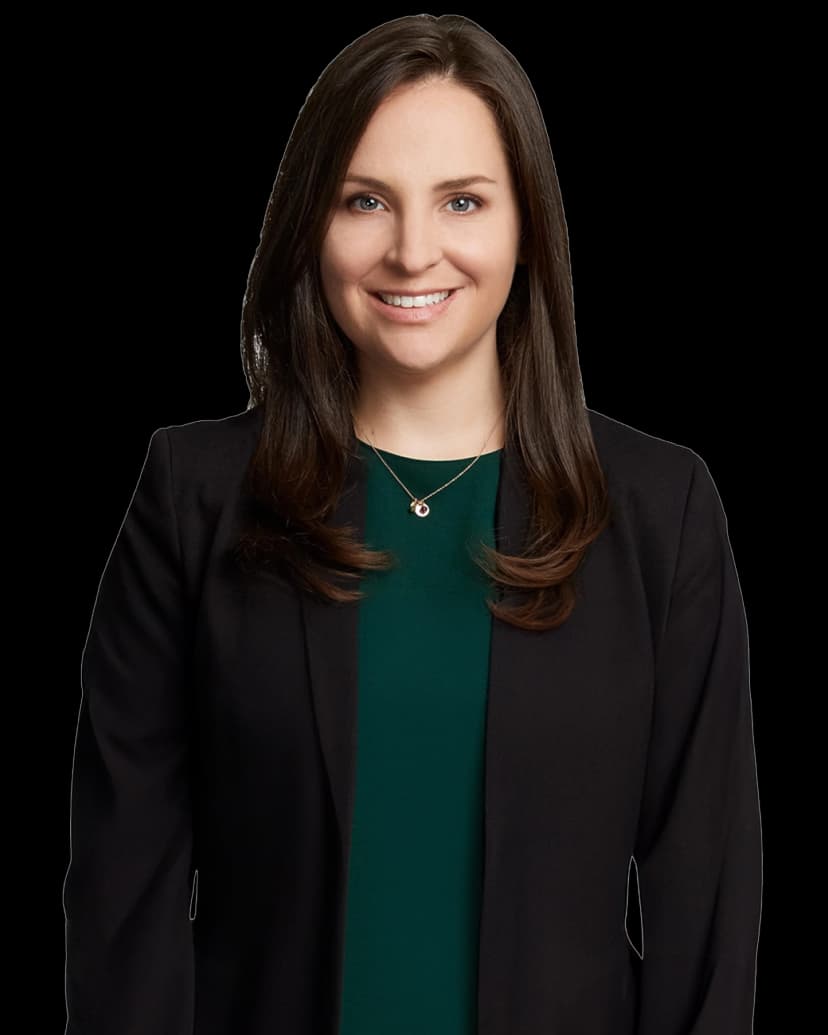
Adam Garetson
Partner
Leader, Blockchain & Digital Assets Group


Webinaires sur demande
ALANA SCOTCHMER: Hey, good afternoon, everyone, and welcome. I'm Alana Scotchmer, and I'm a partner here at Gowling WLG Financial Services and Technology Group, which we call FSxT. And I'm delighted to be moderating today's session on stablecoins. This is one of the most dynamic and timely topics in the digital asset landscape.
Joining me today is my partner, Adam Garetson. He leads much of our work at the intersection of digital assets and financial regulation. Adam advises a wide range of clients in this space, and his expertise focuses on how new technologies fit within Canada's evolving regulatory framework. So he's the perfect person to help us unpack this topic today.
So you may be wondering, why are we talking about stablecoins now? Well, this isn't a theoretical conversation anymore.
Around the world, users, industry players, and policymakers are really moving quickly to define where stablecoins fit within money movement, the business world, and the legal and regulatory landscape. And that pace of development around the world raises real questions for us here in Canada.
How will stablecoins be regulated? What role might they play in business and the movement of money? And how can businesses unlock that potential, and compliance teams get ahead of those changes? So we're going to explore all of that today. Cutting through the noise to focus on what really matters for your business, and the future of Canada's digital asset ecosystem.
So a couple of housekeeping notes to start off with. We hope to have some time for questions at the end of today's session, so feel free to submit those questions in the Q&A anytime. And your questions are only visible to us as the webinar organizers.
Today's presentation also does contain a few polls so we can hear more from you, the audience. And before we turn to Adam, we do want to know a bit more about you. So we know our attendees today are from a wide range of organizations. So we'll go right into our first poll question, which asks about your readiness for stablecoins.
So the question is, if stablecoins became a mainstream payment option tomorrow, how ready is your organization? Is it not yet on your radar? Are you aware but have no formal policy?
Are you assessing those risks and impacts to your business? Are you in the process of implementing controls and operationalizing governance measures? Or are you already operating within a stablecoin framework? So I'll give you a few minutes to let answers trickle in there. And in the meantime, I will turn things over to Adam.
ADAM GARETSON: Yeah. Thanks, Alana. And thank you everyone in attendance for joining today.
My name is Adam Garetson, and I lead the blockchain and digital asset practice group here at Gowling WLG. For those who don't know, Gowling is the leading Canadian law firm ranked in the global top 100, with lawyers practicing across the UK, the EU, the Middle East and Asia. Our group has partners dedicated to supporting financial institutions, money services businesses, registered dealers, challenger banks, corporate entities, and many in between. So we are your go to resource for financial technology, law, and regulation.
I expect our first poll is now closed. Let's see if we can check out the results.
So we've got a bit of a mixed bag. I see 0% operating within a stablecoin framework. That's good to know. We're trending awareness but no formal policy/not yet on our radar.
So it looks like we're doing a bit of an introductory dive here into the topic. So it's good to know where the audience is from that perspective. Given those poll results, why don't we take a look at how major companies and institutions around the world are executing on their stablecoin strategies right now?
So what we can see from this slide is really there's a lot of global activity happening right now with major corporations and major institutions in multiple regions across the globe. One of the primary killer use cases for stablecoins is acceptance as a method of payment. So companies like Shopify, Visa, Gucci, SPAR supermarkets, Emirates airlines, et cetera, are enabling merchant payments through stablecoins.
Why are they doing this? Well, as we'll get into a little bit later, stablecoins can offer transfer and settlement within seconds, ordering instantaneous on a 24/7 basis all over the world, and that is dramatically faster than traditional payment rails.
You can also see from this slide that companies like Uber are exploring stablecoins for worldwide money transfer and settlement. Major institutions like Deutsche Bank and Standard Chartered, as well as large corporate entities like Amazon and Walmart, are in the process of launching their own stablecoins.
So what you can see from this slide is that some of the biggest companies all around the world are actively engaging in executing on their stablecoin strategies right now. Let's send it back to Alana for poll number 2.
ALANA SCOTCHMER: Just wondering about your projections for the size of the global stablecoin market. So what do you think global systemically important banks are projecting as the base case for the size of that market, looking ahead to 2030? The options here we have are $500 billion, $800 billion, one trillion, two, or four trillion. So give it your best guess, and I'll turn it back over to Adam while we have the results trickle in.
ADAM GARETSON: Thanks. I see a quick question coming in the Q&A, so I'll get to that off the bat. Stablecoin is really a digital representation of $1. So $1 that lives on the internet or blockchain represents $1 in the real world, and we'll get into that a little bit more as we unpack the presentation.
But as we saw from the last slide, there's lots of activity happening with these assets around the world. And before we show some of the results and projections off of this question-- perhaps to give the audience who's in context. When you think about the market capitalization of some of the biggest companies around the world, Tesla, Amazon, Meta, these companies are sitting in the $1.5 to $2.5 trillion range from a market cap perspective. So as you can see, those numbers line up, generally speaking, with some of the projections here in this slide for stablecoins.
We're probably good on this poll. So why don't we check out the results? Got it. And we've got weighting towards the trillion dollar estimates here. So it looks like most folks are thinking along those lines as well.
Why don't we show the next slide, and we can see some of the information that we were able to gather on the projected size of the stablecoin market. So as I tell you that this presentation does not constitute investment advice, but is about the legal and regulatory understanding behind the assets, the base case estimates that we're seeing, that are being put out by global systemically important banks, are of an approximately $2 trillion stablecoin market by 2030. So this indicates a significant trajectory of value shift into digital markets in the near to medium term.
What we're seeing is stablecoins making a significant contribution to the global financial ecosystem. Make no mistake, we are living through a global arms race for control and advantage over new and rapidly developing payments and trading technology. And you can see that happening all over the world, getting into the trillion dollar valuation ranges.
We've got one more poll. So why don't we send it back over to Alana to get us going on this one?
ALANA SCOTCHMER: Thanks, Adam. Just moving to our third poll. Wondering what Canadian legal and regulatory regimes are going to be important to your organization when assessing your company's stablecoin strategy.
So I think the first option is securities laws, which are set out by Canadian Securities Administrators like the OSC and CIRO. Second option is AML laws under the PCMLTFA administered by FINTRAC. Third option is the Bank Act and the federal framework for financial institutions which is overseen by OSFI, or all of the above.
ADAM GARETSON: Thanks, Alana. So as people on the call may get from just how the question is framed, generally speaking, each of these regulatory bodies typically operate in distinct ways. Securities regulators regulate securities and investment products at the provincial level, primarily. AML regulators oversee illicit finance transactions that are operating across Canada. And OSFI, they oversee a wide range of banks, trust and loan companies, and pension plans.
So over the 17 years since blockchain technology was invented, time and time again we're finding that digital assets behave like square pegs trying to squeeze into regulatory around holes. Pretending that old laws fit the world wide cascading wave of novel financial assets is really no longer viable.
Let's end the poll there and see what people are thinking on this one. Yeah. So not surprisingly, the majority were reading the tea leaves and seeing that it's likely all of the above.
So that's generally accurate. What we're seeing here is that the legal and regulatory operating environment is not clear or easy to navigate at present, and it takes an innovative and multidisciplinary approach to understand the operating environment for this asset class.
So with that, why don't we dive into the presentation a little bit further. When we were preparing for this presentation, we asked participants to submit questions in advance. A lot of the questions that we were seeing come in focused on what I'll call fundamentals. So how can I understand what a stablecoin is if I don't know what blockchains, crypto, and digital assets are, and how they're different from each other?
It's a question that I get asked a lot, so I thought I would start the presentation today with a high level understanding of some of the technical concepts which support the assets, and that will form a basis of how we can understand the applicable law and regulation as well. So first, why don't we unpack blockchains and how they work.
If we could go to the next slide, please. What we can see is that what blockchains really are, are decentralized digital records that are spread across many computers. Information stored on blockchains are dispersed throughout the entire network, rather than being held by a single organization or in one database.
A blockchain is essentially a network of computers, or what are each called nodes that share the same transactional history. Every time a transaction takes place, it's verified by multiple network participants acting together.
When we flip to the next slide, what we'll see is an image that gives a high level visual representation of what that means in practice. So imagine that each person shown here has the same copy of the same record. In a predetermined number of participants, all need to agree that what takes place on the network is valid.
When we look at the next slide, we can see further information on what really is a block and what really is a chain. Anyway, what I like to think of blocks and blockchains, I think about a block as being a container of information. It can hold data, including financial data, and representations of value.
What's in a block can say or represent things like good afternoon or this is representative of $1. Every time a new block is added, it's linked to the previous block. So in this way, one block is moving around a network amongst those participants. It can be traced from where it started, where it went, and where it's intended to go.
If we flip to the next slide, we'll get a little bit further into what are blockchains? These are decentralized, transparent records often used as financial records that, given their nature, are very resistant to historical change. When we look at the next slide as well, we'll talk a little bit about blocks comprising digital assets living on blockchains, and the assets themselves being stored in what are called wallets, or parts of the network that are ultimately keeping assets for individuals or companies that are looking to hold the assets on the network.
To access the wallets, you need a key. You can think of that key like a password. So to use your key to open your wallet, give you access to your assets. Keys and wallets are the core component of custody in digital Markets.
If we look at the next slide as well, we can see what really does make crypto crypto? Why do people in this space sometimes call everything crypto? Well, it's because of the keys that we were talking about.
Keys are designed to protect assets. They do this by encrypting the access. Your private key decrypts your access to your assets that are in your wallet that live on the blockchain.
When we look at the next slide, we'll get a bit of a better sense about how this all works. On the far left side, you can see that the transaction is requested by a user of the network. The block is created.
A copy is sent across the network for validation. The computers which participate in that consensus validation are incentivized through rewards for providing the computational power and doing the homework to keep the network going. The transaction is validated, a block is added to the chain, and the transaction is complete.
On the next slide, we can compare and contrast this with how the traditional financial system works. Alana, I've been talking for a while, so why I turn this back over to you to give us some perspective on how traditional finance, or what people call TradFi, operates.
ALANA SCOTCHMER: Sure. Thanks so much, Adam.
So I'm looking at this slide. It's familiar to me. I'm sure it is for many of our attendees dealing with the regular traditional financial system. So this is depicting a flow of funds in our traditional financial system.
Here we're thinking about funds moving from buyers to sellers, which are payers and payees. And you've got their own start and end points being banks. You've got recognized intermediaries potentially in between. These arrows I'm thinking probably represent the traditional payment rails. And folks would be engaging through regulated intermediaries like payment service providers, card networks, correspondent banks depending on the scenario, and obviously the banks themselves are also regulated.
ADAM GARETSON: Thanks, Alana. So you can compare and contrast what you're seeing on this slide with what we were thinking about on the previous slide when we saw all those different people participating in the network. So this is an example of a centralized system for the movement of funds, which is the one we currently operate in the traditional financial system. Whereas blockchains provide new financial market infrastructure for the transfer of assets that represent value.
When we flip to the next slide, we can bring it back here to how we think about it in terms of blockchain, crypto, and digital assets. So like I was saying a bit earlier, blockchains are networks of computers just like the internet. Internet is a network of a bunch of different computers.
Crypto generally is the native assets to the network. And I think about that when a rock and roll band self-titled their first album. Like the Bitcoin, asset lives on the Bitcoin network.
But other forms of digital assets, like stablecoins, are representations of value that are created on top of a blockchain network. When we go to the next slide, we'll transition a bit more into what is the legal and regulatory framework that overlays these new types of digital assets.
Really there are two main pillars. One is securities law. As a securities lawyer, when I think about questions around asset creation, there's really four main questions that I ask.
Who's the issuer? Who's actually creating this asset? What is the asset? Is it a security or is it something else?
Are there dealers, individuals or entities that facilitate buyers getting these assets from issuers? And can buyers trade assets among themselves on marketplaces that have peer-to-peer functionality?
Flipping to the next slide, we'll see that the second primary pillar of regulation in this space is under anti-money laundering laws. These laws are generally set out in the proceeds of crime, Money Laundering and Terrorist Financing Act. The act defines virtual currency to include digital representations of value and encompasses the private keys which allow access.
As you can see from this slide, AML laws regulate virtual currency exchange and virtual currency transfer. We think about exchange, relatively straightforward. One type of asset for the other, whether it's be it cash or a digital asset or vice versa, or two different types of digital assets or each other.
Transfer services are very similar to how they are in the traditional financial world, where virtual currency is sent at the request of a client, or there's a receipt of a transfer to a beneficiary. So what does this all mean for stablecoins as a particular asset class?
If we go to the next slide. What we'll see here is a little bit more of a explanation on stablecoins themselves. So stablecoins are digital assets. Their value is pegged or tied to that of another type of asset, generally speaking, cash.
Securities in AML regulators are the primary regulators of stablecoins currently. And securities regulators have developed the term quote unquote "value referenced crypto assets" when referring to stablecoins. A bit more of a unique descriptor in the sense that it tries to give a sense of what the asset really is, referencing value that is generally speaking, existing somewhere outside of the asset itself.
At a high level, stablecoin requirements are currently that they have to be backed by cash, or 90-day Canadian bonds, or US treasuries, or money market funds, other representations of value that live outside of the blockchain networks. These are real world assets that need to be held by acceptable or qualified custodians in order to create what's referred to as a one-to-one value peg for the digital asset.
The collateral has the objective of maintaining the value of the coin at a one-to-one basis, for example, by being able to meet redemption requests from coin holders. So stablecoins can be used for a variety of different things, as I was mentioning earlier, and means of value transfer, and also is an alternative to some of the high volatility that we see from popular cryptocurrencies like Bitcoin and Ether and others. And stablecoins are emerging as a novel form of payment.
So as we mentioned earlier, when viewers were registering for this session, we allowed for questions to be submitted in advance. What we did was we batched those questions into some of the ones that were more frequently asked to get us started today. So, Alana, maybe I could turn things back over to you to help you walk us through some of the questions that we were seeing that were on the top of users minds when they were registering for today.
ALANA SCOTCHMER: Absolutely. Thanks so much, Adam. So we've obviously covered a lot of ground so far.
We've gone a little bit through the basics of stablecoins, looking at the evolving landscape, and a little bit of a peek into the future, I think. So now, as Adam mentioned, we're going to open it up to audience questions. If you haven't already, please feel free to drop your questions into the Q&A, and we'll get to as many as we can. But we will get started with a question that we received earlier.
So moving to the first question. How are stablecoins currently regulated in Canada? Adam.
ADAM GARETSON: Yeah. Thanks, Alana. So we talked about this a little bit earlier.
But just to clarify for everybody in attendance today, there is no single stablecoin act in Canada. There's no one piece of legislation that governs stablecoins. Instead, what we have are multiple overlapping regimes. Regulation comes through a patchwork of existing laws and regulatory guidance that's applied based on the function of the coin, its issuer, and the intermediaries that interface with it.
In Canada, stablecoins are currently regulated as securities, and are primarily overseen by the Canadian Securities Administrators, for example, the Ontario Securities Commission. The CSA, Canadian Securities Administrators, is an umbrella organization that coordinates all 13 provincial and territorial Securities Commissions in Canada.
This body, the CSA, has put out multiple staff notices or guidance notes which define what they call their quote unquote, "interim approach to stablecoins" using the term value reference crypto assets. And you can check out CSA staff notice 21-332 and 21-333. And certainly we can chat further about those as well.
But those guidance notes are effectively over two years old now. And what they do is they set out notices for expectations of what are called crypto asset trading platforms or licensed trading platforms by Securities Commissions, those dealers and marketplaces we were talking about a little bit earlier, that offer or facilitate the trading in stablecoins.
These staff notice pieces of guidance also set out standards for issuers that create stablecoins. Some of those key requirements include that stablecoins must be fully backed by high quality liquid reserves, as we were saying earlier, cash, short term, 90-day government debt or money market funds. These reserve assets have to be held with an acceptable or qualified custodian in trust for the coin holders.
All of the assets which comprise the reserve are to be measured at fair value in accordance with Canadian or US GAAP, or Generally Accepted Accounting Principles. The reserve assets cannot be encumbered or pledged as collateral, and the assets need to be segregated.
Securities regulators expect that platforms listing stablecoins will obtain CSA approval. Issuers of stablecoins also, similarly, are required to seek approval from Canadian Securities regulators and are required to provide an undertaking to be subject to the regulatory jurisdiction of the CSA and provide monthly reserve attestations and clear redemption rates.
Issuers need to disclose these rights, any trading halts or other features, and any fees charged to their consumer or user. Issuers are also required to provide monthly assurance reports from public accountants and audited financial statements as well.
So, in effect, Canadian Securities Administrators treat most stablecoins as a form of crypto contract or investment contract, even if their primary use is in a payments case. There are certain types of stablecoins that are linked to other types of assets that are not cash or short-term government debt. Some of these types of coins can be called algorithmic stablecoins, where they're mathematically linked to other cryptocurrencies, or to other types of assets as well, designed to maintain a stable peg to those other assets.
Generally speaking, these algorithmic or other types of cryptocurrency backed or other asset backed stablecoins are not permitted by Canadian Securities regulators. Under our current framework, it really is the one-to-one intended dollar-backed stablecoins that are authorized and permitted to be available in Canada.
At the moment, there's only one stablecoin issuer that's provided an undertaking to the Canadian Securities Administrators to offer its stablecoin on a regulated basis in Canada. This undertaking was provided by a company called Circle Internet Financial, with respect to the stablecoin, which is commonly known as USDC or a US dollar-denominated asset. Like I was saying, at present, there's only one stablecoin available in Canada by Canadian Securities regulators, and it's this US dollar-backed asset.
When we think about regulation, and we talked about securities laws, and we talked about anti-money laundering laws, it's important to note that there are other regimes that also apply, depending on the nature of the entity that's interfacing with stablecoins. So for example, if you or your institution is federally regulated and overseen by OSFI, the Office of the Superintendent of Financial Institutions, which is Canada's prudential banking regulator, you are allowed to engage with stablecoins.
However, OSFI divides digital asset exposures primarily into two main groups. First one, which they call group 1, refers to traditional assets that are represented on blockchains or through a process of what we call tokenization, or creating a token out of the asset, which includes stablecoins. So you can think about $1 effectively living in a financial institution or a custodian somewhere with the representation of that asset living on the blockchain through what's called a digital asset or a token.
So these digital representations of real world assets, they have to meet certain credential criteria. And similar to Canadian Securities laws, stablecoins need to be backed by cash or near cash assets in order to receive the more favorable group 1 capital treatment for financial institutions from Canadian financial institution and banking regulators.
All other forms of crypto exposure that fail these tests that have been put out by Canadian banking regulators, for example, Bitcoin or stablecoins that are poorly collateralized or algorithmic, fall into a different group. They either fall into a subgroup of group 1 or ultimately what is called group 2.
When we look at qualifying stablecoins or what our banking regulators generally think about as fiat-reference crypto assets, again, these assets need to meet strict stabilization and redemption criteria, as well as a laundry list of other categories that have been set out under the securities regulation as well.
So these assets, and if the conditions for them are satisfied, will allow institutions to have exposure to them that can receive similar capital treatment to the traditional assets that backstop the actual token or stablecoin. So that really means that the risk weight of the digital asset or stablecoin can be consistent with the underlying referenced asset.
However, if those conditions are not met, then the stablecoin becomes reclassified, most likely into what's called group 2, which triggers punitive capital requirements. So you can see from this example how the design of the stablecoin, the issuer of the stablecoin, the reserves of the assets, the nature of the custodian, where the reserve assets are held, what they're comprised of, those are all very important functions and features of stablecoins and can dramatically impact how individuals, users, regulated entities can interface or interact with them.
I'll just note that the Canadian OSFI guidelines for financial institutions and stablecoins and other forms of digital assets are consistent with the guidance that's been put out with international standard setting bodies, primarily the Basel Committee for Banking Supervision.
So in banking regulatory standards and land, there is the overarching body that sets standards, and that's a very similar process for anti-money laundering regulators, as well as securities regulators. So these bodies look at global standards that have been set all over the world, and how those standards cascade down into member jurisdictions all over the world.
So we can think about what global standard setting bodies are suggesting to their members, how those standards are being adopted locally by different countries around the world, and then how those standards are being adopted and written into law and regulation domestically. That's the cadence we see in terms of stablecoin regulation, not only in Canada, but a little bit of a peek about how regulation is developing around the world. Alana, maybe we can turn it back to you for our next question.
ALANA SCOTCHMER: Absolutely. Thanks so much, Adam. So just over the slide to our next question. Next question is, when can we expect the Canadian stablecoin? Great question.
ADAM GARETSON: Yeah. It's a great question. So it's an interesting one because stablecoins are ultimately privately issued assets. There's not necessarily going to be one only Canadian dollar denominated stablecoin that rules them all.
There are a number of projects that are advancing in Canada right now that are on slightly different tracks from one another that involve financial institutions, FinTechs, and FinTech financial institution partnerships. One particular project that's seeking to be issued by way of a prospectus to the public under securities laws, it's called QCAD. So the company that's issuing this, privately issued stablecoin, has filed a continuous offering prospectus in June of this year with Canadian Securities regulators.
Taking a bit of a half of a step back in securities regulation, when you think about how to offer an asset, you can either offer an asset privately to a select group of investors, primarily accredited investors in private markets, or you can issue assets publicly to lots of people in the world.
If you're going to issue a security publicly, securities regulators generally say that you need to have what's called a prospectus. You need to use a disclosure document that sets out the material, terms, and features of the asset, and comply with standards very similar to if a company was going public on the Toronto Stock Exchange.
So you can think about the securities issuance prospectus model and compare and contrast that with what the nature of a stablecoin is and its primary intended use case as being a means of value transfer, similar to acting like cash or a means of value transfer that's based on a Canadian dollar. So these two regimes often may not line up, and that creates a bit of a gap from a regulatory perspective.
There's another Canadian stablecoin that is announced and projected to come to fruition as we saw in a release in September of this year from a company called Tetra Trust. It was an announcement with respect to a bank FinTech partnership where investors like ATB Financial, National Bank, JCPAY, Shopify, Wealthsimple, all plan to come together to issue a Canadian dollar-denominated stablecoin with the company Tetra Trust, which has a trust license in Alberta.
So if this project goes forward, this would ultimately be the first in Canada stablecoin issued from a regulated trust company rather than a private company, which, like QCAD, would be trying to comply with securities laws, but ultimately would be an entity that wasn't either a federally regulated or provincially regulated trust company or financial institution, or through a prospectus filing. So you can see how there are potential multiple tracks for stablecoins to be issued right now under what we'll just call the patchwork regulatory framework that's currently in existence today, along with the Canadian Securities Administrators interim approach.
However, overlaying these technological advancements is an emerging regulatory backdrop. So I've been saying this whole time, the Canadian Securities Administrators provincial securities based approach is interim. At the federal level, we're starting to see comments and policy direction from federal regulators.
For example, earlier this year, it was reported that Peter Rutledge, the superintendent at OSFI, was saying that a federal framework for stablecoins is being worked on, and that OSFI will have a role in its implementation. It was noted that the federal government, via the Department of Finance, is looking at other jurisdiction's rules for inspiration. So we're starting to see statements from federal banking regulators with respect to stablecoins.
In September of this year, the executive director of payments, supervision, and oversight for the Bank of Canada was speaking in Ottawa, and it was reported that he was saying that Canada should weigh the merits of federal stablecoin regulation similar to what other countries have done. So these statements of policy are being made by Canadian regulators that are outside the ordinary course, specifically with respect to this new asset class.
Here at Gowling, FSxT, our financial services and technology team, recently put out an article that talked about what we're anticipating to see in the upcoming fall budget that cuts across a number of different areas of financial services and technology. One of the things, based on these signals, that we're expecting to see at the federal level are statements in the budget around stablecoins and the prospects of an upcoming federal regulatory framework.
So to go back to the question about when can we see the Canadian stablecoin, it's an open question. We've seen projects on multiple tracks under different regulatory frameworks and regimes. We're starting to see the emergence of a federal framework, that's what we're expecting to see coming up. So whether any new market entrants for stablecoins will emerge, post the release of the budget in November, remains to be seen. Alana, I feel like it's a good time to go over to our next question.
ALANA SCOTCHMER: Thanks, Adam. So moving on to question 3. How are stablecoins different from regular currency and regular transactions?
So Adam, I'm happy to kick things off here. I'm just thinking back to that compare and contrast slide that we were talking about earlier.
ADAM GARETSON: Yeah, please.
ALANA SCOTCHMER: So with regular currency, obviously we're thinking about fiat currency issued by a central bank, which I think was in the top center of that slide we were looking at before.
So for Canadian dollars, for example, we have people transacting in CAD, which is issued by the Bank of Canada, and then you have obviously the banks that are regulated by OSFI. They have Canadian currency in their Treasury. They interact with their customers in different ways.
In fiat currencies, they hold deposits. They engage in lending and a wide variety of other functions, including being part of the payments ecosystem in different ways.
And the banks can hook into those traditional payment rails so that customers and businesses can engage with others and send money around. We think about electronic funds transfers, Interac, wire transfers, card networks, et cetera, et cetera. There are obviously many applications here.
And in Canada, we have Payments Canada that owns and operates Canada's payment rails. And then obviously there are international players as well that allow Canadians to then make payments worldwide.
On the just payment intermediary side of things, more recently in Canada we've added the retail payment activities act regulatory regime, which went live earlier this year. It's supervised by the Bank of Canada, and it regulates payment service providers. And then all of that is happening against the backdrop of payments modernization, which is this multi-year project that we're in. It's still developing, and we're in the process of updating and enhancing payments in Canada. So that's setting up the regular currency and regular transactions side of things. So maybe you can do the compare, Adam.
ADAM GARETSON: Yeah. Thanks, Elena. And appreciate that background and insight. I mean, when I think about how blockchain networks differ from traditional payment rails, I always go back to that first slide that we were talking about a little bit earlier, showing all those different people, all connected to each other is part of a network.
So if you think about those individuals, either being in one jurisdiction together or in multiple jurisdictions around the world, you can think about how the assets can move either domestically or internationally across these blockchains. What I also like to think about is that each of those individual users, or call it endpoints that are participating in the network, having their own wallet. So what you can see is that the assets are able to move directly from one wallet to another over the network, across borders, that's on effectively a direct peer-to-peer basis.
Now there are, as I was saying, intermediaries that sit between these assets and networks and the individual users. These are registered dealers and registered marketplaces for the assets that sit outside the network.
And those entities are starting to get more and more licensed and registered and regulated, including by Canadian Securities regulators and by anti-money laundering regulators. But effectively, the network itself has that ability to transfer value between users directly, wallet to wallet, anywhere around the world, utilizing the technology, which has in many cases, significantly faster asset movement times than we've seen from traditional rails.
One of the things that we also see is a difference in split between the payment message and the actual settlement of traditional fiat currencies. So when we think about blockchains, you effectively collapse that payment messaging and payment value transfer. So you're able to move both the messaging and the representation of value in that millisecond-- second-type basis on a worldwide network. So that's a little bit about how we think about stablecoins differently from regular currency transactions and how they move, generally speaking.
We also think about stablecoins as being privately issued assets that are backed by reserve assets that can be ultimately comprised of a number of different types of assets. Now, the regulated coins are having to hold a few specific types of assets like cash, 90-day government bonds, et cetera. But the allocation of those assets is up to the issuer. Where those assets are held and what financial institutions, if they meet regulatory thresholds, are continuingly up to the issuer.
And if you hold the cash that backs the stablecoin, for example, in an interest bearing savings account, then the cash reserve assets of the private issuer can start actually earning a yield off of them. So that yield component that can be earned on the real world assets, that backstop stablecoins, can either go to the benefit of the issuer and raise their value, and that company, can get itself listed on the Stock Exchange and things like that, go public, or that value can be passed back on to the holders of the stablecoins that are living on the blockchains.
So some stablecoins, not any that are presently available and regulated in Canada, but some that exist in other jurisdictions, have started offering yield based on the stablecoin itself, so that value that's created off blockchain is being represented and passed through in connection with the stablecoin asset on chain.
When users hold stablecoins in their wallets, they can hold them with these intermediaries, these dealers that we were talking about a little bit earlier. And those dealers can manipulate their own Treasury in a way that generates revenue off the assets that are held in custody.
So the dealers themselves can then pass the interest back on to the users who are holding their assets in those reserves. So that's a little bit more insight into how traditional assets compare against stablecoins, how traditional networks of value transfer are different from blockchain networks, and then how that interest bearing or yield component can work with respect to blockchain and digital assets. Hopefully that answers the question for the folks who asked it. Maybe we can move on to our fourth one.
ALANA SCOTCHMER: Thanks. Just moving on to our fourth question, which is, what is happening from a regulatory perspective in other regions?
ADAM GARETSON: Yeah. Good question. One that comes up a lot.
And as we were saying a little bit earlier, obviously here at Gowling, we have a lot of different offices in a lot of different places. So we have the benefit of taking a global perspective, particularly on digital assets that can operate in many regions all over the world.
I'm also seeing one of the questions come through in the Q&A. That's happening right now. That's asking about how can we in Canada regulate international offshore assets.
I'm going to tackle that second question first because I do think it's an important one. As I was saying a little bit earlier in the presentation, the way that international issuers of assets, so creators of these stablecoins, to have them available on intermediaries in Canada like dealers and marketplaces, dealers like Coinbase and Crypto.com, entities like that, those issuers go through the Canadian Securities Administrators in order to have those assets listed on registered exchanges.
So as I was saying a little bit earlier, currently, USDC, through the issuers circle, is the only entity that's gone through that process in Canada. The other biggest stablecoin operating around the world right now is another US dollar-denominated asset called USDC. And that asset and the issuer has not gone through that regulatory process in Canada to be issued and available through registered dealers here in the country.
So that's how we keep regulatory perimeter with respect to digital assets in our regulated operating environment here. And that regulated operating environment involves registered entities, dealers, and marketplaces that provide users access to the assets. But certainly, as folks are probably well aware of on this call, individuals who want to go on the blockchains directly and have their own wallets, are potentially able to bypass some of these restrictions and get international assets on their own. But certainly the risk profile increases with respect to those given the fact that they haven't met the Canadian regulatory standards for issuance and distribution into the country.
When we think about what's happening from a regulatory perspective in other regions, there's really three regions that I like to keep pulse of in these conversations. One is Europe and what's happening in the EU. The other is Hong Kong, and the other is the US. So I'll unpack these jurisdictions each in turn.
When we look at the EU and what's happening in Europe, regulators in the EU have passed what's known as the Markets in Crypto Asset Regulation, or MiCA, as it's referred to, which officially kicked in for stablecoins in 2024.
So MiCA divides stablecoins effectively into two categories, one of which they call e-money tokens. So these are assets which are pegged to a single currency, like the euro or the US dollar, or the second category being effectively asset-referenced tokens, which draw value from a basket of assets, which could be several currencies or even commodities or other types of assets.
So issuers in the EU need a license. In one of the EU member States, there are strict rules around reserves and redemption rights, liquidity, and disclosures, similar to what I was talking about in Canada. And what we're seeing is that only EU licensed issuers can legally market these coins inside the EU bloc. And so international issuers will need a local form of e-money license in order to stay compliant.
So the approach that's being taken in Europe really is if it looks like money, it's regulated like money, that can be contrasted with the current interim framework we have in Canada from the Canadian Securities Administrators, where stablecoins are being treated more like securities. And in Europe, stablecoins have been brought into the mainstream payment system but under Prudential oversight, similar to other forms of e-money institutions.
When we look at Hong Kong, for example, Hong Kong has passed its own stablecoin ordinance in 2025, and it should be taking effect very, very soon. Under this new regime, it's being run by the Hong Kong Monetary Authority. And it also focuses on fiat-referenced stablecoins, particularly those that are pegged to the dollar.
To issue one of these, you need to be incorporated domestically or be what's called an authorized foreign institution, and you need a license from the Federal Monetary Authority. So that means things like minimum capital requirements, audited reserves, redemption guarantees, AML controls, et cetera.
So offshore issuers can be caught if they actively market these Hong Kong dollar-denominated stablecoins to local users. What we're seeing is a sandbox as well for would be issuers where they can apply for licenses. I think we've seen about 36 licenses be submitted in Hong Kong, including from several global banks and tech companies who are already in line to get some of the first licenses to come out in that region.
Looking south of the border, as many people probably have heard, the US has passed a federal stablecoin law. This is generally referred to as the GENIUS Act, which was signed into law this year in the summer of 2025. What it does is it sets national standards for what it calls quote unquote, "payment stablecoins." And what these are digital tokens that are meant for payments that are intended to maintain a stable value relative to the US dollar.
Similar to what we've been talking about through this presentation, the issuers of these assets must hold high quality liquid reserves, generally cash and short-term US treasuries that maintain a peg of a one-to-one representation of the dollar into real world versus $1 in the digital markets. So redemption has to be offered at par, monthly reserve reports have to be issued, an AML obligations have to be met.
The US is turing licensing both at the federal level and through qualified state regulators, really depending on the scope and sophistication of the issuer and the asset as well. And the law specifically clarifies that these types of payment stablecoins are not securities or commodities.
What's interesting is that while the GENIUS Act has been passed, it really doesn't take effect effectively for 18 months after enactment. So that would be at the beginning of the year in 2027.
When we look at what's happening around the world, these examples can definitely inform the stablecoin strategy for Canada. But I think what we're forecasting from an FSxT perspective is a made in Canada solution that's being developed at the federal level. These examples really indicate that the time is now for Canada to become a meaningful participant in the global digital market economy through emerging stablecoin legislation.
Alana, that's what I had for question 4. I'm not sure where we are. You're keeping us on track here. We're almost at the end, though, I think. Yeah, no worries.
ALANA SCOTCHMER: Yeah. I think that is all we have time for today. Big thank you to Adam Garetson for sharing his insights and really helping us navigate such a complex and fast-evolving topic.
And of course, we want to give a big thank you to everyone who joined us for the session. We really appreciate you taking time to be part of our discussion today. As Adam highlighted, the regulation of stablecoins really continues to develop quickly. Understanding those changes is key for anybody operating in the digital asset space and beyond.
If you'd like to learn more or connect with Adam or really any member of our team, please don't hesitate to reach out. You can follow us on LinkedIn, which is @Gowlingwlgfsxt-- it's a lot of letters there-- and subscribe to our newsletter. We would also love your feedback on today's webinar in the survey, which I understand has been LinkedIn the chat.
Thanks again for being with us today. And we hope to see you at a future Gowling WLG webinar. Have a great afternoon!
ADAM GARETSON: Thanks, everyone.
[AUDIO LOGO]
Stablecoins continue to be one of the most talked-about areas in the evolving digital asset landscape — especially as regulators and market participants in Canada move closer to defining their place in the financial ecosystem.
Join us in this on-demand webinar as we cut through the noise and unpack the latest developments shaping this fast-moving space. Designed for financial institutions and established corporates, this session explores the current regulatory landscape surrounding stablecoins, emerging use cases, and the key implications for your business and compliance operations.
This program is eligible for up to 1 hour of substantive Continuing Professional Development (CPD) credits with the LSO, the LSBC and the Barreau du Québec.
CECI NE CONSTITUE PAS UN AVIS JURIDIQUE. L'information qui est présentée dans le site Web sous quelque forme que ce soit est fournie à titre informatif uniquement. Elle ne constitue pas un avis juridique et ne devrait pas être interprétée comme tel. Aucun utilisateur ne devrait prendre ou négliger de prendre des décisions en se fiant uniquement à ces renseignements, ni ignorer les conseils juridiques d'un professionnel ou tarder à consulter un professionnel sur la base de ce qu'il a lu dans ce site Web. Les professionnels de Gowling WLG seront heureux de discuter avec l'utilisateur des différentes options possibles concernant certaines questions juridiques précises.





Gowling WLG est un cabinet juridique international constitué des membres de Gowling WLG International Limited, une société à responsabilité limitée par garanties enregistrée en Angleterre, ainsi que leurs affiliés respectifs. Les membres et affiliés constituent des entités autonomes et indépendantes. Gowling WLG International Limited promeut, facilite et coordonne les activités de ses membres, mais ne fournit pas elle-même de services aux clients. Pour en savoir davantage sur notre structure, consultez notre page Avis juridique.
© 2026 Gowling WLG Tous droits réservés