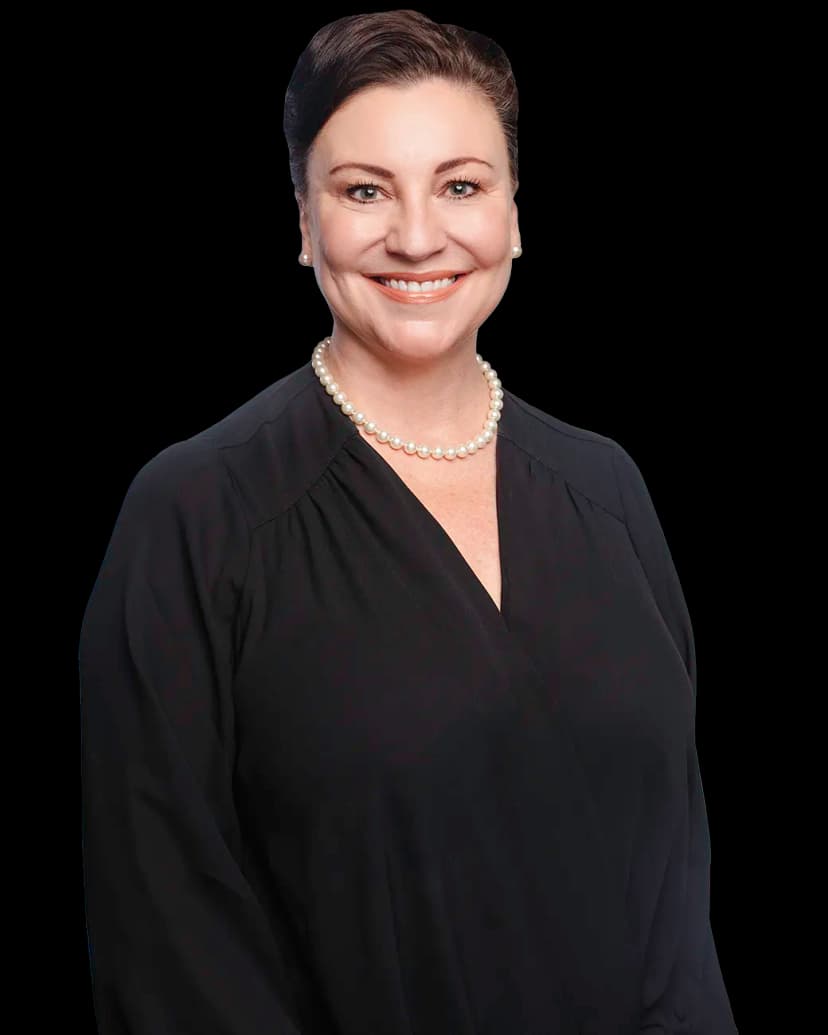
Bettina Burgess
Associée


Webinaires sur demande
FPC/FJC :
BETTINA BURGESS: Well, hello everyone, who's online. Thank you so much for joining us here today. My name is Bettina Burgess and I am a partner in the Gowling WLG Employment Group. And I am very happy to have some extremely special guests with us today.
Carson Healey, being one who is an associate in our employment group at Gowling's and extra delighted to have both Bas Basem Gohar, who is an Assistant Professor in the Department of Population Medicine and he leads the University of Guelph's Research and Occupational Health and Wellness. He holds academic appointments at the University of Guelph Psychology Department, the University of Waterloo School of Public Health Sciences, and Laurentian University's Center for Research and Occupational Health and Safety.
And he's also a Clinical Psychologist in Ontario, and Bas's research focuses in the area of public health with another focus on occupational and workforce areas. And then we have a special guest who we didn't know until last week who was going to be joining us, Behdin, Nowouzi-Kia. And Behdin is a PhD and also an Occupational Therapist and Assistant Professor at the Department of Occupational Science and Therapy at is it UFT Behdin?
Yes, UFT. And he is an affiliate scientist at the Krembil Research Institute at Toronto Western Hospital, University Health Network, and a collaborating scientist at the Center for Addiction and Mental Health, and he was also the founder of Infinity Health Consulting Group and OT Services North. And Dr Nowouzi-Kia who we're going to refer to as Behdin throughout by his first name, has focus on occupational health and getting people with different challenges, disabilities and so on, back to work.
So we have the two most perfect people to be joining legal discussion today, because we're going to try to mesh together legal and practical for you today. And first, before we get into the good stuff, I'm going to do some housekeeping. First, our land acknowledgment, because we are all based in different cities, provinces and territories across Canada we're located in different traditional Indigenous territories, some of which are covered by treaties.
I encourage all of us to take a moment to reflect upon and acknowledge the land upon which we are living. If there are Indigenous people watching and attending this webinar, please feel welcome to share your home community in the chat so that we may also recognize you. Thank you for listening through that and for taking a moment to think about our Indigenous.
Audience, members, our session is recorded and we will be sending a link to everyone who's online or who registered so that you can watch it later if you want to look back. You can also access previously recorded sessions on our website. And if you want to link to that, just let us know, we can send it out.
You can ask questions throughout the presentation through the chat function, and we'll do our best to get to them. But this is going to be a really content rich discussion. And so if we don't get all of to all of your questions while we're going, we will definitely try to do that after in writing.
And I always have to do this, this isn't-- although we're going to be giving you legal advice throughout this, this isn't specific to any particular event, nor is the psychological aspect, the advice from Behdin or Basem. We're giving you high level views that, of course, we want you to be able to think about and work into your practice.
But if you have any specific situations that you're dealing with, can always reach out to any of us to get actual advice about your particular matter. So as the YouTubers say, let's get into it. So, Carson, how about you start?
CARSON HEALEY: Absolutely so I'm hoping that Bas and Behdin can just give us a brief overview of their research with respect to neurodivergence.
CARSON HEALEY: Yeah.
DR BASEM GOHAR: I can start first. Can everyone hear me OK?
BETTINA BURGESS: Yes.
DR BASEM GOHAR: Awesome. Yeah, so my research looks at workplace mental health broadly. I have been focusing on health workers in the past few years, and it's mostly understanding stressors in the workplace that can lead to someone going on leave, whether that being a sick leave or potentially just leaving the profession all together.
The neurodivergent side of things kind of happens more in my clinical practice where we do-- so I have a clinic that we basically focus on psychological assessments, purely children, adolescents, and adults. And this is where we see more of those cases where we may provide a diagnosis related to some type of a neurodivergent sort of traits. And then we offer recommendations. Generally speaking, most of the clients that we have are school-based.
So whether it's elementary, secondary or post-secondary to help these individuals to basically be able to thrive in their education.
CARSON HEALEY: Behdin.
DR BEHDIN NOWOUZI-KIA: Yeah, thanks. First of all, thanks for the opportunity to have us. Delighted to be here. I think this is a different audience for me, but one that I love to engage with further, particularly on the legal side of things, because you play such an important role. For my research, yes, I do a lot of research in workplace mental health.
I held an early career professorship here at the University of Toronto and workplace mental health, meaning that that's part of the research program that I focus is workplace mental health outcomes. I work with adults from a research perspective, looking really at all sorts of outcomes, physical and mental. So some areas that might be relevant to our discussion today.
I'll just point 2/1 some of the research that we've done on neurodiversity and autism in the workplace, some of the strategies that workplaces can put into place that are evidence-based. So there's research to support it, peer reviewed research that's usually pretty strong. And the other aspect of it is this idea of fitness for work. So we're looking at it really from a functional perspective and assessing function.
So similarly like Basem, I also have a private practice in the area of occupational therapy. Oftentimes, I do give a little bit of explanation what this area looks like. So largely I support adults staying at work, going back to work from a functional perspective. So assessing their function, seeing what their functional status is like. And there's different ways of doing that or providing treatment for function disorders and conditions of that matter.
So that's a little bit about how I can and I marry the two together. The research oftentimes may drive some of the clinical questions that I had and vice versa as well. Thank you.
CARSON HEALEY: Super. So something that we wanted to get into right off the bag was trying to understand what the term neurodivergence is meant to encapsulate. And obviously, terminology can be an issue in the workplace. One of the grounds upon which an employee can make a harassment complaint against a coworker or employer. Inappropriate use of what might be considered offensive terminology.
But legally, there are only certain grounds under the human rights code that require an employer to provide an accommodation. Obviously, disability is one of them, and it's the only ground under which an employer actually has a duty to accommodate neurodivergence. But in discussions with the employee seeking an accommodation due to potentially neurodivergence, to continually refer to it as a disability may be offensive and this is a real concern.
Should we be saying, your condition or medical issue or your cognitive challenges? What's the best terminology to use in day to day conversations?
DR BASEM GOHAR: Great question. I wish I could give you an easy answer to that. I think first, maybe we need to unpack what is neurodivergent. So it's actually a term that I don't use very frequently, if I'm being honest. And a lot of my psychology, my psychologist colleagues don't either, because it is very diverse in and of itself. So in my world, the neurodivergence refers to generally speaking, neurodevelopmental disorders in which someone may think, process, learn, or respond to situations differently.
The common ones that we usually see are attention deficit hyperactivity disorder, autism spectrum disorder, and in some cases also a specific learning disorder or a learning disability. Those are the common ones. But I think some people use it much more broadly. And again, there isn't necessarily a consensus. I think the main focus is that it's a broad term that kind of encapsulates how someone may think differently.
So if someone says they're neurodivergent, for example, but they don't necessarily have any diagnosis, like saying I'm neurodivergent is not a diagnosis. So it might be a term because and I've seen this before where they think that they are because they feel that they're maybe processing things differently. And maybe they do, and then they just haven't had a formal assessment yet. But that's something to consider. So that's kind of like the clinical worlds.
When it comes to how do we address it? I think that is a big-- it depends, which I know is a very popular legal answer. And in my world it's also popular because there are many variables that go into things. I think a good employer is also a good leader. And in order to be a good leader, you need to know your team.
And oftentimes being inquisitive is a good thing. I wouldn't go like right away and say, hey, do you have, are you neurodiverse in any way? But by getting to know someone on a personal level can potentially get you there quicker. And then you could ask, how would you like me to address it? So how would you like this to be addressed?
I would like to learn more. Generally speaking, at least in my experience, if you're coming, if you're coming at it from a very respectful and inquisitive kind of approach, people are generally not offended. But if you're going in with big assumptions and you're basically giving them a very closed ended question like, hey, are you this or that? That may put someone more defensive.
So I think a good leader would be curious, get to know the person well, and that person may themselves just be comfortable enough to share and then can talk more. And then the leader would then ask more questions, et cetera. So I would go from a collaborative way of doing this and learning more about my staff before I jump to big conclusions.
DR BEHDIN NOWOUZI-KIA: Yeah, echoing that, I think coming to this as an occupational therapist, we look at it also from the frameworks of what a disability means and not getting too academic. But really what we're looking at is that there's arguments made and there's different models that you can think of what disability really means. And one of those models that oftentimes comes up with these populations of neurodevelopmental conditions.
And I'll get into the nomenclature in a moment, is this idea of what a social disability model is. So meaning that it's not the actual impairment itself that's causing the disability, but the environment. So that's a big paradigm shift when it came out many decades ago and saying that it's not necessarily the medical condition or medicalizing it, but rather the interactions that person has in that space.
And with any type of these conditions in the field of occupational therapy, neurodiversity is oftentimes language that we see from people with lived experience, although it is used. But oftentimes we'll relabel it from the diagnostic label only to have some understanding of it from a medical perspective. But from the language that's often used, I think from patient-partners, people with lived experience, communities that have allies, maybe this idea of neurodiversity to demonstrate the breadth, the bio-diversity, I would say in the human experience.
Not all of us learn the same way. Not all of us interact in our environments the same way. And I think neurodiversity speaks to that in a way that doesn't medicalize or pathologize it. And that's important, because when we're talking about accommodations later on, that is something that I would suggest we avoid doing, is not to use a purely biomedical, meaning that there's a disease, and if we find a cure to it, we're going to solve this problem.
The biomedical model is deeply ingrained in our society. And it's important for certain types of care that we get. I'm a big proponent of the biomedical model. But what I'm saying is that in circumstances where we're looking at work accommodations, it doesn't work very well. If it did, we wouldn't be here talking about this issue, but rather I would espouse us to look at it through something like a biopsychosocial model.
The World Health Organization, the International Labor Organizations, which are large global entities, espoused to that. They support that viewpoint. And that viewpoint is exactly what Basem talked about, which is to be inquisitive, to be open minded.
And yes, when I talk to employers and they ask me, this requires more work and I hate, I'm not going to sugarcoat it. It's going to require more work on the employer side to be engaged with their workers, their employees, whoever they're interacting with. And that might seem very logical, but this is what we have to do, like checking in people like we're all human beings, and we like it when somebody asks us how our day is going.
And if you find that something is off, the best thing you can do is just do a simple check in. How are you today? I noticed that came in a little bit late. Or how's that report coming? These types of conversations, if they're had earlier on, they're going to build trust, they're going to build therapeutic rapport. And you're going to hear more about that as we get further along. Thank you.
BETTINA BURGESS: That's great. Thank you very much. And we definitely want you guys to be open and honest about what is needed in order to get the accommodations to the right place. So you're right, it is going to take some work on both sides.
And on that point, I've just noticed anecdotally in my practice that over the last, I would say five years, and certainly over the last two years, the number of requests that we've received from clients in our practice is helping them deal with accommodation requests from individuals who are coming with new diagnoses of neurodivergence, so new diagnoses of autism or ADHD. And I'm wondering why that is? Why we didn't see so many 10 years ago?
But it's becoming very prevalent now. And I'm wondering, is it because we're more-- it has less stigma, and so people are opening up about it more. What's happening there?
DR BASEM GOHAR: Yeah, it's a great question. There are so many variables that we have to put in this equation. So I think you're right about the stigma, that was number one. So even culturally thinking about it, some cultures are less likely to speak about mental illness in general, not just neurodiversity, but that's definitely getting better.
So it's a good thing that we're able to talk about mental health challenges. Another thing too is just becoming more aware of things. And that's really important. Historically, and this is something that maybe the DSM, which is the book that we use to provide diagnoses. It used to be like it's inflexible in some ways, and now I'm not saying it's like a whole lot better, but I think there's a little bit more flexibility in it.
And I think psychology and psychiatry in general is also starting to see that, we can't have it as a one size fits all. So we are seeing symptomology experiences, among other things. There's maybe a bigger sort of bigger buckets, I should say of things, and they don't necessarily flow, or so like historically it's like, it has to be x plus y will give you z. And now we're looking at it more holistically by understanding experiences from childhood up until their current age, understanding the social experiences, cultural among many things.
So looking at maybe social determinants of health. So there are many factors that are kind of like that we need to consider rather than just looking at symptomology kind of what Behdin was saying earlier. So that in a way has been good. It does make things a little bit more complex. So when we do an autism diagnosis, for instance, and clinically it used to be, do you have social issues? Yes/no.
Do you have, are you persistent? Do you have, do you perseverate on things? Do you have sensory issues? So we very check box like, but now we are really, getting more training and more training that it's not that easy to make the diagnosis and sometimes it doesn't, it may not be as apparent. So I think there's also that piece. And that's why it's now called even an autism spectrum disorder, if we're talking about autism.
It used to be x plus y equals z. But now, even between genders there's differences in how things are being perceived or how they're being observed, et cetera. So I think we're learning more about this. So that's also a really important piece, is that we are evolving in our knowledge on how to basically examine and understand an individual.
On that note, there is also the flip side. And there is a lot of misinformation online. And these people who are providing this information are maybe not necessarily willing or they may not be qualified individuals to say things. So we're in a world of now TikTok or sorry, I should social media. I should just say not just any sort of social media outlet, but many social media outlets out there where people can monetize or they can get fame of some sort, like the influencers.
So they will say things that are maybe not accurate, like you know, three signs you are this or five signs you are that. And sometimes this is based on their personal experience. But as I mentioned earlier, not everything is the same. But what happens is, who's watching this? It's usually maybe the youth. So let's say out of the two or three things that they said, the three signs are like, oh, this resonates with me.
What happens from there is some youth might actually become their own detectives, and then they start looking for more clues on, oh, see, here it is again. Here it is again. And now they kind of got into this world of self-diagnosis. And they almost live up to diagnosis. So that is an issue that we're seeing.
So sometimes like the mental health awareness, there was just a recent study that I or a recent article that I was reading that was talking about that. So mental health awareness is extremely important. And I think it's also important on who is providing this awareness and who's the audience for this. So we are seeing that as well.
And then there's maybe another thing which maybe is an unpopular opinion, which is our threshold to discomfort. So typically like a diagnosis is offered when there's a significant impairment in the way that you can do like day to day things. But we are because of how great the world is around us.
So I'm going to sound maybe an old man saying back in my day. But I just remember the small things, like I wanted to watch a movie. I had to go to Blockbuster, see if it's there, rent it out, come back. Now everything is just, I'll just stream it. I'm hungry. All right. I need to get the phone book out to see if my favorite restaurant has delivery.
And, boy, would I be lucky if they even deliver or if they have someone that can deliver? Or I guess I'll have to take my bike again to go get it. And then I'm like you know what? Forget it, I'm just going to make something at home. Same thing with contacting friends. Again, bike go 20 minutes just to see if my friend is home or not, because I wasn't allowed to occupy the phone line, phone line for those who may remember that.
So all these things that are minor inconveniences, we don't even have that anymore. And I really and again, this is just me talking. I haven't read like a lot of studies on that, but I think when you compound these things, any sort of discomfort now can feel really significant. Going back, like the example people always talk about is the flight, fight, flight or freeze response.
Historically that used to be for big things like, hey, you encounter like a bear or a lion in the wild. Now it's like, oh my God, I just got an email from my boss, I wonder what it says. And then you have the same physiological response. So we are, because we're evolving so much here, society things that are maybe would be a discomfort in the past, but you get past it can potentially be felt a lot more. And that's something to consider.
It's by no means a point of judgment or anything on younger generations, because that's the world that they've lived. And I mean, I'm becoming like prone too. When I don't get a response from something soon enough, I can feel myself getting more tense. So I think all these things combined can explain why you're seeing an uptick in these recommendations.
And also even from a post-secondary institution, we are seeing a huge uptick in accommodating students. And then also there's COVID, which I think did impact our ability to socialize and learn these soft skills, how to communicate effectively and all these things. This likely has an impact on development as well.
BETTINA BURGESS: OK super interesting. Behdin, do you have anything to add to that?
DR BEHDIN NOWOUZI-KIA: Yeah I'll be quite concise just to say the following, I think I agree, I think and the research substantiates that epidemiologically, the number of cases and the new number of cases that are being diagnosed, for example, for autism are on the up-rise. So they're trending upwards. That's what the data says.
And I think in building what on Basem said, the stigma, the awareness, all of that is important. But I think we're also seeing and I think to add to this discussion, again, not to go back to global policy, but I think it's important to look at organizations like the International Labor Organization, which is a global entity that kind of drives the shift.
And about 15 years ago or so, a little bit less, they came up with a policy to put mental health as the forefront. Identifying that mental health is a concern, is a consideration for workplaces, and also recognizing that the burden shouldn't be just on the worker or the employee, but the workplace itself and the employer have a responsibility. And that's created a cascade of events in addition to everything else that Basem has said, that there's greater awareness at the organizational level for these issues.
And many countries and sub-nationals also implemented policies to look at issues around mental health, neurodivergence and just the diversity of their workforce. And also what isn't good enough anymore at least in Canada, and I would say in most of the Global North is this idea that the responsibility is on one group and mainly and traditionally that has been on the worker, but now it's a shared responsibility. The best evidence that we have substantiates that, the best clinical care that we provide supports that.
And I think for workplaces, we're striving in that direction. Workplaces have done an amazing job. I don't want to say that this is all looming, doom and gloom, but there's a lot of work that can be done. And I think we have to shift this paradigm of thinking away from individual level interventions, towards one where we can see higher yield in having policies and procedures at the organizational level implemented to look at outcomes like workload, like psycho-social hazards.
And again, at the international level, which Canada is a member of both the World Health Organization and the International Labor Organization endorse this approach. But I know that this creates challenges for workplaces because this be confronted against business goals, return on investment and shareholder perspectives that has to be brought in together. But I don't see this as being opposing one another, but rather complementary.
And this is the opportunity to do that. We're seeing an uptick in workplace mental health issues. Why not leverage that to work together collaboratively towards answering some of these rising issues, particularly around neurodiversity in workplaces?
BETTINA BURGESS: Yeah, that's all excellent points. And I think one of the things like that the discomfort is because it's relatively new on the one hand. Even though we've had neurodivergence for as long as humanity has existed, but we just didn't know it, talk about it. It's really opened up now. But the other thing is when we talk about accommodations in the workplace, it's so easy to figure out how to accommodate someone who has a physical restriction.
They can lift 20 pounds. They can push and pull whatever. They can stand for 20 minutes without a break. Having to accommodate somebody with neurodivergence it's not black and white, it's mushy. So now that we've of got the background about what neurodivergence is, how we got here and so on. Now we want to talk about some practicalities. So Carson, over to you.
CARSON HEALEY: Should we head into the case studies?
BETTINA BURGESS: Yeah sure. Let's do that.
CARSON HEALEY: OK. So this is the first case study, I'll run through what I have here. And then Bettina will address a different case study afterwards. So case study A. A neurodivergent employee named Brandon is diagnosed with Asperger's syndrome. Other employees are complaining because Brandon has called his coworkers fat, told them he does not like their hair or clothes, that they have bad breath and that they are stupid if you perceive they're doing something incorrectly.
Leadership has spoken with Brandon repeatedly about not making these types of comments, and he has received written warnings. However, since then, Brandon's guardian has contacted HR and advised that as a result of Brandon's Asperger's, he does not have the ability to filter his thoughts and is unable to avoid making socially inappropriate comments. In other words, he can't not say whatever he is thinking.
Now the question, I mean, there's a few questions, but the first one is, given that Brandon has a right to confidentiality, and legally, employers may not disclose an employee's medical information absent the employee's consent. What are some suggestions for the employer on how to handle this type of situation?
BETTINA BURGESS: Who wants to go? Behdin, Basem? Behdin, let's start with you.
DR BEHDIN NOWOUZI-KIA: Sure, sure I can. I can get the discussion going. I think this is an excellent case scenario, first of all, and I think one that probably many of us have encountered. I've seen this both in terms of research that I've done, but also in clinical practice around in these issues. I would say, the first thing that I would suggest is distinguishing between what the person is doing and also what the employer's role is here.
So what I mean by that is that from the behavior perspective, yes, there's some inappropriate comments that are made. But I would look at what Brandon's abilities are and then match it to his functional level. So if he's making these types of inappropriate remarks, the first thing that I would do is be inquisitive to Basem's point.
Understand where this is coming from, and then there's duty to inquire dovetails with this very nicely, sit down and have these conversations. Hopefully, they've been had all along and you've had these discussions all along. But if it's brewed and it's popping up now, it becomes more complicated because of the fact that from a health perspective, he doesn't have to disclose the diagnosis.
And from the employer's perspective, they have to provide accommodations to the point of undue hardship, which I don't have to tell a legal team how to what that's about. But really what that entails is that these discussions have to be had. You may also want to from a practical standpoint, again, look at providing additional services. This is the type of case where it really occupational therapy can help.
Looking at behaviors, functional issues that are happening in the workplace and sitting down with this person to have a discussion and understand what's going on. And then you could also talk about this idea of consent. If Brandon in this case, consents to disclosing that information is comfortable, that discussion could be had. I'm not saying it's impossible to do that, but also there could also be educational opportunities for everybody involved.
And maybe that's already being done for managers, supervisors, coworkers. So for people to understand what the condition is and also again, separating the behavior and the condition from what the job demands are. And to me, when we do these types of evaluations based on fitness for work, oftentimes this is exactly what we do. We distinguish between what the person's behavior or symptoms are, from what their ability to do the job are.
And that's a very important point because they may be very competent to do the role like this. But there's other aspects that have to be looked at from a behavioral issue, and that can be addressed through additional supports, training and education. I'll leave it there. There's a lot more nuance that I can get into, but I think that's a good way to start the conversation.
BETTINA BURGESS: OK.
DR BASEM GOHAR: Just to add to that, obviously this is a tricky situation. And one that might feel there's no great way to resolve it. I think first, we need to obviously support Brendan and see if Brendan requires additional resources. Oftentimes with a profile like this, Asperger's which is now like what we describe as high functioning autism, there are supports in place where they can work on these skills, like the stop and think approach or being more explicit.
So sometimes someone with a profile as Brendan's and again by the way, again, this is very broad high level. It's important to note that. Sometimes the discussions need to be very explicit. When you say x this person might feel that way. And then an approach afterwards, what can we do to support you with that?
So then basically the employer is really taking keen interest on how to not just stop that behavior, but how to support the individual. And I think that's a really important piece. Also just anecdotally, depending on the severity of the situation, I feel and I don't usually say I feel I should say a thing, but I feel that we are now in a society where we can understand individuals profiles without even having to think of a label and just appreciate that each person is unique.
And some people may have strengths and some may have areas maybe that they cannot necessarily, like areas of needs for example. So one thing I'm noticing actually is people are becoming more understanding of these things and not necessarily taking it personally. I just think that the important piece here is how to support an individual with a skill that they don't necessarily like they don't come naturally, have naturally.
And I think this is where I guess it gets tricky because you don't want to obviously like disclose diagnoses and things like that. But I think overall, people may just understand that different profiles, there's different needs, so that can be a little bit more patient. And also start becoming aware as a workplace. So not just the onus on the colleagues or on Brendan or on the employer, but as a workplace in general.
Maybe starting to understand if there are certain situations where these behaviors are maybe becoming worse or I shouldn't say worse, but maybe more prominent because it could be under high stress, for example. It could be due to someone speaking sarcastically things of that nature. So they may, someone may misunderstand that, someone like Brandon may misunderstand a comment like that. And then they might respond in a way that may come off as maybe rude or inappropriate.
So I think it is a collaborative approach. There is no great answer to this if I'm being very honest. So yeah.
BETTINA BURGESS: That's all very helpful. And I think so from a legal perspective in a situation like this, and as I always say when we're doing these webinars, generally speaking, when we give case studies, they're based on actual examples of things that we had to work through with clients. And this is one. So what I'm hearing is it sounds to me like in a situation like that, the absolute best thing would be to speak with Brandon.
And sometimes we do have to involve guardians because whoever the neurodivergent employee is, they may or may not have the full cognitive ability to understand everything, all the nuances. And so you may have to be involved with the guardian as well. Leaders out there who are listening, having a conversation with them and saying, look what. We think that one of the ways that we can help Brandon in this environment is to actually let everybody know, his coworkers know what's going on with Brandon and educate everyone about what high functioning autism means and what that might look like.
So that if Brandon says something that may be off putting, if it came from somebody who's neurotypical, we don't take it personally. We understand that this is something that Brandon's going to do. He doesn't necessarily mean it in a belligerent or mean way, that type of thing. So I think that is one of the accommodations that I would be advising my clients. You need to talk to Brandon and you need to talk to the guardian about whether or not we can educate his coworkers so that we can all work collaboratively, and find a safe place for everyone.
Because I feel like in that situation, if the other coworkers don't know what's going on with Brandon, they're going to be harassment complaints made because they're going to think that Brandon's neurotypica and he's just a jerk. So that's why I think the education piece would be really important.
But again, because of confidentiality, we would have to get consent from Brandon and the guardian. The other thing I want to ask Behdin and Basem. You both said there may be other resources that we can bring in to help with Brandon. And I want to ask you what those are?
And I want our audience really to pay attention to this, because one of the things that you have an obligation as an employer in your duty to accommodate, is to seek out resources that will enable the employee to be accommodated, even if they're very expensive. So let's talk about what those other resources might be.
DR BASEM GOHAR: May I start first?
BETTINA BURGESS: Sure.
DR BEHDIN NOWOUZI-KIA: Sure, of course.
DR BASEM GOHAR: So I think it's also important to reflect on someone like Brandon. Oftentimes we might necessarily jump to the negative but I would argue that someone like Brandon probably has a lot of positives. Probably like an amazing work ethic, probably a really good sense of what's right and what's wrong, honesty like too honest, I guess I suppose. But these are really, really good things to have. And I think it's important as a leader to also consider that.
That any individual, they may have their needs, but they also have a lot of strengths that they can bring to the team. So that's number one. And I really liked your recommendation, and I think I would like to add to it more if that's OK with you.
BETTINA BURGESS: Sure.
DR BASEM GOHAR: I think I would start if the opportunity arises where you can talk to the guardian is maybe be even more inquisitive and start very open ended. We really want Brandon to thrive here with us. So on the one hand, there's this, on the other hand, as you may like, he's very honest, and he may say things that people who don't are unaware of his profile may say, may be like offended and so on. What would you recommend?
What has happened? Like, what was successful in the past? Because sometimes we don't need to reinvent the wheel. So if Brandon went to high school or maybe like college, there may have been already resources and supports that were there that allowed him to thrive.
So sometimes starting open ended and having that guardian and maybe even Brandon be involved in this decision making process. This may lead to them, actually them saying it, because the last thing that we would want is feel that we're pressuring someone into something. So starting off more open ended when it comes from them, it actually might be stronger and they might feel more empowered.
And it might also be a learning opportunity where they can not just disclose their diagnosis, but they can talk about their profile in general and say, here's what I'm really good at, and here's the areas where I may struggle. And maybe as a team building, depending on the size of the organization, is maybe people not necessarily just everyone divulging their personal information is like you know what? Here's what I'm really good at. And here's the area that I sometimes really struggle with.
And then it becomes like a more team bonding thing rather than like hey, everyone needs to relax because someone has. Sorry, I'm oversimplifying, but I just think going back to this, I think that the piece here is to empower the individual. And if the Guardians are involved to open-endedly start there. What do you think would be helpful? What can we do to help?
And just by asking questions like that, the perception might change significantly or the employee and the guardian and be like, wow, this person is actually like, wants to be on my side. So you know what, I'm going to be more collaborative myself.
BETTINA BURGESS: Yeah.
DR BASEM GOHAR: In terms of resources, I think that answer is a big it depends as well, because it depends on many things like financial resources, it depends on age among other things. But there are supports, so for example psychotherapy. Like having psychotherapy with someone who understands neurodiversity and among other things is good. Sometimes, when they were usually younger, like the applied behavior analysis piece, where they focus on behavioral things and tackling these things.
These are options. This could be done, I think, with an ABA consultant who are actually now registered under the College of Psychologists and Behavior Analysts of Ontario. And I think some of it could also potentially be done through psychotherapy lens with an occupational therapist or a psychologist and so on. So these are some of the resources. I just think maybe that the piece that I want to just reiterate is sometimes we don't need to reinvent the wheel.
We can ask and this is what we do in my research as well, like the lens of what has been successful before for Brandon?
BETTINA BURGESS: Yeah perfect. So I really want everybody out there to hear about the resources that may be available that may involve having to bring in an occupational therapist. It may not always be a matter of you going back to the employee and saying, well, you've got to go get treatment, you've got to go see a psychologist, and we're going to leave that to you.
You may have a duty to actually engage and pay for the resources that Brandon will need in order to have the support in the workplace. I want to address some questions that we've had in the chat because they're actually really good questions. Now the. And the questions are primarily, well, what if we have a situation where Brandon is saying things that are so offensive and we can't, maybe he's just not capable of controlling it.
And we have a situation where everybody is aware that Brandon has high functioning autism. And this may or may not be why he's saying the things that he's saying, but they're nevertheless creating a very intense situation and harmful situation for the other workers because he's saying incredibly hurtful things to them. And for whatever reason, it nobody-- we just can't get past it.
It's creating a work environment that's untenable. So from a legal perspective, after you've attempted employers out there to resolve things, and it has gotten to the point where it's just untenable. One of it's undue hardship comes into play and one of the tenets of undue hardship. One is financial, the other is health and safety.
So where the health and safety of other employees are at risk because their mental health is being impacted by the things that Brandon is doing or saying, Brandon's rights under human rights do not trump other people's health and safety and their mental health. So it may be a situation where unfortunately, we get to the point where having Brandon in the workplace just isn't going to work anymore. We've tried everything.
It's too impactful, negatively impactful on other people. It's just not working. And so you do have to terminate Brandon's employment. We may just end up in that situation. So that's the answer to those questions that were in the chat.
DR BEHDIN NOWOUZI-KIA: Can I add a little bit to this just from resource side?
BETTINA BURGESS: Yes, absolutely.
DR BEHDIN NOWOUZI-KIA: So I'll be very brief. I think you've already covered the point of undue hardship. I think the aspect of that and that determination, oftentimes when it comes to staying at work or return to work, some other resources that may be helpful from the employer side is to get objective, what we call objective medical information. And that medical information could be exactly referring to someone like Basem and his team and his clinic to do psychological assessment, provide a diagnosis.
Other times, it may be to get a functional overview of what the person's abilities are. And these kinds of reports can be sent by the employer to get independent medical evaluations. But really, what I would stress is emphasize and really highlight the functional abilities, what the person is able to do, and then match that to the job demands of what the job role is. So oftentimes having that information available and keeping the job demands, rosters for all employment at an organization is really, really important to have in your discussion.
And then just the final piece about undue hardship, you're absolutely right. There's a financial piece and there's a health and safety piece. And I'll just add that sometimes it may not be the other workers. It might be to the worker themselves.
So that's also something that's come up in some of my clinical work where you're particularly looking at safety sensitive positions, safety determinant positions like that, where somebody may put their own lives, their own life at risk, in addition to others like pilots, things like that. So that type of determination is really important to get the objective medical and not rely just on the worker to go to their family doctor or their primary care provider that oftentimes may know them for a long period of time.
And they may not, but they'll just write what the subjective information is. Patient reports this, patient reports that. But getting it objective will give you a much better understanding of how you can take that objective medical around the restrictions and limitations and marry that with the potential accommodations, because that's the employer's role. And sometimes I tell health providers this too, your role is not to provide the accommodations.
Your role is to provide the medical information around the functioning aspects of this with restrictions and limitations, and present that hopefully in a collaborative way, with the worker or the employee to the workplace. And the employer will take that information and come up with accommodations. So this is truly a shared responsibility and this is how the law is structured, and this is how the care should be provided, function-based, looking at undue hardship and ensuring that this is done through a collaborative, respectful way.
BETTINA BURGESS: Perfect segue. Into the next case study. And I really want to focus on the collaborativeness and the two way street that accommodation is. And I think we all have to remember what is the purpose of accommodation? Accommodation is meant to help the employee so that they can perform the duties of their job. Sometimes that means that we do have to eliminate things or we do have to modify tasks.
But ultimately what accommodation is supposed to do is to help the employee be able to perform all of the duties of their job in the most dignified manner. That is what the human rights code requires. So I'm going to talk about a next case study that was really, really difficult. And I want to get your input, Behdin and Basem, on how it was handled and anything that you might have done differently, what you think about it.
So we had a situation. I'm going to call the employee Lena. And she was a University grad. She worked in a marketing role that involved a lot of multitasking. She was dealing with clients. She had to put together materials, writing ad campaigns, that type of thing.
And she got a she got a poor performance review one year, she had worked for the company for about two years, and in her second year she got a poor performance review. And within about two weeks of getting that performance review, she came to the employer and said, I've recently been diagnosed with autism, and she came with a 10 page document setting out all of the accommodations that she required. And I'm just going to list the accommodations that she was actually seeking.
She wanted all instructions in writing rather than orally. So she wanted her leaders to provide her with everything in writing. She wanted to ensure that they went through and highlighted and provided her only with vital information. Because getting too much information was too difficult for her. She wanted big tasks broken down into smaller tasks. She wanted them to avoid giving her tight timelines.
She wanted them to identify whether or not she had done previous assignments that might help her with the assignments they were giving her now. She wanted someone to be responsible for reviewing all of her work before it went to a client to ensure that it didn't have errors. And she did not want to receive criticism or be penalized for errors that she made in her work.
And she did not want to be required to attend any meetings that were not directly related to her assignment. And she wanted to be given one task at a time. So you can understand the employer's reaction, I'm sure when they got this list. And they said to me, we can't accommodate any of this, we've she's just got to be fired. And I said, OK, let's wait.
We got to break this down. And so we went through and said, OK, what things can you accommodate. And there really were very few things that could be accommodated as Lena wanted them accommodated, given her role. And so what we did was go back to Lena and explain in writing the reasons why we couldn't perfectly accommodate her the way that she wanted to be accommodated.
We asked her, OK, we're going to have to work with medical professional. She could not get into a specialist herself. So we found someone. The resources that you're talking about, an occupational therapist who was specialized in dealing with people with adult autism to work with her. And the goal was to identify the tasks that she really actually struggled with, and then provide her with the tools that she could bring back to the workplace in order to be able to complete the tasks.
So, for example, one of the things that were recommended to her was if you need instructions in writing, we can't do that. We just don't, people don't have the time or capacity to give you everything in writing, but we're going to give you this device or whatever. You can record the meetings and then it will transcribe the meetings for you. What I will tell you is, at the end of the day, Lena did not want to engage in any of the tools, the development herself, she wanted.
She was hard and fast. No, I have autism, you must accommodate me in the way that I'm asking you to accommodate. After two years of trying to work with her and get her this assistance outside of the workplace using a specialist, it became untenable. And she was packaged out. So I want to get some feedback from the two of you. What could we have done differently In order to help in this type of situation?
DR BASEM GOHAR: Yeah, I think I like to take a preventative approach. I think Ben and I are both trained in our research to think of primary and secondary and tertiary intervention. But we think primary first. One is, for preventing this to happen, it might be reasonable to have job descriptions that are clear and job roles that are clear from the get go.
This is really, really important. And it might be one of those things. And again, I don't know how realistic it, this may look like depending on the organization, the size of it, the financials, and everything. But this may also get revisited from time to time. And the reason why I say that is because one thing that we may forget is that a job can morph into something else as time progresses, and that could be a challenge for an employee.
So from what I'm hearing you say is that this person has been there for two years, but year one there were no issues. So I think the first piece is being more introspective and reflect, what has changed? Is it possible that maybe the job roles have changed, or the demands have just become too much, that maybe we are doing, we're asking for too much? And this is sometimes something that happens, especially even in good employees.
So a good employee that you have, you trust them so much may actually give them more work almost as a reward, like, hey, I trust you with this. And they may do it, but when the demands get really, really large, it might reach someone's breaking point. So some people may have been ADHD, autistic or enter whatever diagnosis with specific kind of characterizations, but maybe they have had skills that allowed them to manage.
OK, but maybe at some point, it became too much. So I think the first piece is definitely reflecting like what has changed? I think the second piece is just the idea of just being reasonable on both sides. And I know that reasonable is another legal term that's used a lot. And just get an understanding of how much of an impairment has been had, has is occurring at this time.
And it may require a thorough assessment. And this is something that kind of Behdin was starting to talk about and you said, let's segue. And I think this is maybe something we should talk about a little bit more is like who is doing the diagnosing? And what recommendations are coming with these assessments?
So there are many avenues in Ontario and Canada to seek a diagnosis or to basically go to someone and then receive a diagnosis based on the concerns. And this is by no means saying like must see a psychologist. This is not what I'm saying at all. I just think it's important to be mindful of just who's doing it. So if I were a physician, like a primary let's say, a family doctor and a patient is coming to me and expressing concerns about specific things.
I'm not going to tell someone I'm not sure. You know what? Maybe you're lying to me. So they might do two things. They might say, OK, here's a diagnosis, here's some treatments because we don't want you to suffer or let's refer you to a specialist. And most people actually do, they're referred to a specialist, which makes sense.
And that's important because typically when you do an assessment for autism or anything, anything really mental health or neurodevelopmental, you want to be, you want to be thorough. And get as much information as possible. And typically you would get some reports that offer some accommodations and things like that would be reasonable.
So I think kind of being reasonable is the most important thing. But to me the first piece that I would look at is, what has changed? That maybe first year there were maybe, I'm guessing no concerns or good reviews. And then what happened from there? And then the second thing is obviously having really clear job descriptions.
So then it's like outlined from the get go to set people up for success. I don't know if Behdin wants to add now to that.
DR BEHDIN NOWOUZI-KIA: I'll be very brief. I think it all comes down to having these conversations and making sure to your point that they're done in a respectful way. The Institute for Work and Health in Toronto, just down the street from where I am right now has the seven principles for return to. Work their evidence-based resources that anybody can download, and in them you'll notice that none of them talk about medical issues.
They'll actually talk about the social aspects of this interaction between employers and workers. And that social aspect has seven principles. And some of the ones that we're talking about today are very pertinent to Lena's case. Effective communication, cordial responsibilities, having dedicated staff members to supporting return to work among four other ones as well that probably aren't as relevant.
I think that might be a great way to tap into resources like that and get objective medical information to support these types of discussions. When you're looking at return to work, because that will substantiate from your perspective as leaders and employers that you've gone to the point of undue hardship. You're using medically sound information to come up with the accommodations that are based on restrictions and limitations and that you've got solid legal ground if anything goes, astray. Thank you.
BETTINA BURGESS: That's great. I am mindful that we're now three minutes past. So I just want to say I don't necessarily want to log off yet. But for those who have to leave, we will have a QR code. Alison, I'm not sure if that can be sent out to people? It's normally at the bottom of the screen. Would you mind posting that now. Did I just--
CARSON HEALEY: It's a SurveyMonkey link. It should be available in the chat for everyone.
BETTINA BURGESS: OK. Sorry, I just-- there we go. I just thought that I had logged off for a second. All right. OK, so if everybody else is like anyone else who wants to stay on, we're just going to finish up a couple of topics. I apologize that we didn't get through everything within the hour, but there's so much that can be covered under this. So for those of you who need to log off again, this is being recorded, so you can get the tail end of it at another time.
And someone in the question sent me to identify the resource that we used in the Lena's situation. I can't remember off the top of my head, so if you email me, I will give you that resource. But also Behdin does this, I believe, right Behdin? This is so if--
DR BEHDIN NOWOUZI-KIA: Yeah, yeah definitely can. We can talk about other resources, just taking off the UFT hat. Don't mind the background in terms of clinical aspects of this, I have my prior practice otservicesnorth.com. You can definitely talk to us about clinical situations in terms of maybe you need more objective information, assessments, evaluations related to return to work and assessment. And sometimes that might also include education.
I was just reading, sorry, I was reading some of the Q&A and there was some fantastic questions around what resources are available. A lot of this could also be rather than being pinpointing someone and they may feel singled out, you could also look at it from an opportunity to educate and train everybody and giving everybody that knowledge and that knowledge as we know, is power.
And it will allow them to empower themselves to understand these types of situations. They're nuanced, they're often complex. They go well beyond just a medical diagnosis, as we are hearing today. And they provide an opportunity for discussion. Let's be curious, mindful and collaborative. I think we can go a long way with it.
BETTINA BURGESS: Amazing thing. OK, Carson, I'm going to put you on the hot spot because or in the hot seat. One of the questions that we received in the chat is if you have a situation, for example, where somebody is customer facing and they have to deal with customers all the time, but their neurodivergence makes it so that they don't want to do it, or they're not all that great at it, but it's one of their job duties.
The question is, when do we get to the point where we have undue hardships. Sorry, my light keeps turning off because I'm not moving. Can you explain what undue hardship means? And where an employer gets to that point?
CARSON HEALEY: Absolutely. Sorry. I heard something else. So undue hardship is economic. Lack of economic resources or financial resources does certainly doesn't count towards undue hardship. It really off the top of my head. I can't think of any examples that would constitute undue hardship, but that is a major one that we often get questions from clients on is and usually that is the issue is the expense required to provide such an accommodation or for example, to have another employee come in and do certain duties. And maybe that employee only receives in this instance, maybe half a schedule or they're well, I mean, they're probably already part time. But these are the sorts of things that our clients ask us about. And the answer usually is that would not constitute undue hardship and should be executed if possible. It's worth saying, that the chosen accommodation is supposed to be so, whatever you end up deciding on for an accommodation that you're proposing is supposed to be the most dignified for the individual. But employees are not by default entitled to their preferred accommodation. So, for example, a neurodivergent employee may not want to be placed in a corner cubicle, if the office is open concept. And so working from home may be a required accommodation even despite policies requiring employees to work from the office. I don't know if that's helpful, but I don't know if you can think of the top of your head Bettina, about a situation that maybe would constitute undue hardship?
BETTINA BURGESS: Well, I think that was great. Am sorry, again, I'm seeing that the QR code is not coming up. We're going to try to get that resolved. But anybody who's online will make sure that you get it. So the one thing to think about is when we're doing an undue hardship analysis, you have to start by looking at what are essential duties.
And it's really hard to figure that out because a lot of employers have a misconception that, well, every duty is an essential duty, but it's not. An essential duty is really considered the core function of the role. Meaning, if you eliminate that duty, you will be completely getting the role and it will no longer even resemble what it was supposed to be for. So if you have in the example that's in the question, a customer service role, obviously an essential duty is that the person has to deal with clients.
And so if they can't do that, even with accommodation, then that would constitute undue hardship. The end. You would have a frustration of contract, undue hardship. But let's say you had somebody who-- I'm just going to give a very black and white sort of example. You had somebody who works in a warehouse and may have difficulty, and one of their duties is once every three weeks, they have to go sit-in reception because it's their turn to cover when the receptionist goes on lunch duty.
And for them, that's just impossible because whatever their neurodivergent issue is, they can't deal with personal interaction like that. That would not be an essential duty. You would not have undue hardship in that particular case. You would be expected under human rights to eliminate that duty, and not require that individual to perform that duty. I hope that helps a little bit.
We have one more question. Reasonable hiring another person. Oh, OK. So hiring another, the question is, do we have to hire another person to carry out the duties? No, that is generally not a requirement that you actually have to hire someone to come in and perform an essential duty. So once you determine that something is an essential duty, the accommodation has to be that particular person can perform not essential duty.
It's only where it is not essential, that you might have to redistribute those duties to someone else. But generally speaking, no, you're not required to hire another FTE or even a PTE to come in and perform the duties that person is not able to do if they're essential. I hope that answers the question.
OK I think we have to wrap up now because we're 10 minutes beyond time. We could go on like this forever, and maybe we're going to do a part 2, because there's so many things that we haven't touched on. This is the tip of the iceberg, and we wanted to give you a high level overview and get into some practicalities. But I want to thank you so much Behdin and Basem for taking the time out of what I know are extraordinarily busy schedules because not only are you doing your clinical work, you're doing your research work.
Basem, I understand that you're listening to people fighting for their lives right now with their defending their thesis. So when you're taking a little bit break out of that to help us out. Carson, thank you very much for doing this with me. And thank you so much to the audience.
Again, if you have any questions, reach out to us. We're going to post resources after this and make sure that everybody gets the QR code.
CARSON HEALEY: Thank you.
DR BASEM GOHAR: Thank you so much.
BETTINA BURGESS: Oh, there it is. Yay OK.
DR BEHDIN NOWOUZI-KIA: Thanks everyone.
BETTINA BURGESS: Thanks so much.
DR BASEM GOHAR: Thank you.
BETTINA BURGESS: Bye bye.
Accommodating employees with neurodivergence presents unique obligations and can raise complex and sensitive challenges for employers.
We are pleased to bring together insights from our employment lawyers, Bettina Burgess and Carson Healey, alongside Dr. Basem (Bas) Gohar, Assistant Professor in the Department of Population Medicine at the University of Guelph and a registered clinical psychologist in Ontario. Dr. Gohar leads the University of Guelph’s Research in Occupational Health & Wellness (UGROHW) Lab and focuses on workplace mental health and employee well-being.
Together, our speakers will explore:
This session is designed for HR professionals, business leaders, and in-house counsel seeking practical guidance on navigating accommodation requests, workforce dynamics, and risk management in a thoughtful and strategic way.
This organization has been approved as an Accredited Provider of Professionalism Content by the Law Society of Ontario.

CECI NE CONSTITUE PAS UN AVIS JURIDIQUE. L'information qui est présentée dans le site Web sous quelque forme que ce soit est fournie à titre informatif uniquement. Elle ne constitue pas un avis juridique et ne devrait pas être interprétée comme tel. Aucun utilisateur ne devrait prendre ou négliger de prendre des décisions en se fiant uniquement à ces renseignements, ni ignorer les conseils juridiques d'un professionnel ou tarder à consulter un professionnel sur la base de ce qu'il a lu dans ce site Web. Les professionnels de Gowling WLG seront heureux de discuter avec l'utilisateur des différentes options possibles concernant certaines questions juridiques précises.





Gowling WLG est un cabinet juridique international constitué des membres de Gowling WLG International Limited, une société à responsabilité limitée par garanties enregistrée en Angleterre, ainsi que leurs affiliés respectifs. Les membres et affiliés constituent des entités autonomes et indépendantes. Gowling WLG International Limited promeut, facilite et coordonne les activités de ses membres, mais ne fournit pas elle-même de services aux clients. Pour en savoir davantage sur notre structure, consultez notre page Avis juridique.
© 2026 Gowling WLG Tous droits réservés