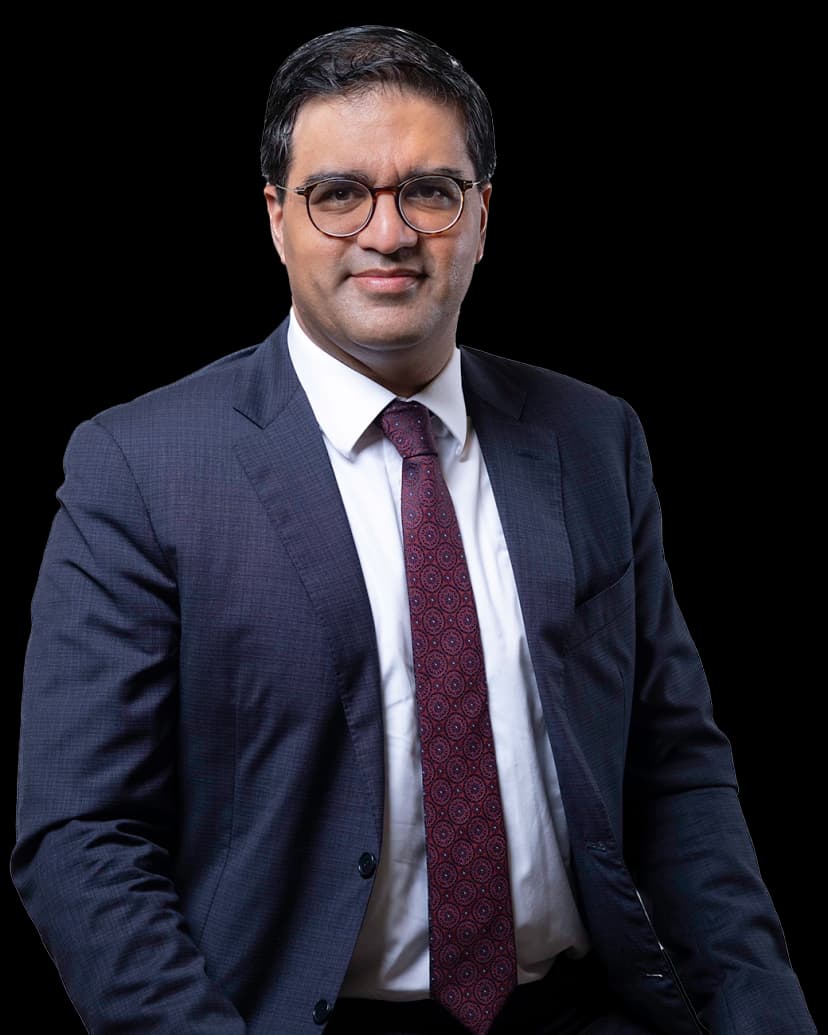
Aarij S. Wasti
Partner
Entertainment & Sport / Brand Protection, Corporate Commercial, Funds and Private M&A


Vidéos
Épisode 6
À l’approche de la Coupe du Monde de la FIFA 2026 qui se déroulera conjointement au Canada, aux États-Unis et au Mexique, Sideline Conversations vous explique les enjeux juridiques et commerciaux liés à ce grand rendez-vous sportif. Cette série vidéo est animée par les experts en réglementation d’événements sportifs mondiaux, Aarij S. Wasti (Gowling WLG, Toronto), Marlon Hill (WSHC+B, Miami) et Juan Carlos Partida (EC Rubio, Mexico).
Dans l’épisode 6, ils accueillent Daniel Zohny (associé et chef mondial de la protection des marques en ligne chez Abion) et Mukhammad Sodik Sadik-Akhunov (chef du département des compétitions et événements de la Fédération de football de l’Ouzbékistan), pour analyser les réalités juridiques entourant la diffusion publique d’événements sportifs, l’application des droits de propriété intellectuelle, ainsi que les enjeux pertinents sur le plan du marketing et des commandites.
Cliquer ci-dessous pour visionner la vidéo complète. (en anglais)
MARLON HILL: Welcome back to the Sidelines. We are crisscrossing the time zones all across this planet Earth here for our sixth episode here on the Sideline Conversations. We have our friends in Mexico City, my good friend JC, saw you there in Mexico City.
My good friend holding down the six North in Canada. I'm not sure if it's about minus something degrees up there in Toronto, Aarj Wasti, but my friends there.
AARIJ S. WASTI: Hey, Marlon, it's actually thought up. We're getting closer to the World Cup. It's 5 degrees now.
Marlon Hill: Yeah, don't hold your breath. Don't hold your breath. But we have some very special guests here on the sixth episode of the Sideline Conversations. We are going to be digging in. We know that around this time here in spring, everyone is planning their public viewing watch parties.
They're planning their marketing promotions surrounding this summer's historic tri-nation hosting of the World Cup here 2026 in North America. We have some very special guests joining us to dig into these intellectual property rules, advertising rules, what is a clean zone, all of those things that we have one of the most globally recognized experts in online brand protection.
He's now currently heading Albion in Zurich, Switzerland. And formerly, he represented our good friends at FIFA in online brand protection. But he's now doing it privately with global brand protection for various private brands across the world in Zurich. Daniel Zohny joining us from Zurich. Welcome to the sideline.
DANIEL ZOHNY: Thank you, Marlon. Appreciate it. Appreciate the kind introduction. Glad to be here.
MARLON HILL: Is it a similar weather in Switzerland as it is in Toronto?
DANIEL ZOHNY: It's raining. It's like it's not great. It's not great, but much warmer, much warmer. It doesn't get that cold here.
MARLON HILL: Well, we really appreciate you being here on the sideline. Later on in our program, we're also going to be welcoming our debutant friends from Uzbekistan to give us some perspective of what it's like to be joining the World Cup for the very first time in history, and we will be joined by special guests later on in the program.
But for now, if you want to walk through the jungle of planning public viewing watch parties, also known as PVEs, Public Viewing Events, and what the legal framework or the business considerations are about hosting these watch parties. So, Daniel, I know that FIFA has regulations.
I know that the networks are trying to protect their brands and their broadcasting rights, but what's really entailed in having a public viewing event, whether you're having it locally in North America, or you're doing it in Uzbekistan, or Switzerland, what is the general framework?
DANIEL ZOHNY: Well, the good thing is for everyone, you can look up the framework FIFA has published at the end of last year. Its regulations for public viewing events, which actually this time around was earlier than often in the past. So there are some guidelines that you can look at.
They have published two sets. One is international, and the other one is for the host country. So USA, Canada, Mexico. And they differ slightly. There's a lot of that is the same, but they differ slightly, especially when it comes to defining what is what.
And in general, there are different kinds of public viewing events that FIFA requires a license for. And those hinge on whether they're commercial or non-commercial and on the size of them.
MARLON HILL: What's the biggest difference between those two, commercial and non-commercial?
DANIEL ZOHNY: So when you look at commercial, it means that it's ticketed. So you're asking for an admission fee. And that doesn't have to be an admission fee in the sense of money exchange. It can also be a consumption minimum, drink minimum, whatever. So that makes it commercial already. And also if it's sponsored by anyone, that also makes it commercial. And essentially, any commercial benefit is derived. Even if you said, hey, you only get in if you do X, that makes it commercial. So more likely-- yeah?
AARIJ S. WASTI: If I have a restaurant at downtown Kansas City, we know the Argentinian army is arriving. I want to put these matches up on my screen. I'm going to charge slightly higher than usual for burgers, fries, and beer, but I'm not-- I don't have a minimum. I don't have an entry fee. Am I still commercial?
DANIEL ZOHNY: That really depends, as always, when you look at legal documents. But generally, bars, restaurants, hotels, pubs, clubs can qualify as non-commercial. So if you show sports in an ordinary course, like a sports bar, et cetera, in general, you're fine. If you're making a special event out of it and especially if you're exceeding a certain size, normally above 1,000 attendees, then you get to the commercial part.
But if you run a sports bar in the normal course of your business, you typically are fine, and you don't need a specific license. However, you still need the regular cable licenses, et cetera, right. I mean, you just can't throw up a feed that you got somewhere. You still be on the right side of the regulations, but you don't need a license from FIFA, per se.
JUAN CARLOS PARTIDA: Daniel, I just thought--
MARLON HILL: JC, you were going to say?
JUAN CARLOS PARTIDA: Yes, I'm sorry. I just heard from and saw a lot of news from Mexico. I mean, a lot of cities where there's not going to be any matches are thinking of doing some public viewing in the square, Downtown squares or in theaters, and there's going to be more than 100, more than 1,000 viewers.
For example, in the city I live in, Puebla, they are thinking about putting giant screens in certain parks and everything. And they will be selling-- this is organized by the museum, the local authorities, but they're going to be selling beer, or food, or anything like that. Would they still be qualified as non-commercial viewings?
DANIEL ZOHNY: Well, again, that depends. If it's more than 1,000 people, if the attendance would be more than 1,000 people, then you need a license. But the good thing is there is a mechanism. You can go on the FIFA website, and request a license, and actually FIFA will determine whether what category you fall under.
I think the crux here simply is don't just go on your gut feeling. This might be commercial. This is not-- look at the regulation. And if in doubt, just apply for a license. If you don't fall under a special licensing scheme, FIFA will tell, you know what, you don't even need a license. But what most people do, they don't even look, right, so that's the problem.
AARIJ S. WASTI: So I think the important takeaway here-- I think the important takeaway here, Marlon, is for the party that you're planning for all of us, which I understand the guest list is about 1,000 people right now, you might actually need a license.
Before we continue with Daniel, I thought now that Muhammad has joined us from Uzbekistan, it would be a good opportunity to welcome you. I'm going to try to say this correctly, xush kelibsiz. Is that close enough?
MUKHAMMAD SODIK SADIK-AKHUNOV: Xush kelibsiz. Yes.
AARIJ S. WASTI: Kelibsiz. Welcome to the Sidelines.
MUKHAMMAD SODIK SADIK-AKHUNOV: Thank you so much. Hello. I do apologize for the late joining because it was unexpected I was stuck in the city center in downtown.
MARLON HILL: No problem.
MUKHAMMAD SODIK SADIK-AKHUNOV: But finally, I'm here. So I'm glad to see you all. And thank you very much for your invitation. So I'm so excited to have a good conversation with you guys.
MARLON HILL: Absolutely, Muhammad. Thank you for joining us here on the Sideline Conversations from Tashkent. We are having a very robust discussion about public watch parties, and I'm sure there are a couple public viewing parties that are going to be planned in Tashkent and the various towns.
And JC were just asking whether or not these public viewing regulations actually apply to municipalities, and towns, and/or law firms, or I know that Gowling is planning a big party. If they have multiple screens in their law firm, Daniel, and they're serving appetizers, and they send out a nice flyer with sideline conversations, would that apply to Gowling?
DANIEL ZOHNY: Gowling, complete ambush issue.
[LAUGHTER]
One additional thing I just wanted to say that when you asked about municipalities putting up events, et cetera, or having events in cities, even if you get a FIFA license, of course, right, you still have to take care of all the other pyramids you need.
Just because FIFA gives you a license doesn't mean you can do whatever you want to do based on local, municipal law, potential insurance coverage, because you have certain--
AARIJ S. WASTI: All permits and all.
DANIEL ZOHNY: All of that. You still have-- you only get a license from FIFA. That doesn't mean anything else. You have some to take care of.
AARIJ S. WASTI: It's a valid point. Because one of the things that I have seen here is that people are of like, is it either/or? And there's almost this kind of assumption that, well, if I've got approval from one or the other, I'm good to go, and they often forget that actually, FIFA isn't part of the host government. You can't replace law. And so yeah, I think that's a valid point. Daniel, in terms of before we can all-- sorry, Marlon, go ahead.
MARLON HILL: No, no, no. I was just going to say that FIFA provides a route, where you can send them an email if you're not sure, publicviewing@fifa.org. Send them an email. Let them know what you're planning.
You definitely don't want to be on the back end of investing a lot of money and putting together a party, and then you have to walk it back. I'm sure if the Federation-- Mukhammad, are you planning any public viewing parties in Tashkent?
MUKHAMMAD SODIK SADIK-AKHUNOV: Probably, yes. Because-- here's a bit different. Everything is under the government authority. So they are doing the public views. For example, even our last match when we qualified for the World Cup, they installed the giant screens in every 12 region, they gathered the people just to celebrate together.
But it wasn't under the government authorities. So we don't have any links to that. But we are trying to help them with certain rights, to get the rights and some regulations just to avoid any problems.
MARLON HILL: Excellent. Are you going to say--
AARIJ S. WASTI: That's what I call a-- that's what I call a self licensing regime. You're organizing as the government, you issue yourself the permits. To Daniel's point, where there are broadcast licenses or approvals from FIFA that are necessary. Presumably the government would go and get those.
Daniel, before we leave watch parties, in terms of just broad enforcement and policing, again, looking at that FIFA and local authorities split, where businesses perhaps don't air on the side of caution don't necessarily adhere to the rules, who are they looking to come after them? What sort of mechanisms might apply, and who might they expect?
DANIEL ZOHNY: So I'd say first the question is, I mean, who polices this even? If you look internationally, it really hinges on advertising. I mean, if you put it up on your social media, on your website, et cetera, that you're going to have this whole thing and you blast it, then somebody will probably get wind of it, and you might hear from FIFA, and then they will request a license, a payment, or they will request you not to run the event.
In the host countries, it really depends. For example, in Qatar, the enforcement was done by the local broadcaster. It was BN that actually did the enforcement of the PVs. I don't think that, for example, in the US, Fox would do that, but I don't know. I'm not sure what the regime is, but it is sometimes dropped down because it's in their best interest.
And actually, they have much more personnel that can police that. Because they police anyway. They police bars, et cetera on game days. That could be that there is quite a broad monitoring that goes on. And I don't really know what it is this time around.
In host cities themselves, there will also be the regular FIFA personnel typically either whether it's from the media team, the broadcast team, or the brand protection team that keeps an eye out. But to be honest, typically, they target larger ones, the big publicized ones. If somebody is running like a smaller scale event, that is really localized, maybe in a neighborhood, it could pass under the radar, but I wouldn't recommend it.
MARLON HILL: Interesting. JC, in Mexico, you guys have a robust industrial property law there in terms of-- I'm sure FIFA is properly registered in all three host countries and in countries across the world in protecting their wordmarks and their insignias. What are you seeing in Mexico City? Are you starting to see any advertising as it relates to the work of in Puebla or Mexico City in and around Mexico?
JUAN CARLOS PARTIDA: Yes. Mainly in Mexico City and the other two host cities, Monterrey and Guadalajara because that's going to be the epicenter of the World Cup in Mexico. But certainly, as you mentioned, there is a robust intellectual property authority in Mexico, and they will be watching any possible infringement of FIFA trademarks.
And basically, because also the Mexican federal government will be also very aware and trying to enforce all those laws because they have that responsibility before FIFA. So yes, there's going to be a lot of activity from the intellectual property authority. And I see that there's going to be some sanctions there. Because in Mexico, sometimes you do things, and then you ask questions.
MARLON HILL: Aarij, I know that you are also getting phone calls--
DANIEL ZOHNY: Maybe just to add also--
MARLON HILL: No, go ahead, Daniel. Daniel, go ahead.
DANIEL ZOHNY: I just wanted to say something about Mexico. Because Mexico was always like a hotbed of activity, also in past World Cup editions. Both the MP, the PROFECO, the consumer protection body are very active, also have certain enforcement abilities that in other countries administrative bodies don't have and really run a tight ship there.
When it comes to engagement with businesses, et cetera information, actually, Mexico has a very, very good system when it comes to that, I have to say.
JUAN CARLOS PARTIDA: Yeah, you're correct, Dan.
MARLON HILL: Aarij, I know that you're getting phone calls about clients interested in marketing in and around the World Cup, either around stadiums, or fan fests, or marketing campaigns during the summer. What are some of the parameters that exist in putting together marketing plans around a big event and tournament like this?
AARIJ S. WASTI: So as we've discussed on previous episodes, right, you've obviously got to understand the layout and the framework of sponsorship. We've been through the various tiers before. We've also got four host cities, including Toronto and Vancouver. Clean zones that FIFA and the local governments have started to articulate and define.
One thing I found quite surprising, Daniel, you'll remember our conversations in Qatar, very different kind of commercial environments in the city centers. We are close to many of the stadiums in this tournament, very populated, including with local businesses. Yet for Toronto and Vancouver, they basically said two kilometer radius, full stop.
So a lot of questions have now come up from local businesses in terms of does that mean I have to stop business? Does that mean that I'm completely caught out? And so you've got-- to answer your question, Marlon, understand what that means, where you are within the city geographically.
And then, of course, as always, you've got to ensure that the commercial activity that undertaking is not in breach of any FIFA regulation or local bylaw. It's again, a two-tiered concept. And the important thing, as always, is to find out. When in doubt, seek advice, seek counsel, email the host city, the LLC, or FIFA itself.
Yeah, Daniel, are there any trigger words that companies-- some of the companies that you represent at Albion should be avoiding in any marketing advertising plans before the summer or during the summer in and around host city?
DANIEL ZOHNY: I mean, it goes to any business that wants to be part of the World Cup flavor. Don't use any marks. Don't use anything that is registered. Don't use any IP that is easily recognizable. There's, of course, levels of importance of IP also, but definitely nothing that is whether it's FIFA, anything to do with 26 emblem, the mascots, but most importantly, the trophy.
FIFA is very, very vigilant when it comes to the World Cup trophy, which is its most prized and probably most important intellectual property asset. And in the past, there have been campaigns that kind of play on the trophy. There was one back in the day that was a chicken drumstick that looked like the trophy. At the base was actually the trophy.
And you could see that malachite ring. It was quite easy to take care of. There was a campaign by Duolingo, actually, in Brazil, that they named a local Football Club, Qatar, and then had the trophy, and it was like scrambled. But again, you could see those rings.
They're so iconic that it's quite easy to deal with. So just stay away from anything that looks like the FIFA trophy. That's really important. You can use other trophies if you wanted to that look differently. Just don't use one of maybe US sports either. Those are the things that are very easy triggers and that are also very easy for FIFA then to enforce, especially online. That's very easily done.
MARLON HILL: Absolutely, absolutely in and around. But Daniel, are there any creative suggestions or examples that you can give that will put people in the-- not in the clean zone, but in the safe zone without getting a red card?
DANIEL ZOHNY: As I said, first, stay clear of any use of FIFA IP. Secondly, there have been a lot of campaigns that were run in past tournaments by also straight up competitors of FIFA sponsors or partners that just treaded on the right side of association. I mean, associations are very broad term.
Just because you're using football imagery, or football themes, or you're in a setting that might look like a certain country doesn't mean that that is prohibited or that is already crossing the line. I mean, for example, Pepsi ran a big campaign with major stars that were also participating in the World Cup, like Messi, et cetera.
On the backdrop of what looked like an Arab city, which it was not filmed in Qatar, it was filmed in-- it was filmed in Morocco. But it was kind of a bizarre setting, et cetera. But it was just not enough to cross that-- to cross that line, to say, OK, now, you're getting into ambush territory.
MARLON HILL: Yeah.
DANIEL ZOHNY: Permissible ambush territory. Because it was an ambush, right, but it was not actionable, let's put it that way. And so there are ways. Beats by Dre did it in 2014 with a very famous campaign.
MARLON HILL: Exactly.
DANIEL ZOHNY: With probably one of the most expensive campaigns because they had everybody that you could just imagine, from LeBron James, Serena Williams, Neymar, et cetera in that spot. But yeah, again, it was just not enough to be actionable. So there are these opportunities. You just need to play it smart.
MARLON HILL: Absolutely.
AARIJ S. WASTI: So Mukhammad, as you guys are now planning to visit Atlanta, Houston, and--
MUKHAMMAD SODIK SADIK-AKHUNOV: Mexico.
AARIJ S. WASTI: There we go. JC.
JUAN CARLOS PARTIDA: I know.
AARIJ S. WASTI: You got a guest.
JUAN CARLOS PARTIDA: I know, I know. I'm trying to get tickets, remember?
AARIJ S. WASTI: Let's not go there. Let's not go there.
MARLON HILL: We've just joined the Uzbek delegation.
AARIJ S. WASTI: Yeah.
MUKHAMMAD SODIK SADIK-AKHUNOV: You're more than welcome.
AARIJ S. WASTI: Are you aware of companies that could be back home from Uzbekistan that are looking to use the opportunity of having the Uzbek national team in the United States and Mexico to advertise their brands, to do any activations? Are you seeing some activity there?
MUKHAMMAD SODIK SADIK-AKHUNOV: To be honest, I'm a bit far from the marketing matters because I have my stuff doing this. But as per my information, we don't have any local brands that they want to make some brand activations.
But what I know, we have our minister of culture and tourism that are planning to do some activities, but not in the FIFA territories, like official areas. In the cities itself, in Mexico City, in Houston and Atlanta. So we want to spread our culture, to show Uzbekistan and open-- and to show that Uzbekistan is open for everyone to invite everyone.
We have very beautiful-- very beautiful historical sites. So I think it's a good opportunity for us to show the country itself, not only on the pitch but beyond the pitch as well.
AARIJ S. WASTI: Well, I think it makes a lot of sense. And Daniel, we've seen that at previous tournaments. You think back to when Qatar was introducing itself to the world in 2010 in South Africa, that was the play, right? Let's just introduce ourselves to the world.
DANIEL ZOHNY: Yes.
AARIJ S. WASTI: And not necessarily with a directly commercial objective, but a cultural exchange. And I think that's one of the most beautiful things about this World Cup. And certainly, I think Uzbekistan playing in Mexico City is going to be fantastic.
MUKHAMMAD SODIK SADIK-AKHUNOV: What do right here is not here more commercial-- yes, please. Go ahead.
MARLON HILL: No, Mukhammad, I just going to say to JC that this is an opportunity for Uzbek and Mexican food to be-- there may be an opportunity here for a merger here, JC, come on.
JUAN CARLOS PARTIDA: Oh, no. No, totally. Totally. Totally. Yeah, yeah.
MUKHAMMAD SODIK SADIK-AKHUNOV: We'll bring some cooks. We will try to do something.
JUAN CARLOS PARTIDA: I know. It will be with the Uzbekistan delegation all the way.
MUKHAMMAD SODIK SADIK-AKHUNOV: Of course, of course, of course. You have my contacts, JC. You are more than welcome.
JUAN CARLOS PARTIDA: Yeah, of course.
MARLON HILL: So, Mukhammad, how are you preparing for this historic opportunity? What is the mood within the federation and the team? Bring us inside the locker room. And how you guys are feeling? How are you preparing for this moment?
MUKHAMMAD SODIK SADIK-AKHUNOV: Actually, we are very excited. We are very happy. We have a lot of work, but we've been dreaming this for a long time, and so we are ready.
So we were preparing ourselves for 34 years, for this opportunity. And we are here. And we are doing our best 24 hours and doing all this hard work. It's new for us. We're learning every day new things, but we're excited.
And a part of that, everything is good. The team is getting-- guys is getting good preparation. So we're going to host the FIFA series matches in March. So we will host the Venezuela, Gabon, and Trinidad Tobago national team.
So we're waiting for very exciting and very, how to say, tough matches. And so as you're well aware, we will have a match in Canada on the 1st of June against the Canada, so in Edmonton city. Then we will move to us and to continue our last preparations for the World Cup then. Here we go. We go to Mexico on 17.
JUAN CARLOS PARTIDA: Yep.
MARLON HILL: Excellent. Excellent. Nice.
JUAN CARLOS PARTIDA: I like it Mukhammad--
MARLON HILL: Go ahead, JC.
JUAN CARLOS PARTIDA: Yeah, I'm sorry. I was going to ask Muhammad now that he's talking about the qualification. First of all, congratulations for qualification to Uzbekistan. But can you talk to us or describe to us very briefly how or what was the atmosphere within the Federation and across the country upon the qualification?
MUKHAMMAD SODIK SADIK-AKHUNOV: To be honest, it was one of the best days of our career. Unfortunately, I couldn't travel to UAE because we had another important matches here. So with that time, we hosted around 10 national teams or different age categories in Uzbekistan. So that's why I couldn't travel.
But I watched the match with the family, with my wife, and that was something amazing. As I told you, we've been waiting for this for 34 years, and this has happened. I've watched the five qualifiers. And every time we've been so close to qualify, but we couldn't.
Sometimes we needed one goal or one point. But this time, we made it, and we made it one of the first teams, we qualified, I think, for fourth or fifth in the world. So this makes us proud. And after the qualification, so we started the preparation for the celebration because we had another match against Qatar, the last one.
And we-- so with the all government authorities, we started the preparation. And so finally, we did it. The country president came to the match. So we won the Qatar 3-0. Then so after the match, we were celebrating all together. So he came out to the-- so he came to the pitch.
So he congratulated everyone with this big victory. So from that time, so we started our big journey.
JUAN CARLOS PARTIDA: So it's a party-- it's a party-- it's an ongoing party ever since.
MARLON HILL: And it's going to be a bigger party when Jamaica qualifies, Mukhammad. Because Jamaica is going to have to take on New Caledonia and Congo in order to get to see if we can have some Uzbekistan reggae. How about that?
MUKHAMMAD SODIK SADIK-AKHUNOV: Yeah, yeah, yeah. Good, good. Well, we're looking for-- we're watching all our opponents. New Caledonia, Jamaica, and Congo, DR Congo included. So we are too excited. So we're ready. Let's do it.
MARLON HILL: Very good choices on your friendly matches.
MUKHAMMAD SODIK SADIK-AKHUNOV: Yeah, thank you.
AARIJ S. WASTI: At a very high level, what are some of the logistical and operational challenges that you and the team are tackling as you prepare to travel to North America for 26?
MUKHAMMAD SODIK SADIK-AKHUNOV: Actually, I don't see any problems as part of, how to say, the distance. Distance is quite far for us. I travel to the official draw, then I've been traveling around the US or to looking after for the team base camp.
So it's 14 hours from Istanbul. This is the main challenge, I think. But the rest are OK. We are good in, how to say, in the preparation with the visas, with but everything, all OK. But the only issue is a distance, and time zones, and the time difference.
That's why we are planning to come earlier to-- first to Canada, then to us to adapt ourselves. Our coaching staff and medical staff, so they are now doing their best to prepare the best plan to make everyone, not only the players, but the staff and to be in good shape for the first match.
MARLON HILL: Well Mukhammad, you definitely have a large Uzbek community, primarily in the Northeast. How are you connecting to those Uzbek Americans and making sure that they can be a part of your fan base, whether in the US or in Mexico?
MUKHAMMAD SODIK SADIK-AKHUNOV: You should ask JC. My ticketing manager, he became crazy.
[LAUGHTER]
So we are in touch with them on daily basis, especially with those people who are in America. And I told you, when I visited the US for the withdrawal, we met a lot of Uzbek communities in Atlanta, and Houston, in New York, in Washington. So we met everyone.
So we discussed the opportunities to bring all Uzbek people to the stadium because we have big community in the US, in Canada, in Mexico. We want to bring all of them, and we are trying to help them as well as much as we can. So we want the stadium, at least half, to be white and blue. Because we know 100% first match in Mexico will be all yellow. But we're trying to mix it up.
MARLON HILL: To all the football fans out there, Mukhammad, how would you describe Uzbek football? How would you define-- how is Uzbek? What would you say?
MUKHAMMAD SODIK SADIK-AKHUNOV: In one word or what?
MARLON HILL: One word, or sentence, or-- what should football fans look towards from Uzbek football in 2026?
MUKHAMMAD SODIK SADIK-AKHUNOV: Sorry for question again. In the World Cup or football itself?
MARLON HILL: In general, how would you describe--
MUKHAMMAD SODIK SADIK-AKHUNOV: In general.
MARLON HILL: In general.
MUKHAMMAD SODIK SADIK-AKHUNOV: In general. So I think the last two years was quite successful for us because of the good strategy and the good support from the government side. And we are looking to continue it and to have more achievements.
And we will host the under 20 World Cup in 2027, which is also one of the big milestones for us. And also we're going to host the Asian Cup-- Women's Asian Cup, first ever in Central Asia. Then we bid for Asian Cup with joint bid with Kyrgyzstan and Tajikistan for 2031.
We have very big plans. OK, one of the big, big, big news from the last year, we started the new building, the new stadium, 55 000 capacity stadium, which will be the biggest stadium in the Central Asia. So we have a lot in front of us and step by step with the cold mind but very warm heart. So we're doing our steps, and I hope we can achieve it.
MARLON HILL: Excellent.
AARIJ S. WASTI: That sounds fantastic. In fact, to answer and put that one word description on the Uzbek team, Marlon, they're dangerous. I know that people are looking at the schedule, and they're saying, oh, Colombia, and Portugal.
Look out. Uzbekistan played Qatar almost inevitably. Every single qualification route in over the last 20 years. And I tell you, they are the team that you're always nervous about. And they've been getting so much better. I think dangerous, ambitious, and don't write them off as a potential wild card.
Daniel, just to get your old kind of FIFA experience, when FIFA is dealing with a first time qualifier, like Uzbekistan, what sort of relationship do they build? What kind of guidance are they able to provide, particularly around some of the commercial stuff that their media partners may be interested in, their commercial partners may be interested in?
MARLON HILL: Great question.
DANIEL ZOHNY: Yeah, Mukhammad, take close-- take a close look at the media and marketing regulations that FIFA will release. So there will be a team workshop, right, where they go through all these things, and there's a commercial part of it, and especially around your own sponsors.
So don't overlap with FIFA sponsors, these kind of things. Not during match days, not in campaigns. That is something that FIFA takes a close look at and will normally then engage with you directly, right. And with your team liaison-- and if there's an issue, typically, it's just a warning, right.
There is a conversation, say like, hey, maybe you don't know, but you can't do this, especially with the first time contenders. There's a little bit of leeway too because it's new. There's a lot of excitement. There will be a lot of excitement from your sponsors also because it's the world stage, but you have to rein them in a little bit. Because you don't want to waste time during the tournament with that kind of stuff. You want to concentrate on football.
MUKHAMMAD SODIK SADIK-AKHUNOV: Totally. Agree. Since we're talking to people here that are in the host countries, and you mentioned the clean zones or whatever you might call them. I think in Canada, they're calling them exclusion zones in the ordinances. Businesses that are in those zones, don't be afraid too much. You'll be able to go about your business. Just don't expand on it.
Do what you're doing, and you're allowed to do that. Just don't come up with funny ideas, to rebrand your whole business, to suddenly take somebody's money and be like, hey, how about we turn this into a Pepsi store? Yeah, that will not fly. But other than that, just go along your business and enjoy it.
So don't be-- don't be too concerned. And just also make sure, whether you're in or out of the zone. Because the zone, you said it earlier, Aarij, two kilometers. But that was actually an old thing from FIFA. Then it was done to one. But it's never like the whole radius.
It's actually what is drawn on the map, precisely. So these maps will be published at some point. Whether it's by FIFA, I don't know. That was something that was done in Qatar. But otherwise, it will be in the ordinances of the cities, and you can find them somewhere online.
I only found three or four so far. I think not all of them are set yet, but Vancouver is done. I think Miami is done. Santa Clara for the Levi Stadium. Can't call it Levi Stadium for the World Cup.
AARIJ S. WASTI: San Francisco.
DANIEL ZOHNY: For the Bay, San Francisco Bay Area Stadium is also done. But, in time keep, the businesses should look out for that.
AARIJ S. WASTI: So Daniel, if we think back, St. Petersburg, 2018, within the fan fest-- in fact, inside the secured zone of the fan fest was Jamie Oliver's restaurant.
DANIEL ZOHNY: Yeah.
AARIJ S. WASTI: And lots of question mark, you remember discussions about they ultimately were able to do business. They were still serving pasta and pizza. People were still able to enter the restaurant and no harm, no foul because at the end of the day, it wasn't a pop up.
DANIEL ZOHNY: Yeah, typically, there's a cutoff date. At some point-- at some point, FIFA determines a date and says, as of now, you can't add new stuff. And ideally, those dates are publicized because it just gives security to everyone.
AARIJ S. WASTI: Certainly.
DANIEL ZOHNY: Yeah, they not always-- and that, I have to say was really great in Qatar. Everything was super transparent. It was really very transparent. And there was not a lot of doubt. But it's not always that way, unfortunately.
MARLON HILL: We are just so honored to have our debutant team Uzbekistan here with us here on the sideline conversations. Mukhammad Sodik, head of competitions. Good luck on your friendly matches against Trinidad and Tobago, Gabon, and Venezuela.
Those teams are going to well prepare you for Portugal and Colombia. We wish you the best in all your-- whatever challenges you have, we know that Uzbek people are very excited about coming to North America for their first time after 34 years.
And certainly, our friends in Monterrey, Guadalajara, and Mexico City are getting ready for their municipal public watch parties. Please make sure that if you are a business or municipality, that you contact people at publicviewing@fifa.org to ask your questions as to whether or not your event is commercial or non-commercial.
And certainly, art is getting ready for his ambush campaigns for many of his clients, making sure that they are up to the line of association but no association in terms of his compliance as well, making sure that they are outside the clean zones and outside the exclusion zones here on the sidelines, avoiding any yellow cards, avoiding any red cards.
AARIJ S. WASTI: All right. And remember, you need a ticketing agent. JC is available in Mexico City. All he asks is one ticket. He just wants one ticket to a FIFA match.
DANIEL ZOHNY: Thank you.
JUAN CARLOS PARTIDA: All right.
DANIEL ZOHNY: Ciao. Bye, bye.
AARIJ S. WASTI: Take care, guys.
CECI NE CONSTITUE PAS UN AVIS JURIDIQUE. L'information qui est présentée dans le site Web sous quelque forme que ce soit est fournie à titre informatif uniquement. Elle ne constitue pas un avis juridique et ne devrait pas être interprétée comme tel. Aucun utilisateur ne devrait prendre ou négliger de prendre des décisions en se fiant uniquement à ces renseignements, ni ignorer les conseils juridiques d'un professionnel ou tarder à consulter un professionnel sur la base de ce qu'il a lu dans ce site Web. Les professionnels de Gowling WLG seront heureux de discuter avec l'utilisateur des différentes options possibles concernant certaines questions juridiques précises.





Gowling WLG est un cabinet juridique international constitué des membres de Gowling WLG International Limited, une société à responsabilité limitée par garanties enregistrée en Angleterre, ainsi que leurs affiliés respectifs. Les membres et affiliés constituent des entités autonomes et indépendantes. Gowling WLG International Limited promeut, facilite et coordonne les activités de ses membres, mais ne fournit pas elle-même de services aux clients. Pour en savoir davantage sur notre structure, consultez notre page Avis juridique.
© 2026 Gowling WLG Tous droits réservés