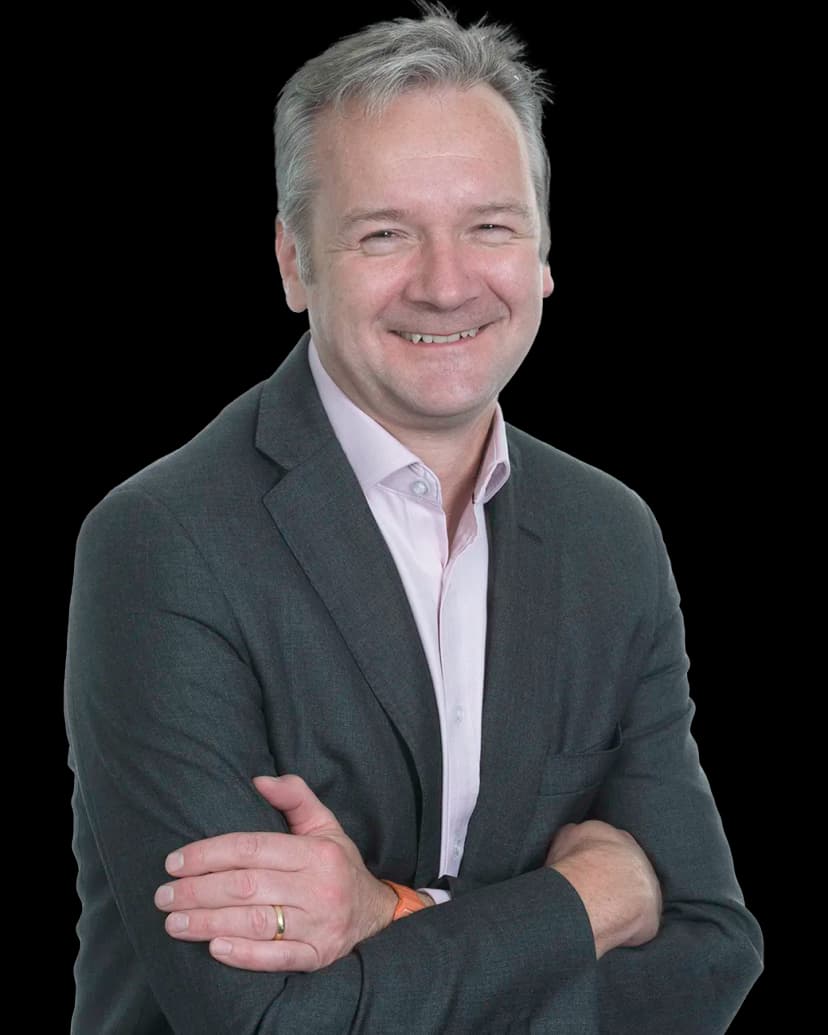
David Lowe
Partner
Head of Commercial Contracts
Co-Chair of ThinkHouse


Article
4
For business leaders, especially General Counsel and senior executives, 2026 presents a defining challenge: steering businesses through a year of steady but unspectacular global growth, heightened dollar volatility and a rapidly shifting trade landscape. As the US steps back from its transitional role in shaping global commerce, a "World Minus One" dynamic is emerging with new trade agreements, supply chain realignment and regional partnerships reshaping where opportunities lie.
At a recent Gowling WLG client event, we were joined by John Ferguson, Global Head of New Globalisation at The Economist Impact, who offered a candid and forward-looking perspective on the forces reshaping global commerce. From the outlook for key markets and the implications of transatlantic tensions, to diversification strategies and how leading companies are moving AI from experimentation to measurable ROI, John offered practical perspectives for leaders making critical decisions this year.
We sat down with him to explore the themes that matter most for corporate strategy in the year ahead.
A: Broadly speaking, the global economy is holding steady. We expect world GDP growth to come in at around 2.7% for 2026, only slightly down from an estimated 2.8% in 2025[1] . It’s not spectacular, but it's stable - something many businesses welcome after several years of volatility.
Asia and Africa remain the standout growth regions. Vietnam continues to benefit from supply‑chain realignment, and India, with expected growth of around 7.2%, is the world’s fastest‑growing large emerging market. In the Middle East, the UAE and Saudi Arabia are also powering ahead, both expected to exceed 4% growth[2].
The picture is more modest in Europe and the UK. The UK is forecast for 1.4% growth, matching its 2025 performance. Germany is a relative bright spot: after a challenging 2025, its growth could rise from 0.2% to 1%, and even up to 1.6% in 2027, driven by a renewed fiscal push, major investment commitments and increased defence spending[3].
The good news globally is that inflation is easing, encouraging central banks— including the Bank of England, which may cut rates up to three times this year— to continue loosening monetary policy.
A: There’s a lot of conversation about 'de‑dollarisation', but realistically, we won’t see meaningful progress on that in the near term. What is more likely is greater US dollar volatility in 2026.
This is being amplified by political pressures within the United States itself. Continued attacks on key institutions by the current administration are unsettling investors. So, while the dollar won’t lose its dominance, companies should prepare for sharper swings.
A: It was impossible to ignore geopolitical tensions at Davos, particularly the fallout from the Greenland dispute between the US and EU. Although President Trump ultimately backed away from his most severe threats, the damage to transatlantic trust was very real. European policymakers have come away far more sceptical about the stability of the US‑EU relationship.
On the EU‑China front, we expect a complicated mix of cooperation and tension. The deterioration of US‑China trade relations means more Chinese goods are being diverted to Europe, which will place pressure on EU industries. That increases the likelihood of new trade tensions in 2026.
Interestingly, the EU‑UK relationship may improve. While nobody expects a full UK return to the bloc, both sides seem more willing to find ways to collaborate practically.
And a big moment at Davos was Mark Carney’s “call to arms” speech, urging middle‑power nations to forge new coalitions and take a more active role in shaping global trade. Countries like Australia will be watching this closely.
Finally, we’re seeing the world respond to a more protectionist US by forming deals around it. The last year alone has seen:
All signs point to a “World Minus One” dynamic: globalisation continuing, but without the US as its central architect.
A: In one word: diversification.
The companies managing uncertainty best are the ones spreading both their markets and their supply chains. For critical inputs, dual‑sourcing has become standard practice, and firms are investing heavily in scenario planning for key geopolitical risks.
We’re also seeing much more attention on internal governance - building systems that allow leadership teams to make faster, informed and risk‑aware decisions.
But it’s not all defensive. New trade agreements are opening up commercial opportunities, especially as manufacturers reposition themselves in response to US tariffs.
A: The best companies have moved well beyond the hype. Most have now completed their experimentation phase and are entering what I’d call the ROI phase - deploying AI in targeted, measurable ways.
The organisations getting this right are:
Yes, AI can make operations leaner. But its real potential lies in enabling new products, new services and new business models. That’s where the leaders are already heading.
The world is becoming more fragmented, more volatile and more politically charged. But for companies willing to diversify, invest in resilience and embrace technologies like AI, 2026 offers not only challenges but opportunities.
Thanks again to John for joining us and sharing his insights.
Find out more about the five trends shaping 2026, from geopolitical shifts to advances in AI, in our Big Picture for Business report.
If you’d like support navigating any of the geopolitical, regulatory or trade and supply chain‑related implications discussed above, the Gowling WLG team is here to help so please get in touch.
[1] Economist Intelligence Unit (EIU)
[2] Economist Intelligence Unit (EIU)
[3] Economist Intelligence Unit (EIU)
CECI NE CONSTITUE PAS UN AVIS JURIDIQUE. L'information qui est présentée dans le site Web sous quelque forme que ce soit est fournie à titre informatif uniquement. Elle ne constitue pas un avis juridique et ne devrait pas être interprétée comme tel. Aucun utilisateur ne devrait prendre ou négliger de prendre des décisions en se fiant uniquement à ces renseignements, ni ignorer les conseils juridiques d'un professionnel ou tarder à consulter un professionnel sur la base de ce qu'il a lu dans ce site Web. Les professionnels de Gowling WLG seront heureux de discuter avec l'utilisateur des différentes options possibles concernant certaines questions juridiques précises.





Gowling WLG est un cabinet juridique international constitué des membres de Gowling WLG International Limited, une société à responsabilité limitée par garanties enregistrée en Angleterre, ainsi que leurs affiliés respectifs. Les membres et affiliés constituent des entités autonomes et indépendantes. Gowling WLG International Limited promeut, facilite et coordonne les activités de ses membres, mais ne fournit pas elle-même de services aux clients. Pour en savoir davantage sur notre structure, consultez notre page Avis juridique.
© 2026 Gowling WLG Tous droits réservés