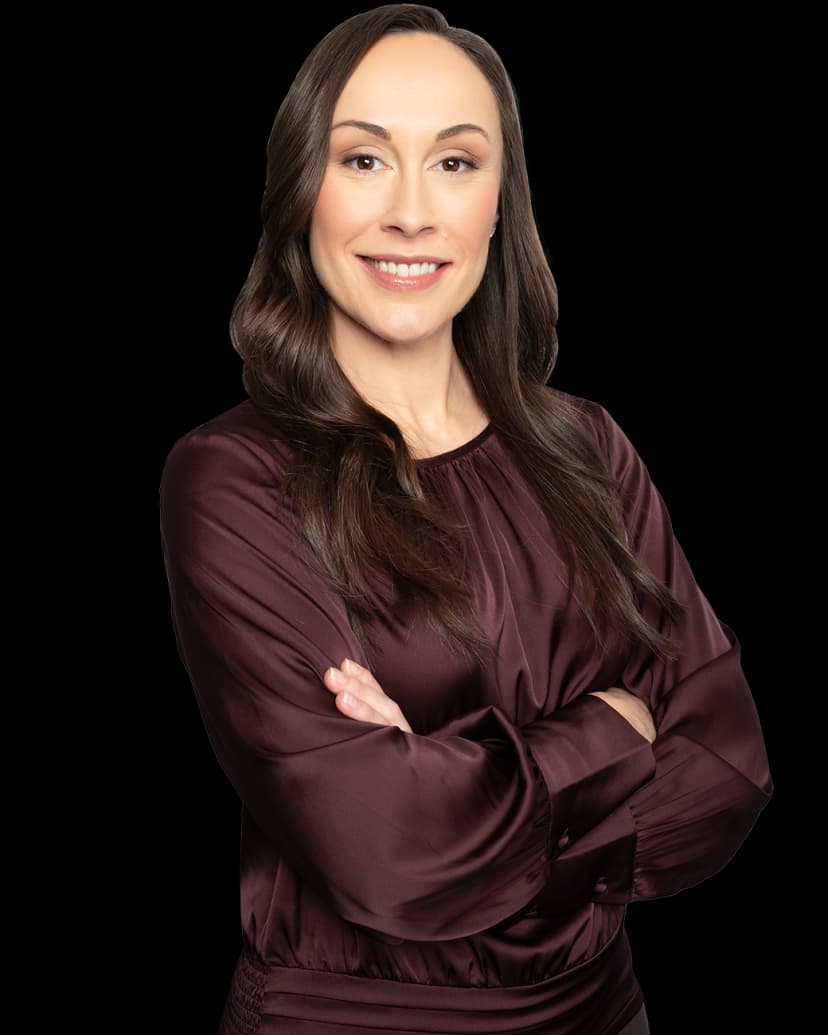
Jessica Foster
Partner


Webinaires sur demande
Built for success: Understanding and selecting project delivery models and construction insurance
JESSICA FOSTER: So good morning, everyone, and welcome to Session 1 of From Bids to Bricks Series. On behalf of myself, I'm Jessica Foster, a partner here at Gowling WLG and my co-chair of this series, Kyle David at Aon, we wanted to extend a warm welcome to both those of you joining us online and also those joining us in person here at the Gowling WLG Toronto offices.
So first and foremost, a huge, huge thank you for taking time out of your busy day to be here with us because without your engagement and support, this series would not be possible. So, thank you.
KYLE DAVID: Thanks, Jessica. I'd like to echo those thanks. And I think that it's great to see such a diverse room of stakeholders that have common interest in project delivery in the room and in attendance online. The collective experience of the various people in attendance span the construction life cycle, and I think it's a great cohort of people to discuss and openly collaborate on how we can get these buildings from the beginning to the end.
JESSICA FOSTER: Great. So before we dive in, just wanted to give you a quick background on the impetus for this series, as well as a bit of a preview as to what's coming up. So, both Kyle and I, we've spent many years in our respective professions. Myself in law, and him in insurance. And we've worked with a wide range of clients across the construction and infrastructure industry.
And over time and over our discussions together, we started noticing a bit of a recurring theme. And specifically, when it comes to these infrastructure projects in this construction space, we were noticing that a lot of the legal issues and the insurance issues are really deeply intertwined, and they cross over into the other's area of expertise. And we were really seeing this with some of our clients who would approach me asking what limits they should be carrying on their shoulders risk, or approaching Kyle and asking him about the termination provisions in their contract. So, that's why we decided to join forces today and essentially create this series so we could offer a holistic, coordinated approach that brings together the legal, brings together the insurance, and delivers some really practical, integrated insights through these four sessions that will build on each other.
So, as you see on the screen, today is just the first of four. We have three more sessions coming up, and they're all designed to essentially build on each other. But if you miss one, don't worry, they're going to be recorded. You can catch up online.
So as you can see, these sessions are going to essentially be designed to demystify some of the most common-- but also most confounding-- issues that come up on these infra construction projects, ranging from designing smarter procurements to contract management, and then of course, to navigating liens, and prompt payment, and also adjudication. And this will all be done while wrapping in the recent updates to the CCDC base forms. We'll talk a little bit about that today, as well as the pending Construction Act amendments.
KYLE DAVID: During today's hour, we will unpack the delivery methods from traditional design build to progressive design builds and everything in between. Once we've captured that, we will move on to some of the different insurance strategies to help keep these models upright in the event of an unfortunate happening.
As Jess mentioned, we will be recording these sessions, so feel free to send the invite to any other colleagues that may have wanted to be in attendance, and have them get up to speed so we can hopefully have them join us in any subsequent sessions. As a quick housekeeping, for the lawyers in the room, this program is accredited for up to 1.25 substantive CPD and CLE hours.
JESSICA FOSTER: OK, great. So finally, today's conversation doesn't need to end here when the mics go off. If you have any requests for specific content that you would like to see in the upcoming three sessions, or if you have feedback on a particular session, please do not hesitate to reach out to myself and Kyle. And on that note, after today's session, you will all be receiving via email a feedback survey. I really encourage each of you to please, please take a couple minutes and fill this out, because we really do want to make sure that we're making the best use of your time and providing content that is as useful and relevant to you as possible.
So last bit of housekeeping before we get into it, I would ask that if you have questions as we're going through the content, please jot them down and we'll be holding questions till the end of each segment. Lindsay and myself will be taking questions at the end of our segment, and then we'll allow a bit of time for Kyle and Sean and Pablo to take questions at the end of the insurance segment.
OK. So, this is our agenda for today's session at a high level. And I am thrilled to introduce my co-presenter today, Lindsay Wong. Lindsay is a partner here at Gowling WLG in the infrastructure group with me. She practices in P3s, infrastructure, and construction law, and she's practiced in this area for 15 years. And over that time, accumulated many well-deserved awards and accolades for her work.
She acts for both public and private sector clients and specializes in very complex, high-value infrastructure projects across a range of delivery models and asset classes. And she also advises at all stages of a project's life cycle.
LINDSAY WONG: So, we're going to start by talking about some considerations when selecting a project delivery model. So, by far, one of the most important phases of a project is planning-- even pre-planning. Because this is where, ideally, the commercial, the technical, financial, even operational and legal should be coming together to provide their input on the project that is going to be built. Now, in large owner organizations, you may have different teams who oversee these functions, but this input and the consultation piece is very important to ensure-- or try to ensure, as much as you can-- success of that ultimate project.
Now, what does success look like, though? You need to think this-- you ask most owners what is a successful project to them. They're going to say, well, on time, it's on budget, and it's high quality, and it does exactly what I wanted to do. I mean, easy, right?
But to achieve that, at the outset, at the planning stage, you need to identify and prioritize your key objectives. And you also have to be very honest with yourself about your own capabilities in house, as well as the constraints you're working within. So, these next couple slides just set out a non-exhaustive list for some factors that owners and those involved in this planning stage may want to consider.
Now, I will say, though, some of the factors on here, like pricing, like risk tolerance, what we'll talk about, that's going to be applicable to really any party in this construction pyramid. Because if you're a contractor, you're going to be looking at the level of price certainty as well, for instance.
So going through these, I mean, you need to know what is being built of course. Are you building a new medical facility on a greenfield site that maybe has complex operating rooms and very detailed specifications and equipment that needs to be procured with a long lead time? Or are you building a storage warehouse, but you're currently renting a space to store what you need to store, and that lease is going to expire, so you need to make sure that new building is done on time? Maybe you're building a new heavy rail transit line, a long linear project that's going to span multiple different parcels of land, and you're not quite sure what those site conditions are. So, these are all questions to get your head around while you're in that planning phase.
Innovation and flexibility. How much latitude do you want and need for innovation and flexibility once you start this project? And practically speaking, where is your design? Has your design been started? Is your design complete?
Because the stage that design is at, as well as the type of innovation and the flexibility you may be looking for, that's also going to be a key factor when selecting a delivery model. Pricing, and this is a big one, what degree of price certainty do you want and need? So if you are an owner, think about where is the money for this project coming from.
Are you self-financing? Are there lenders involved? Is it being funded by taxpayers? Essentially, the key question here is what is your ability to absorb unforeseen cost increases.
And again, like I was saying, this would apply to others in the construction pyramid as well. Contractor side, same fundamental questions. What and how much are you prepared to risk on a single job?
Schedule. What are your constraints and pressures on your schedule? For instance, have you publicly announced to the community that your new medical center will open on a specific date? And you are under a lot of political pressure to make that happen. That will mean you don't have a lot of flexibility in your schedule, and when you actually take handover of that facility.
Owner involvement. So, as an owner, I think it's very important to be honest with yourself and your organization. What is your experience level with projects of this nature? How sophisticated are you? And more so, what is your capacity to be involved in this project? How much time, on a day-to-day basis, do you have to be making decisions?
Because some of these delivery models, like your alliances and some of the progressives, they will require extensive owner involvement and experience. And as well, how many contracts do you want to be responsible for managing directly? Do you want one throat to choke, as they would say? Do you want the control in managing your GC and your architect separately? These are also going to be factors.
Think also about your stakeholders and their involvement. And who are your stakeholders and how are you constrained by them? Do you need approvals at specific phases of the project? Do your stakeholders dictate the budget? Are they aligned? Do they know their own roles? Key questions to think about.
Finally, risk tolerance. And this also ultimately ties back to the price certainty point we were discussing earlier, because it comes down to the ability of your organization to absorb risk. And generally, risk equals money. If you transfer risk to a different party, you are likely going to pay for it in some fashion or another. If you choose to keep that risk or self-insure, you may be able to find some value there.
So, what's your attitude on this? And also, you may want to consider alternative risk transfer products that could backstop that risk, like our good friends at Aon, we'll be discussing further.
Great. So, we thought before we would get into the details of the particular contract models, we'd go over some of the key pricing structures that are used. Also, just to get you familiar with some of the different types of pricing structures that are involved and the terminology we use to describe those. And also, just based on the last polling, it appears that pricing is one of the key components, so we can perhaps cover some structures that will help you achieve that price certainty.
So, the first one is fixed price, and this is likely the one that will give you the most price certainty. This is also sometimes referred to as stipulated sum, stip sum, or stipulated price. And this is where there's a lump-sum payment for the entire project scope. It's important to note that even though you'll get that fixed price up front, the contract models that used a fixed price as their payment mechanism will often have adjustments to that if there's unforeseen circumstances, or events that occur, or if there's anything that's outside of the control of the contractor, or those will be defined within the contract.
The next one that we'll talk about is cost-plus. And so this is where there's a fee. You see this in construction management contracts. You'll pay a fee for the construction management services, but the cost of the construction will be based on the actual cost of construction incurred.
That fee for the construction manager, it could be a fixed fee, it could be based on a percentage of the construction costs incurred, or it could just be based on time plus the rate. You'll see that a lot in the construction management, and we'll differentiate that just in a little bit from the caps and GMPs.
Time and materials. This should be pretty straightforward. So you'll have your labor rates and costs for materials. This is probably the least fixed-price or least cost-certain of the pricing structures where the owner will pay for everything that is incurred, both time and materials as it's incurred.
Unit prices. I'd say this would come up mostly in a supply agreement or as an element to one of the other contracts for a subset of pricing. So you might see this, for example, as a way to pay for variations or change orders, where you're just multiplying the unit of measurement by the price that's agreed to for that unit of measurement, depending on what it is that's being supplied. If it's gravel, it could be by volume or weight. Other things could be measured by area or linear measurements.
Next is caps and GMPs. And so this we see most often in the construction management at-risk contract. And so this is where there'll be a maximum or a guaranteed maximum price for both the fee and the cost of the construction. And then, the construction manager will be very involved in building that price and do the pre-construction estimates, but then, to the extent the actual cost of construction exceeds what they had estimated, that will start to eat in into the construction manager's fees so that the owner is only on hook for that total cap that was agreed to.
It's also important to note that there's hybrids. And I think I alluded to that earlier, where you might have a fixed-price contract, but then use unit prices, for example, for change orders.
And last pricing structure that we'll touch on today is the target price regime, where the owner and the contractor, in most cases, build this together. And then once that target price is exceeded, there's a cost-sharing mechanism where any exceedances in the cost of construction is shared between the owner and the contractor. However, if there's also comes in under budget, any of that cost savings is also shared.
JESSICA FOSTER: OK, perfect. So, we've all, in this room and online, heard a ton about the new sexy alternative delivery models like progressives, like collaborative contracting, but not to be forgotten or ignored, we have our traditional delivery models like the humble DBB, which ranked second in our polls.
So, I'm going to start off by discussing a few of these traditional delivery models. And in my view, they do remain the backbone of our market. The contracts are familiar, there's a clear risk allocation, lenders are comfortable with them, and they typically produce strong competition out to tender. So, in my view, these models aren't going anywhere. And in fact, I've heard some predict a resurgence in these over the coming years, which again might be foreshadowed by the results of that poll.
So first up, DBB. But before we get into that, I'm just going to say a few words on the acronyms, which you're going to see on this slide. So you're going to see CCDC-- Canadian Construction Documents Committee. Essentially, that's a National Committee composed of reps from industry owner and design professionals. They have model contracts, typically apply to the relationship between the owner and the GC, so their construction contracts.
CCA is the Canadian Construction Association. They also develop their own standard documents, typically used further down in the construction pyramid for some contracts and the likes. So you'll see a couple of those on the slides as examples of contracts that may be used between certain parties.
RAIC-- Royal Architectural Institute of Canada. They produce standard contracts for architectural services.
And the OAA is the Ontario Association of Architects, and that's the regulatory body for architects in Ontario. And they published standard form contracts as well. The nice thing if you're in Ontario is that these are consistent with and they contemplate Ontario law, such as the Provincial Architects Act and the Construction Act. And they also reflect the reality of Ontario practice.
So that being said, let's get into design-bid-build, the DBB delivery model. So, in this model, as you can see on the graph here, the owner is required to enter into and manage two distinct contracts. Now typically, these are sequential, not concurrent.
So first would be the architects agreement under which the design is completed. And second would be the construction contract. That's where our CCDC 2 comes in with the GC, the general contractor, to build what has been designed. So, there's a significant amount of owner involvement and control in this model.
Now, it is a best practice. Remember how I said sequential? It is a best practice for the design to be complete before tendering that design with the construction contract to build it. Otherwise, a couple of things could happen.
The CCDC 2 is a fixed-price contract, so no matter what stage the design is at, there's going to be some risk contingency dollars built into that. If the design is not finished, the amount of risk contingency built in will likely increase exponentially. Also, if the design is not finished and the construction contract is signed, you may be looking at numerous change orders down the line as that design is iterated, and developed, and finalized. So, please finish your design before tendering it. That's the PSA for today.
In this model, there's also really not an opportunity for the designer and the contractor to collaborate. So, the contractor that's going to be building the asset is not really going to have a chance to provide constructability input into that design. It's one of the reasons that the DBB is typically best for projects where they're more straightforward. There's not a lot of innovation that's going to be required or that the owner is looking for. It's a good model though when price certainty is desired by the owner, and the owner wants to keep that control and involvement over the design and their contractor, and manage those contract directly.
Now, this next slide just shows a more complex structure of a DBB, and there's a couple differences here. So, you can see the addition of a lender up in your top right in that little box. So typically, they're going to have some sort of credit agreement with the owner if they're lending money to the owner to finance the construction project. You might also see some direct agreements in this arrangement as well, incorporating step in rights.
Another change here is if you go over to the left of your screen, you are going to see there's a box of key consultants. So here, this is when essentially the owner chooses to contract directly with some consultants who are not already under the architect's umbrella or part of the architect's team. So we might be talking about, for instance, a commissioning consultant or a cost consultant.
And there's a nice CCDC 31 form that can be used for that. It's just reimbursable expenses. And then the consultant would get their fee on top of that, either a time-based fee or percentage-based fee.
And then, lastly to point out, the owner is also contracting directly with-- you might see that specialized supplier box. So, this could either be a custom form of contract, if it's, for instance, a vendor purchase-supply contract. You could also customize a CCDC 2 for this if it involves both a supply and install. I think the contract would usually be bespoke in this instance.
But the major takeaway, as you can see, is how many contracts here-- I think there's about five-- that the owner is entering into directly. So again, unless the owner is experienced and they have the time, and capacity, and the desire to exercise control over all of these different counterparties, I probably would not recommend this.
The CM contracts are up next. So, we're going to talk about construction manager not at risk model or construction manager as agent. So, in this diagram, you can see as well that the owner is entering into direct contracts with the architect and, as well, the construction manager up on the top right of the box there. And that's just a services contract, though, under the CCDC 5A.
So, all the construction manager is doing here is they're providing, essentially, advisory services. It can be that valuable constructability input pre-construction. It can also be input on cost development and planning. But the construction manager is not taking any risk for the actual construction of this project, because as you can see, the owner is contracting directly with the trade contractors.
Now, what the CM is doing, though, is if it's acting as the owner's limited agent or the owner's representative in that it is coordinating and managing those trades. So it may assist with scheduling, it may assist with overseeing progress, but it's not responsible for and does not guarantee the construction.
So, I mean, this model is really good for owners who do want to maintain control over and also the selection of specific trade contractors. Maybe there's certain relationships they already have that they want to leverage, but they still want to benefit from the CM's very valuable advisory and management services.
Now next, to compare and contrast, we have the construction manager at risk. And you can see in this diagram it's actually a very similar structure to a DBB. The owner contracts separately with the architect in the CM. But in addition to the CM providing both, ideally, those pre-construction services-- because, in my view, a best practice to bring them on early, at the very outset of design-- but in addition to providing pre-construction and advisory services, the CM is also acting as the GC essentially. It is building the project. It is the constructor.
So it's acting in two roles here and wearing a number of hats. So because it's taking on that constructor risk and it's building the project, that's where you get the CM at risk. And that's typically done under your CCDC 5B.
So in this model, typically, the CM is compensated by getting their reimbursable expenses for their advisory work, as well as a fee on top of that. But then during construction-- essentially, it's a cost-plus, as Lindsay was saying. They're going to get their costs of work. So direct costs such as labor, such as materials, plus either a fixed- or percentage-based fee on top of that.
Now, under the 5B. And Lindsay spoke about some hybrids earlier as well. But although cost-plus is the default payment mechanism, there's also an option to convert into a GMP, a stipulated price, or a GMP with cost-savings options, whereby essentially, there's a target price and, if the construction cost comes in underneath that target price, there's an option to essentially share the savings between the parties.
So, in this model, I mean, this is really great for accelerated project completion and fast tracking, because ideally, when you have the construction manager and the architect working together early in the project, you may even be able to begin certain elements of construction and start building the asset before the design is even complete, based on certain phasing and sequencing considerations. So it's a good model for that, and it's also great if the owner is essentially seeking a single point of responsibility for consistency. Under the 5B, though, if it stays at the cost-plus and it's not converted into a GMP or stip price, they're certainly going to be less price certainty for the owner.
Couple updates I'll mention before turning it back to my colleague Lindsay. So just in June of this last year, there were some updates made to the CCDC 5s. I won't talk about all of them in detail. I'll hit on a few of the key updates.
So, I thought a really nice revision was the addition of the ready for takeover milestone in the 5A and the 5B. Because previously, it was substantial performance, which is a statutory concept under the Construction Act. Substantial performance was used as the key completion milestone under the CCDC 5, and as well the 30, which we'll talk about when we talk about IPD a little bit later.
But the issue there is that in practice, owners actually require additional deliverables as well as substantial performance to actually be able to occupy and operate the facility. So, for instance, in addition to substantial performance, which again, is a statutory concept, the owner would likely want to see as-built drawings, they would want to receive operations and maintenance manuals, they would want their personnel trained. And so by adding this contractual concept of this ready for takeover milestone, it's essentially better aligning the owner's operational requirements with the actual completion milestone in the contract.
There's some provisions on early occupancy now as well that explicitly permitted an owner to take occupancy early of all or a portion of the project. There were some clarifications of the fees in the 5A as well.
The last one I'd like to stop on-- termination for convenience. The 5s now include an express provision for essentially what we call in legal speak termination for convenience, meaning the owner can terminate the contract for no reason or whatever reason they want upon a certain number, typically, of days of notice to their counterparty. Now, while this creates a contractual off-ramp for the owner, there are going to be certain costs associated with a non-default termination. And typically, the owner is going to be paying their counterparty more on a term for convenience on non-default termination than they would if their counterparty defaulted and breached certain terms of the contract. And so with that, I'll turn it back to Lindsay to talk about the DB.
LINDSAY WONG: So, the last of the traditional contract models that we're going to cover is the DB, the design-build contract. And this is the contract model that offers the owner the most cost-certain, schedule-certain outcome. And so, this is where the owner contracts with one entity for both the design and the construction. And that design-builder may self-perform works or enter into further contracts with consultants, architects for the design and construction and will enter into subcontracts for the construction portions of the contract.
The CCDC 14 is the model we most typically see for this type. And I think it goes back to Jessica's earlier comment of this is the one-throat-to-choke sort of approach where the owner really just wants to work with one party and wants one party to turn to.
So, we're going to move on to alternative delivery models. And again, these are really complex structures, and we're going to be covering them at quite a high level given the time we have left and the time we allocated today for these. And we're by no means going to be able to go into the details of each of the models under this broader alternative delivery models, but we're going to cover at a high level of P3s. So, public-private partnerships, progressive projects, and IPD and alliance contracts. I'll pass it to Jess so she can give an intro to the P3 model.
JESSICA FOSTER: OK, great. Thanks, Lindsey. So, P3 is-- they're fixed price. So typically, most effective, where projects have a clearly defined scope and objectives, and where the risks are well known and quantifiable.
One of the defining features of the P3 is the use of private sector financing. So essentially, project financing is arranged by the private sector, typically through a combination of equity capital and lenders. Now, that financing is necessary through the design and construction phases of the project, because typically, the private sector does not receive significant payment from the public authority for work until the project is substantially complete. And of course, substantial completion is actually a defined contractual term in some of these contracts, which we call the project agreements.
Now, design and construction durations on these large, complex P3s can span a number of years. So as you can imagine, the financing costs are going to form a material component of the total project cost, but the corollary of that cost of private sector financing is that it provides a degree of oversight, both from those equity providers and the lenders. Because in a sense, their objectives of maximizing their returns, achieving their repayment on time, they're best achieved when that project reaches completion on schedule. So in that way, their interests very much align with the owner's interest, who also wants their asset completed on schedule.
So before turning it back to Lindsey, there's a number of different types of P3 models, ranging from the BF, the build finance, most similar to your CCDC 2, the design-bid-build model, all the way to your DBFM design-build-finance-maintain, where the private sector designs and builds and then finances and also, in some cases, maintains the asset for up to 30 years. The commonality is that F, when you see the acronym, that stands for financing, which is that private sector financing that I just talked about. So now, back to Lindsey.
LINDSAY WONG: So, the image you see on this slide is the DBFM model. We depicted this just because it is the most complex of the ones. Perhaps DBFOM would be one more deviation where there's different requirements for the operations and built in there. But we depicted this just so you can see all of the parties that are involved in a P3.
So we have the authority, which could be a government authority, it could be a hospital, it could be transit authority, but it is typically a government-led project at whatever level of government is doing the infrastructure project. They enter into what we call the project agreement with what we call a Project Co. The project agreement is where we will see the scope set out, so that's what will determine whether it's a build-finance or a design-build-finance-maintain project, or wherever it is in between.
Project Co is typically an SPV that's created by the proponent that wins the RFP. And that SPV can be a partnership, it can be a corporation. There may be a shareholders agreement or a partnership agreement depending which way they choose. And that's also where in a DBFM circumstance, equity would come in. It's through that Project Co entity.
Because it's an SPV, we want no risk stranded or left with Project Co. So Project Co will enter into subcontracts-- a construction contract or design build contract-- to pass all of the design and construction risk down to an operating substantive entity, and all of the operations and maintenance services risk will go down to that FM contractor. So Project Co will have those two key subcontracts to pass down all of the obligations. The only thing that's really left at the Project Co level is the obligation to finance, which they have a credit agreement with their lenders, and any just operational needs of Project Co as an entity.
Between the design-build contractor and the FM contractor, the facility coordination agreement or interface agreement are the two most common terms we use to describe the contract that governs that relationship. It's particularly important for the service provider that interface agreement, because you can imagine after you reach substantial completion and the service provider steps in to begin the operations and services, if there's any defects or issues with the facility itself, it needs a mechanism to turn to the design builder to get those defects corrected. Going up to the authority, they'll look to Project Co. But the authority doesn't necessarily care between who's at fault, whether it's a maintenance and service issue or whether it's a construction defect. And so they'll just look to Project Co.
And so the service provider needs recourse directly against the construction contractor to make sure the construction contractor comes back and fixes any defects that are discovered. Again, this is important because the service provider will be paid either based on its service level or availability levels. And if there are any defects that are impacting that, that will impact-- by way of deductions-- the payments that they receive.
Not depicted here is a number of direct agreements. And so if there's ever a protocol failure, the authority will want to be able to turn to both the design builder or the service provider to exercise rights directly against those parties. And so for that, they will enter into these direct agreements. Similarly, the lenders will also have direct agreements with both of those subcontractors, so that if there's ever an issue at the Project Co level, the lenders-- again, wanting to protect their ability to be repaid-- will want to have recourse directly against those or to be able to cause those parties to continue to perform their scope.
There will also be a direct agreement between the authority and the lenders. And that is, again, if there's a Project Co default, the lenders want the ability to come in and correct that default, again, protecting their ability to be repaid. And so, there's step in. So before the authority will be able to terminate the project agreement, they'll have to provide the lenders an opportunity to remediate that default.
So that, in a nutshell, is public-private partnerships that are, again, very complex. So they're typically reserved for complex projects. It's costly to run both the procurements, as well as to do the actual implementation of the contractual structure. So it's typically large projects that use these structures.
We'll move on to progressive design-build. Next slide, please. Oh, there we go. I want to say, at a high level, what's depicted here is not representative of all what we would call progressive projects. What we're showing here is very limited. It's a progressive design-build that's split into two contracts. Progressive projects could also be a P3 project.
And the word progressive is essentially adding a level of collaboration, and usually in what we call a development phase between the owner and the ultimate contractor. And so what happens is you'll run a procurement and end up with one party that you want to work with to do the project due diligence and develop the design. And that is done through what we call the development phase.
The design during the development phase will be completed up to a specified percentage. It could be anywhere from 50%-60% up to 90%-100%. But that design is completed during the development phase where parties work together to identify project risks, deal with the project risks in the ultimate project agreement, price those risks, determine where contingency can be perhaps reduced based on risk allocation in the ultimate project agreement, and really end up with some type of pricing structure.
So, as I said, it can be a P3, it could be a progressive design-build. If it's a P3, at the end of the development phase, you will see the authority enter into a project agreement under something that looks a little bit more like a traditional P3 model. But if it's a progressive design-build, they'll enter into-- it could also be called a project agreement or something else, but a project for the construction phase.
I'd also like to note, sometimes the development phase and the implementation or construction phase are all in one agreement or contract structure with different off-ramps. And the off-ramps are important to the owner because if, at the end of the development phase, they decide perhaps the price with the party they picked during the RFP process isn't what they had a budget for, they might want to take that design and re-procure the design. But they may want to just off-ramp before they enter into the construction phase, depending on the outcome for whatever reason of that development phase. So, if it is one contract structure, you will often see off-ramps that are exercisable.
On a progressive design-build, once they get into the construction phase, these can be priced differently depending on the ultimate model. So in a progressive design-build, we've seen target price, where the authority and the contractor work together to develop both the schedule and the price. And then again, if there is cost savings-- if they come in and the ultimate construction is lower than the target price that they developed during the development phase-- there's what we call a gain-share mechanism, and the parties get to share in that cost savings.
Similarly, if there is an overrun or if the project comes in over budget, typically, the party would still get compensated for the defined cost, but it'll start to eat up their overhead and profit as a way to share in the pain of the cost overruns. So that, at a very high level, is progressive. But again, don't take this one structure that's depicted here as representative of all ways that we might be using the word progressive in the Canadian infrastructure market.
JESSICA FOSTER: Great. Thank you, Lindsay. I will next be talking about IPD, integrated project delivery and alliance, also at a very high level. These are both examples of collaborative contracting models. So unlike some of the traditional delivery models which I discussed earlier, which are predicated on transferring and allocating risk-- either it's your risk or it's my risk, you're responsible for it or I'm responsible for it-- these models are designed to foster shared risk. In addition to transparency, open communication, and essentially a unified team approach from the very outset of the project.
Now, IPD and alliance, they're more similar than they are different. And so, I'll talk through some of the similarities at a principled level next. Essentially, all of the key parties-- the owner, the architect, the contractor, as well as some key potentially suppliers and subcontractors-- they are going to be United under a single contract, hopefully, at the earliest stages, often before the design work has even started.
And that brings us to the next point: early engagement of key stakeholders. So, the goal of this is to allow all of the parties I just mentioned to work together at the outset to identify potential issues and risks and find cost-effective solutions. Not after the design is finished, not after you've signed a fixed-price contract, but you're all talking from the very beginning.
A shared risk and reward. This is a central tenet of IPD and alliance. So although the payment mechanisms differ slightly between these two contracts, fundamentally, the risk allocation is the same. It's a cost-plus target price contract. So essentially, the architect and the contractor, they are guaranteed reimbursement of their direct costs for design and construction. And then altogether, the parties set a target price, and then a pain-share/gain-share is applied to the profit.
So if the project comes in below that target price, the savings are distributed to all parties as profit. If the project's over budget, then losses are typically shared collectively. So essentially, the maximum that the non-owner participants can lose is their profit, or in some cases, their overhead as well, although the market approach to overhead risk is shifting. So this essentially ensures that everyone's financial success is tied to the project success.
Governance and decision making. Again, the governance structures are different between these two models, but essentially, at those highest government tiers, unanimous decision making is required. So essentially, this embeds a high degree of mutual trust and collaboration in the model.
Information symmetry. All the key parties I mentioned are under the same contract, so they have similar access to information and function on an open-book approach, meaning that all team members have full access to project information, including financials and profit margins.
Another key tenet: no fault, no blame. So, this essentially means when errors or mistakes occur, the project teams, the parties I mentioned earlier, they cannot claim against each other. And this is enshrined in the contracts in one manner or another. So instead of pointing the finger at each other, the owner and the contractor are pointing fingers, the contractor and the architect are pointing fingers at each other.
This makes the parties remain focused on finding a collaborative solution. Because when finger pointing is occurring, that is not typically best for project. If anything, your project may grind to a screeching halt when there are disputes. So this approach is designed to avoid that.
Now, these differentiators I have on this slide, honestly, they're more form than actual substance. Of course, the contract forms are different. We have the really nice CCDC 30 for the IPD, which was just updated in June of this past year. The alliance agreements I've seen are typically heavily bespoke.
Both models typically have a go/no-go decision making point after some sort of validation phase or project definition phase at the very outset of the project, where the parties discuss the key issues. They typically agree on a base target cost, a schedule, key risks, and contingency. And then there's a point at which the team, together, collectively needs to make a unanimous decision about whether to proceed with the project or not.
So, one last slide I'll talk about here: some key updates to the CCDC 30 I mentioned. I'll just go over a couple of them very quickly. There's now-- for the IPD and the 30, just more formalized project phases. So there's a specific validation phase that I just mentioned, after which a go/no-go decision is made by the senior management team.
And then you have your clearly defined segment B, your project execution phase. And then you have your articles which apply to both. So the updates really clarified that.
The selection of AVIIs or added value incentive items, I really like these. Previously, they were only able to be selected during the design phase, but now they can actually be selected during the construction phase as well. And I think that's a nice improvement. Ready-for-takeover milestone, that contractual concept, that's also been added to the CCDC 30.
So, we're going to actually skip the last polling question. And the remaining slides I have here, we've already talked through most of these at a high level, and these were intended to be for your reference as well as more of a takeaway point. So I won't go through them in detail here today. But we will spend, Lindsay and I, maybe just a minute or two taking a few questions on this segment of the presentation.
And maybe to kick us off, I have a question online that may be a good one for Lindsay. What is a GMP? Because we're using acronyms.
LINDSAY WONG: Apologies for that. That would be a guaranteed maximum price. It's sort of like an upper upset limit. The price doesn't have to come in at that level. It's not a fixed price.
You'll be paid for construction costs based likely on a defined-cost basis up until you hit that cap. After the price hits that cap, anything else would essentially be at risk of the contractor. So again, GMP is guaranteed maximum price.
JESSICA FOSTER: Do we have any questions in the room before moving on?
AUDIENCE: Oh. OK. Sorry. I have loud voice, I could have-- anyway. How often do you actually see the Project Co default? Is that something that's happened very often?
LINDSAY WONG: It's extremely rare. I would say there's only one that's publicly happened that I'm aware of in Ontario. I'm sure people can read some news articles, it would be Bonfield, where we had a major construction company that had some issues, and I think that caused some defaults in some projects. But apart from that, I can't think of any in recent years. But it's extremely rare.
JESSICA FOSTER: OK, great. And so I will say we don't have time for more questions right now. For those of you in the room, the presenters will be staying after the session, and we can answer more questions. There will also be a few minutes at the end of the presentation for more questions as well. So we will try to get to as many as we can before 10:00 AM. And again, the presenters will be in the room afterwards if you'd like to come chat.
OK. So, with that, over to Kyle, and Sean, and Pablo.
KYLE DAVID: Thanks, Jessica. In mindful of time, I'll rush through some key insurance terminology just so that we all have the same foundation going forward. Starting with loss payee, and as the name suggests, the loss payee is a party that is eligible for financial reimbursement in the event of an insured loss. So this can really be any of the stakeholders involved in the project, as long as they have a financial interest, and it's a key mechanism by which the various parties are provided financial securities that the lenders are going to lend based off of. It's very important in the financing for the project as well as securities for the owners themselves.
Move forward to the next slide. So, talking about additional insureds in the construction project and policies. So additional insured is somebody that can be named insured on insurance policies, and that can be really any of the project stakeholders involved depending on the different delivery model. And the purpose is to extend liability protection to the key stakeholders and avoid, essentially, infighting sometimes amongst the parties, depending on the nature of the claim or the origin of the claim.
Next, we'll talk about the waiver of subrogation. So, a waiver of subrogation prevents an insurer from seeking reimbursement from a third party after paying a claim. So in a project delivery, you may see waiver of subrogation amongst various parties to prevent infighting after a claim that the insurance company would then want to seek subrogation against one of the subcontractors or various parties. So the use of the waiver is important amongst the different delivery models to prevent that infighting and help the project essentially move forward on a mutually beneficial basis without getting bogged down in the details of a specific claim.
Next, I will talk about retention and the concept of retention. So, retention is obviously the overarching term that is used for when we refer to both deductibles and self-insured retentions. Essentially, retention is just the amount that the party's going to pay before the insurance company will pay their portion. You can see various levels of retention depending on the projects or the risk appetite of the insureds.
I'm talking specifically about SIRs, self-insured retentions and deductibles. They are essentially the same, and the same concept applies that it's the amount by which you pay before the insurer pays. But in the self-insured retention, that would be the sequence, and that the actual insured handles the claim up until the retention level, at which point the insurer picks up the remaining up to their policy limit, potentially. In a deductible, it's paid by the insurer at the outright, up until and maybe in excess of the deductible amount, and then the insurer is reimbursed by the insured for that amount.
So, an example of that. If you have $100,000 of retention and the insured pays $110,000, you're going to be paying the $100,000 out of your own pocket, and your insurer is going to pay the additional $10,000.
It's OK. Yeah, no worries. I'm just going to speak about occurrence and claims-made policies. And that's the structure of the policies and the method in which-- I should say the timelines in which the claims need to be made under those policies.
So, the occurrence focuses on when the event occurs. And as the name suggests, the claims-made policy would refer to when the claim is actually filed. So, in an occurrence policy, it's when the, if the policy was in place from January 1 to January 1, the same year, and the claim was filed for an event that occurred in, say, July, that would be within the policy period and an occurrence policy.
Now, in a claims-made policy, the policy responds only if the claim is made within the policy period or the extending reporting period of the claims-made policy, which is a key distinction. You typically see general liability policies being written on an occurrence basis, and professional, for example, would more likely be made on a claims-made basis. And some of the differences involve the pricing and the different nature of the claims with the different coverages applicable. But it's important to understand the basis in which the policies applicable are written, so that you are-- potentially, in a claims-made scenario or claims-made policy-- taking into account the potential delay in understanding what a claim looks like and having appropriate extended reporting periods for that policy baked into the different contract language.
So with that, I will pass it off to Sean, I believe.
SEAN HOARE: Hello, everyone. My name is Sean Hoare. I run the construction and infrastructure practice at Aon in the province of Ontario. I'm going to talk a little bit about the difference between contractor-controlled insurance placements and owner-controlled insurance placements, and some of the hows and whys of why that decision might be made.
At the kind of standard form contract level CCDC, it calls on the contractor to place insurance on the project. But a lot of times, we'll see owners who have an interest in participating in that process and placing the insurance themselves. I wouldn't say there's a right way or a wrong way to do this. One of the things I tell clients all the time, whether they're owners or whether they're contractors, is to make sure that you're collaborating and talking to the other stakeholder. Everybody's got skin in the game, and making sure that the risks of the project are covered properly is integral to give everybody a comfort level around the fact that their interests are being protected properly.
Oftentimes, we do see owners that are a little bit larger, that are a little bit more experienced with construction, wanting to participate in the procurement of the insurance. And there are some benefits to that that we can look at here. One of those would be uniformity of insurance.
So again, standard form contracts, your CCDCs, it's a very benign insurance requirement that they have in the contract language. They actually only call for one and a half project-specific insurances in their document. And that's what they call all-risk property, but what we would call builder's risk or course-of-construction, or what have you. And the half is the equipment piece that goes along with that. But that is-- 99.9% of the time-- a baked-in coverage of that builder's risk policy.
So, if you're wanting to tailor out the insurance on a project, taking some control of that and being a part of that is in your interests, like I said, a lot of more complex projects, your P3s, your IPDs, they're very, very prescriptive around what the insurance needs to look like-- not just from what coverage you need to buy, but from what does it need to cover, what is it allowable to exclude, what are the deductibles need to look like, what are the sublimits need to look like. And if you're more involved in that process, you get more leverage, obviously, in being able to decide that and get it right at the onset.
It can help reduce costs. If you're carving out the requirement that insurance costs be embedded in a bid, you have a lot more control of that again. And any contingency that contractors might be putting in their bid for insurance, it's kind of carved out. They bid the project, you're placing the insurance, and that's kind taken care of, and not part of the cost scenario in that particular situation.
You could also tailor your placements. So if you're looking at a scenario where maybe you're building a multi-phase building and contract 1 is for phase 1, if you're taking control of that situation, you might be able to talk to your broker partner and some of your insurer partners to leverage out the fact that this is going to be a larger, more extensive project in the final analysis, and you can build your insurance scenario around that.
You can also streamline the claims process. So claims, as Kyle kind of alluded to, there's a lot of additional insureds that have coverage under contract or project-specific insurance policies. But the driver of the bus is typically the first named insured whose addresses on the policy. And if you're the owner, and you want to be a part of that, and you want to be kind of living in the claims process to keep your project on track, placing the insurance gives you that opportunity.
And then there's some reduced administration around that. You don't have to check the policies of all the insurers. Like I said, certain contracts are very prescriptive around what you need to buy. Others aren't. So if you want to get into the weeds on that, it adds a level of administration to your entire process. But again, my kind of emphasis there would be-- whether you're going to do a placement through an owner or through a contractor-- to be collaborative with your partner, to make sure everybody kind of understands what risks are important to stakeholders, so that you can cover that off when you're placing your insurance.
The other thing I'll share an anecdotal example, something that Kyle and I have lived in. You may be in a scenario as an owner where you think, "Oh, my contractor partner's a contractor; their insurance consultant knows a lot about construction insurance." That may not be the case all the time. I think you want to be careful that you're working with an insurance broker that knows the space and is able to provide the right coverage for the right project.
Again, my anecdotal example is Kyle from our public sector space was working with the municipality that was building a community center. And a part of that, there was some-- what do we call it now? The laminated wood scenario. Mass timber construction.
They had their insurance scenario as a contractor-based insurance program. The contractor came with a price that kind of blew their socks off. They came to Kyle, had a conversation, what's going on here. We kind of looked at it, and we were able to say, we think we can reframe this in the marketplace, we think we know the markets that understand this exposure. And we were ultimately able to save about $500,000 on an insurance placement.
So, working with a broker that really knows construction, the marketplace, and how to frame a risk is important when you're thinking about how to determine who's going to place the insurance. So I'm going to hand it off to my colleague Pablo Hernandez, who's going to talk about some of the contractor- or project-specific insurances. Beyond just that, COC, builder's risk, all-risk property.
PABLO HERNANDEZ: Thank you, Sean. My name is Pablo Hernandez. I am the Account Executive in Sean's team. And I'll be talking a little bit more about the specific insurance.
So, this is once you've decided if it's either an owner or a contractor who will be placing the insurance. There is insurance that is for the project itself. So there are four main ones. The first one is the builder's risk.
One thing I will note is the builder's risk has a lot of names in the contracts. It's either a builder's risk, it's either a broad form, it's all-risk policy, or course-of-construction. It's all the same type of insurance-- builder's risk. The second item is the wrap-up, which is the liability portion of it. And the third and fourth is the project-specific pollution/environmental, as well as the professional liability.
Those two items won't be in scope in this conversation. They'll be for the next presentation, which we'll have other colleagues coming into it.
So the builder's risk, what does that cover? So it actually provides a physical damage to the project. First, party insurance for any loss that arises to the property under construction, whether it be a new construction or renovation. It also provides all-risk coverages for installation, erection, demolition, reconstruction, or repairs while at the site, or in transit, or located at a temporary site. And as Sean just mentioned, it almost always includes boiler machinery as added coverage involved.
So, who is insured? And this is the main key thing. With the builder's risk, it covers not only the contractors and the owner, but it also covers the subcontractor, the construction manager, the architects and engineers, specifically for the finance interest. So ideally, what this does is it avoids the finger pointing and helps just resolve the insurance so that the project can continue along its way.
And what is insured? Essentially, the policy limit is written to value, including the hard costs, which is the labor, material, equipment and services, but also the soft costs, which is the indirect costs, such as contractors, overhead profit, and direct construction costs.
So, the additional coverages that you have under builder's risk, which I mentioned, are soft cost and delay startup. And this includes contingent costs such as advertising, promotional expenses, interest on construction loans, taxes, rental equipment, storage, and labor wages, expediting expenses if they're required, soft costs, and any lost earnings or loss of rent. So if there's any projects that you're expecting rental income after it was to be completed, now that there's delay and you're losing any future potential rents, delay startup would be required to provide that coverage. It has a limit, a period of recovery, and a separate deductible as well for these specific soft cost coverages.
Now, the other side of things. So we have the first-party coverage which is the builder's risk. The second side is the wrap-up the liability. Very similar to what a builder's risk is in terms that it covers everyone who's insured, as I mentioned earlier. But specifically, this is a third-party claim. So often not required contractually--
KYLE DAVID: That's right, Pablo. Maybe we can just do a really quick summary wrap-up, and then we're going to open the floor for a quick question before we have to cut off at 10.
PABLO HERNANDEZ: Yeah, no problem. So just the main key thing with the wrap-up is that it covers third-party liability for everyone that's named insured. Typically, a CGL. The slides will have more information on there. Thank you.
LINDSAY WONG: Wrapped up in record speed. Thank you. Yeah. This was a dense session today, so thank you for hanging with us. I think we have time for maybe one or two questions before we need to stop the recording. As I said, we will be here in person for those in the room.
Any questions in the room? Because I have a couple on the line we can go to. So maybe I'll start it with this one. Question online. Is there an opportunity to shift between delivery models during the process?
So, the crux of that, the answer to that question is: where in the process? Because if you are in pre-planning phase, planning phase, sure. I mean, you may be exploring different models as those discussions develop. But what the key turning point is there is when there's a tender release to market for a specific model, because typically, you're going to be attaching the form of performance contract to that tender to that RFP.
And especially after-- if you have interested parties or, especially after bids come in-- I mean, you always have to be mindful of fairness considerations in procurement under common law. So definitely, likely not recommended to switch models mid procurement. But ultimately, your ability to do that and what rights you would have as an owner or procuring authority are going to be set out in the RFP documents.
JESSICA FOSTER: Just quickly adding, though, that once you sign a contract, most contracts have amendments in writing, so you can agree to amend your contract with your contractor if you do so by writing. It's really difficult to change models entirely, but if there are elements that need to be dealt with, you can do written amendments to any of your contracts.
LINDSAY WONG: OK. So, it's 10:00 right now. I don't see any frantic hands in the room, so I think we will go ahead and end it off there. And thank you so, so much for joining us for session 1, everyone. Part 2: Laying the Foundations: Smarter Procurement, Strategic Contract Management and Insurance will be happening Wednesday, October 22. Same time, same place, same channel. Thanks so much, everyone.
Join Aon and Gowling WLG for the first session in this four-part From Bids to Bricks: Legal and Insurance Essentials on-demand series, designed to help construction and infrastructure stakeholders navigate today's complex project landscape.
In this on-demand session, our speakers provide practical guidance on choosing the right project delivery model and understanding the role of construction insurance in mitigating risk. We'll cover:
Whether you are an owner, contractor, insurer or advisor, this session provides the insights needed to structure your projects for success and ensure you are protected from the ground up.
This program is eligible for up to 1.25 hours of substantive CPD credits with the LSO, the LSBC and the Barreau du Québec.
CECI NE CONSTITUE PAS UN AVIS JURIDIQUE. L'information qui est présentée dans le site Web sous quelque forme que ce soit est fournie à titre informatif uniquement. Elle ne constitue pas un avis juridique et ne devrait pas être interprétée comme tel. Aucun utilisateur ne devrait prendre ou négliger de prendre des décisions en se fiant uniquement à ces renseignements, ni ignorer les conseils juridiques d'un professionnel ou tarder à consulter un professionnel sur la base de ce qu'il a lu dans ce site Web. Les professionnels de Gowling WLG seront heureux de discuter avec l'utilisateur des différentes options possibles concernant certaines questions juridiques précises.





Gowling WLG est un cabinet juridique international constitué des membres de Gowling WLG International Limited, une société à responsabilité limitée par garanties enregistrée en Angleterre, ainsi que leurs affiliés respectifs. Les membres et affiliés constituent des entités autonomes et indépendantes. Gowling WLG International Limited promeut, facilite et coordonne les activités de ses membres, mais ne fournit pas elle-même de services aux clients. Pour en savoir davantage sur notre structure, consultez notre page Avis juridique.
© 2026 Gowling WLG Tous droits réservés