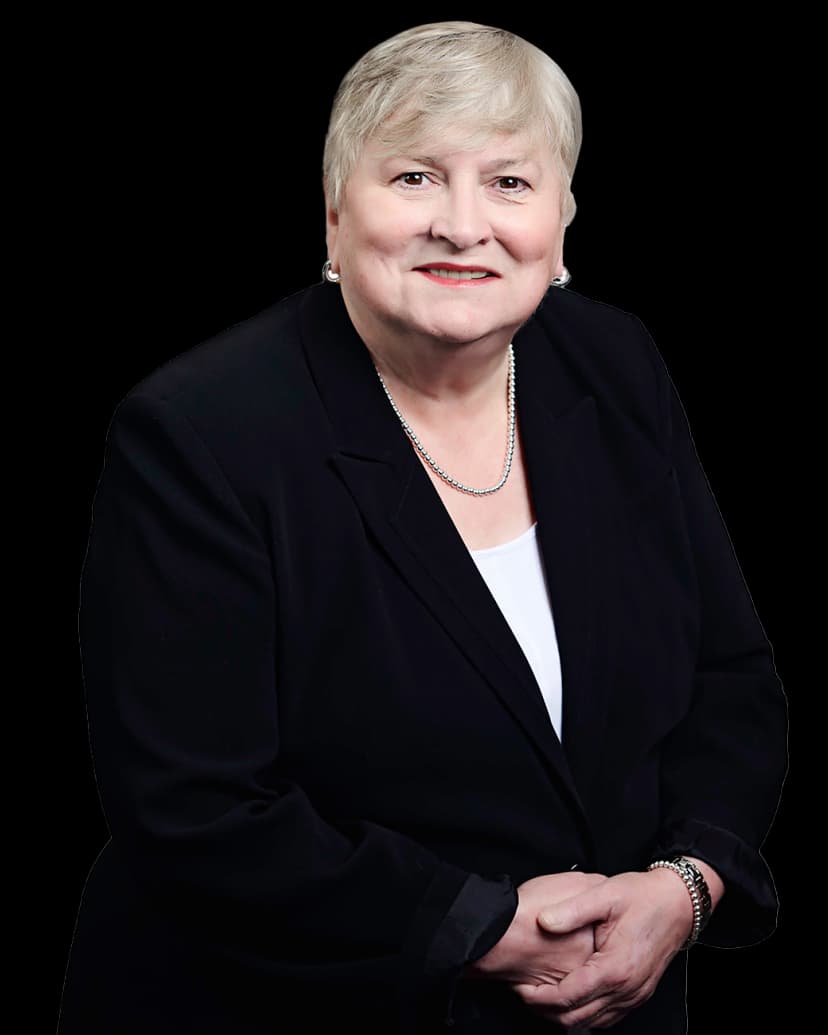
Jacques J.M. Shore, C.M.
Associé


Article
5
Canada’s House of Commons returned to work this week (the Senate resumes on February 3) at a moment of heightened economic and geopolitical unrest. With global markets unsettled, U.S. trade tensions resurfacing, and domestic expectations rising, the government faces a narrow window to demonstrate momentum and deliver tangible results.
It has been roughly eight months since the Liberals have been governing with a minority, and there is growing pressure for Prime Minister Carney to deliver nation-building results while addressing the ongoing effects of U.S. President Donald Trump’s threats and actions, particularly regarding tariffs. The Prime Minister is focused on what Canadians can control such as building a stronger economy. To that end, the prime minister has been relentless in facilitating major infrastructure projects, including natural resource development, making investments in defence, pursuing housing affordability, and diversifying global trade and security relationships.
Whether a late winter or spring election occurs will depend on both political dynamics and the government’s ability to deliver concrete results during this period of instability.
The main priority is advancing Bill C‑15, the Budget Implementation Act, which contains measures on natural resources, housing, infrastructure, and trade, which are key pillars of the prime minister’s agenda. While passage is expected, the government may need to accept opposition party amendments to move the Bill forward by February.
Legislating will be challenging for the Carney government if it remains a minority. Prior to the winter break, the Liberals were one seat short of a majority government with the defections of Michael Ma (Markham-Unionville, ON) and Chris D’entremont (Acadie-Annapolis, NS) from the Conservative Caucus. Since then, there was a vacancy in the Liberal Caucus when Chrystia Freeland (University Rosedale, ON) on January 9, 2026, announced her resignation to advise the Ukraine government. Other members of the Liberal Caucus are rumored to fill diplomatic postings in London (Bill Blair, Scarborough) and the European Union (Jonathan Wilkinson, North Vancouver-Capilano). By-elections in relatively safe Toronto, Scarborough, and Vancouver seats are expected to take place before the end of March, which may help the Liberals regain ground with potential floor crossings.
Stakeholders seeking legislative action should plan for delays because of the potential obstructions from opposition parties. That being said, opposition parties face mixed incentives regarding a spring election:
Negotiations on a federal–Alberta MOU for a new oil and gas pipeline will be complex and politically sensitive, but the government views resource development and export diversification as essential to national unity and long‑term economic resilience.
This year introduces a new fiscal cycle featuring a spring economic update and a fall budget, with pre‑budget consultations beginning by May 2026.
The one constant for Prime Minister Carney is how will he react to President Trump in 2026. Much is expected this year with the looming renegotiation of the Canada-United States-Mexico Agreement (CUSMA). While successful CUSMA renegotiations will be a priority for the government, it is expected that the Liberal government will continue with its trade diversification agenda. Agriculture, natural resources, and manufacturing will be important components of any trade deal. Regarding CUSMA, the Carney government will also likely need to address U.S. irritants such as supply management in dairy, digital policies, procurement, and certain provinces’ boycott of American alcohol beverages.
On the first day back in the House the prime minister announced new initiatives to improve affordability, including the Canada Groceries and Essentials Benefit—the former GST Credit—set to increase by 25% for five years beginning July 2026. Further, the government will be providing a one-time payment, equivalent to a 50% increase, this year.
Additional proposals to strengthen food security, support producers, and improve supply chains include:
In this minority government, advocacy should align with government priorities: trade, major projects, and affordability. Minority Parliaments heighten opportunities for stakeholders to influence policy through committee engagement, where the Conservatives and Bloc hold a functional majority and can shape legislation before it reaches the Senate.
Stakeholders should also be mindful of updated guidance from the Office of the Lobbying Commissioner of Canada (“OCLC”), which now defines “significant part of duties” as eight or more hours within any consecutive four-week period. In this calculation a consecutive four-week period of direct communications (written or oral) or indirect communications (grassroots campaigns), including preparation time, by one or more employees of any corporation or organization will be counted. This replaces the previous interpretation of 20% of overall duties (approximately 32 hours per month).
Gowling WLG’s Government Affairs team continues to closely monitor parliamentary and policy developments and is available to advise on specific impacts to your business. In addition, our Lobbying Compliance Unit, provides strategic guidance and practical support to ensure your organization remains compliant while engaging with government. With deep expertise in lobbying laws across federal, provincial, and municipal jurisdictions, we are well-positioned to assist you across all aspects of your advocacy initiatives—from providing strategic guidance and advice on advocacy efforts, registration and reporting obligations to navigating complex legislative frameworks and managing regulatory inquiries or investigations.
For further information or assistance, please contact us directly to learn more on how we can help ensure your advocacy efforts are ethical, effective, and compliant with the rigorous requirements under the Lobbying Act.
CECI NE CONSTITUE PAS UN AVIS JURIDIQUE. L'information qui est présentée dans le site Web sous quelque forme que ce soit est fournie à titre informatif uniquement. Elle ne constitue pas un avis juridique et ne devrait pas être interprétée comme tel. Aucun utilisateur ne devrait prendre ou négliger de prendre des décisions en se fiant uniquement à ces renseignements, ni ignorer les conseils juridiques d'un professionnel ou tarder à consulter un professionnel sur la base de ce qu'il a lu dans ce site Web. Les professionnels de Gowling WLG seront heureux de discuter avec l'utilisateur des différentes options possibles concernant certaines questions juridiques précises.





Gowling WLG est un cabinet juridique international constitué des membres de Gowling WLG International Limited, une société à responsabilité limitée par garanties enregistrée en Angleterre, ainsi que leurs affiliés respectifs. Les membres et affiliés constituent des entités autonomes et indépendantes. Gowling WLG International Limited promeut, facilite et coordonne les activités de ses membres, mais ne fournit pas elle-même de services aux clients. Pour en savoir davantage sur notre structure, consultez notre page Avis juridique.
© 2026 Gowling WLG Tous droits réservés